
Please Choose Your Language
Views: 222 Author: XS Traffic Facilities Publish Time: 2026-04-19 Origin: Site


When it comes to road visibility and night-time safety, Cat's Eye vs Road Studs is not just a naming debate. It is a real-world decision that affects driver reaction time, maintenance costs, and road performance in rain, fog, and low-light conditions. For highways, toll stations, parking lots, and urban traffic systems, the right choice depends on your road environment, budget, and safety target.
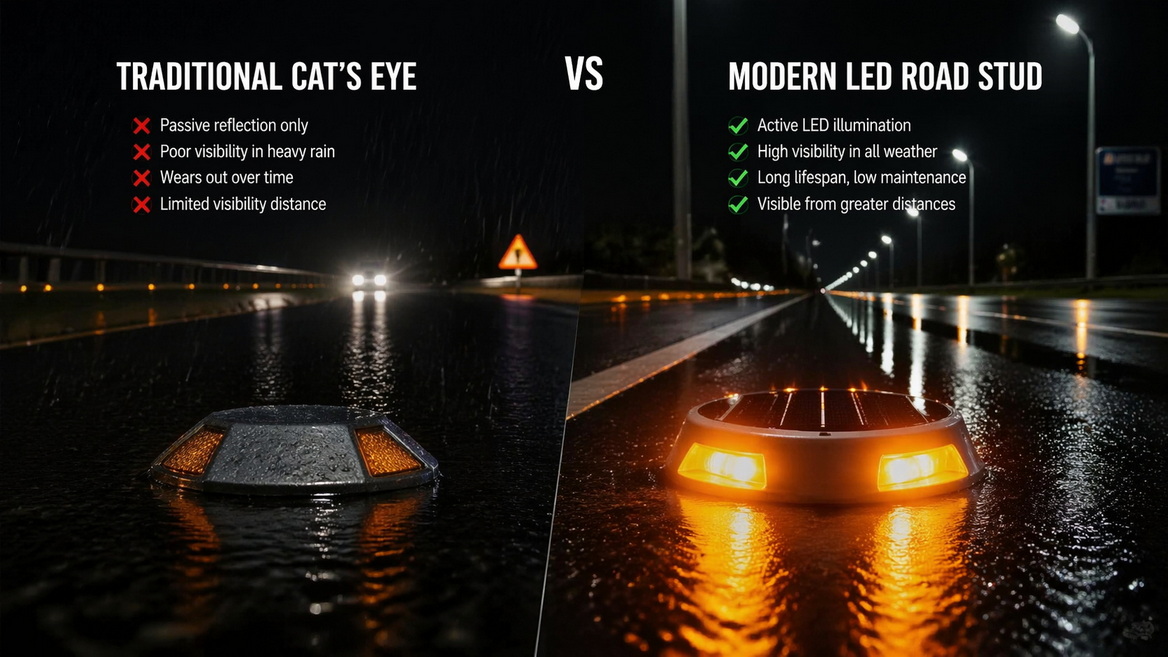
Cat's eyes are retroreflective road markers designed to bounce vehicle headlights back toward the driver. They became widely known for improving lane visibility at night and in poor weather. Traditional cat's eyes are usually passive, meaning they do not generate light on their own; they depend on external light sources such as headlights.
In practical terms, cat's eyes are a simple and proven solution. They are often used where budget control matters and where basic guidance is enough, such as rural roads, standard lane marking, and lower-risk traffic zones.
Road studs are raised road markers used to guide drivers, define lanes, and warn about hazards. Compared with traditional cat's eyes, the term "road stud" is broader and may include reflective studs, plastic studs, aluminum studs, solar road studs, and LED road studs. That means road studs can be passive or active, depending on the product type.
Modern road studs are especially useful in complex conditions such as highways, toll booths, curves, tunnels, and parking facilities because they can provide stronger visibility and clearer lane separation. For buyers looking for smarter traffic safety products, road studs are often the more flexible category.
The core difference is simple: cat's eyes are usually passive reflective devices, while road studs can be passive or active lighting products. This one difference affects visibility, durability, and use cases more than anything else.
| Factor | Cat’s Eye | Road Studs |
|---|---|---|
| Light source | Reflects headlights | Reflective or LED/solar-powered |
| Visibility | Depends on vehicle lights | Better in fog, rain, and dark areas when LED/solar type is used |
| Product range | Narrower | Wider, including solar and LED models |
| Installation | Usually simple | Can be surface-mounted or embedded |
| Maintenance | Low for passive models | Low to moderate depending on power system |
| Best for | Basic lane guidance | High-risk roads, smart roads, parking areas |
Cat's eyes are still useful, but road studs offer more options for modern traffic systems. If your project requires stronger warning performance, road studs usually provide better results.
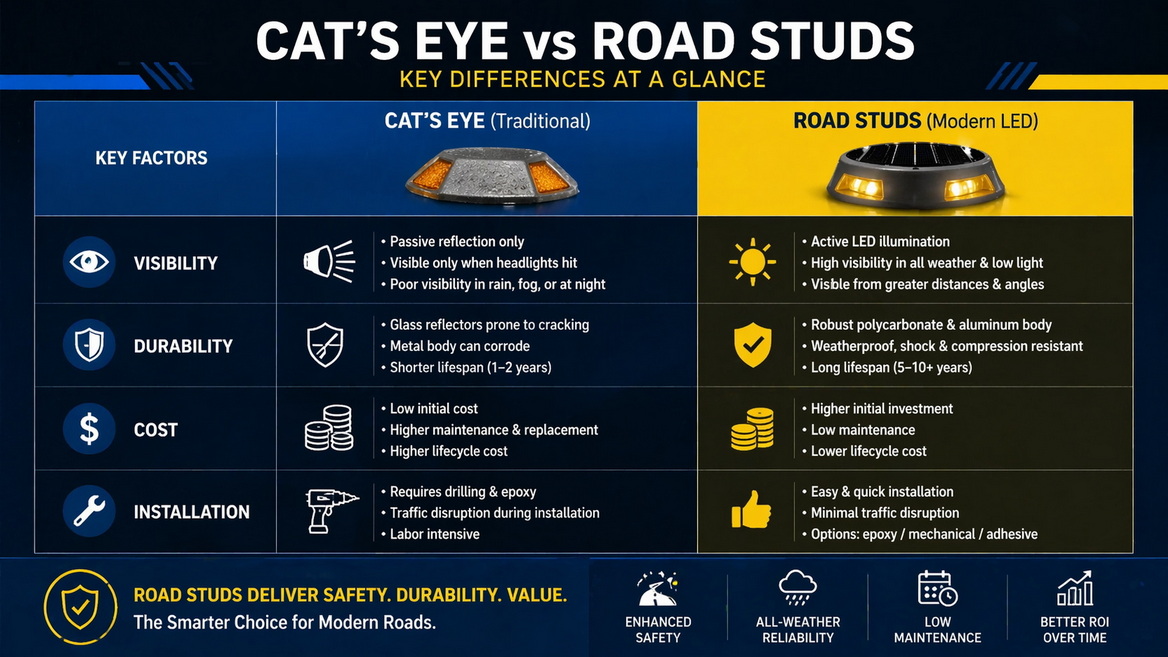
Visibility is where road studs often outperform cat's eyes. In dry, well-lit environments, reflective cat's eyes can work well, especially when paired with headlights. However, in rain, fog, snow, or unlit roads, passive reflection becomes less reliable because it depends on angle, light source, and weather conditions.
Solar and LED road studs improve this problem by producing their own visible light. That makes them more effective on curves, highway exits, toll plazas, and roads with poor ambient lighting. For users seeking clearer night guidance, road studs are typically the stronger option.
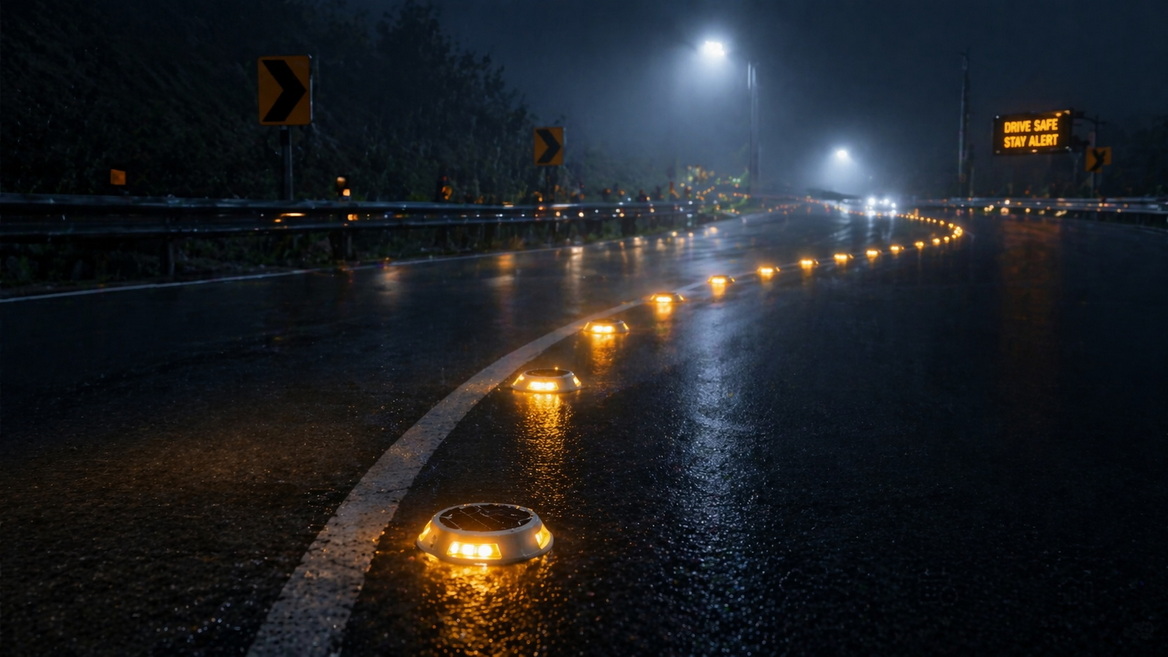
A good road safety product should not only work on day one. It should also remain stable after repeated vehicle impact, weather exposure, and long-term use. Traditional cat's eyes and reflective studs can be affordable at purchase, but their long-term performance depends on traffic load and road conditions.
Road studs, especially aluminum or solar LED models, are usually designed for stronger compression resistance and more demanding environments. In many projects, the initial price is higher, but lifecycle value can be better because of stronger visibility and reduced safety risk. For public infrastructure buyers, that total-cost view matters more than unit price alone.
Not every road needs the same marking system. The right product depends on speed, visibility, and maintenance access.
- Cat's eyes are suitable for low- to medium-risk roads, simple lane guidance, and budget-sensitive projects.
- Reflective road studs are practical for standard lane marking, parking areas, and controlled traffic zones.
- Solar road studs are ideal for highways, curves, ramps, tunnel entrances, and accident-prone areas.
- LED road studs are best for high-visibility warning applications where active illumination is needed.
For parking lots, toll stations, and access roads, road studs can also improve driver navigation and reduce confusion at night. That makes them especially attractive in commercial and municipal projects.
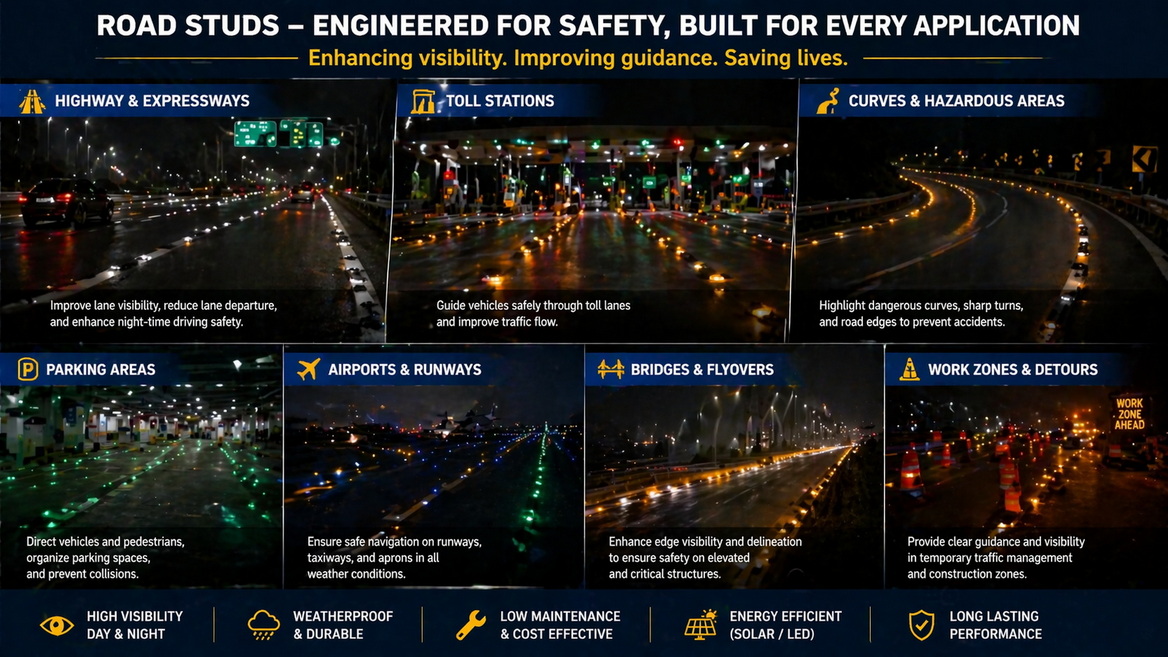
A useful way to select between cat's eyes and road studs is to classify the road by risk level.
1. Low-risk roads: cat's eyes or standard reflective studs may be enough.
2. Medium-risk roads: use stronger reflective studs or mixed guidance systems.
3. High-risk roads: choose solar or LED road studs for active warning and clearer lane definition.
This approach is more practical than comparing products only by price. It helps buyers match product performance with actual traffic danger, which is the real goal of road safety engineering.
For overseas buyers, OEM and ODM capability matters as much as the product itself. A reliable manufacturer should be able to support custom colors, logos, packaging, voltage options, waterproof design, and road-specific specifications. This is especially important for distributors, engineering contractors, and brands that sell to public works markets.
If you are sourcing from China, ask for:
- Compression resistance test data.
- Waterproof and dustproof test reports.
- Battery cycle life information for solar models.
- Project references for highways, parking lots, or tunnel applications.
- OEM/ODM customization options.
This is where a manufacturer like Shenzhen Xingsheng Traffic Facilities Co., Ltd. can position itself strongly, especially if it focuses on LED traffic signs, road safety products, and customer-specific solutions for streets, highways, toll stations, and parking facilities.
From a product strategy perspective, the best option is not always the most advanced one. The best option is the one that solves the road problem with the fewest compromises.
- Use cat's eyes when the project is simple, low-cost, and not exposed to severe weather.
- Use road studs when visibility, safety, and long-term durability are the top priorities.
- Use solar or LED road studs when the site has high traffic speed, poor lighting, or frequent fog/rain.
This is the same logic road engineers use when balancing safety performance and maintenance cost. In most modern high-risk applications, road studs have the stronger safety case.
Correct installation matters as much as product selection. Even the best road stud can fail if the surface preparation is poor or the adhesive system is unsuitable. For embedded products, road surface cleaning and curing time should be carefully controlled.
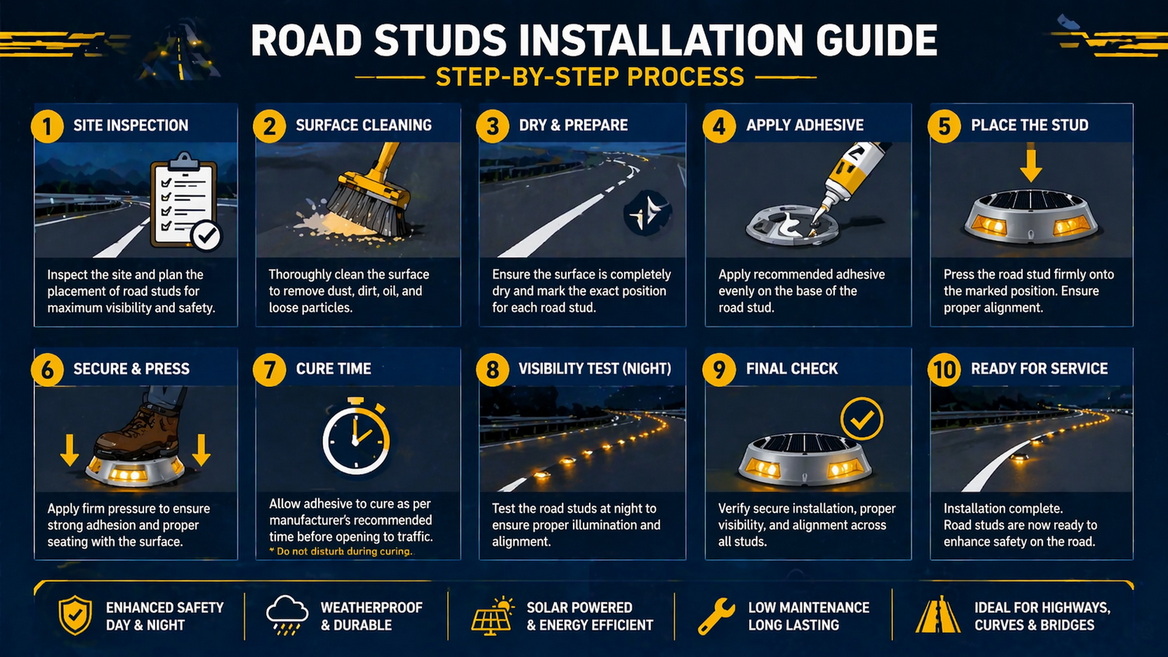
Here is a simple installation checklist:
1. Confirm the road type and traffic speed.
2. Choose the correct product category.
3. Check the mounting method and spacing.
4. Verify waterproof and compression standards.
5. Test visibility at night before full rollout.
For long-term performance, regular inspection is important, especially in heavy rain zones, sharp curves, and toll areas. This helps prevent unexpected failures and keeps guidance lines visible.
Road studs are not just a visibility product. They are becoming part of the broader smart traffic ecosystem. As roads move toward smarter guidance and energy-efficient safety systems, active lighting products such as solar and LED road studs are gaining more importance in infrastructure projects.
That is why many buyers now prefer products that combine visibility, durability, and customization. For manufacturers, this creates an opportunity to position road studs and LED traffic signs as part of a complete safety solution rather than a single product category .
If your project needs simple, low-cost lane marking, cat's eyes still have a place. But if you need stronger visibility, better nighttime guidance, and more flexibility across road environments, road studs are usually the better choice. For modern highways, toll stations, parking lots, and accident-prone areas, solar and LED road studs offer a stronger safety return.
Contact us to get more information!
Not exactly. Cat's eyes are usually a traditional type of reflective road marker, while road studs include a broader range of products such as reflective, solar, and LED models.
Road studs are usually better for highways because they can provide stronger visibility and better performance in low-light or bad-weather conditions.
Yes, solar road studs are designed to remain visible in poor weather and low-light situations because they emit their own light.
Cat's eyes or standard reflective studs are usually cheaper upfront. However, road studs may offer better long-term value in high-risk zones.
Yes. Many traffic safety manufacturers offer OEM and ODM services with custom colors, packaging, specs, and branding for different projects.
1. Jackwin Safety, "Cat's Eye Vs Road Studs for Road Safety Applications" — https://jackwinsafety.com/cats-eye-vs-road-studs/
2. Lightway Traffic, "Solar Road Studs vs Traditional Road Markers" — https://www.lightwaytraffic.com/solar-road-studs-vs-traditional-road-markers-which-is-more-effective/
3. TopSafe Traffic, company profile and OEM/ODM traffic safety product positioning — https://www.topsafetraffic.com
4. Dursafety, traffic protection manufacturer profile — https://www.dursafety.com/traffic-protection/
5. Shenzhen Xinsheng Technology Co., Ltd company profile as a China manufacturer reference — https://shenzhenxinsheng.goldsupplier.com/about.html
6. Alibaba product listing showing cat-eye/LED road warning product attributes — https://chinese.alibaba.com/product-detail/Traffic-Warning-Pavement-Cat-Eye-LED-1601184457191.html


