
Please Choose Your Language
Views: 222 Author: XS Traffic Facilities Publish Time: 2026-06-20 Origin: Site


Content Menu
● Introduction: Why This Comparison Matters
● What Are Aluminum Alloy Road Studs?
● What Are Plastic (ABS) Road Markers?
● Head‑to‑Head Comparison: Aluminum Vs Plastic (ABS)
>> Performance and Application Matrix
● Durability, Climate and Maintenance Considerations
● Cost and Lifecycle ROI: A Procurement Perspective
● Safety, Visibility and Driver Experience
● Sustainability and Material Impact
● Real‑World Use Cases from the Field
● How Shenzhen Xingsheng Supports OEM/ODM Projects
● Practical Selection Checklist for B2B Buyers
● Where to Use Aluminum and Where to Use Plastic
● Call to Action for B2B Buyers
● FAQs
>> 1. Are aluminum alloy road studs always better than plastic (ABS) road markers?
>> 2. How long do aluminum alloy road studs typically last?
>> 3. Can plastic (ABS) road markers be used on highways?
>> 4. What standards should I check when importing road studs?
>> 5. Why work with a Chinese OEM/ODM manufacturer for road reflectors?
Aluminum alloy road studs and plastic (ABS) road markers each play a critical role in modern traffic safety, but they perform very differently in real-world road, highway and parking applications. For B2B buyers, contractors and importers, understanding these differences is essential to balancing safety, lifecycle cost and project specs when sourcing from a Chinese manufacturer like Shenzhen Xingsheng Traffic Facilities Co., Ltd.
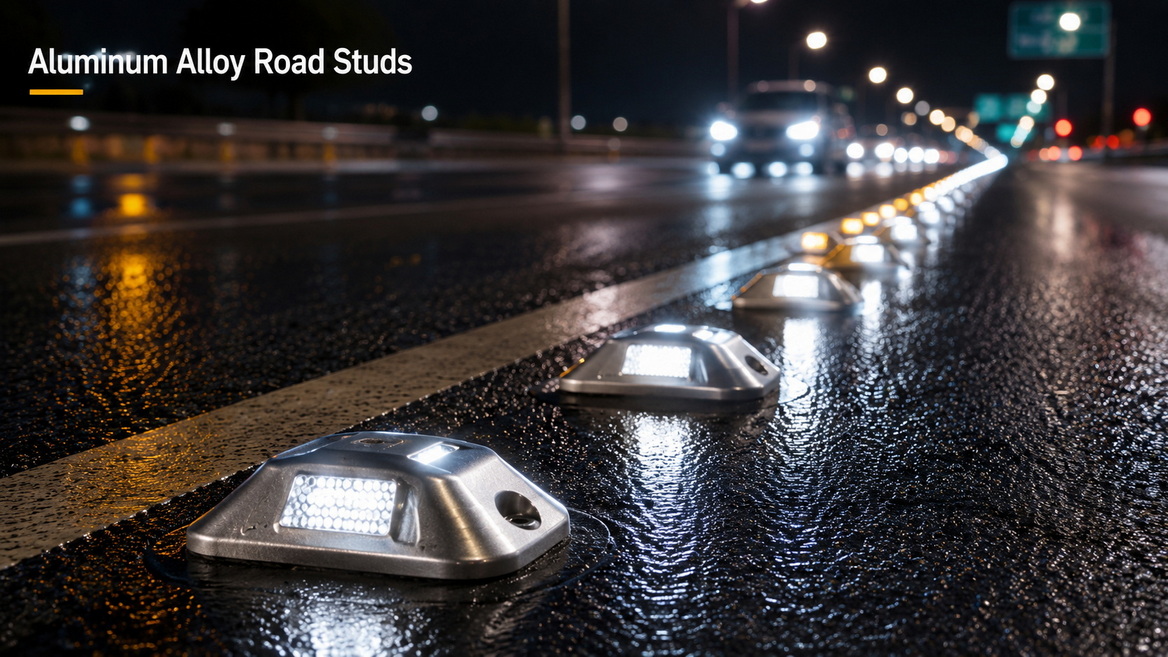
When you spec road reflectors for highways, toll stations or parking facilities, you are not just buying hardware – you are choosing how drivers will navigate your infrastructure day and night for the next 3–10 years. From an industry practitioner's perspective, the most common decision is between aluminum alloy road studs and plastic (ABS) road markers, each optimized for different traffic and budget scenarios.
In my experience working with global importers and EPC contractors, the wrong material choice often shows up as early breakage, fading reflectors and unplanned replacement cycles – all of which quickly erase any short‑term price advantage. This is especially true on high‑speed roads and heavy‑truck corridors where mechanical loads and UV exposure are extreme.
Aluminum alloy road studs are raised pavement markers made from high‑strength cast aluminum, usually combined with reflective lenses or micro‑prismatic inserts on one or both sides. They are designed to withstand heavy axle loads, repeated tire impacts and aggressive weather conditions over many years.
Typical characteristics include:
- High mechanical strength: compression resistance around 30–40 tons, suitable for truck traffic.
- Long service life: often 5–10 years in high‑traffic environments when correctly installed.
- Good temperature and UV resistance, making them suitable for both hot and cold climates.
These properties make aluminum studs a preferred choice for highways, main arterials, toll plazas, bridges and logistics corridors where safety requirements and traffic intensity are both high.
Plastic (ABS or polycarbonate) road markers are lighter road studs molded from engineering plastics with embedded reflective elements. They focus on cost‑effectiveness and ease of installation, making them attractive for low‑to‑medium traffic and budget‑sensitive projects.
Key traits from field use and manufacturer data include:
- Low to medium mechanical strength: typical compression resistance in the 5–10 ton range.
- Lower initial cost: unit prices are significantly below aluminum alternatives, enabling wide coverage on limited budgets.
- Lightweight, corrosion‑resistant design that is quick to install and replace.
These markers are widely used for temporary detours, community roads, internal factory routes and school or hospital zones where traffic speed and axle loads remain relatively low.
| Dimension | Aluminum Alloy Road Studs | Plastic (ABS) Road Markers |
|---|---|---|
| Mechanical strength | 30–40 ton compression resistance, suitable for heavy trucks and high‑speed impact. | Around 5–10 ton resistance, better for light vehicles and low‑speed environments. |
| Service life | Typically 5–10 years in high‑traffic scenarios with proper installation. | Often used for 1–5 years, especially in temporary or low‑traffic sections. |
| Visibility & reflectivity | Strong, stable reflectivity; often used on highways and critical guidance areas. | Adequate for low‑speed roads, internal lanes and parking lots. |
| Cost per unit | Higher initial price, especially for heavy‑duty or solar models. | Lower upfront cost, ideal where coverage density is more important than extreme durability. |
| Total cost of ownership | Fewer replacements and less maintenance over lifecycle, often lower cost over 5–10 years. | More frequent replacements can increase long‑term project cost despite low purchase price. |
| Typical applications | Highways, toll stations, main urban arterials, sharp curves, logistics zones. | Temporary works, community roads, internal plant routes, parking bays. |
For safety‑critical B2B projects – such as new expressways or national infrastructure upgrades – aluminum alloy road studs almost always become the specified solution after risk and lifecycle reviews. For developers of residential streets or commercial parking lots, plastic (ABS) road markers can deliver enough performance at a much lower entry cost.
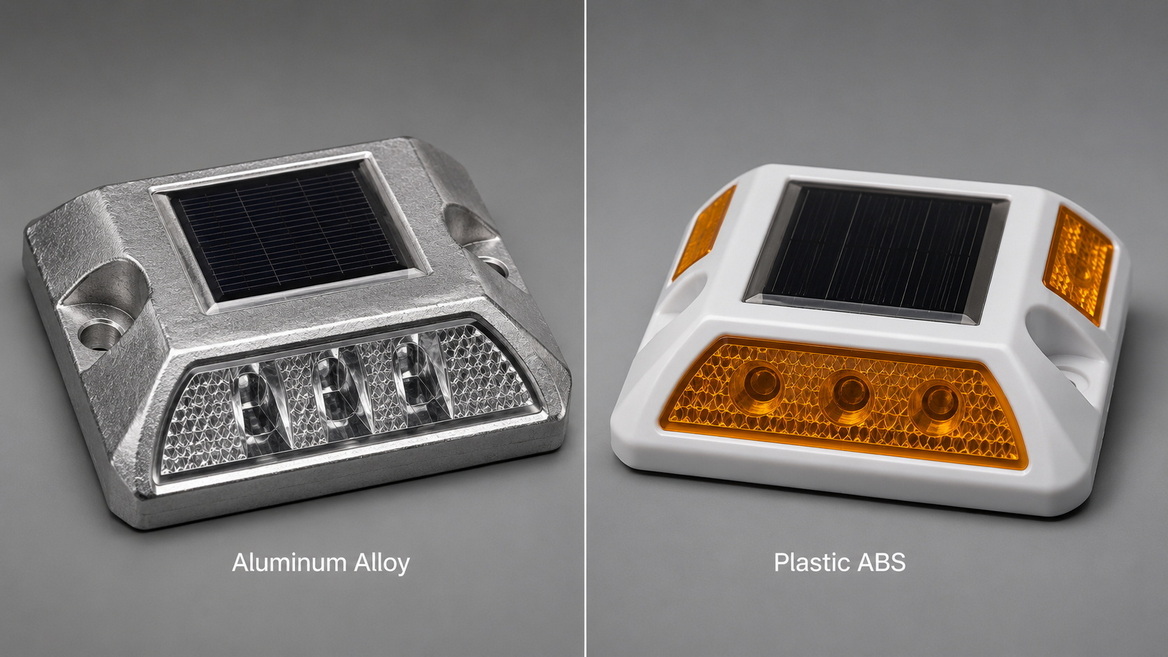
From a maintenance engineer's viewpoint, durability is where the difference becomes most visible after the first 12–24 months of operation.
Aluminum alloy road studs:
- Maintain structural integrity under repeated heavy‑truck loads, reducing breakage and debris on the carriageway.
- Show better resistance to extreme temperatures and UV radiation, especially on open highways.
- Typically require only periodic cleaning and bolt checks where mechanical fixing is used.
Plastic (ABS) road markers:
- Offer good basic corrosion resistance but are more prone to deformation or surface aging under intense UV or heat.
- Can turn brittle at very low temperatures, especially after years of exposure.
- Are easy and quick to replace, but higher replacement frequency can disrupt traffic and consume maintenance budgets.
For operators managing long linear assets, this is why many life‑cycle cost calculations favor aluminum alloy in high‑traffic sections, while plastic markers are reserved for low‑risk, low‑load zones.
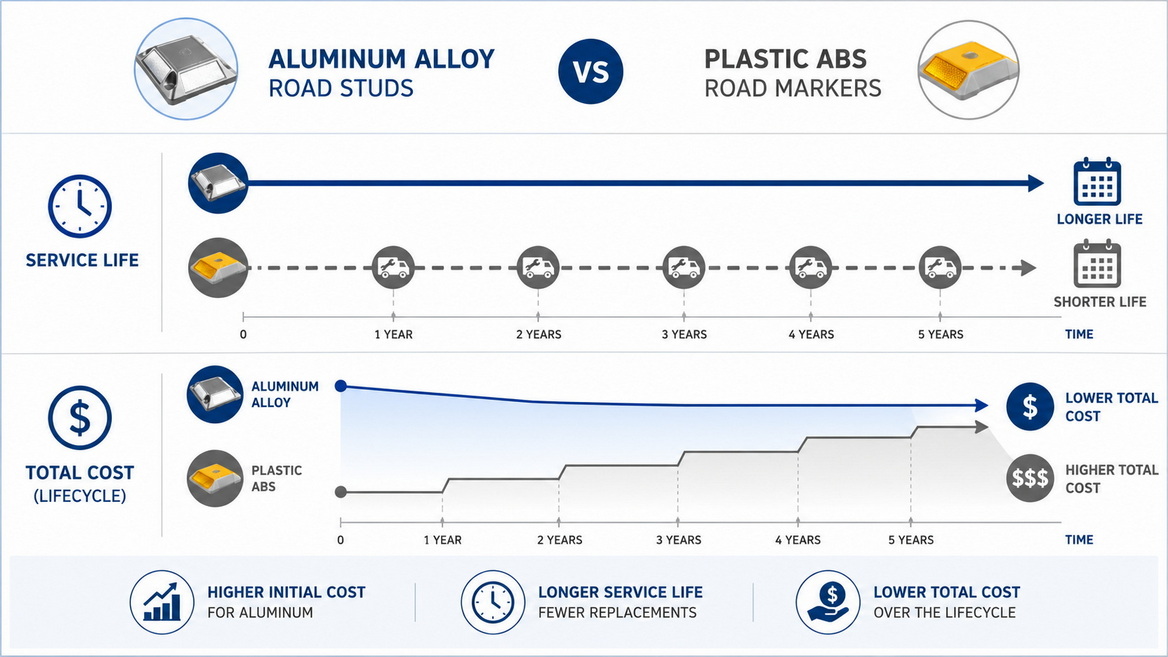
On paper, ABS markers look attractive thanks to their lower unit price and minimal shipping weight. However, B2B purchasers focused only on ex‑works pricing often underestimate:
- Replacement cycles: aluminum studs may last 5–10 years, while plastic markers in demanding areas can require replacement in 1–3 years.
- Labor and closure costs: every replacement requires lane closures, labor, equipment and sometimes night‑work premiums.
- Safety risk cost: failed reflectors directly reduce nighttime visibility on high‑speed roads, increasing accident risk and liability exposure.
Because aluminum road studs combine longer lifespan with higher mechanical strength, many highway agencies and large industrial park operators report lower total cost of ownership compared with repeated replacement of plastic markers in the same locations. For parking lots, campus roads and inner‑city traffic‑calming projects, the math often favors plastic because impact loads and travel speeds are much lower.
From a user‑experience angle, the question is simple: how clearly can drivers read the road at night and in bad weather?
Aluminum alloy studs are commonly specified where lane guidance is critical – for example on high‑speed curves, lane splits, toll plazas and merge areas. They integrate high‑grade reflectors and sometimes solar‑powered LEDs, offering:
- Strong retro‑reflectivity at long viewing distances.
- Enhanced visibility in fog, rain and low‑light conditions.
Plastic road markers also improve night visibility, but their lower mechanical resistance and shorter life can result in missing or damaged units in busy lanes, which directly impacts driver perception and comfort. For lower‑risk applications, however, they still provide adequate visual cues at a fraction of the price.
Sustainability is becoming a frequent requirement in RFQs from European and North American buyers.
- Aluminum studs are typically recyclable at end‑of‑life, and their longer service life reduces waste volume and transport emissions over time.
- Plastic markers consume less material per unit and are lighter to ship, but frequent replacement increases total lifecycle material use.
For ESG‑focused infrastructure owners, pairing aluminum alloy road studs on high‑impact sections with ABS markers on secondary routes can be an effective compromise between sustainability and budget.
Based on the way global traffic safety manufacturers position their product portfolios, several usage patterns are clear:
- National highways and expressways prefer aluminum or glass‑based studs with high load ratings.
- Municipal road upgrades often mix aluminum on main corridors with plastic markers on side streets and parking lanes.
- Industrial facilities use plastic (ABS) markers inside plants and yards, reserving aluminum studs for access roads frequented by heavy trucks.
This hybrid strategy allows asset owners to optimize safety and costs by matching each product's strengths to its operating environment.
As a dedicated Chinese manufacturer of road reflectors and traffic safety products, Shenzhen Xingsheng Traffic Facilities Co., Ltd. can support both aluminum alloy road studs and plastic (ABS) road markers within one integrated solution package.
For B2B buyers, this brings several advantages:
- OEM customization: branding, reflective color, load rating and installation method can be tailored to local standards and project specifications.
- ODM design support: for distributors building their own product line, design teams can help define shapes, optics and packaging based on regional market demand.
- Portfolio bundling: road studs, speed bumps, wheel stoppers and other safety products can be consolidated into one shipment to optimize logistics.
From a UX perspective, working with a single specialist supplier simplifies technical communication and ensures that aluminum and plastic solutions are coordinated rather than conflicting on‑site.
When I advise importers, distributors and contractors, I recommend a simple but actionable decision framework:
1. Define traffic profile
- Heavy trucks and high speed: favor aluminum alloy road studs.
- Light vehicles and low speed: plastic (ABS) markers may be sufficient.
2. Set design life and maintenance strategy
- If lane closures are costly or complicated, prioritize long‑life aluminum units.
- If regular resurfacing is planned within a few years, plastic markers may align better with your schedule.
3. Calculate total cost of ownership
- Ask suppliers to compare 5–10 year lifecycle costs, not only ex‑works prices.
- Include replacement frequency, labor and potential safety risk in your assessment.
4. Align with local standards
- Confirm compliance with MUTCD, ASTM, EN or local road authority specifications where applicable.
5. Leverage OEM/ODM capabilities
- Use customization to match product performance (load rating, reflectivity, color) to each specific project zone instead of using a single one‑size‑fits‑all item.
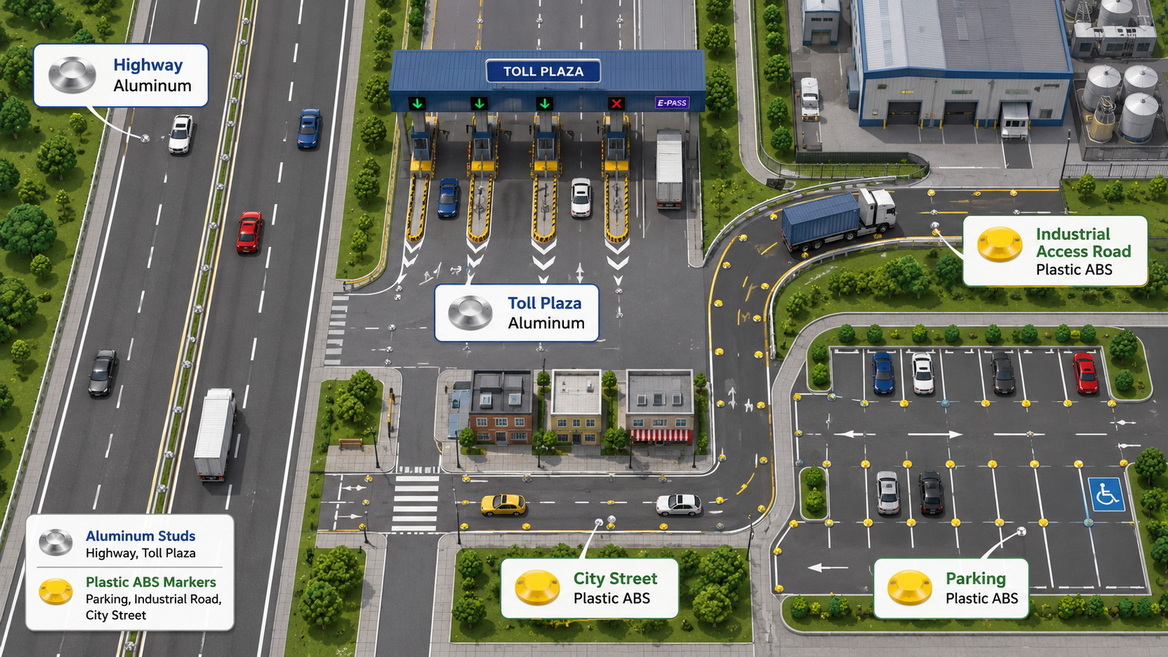
To make this concrete, here is a simple deployment pattern you can use when planning your next project:
- Use aluminum alloy road studs for:
- Mainline highways and expressways.
- Toll plazas, ramps, sharp curves and bridge approaches.
- High‑load industrial access roads with frequent truck traffic.
- Use plastic (ABS) road markers for:
- Urban streets with moderate speeds and lighter traffic.
- Parking lots, driveways and internal factory routes.
- Temporary lane divisions and work zone detours.
This hybrid approach reflects how experienced road agencies and large facility managers actually build their cross‑section designs in the field.
If you are planning a new highway, industrial park or large parking facility, now is the best time to define whether aluminum alloy road studs or plastic (ABS) road markers should be your primary solution. By sharing your traffic volumes, design life and budget targets with a specialist manufacturer like Shenzhen Xingsheng Traffic Facilities Co., Ltd., you can co‑develop an OEM or ODM package that balances safety, lifecycle cost and branding needs.
Reach out with your project drawings and technical standards so the engineering team can recommend a mixed deployment plan – aluminum where safety is critical, plastic where cost and flexibility matter most.
No. Aluminum studs are better for heavy‑traffic and high‑speed roads, while plastic markers can be a smart choice for low‑speed, low‑load and temporary applications.
Under normal highway conditions and correct installation, aluminum road studs often provide 5–10 years of service.
They can be used in some highway scenarios, but many agencies prefer aluminum or glass for mainline lanes due to higher load and durability requirements.
Common references include MUTCD, ASTM and regional standards in Europe, Australia or local road authorities; your supplier should specify which standards each product meets.
Specialized Chinese manufacturers offer competitive pricing, wide product ranges and customization options, allowing you to align material, performance and branding with your target markets.
1. Lightway Traffic, "Reflective Road Studs: Complete 2026 Selection Guide." https://www.lightwaytraffic.com/reflective-road-studs-complete-2026-selection-guide/
2. Jackwin Safety, "A Complete Guide to Road Studs: Types, Materials, and Installation." https://jackwinsafety.com/road-studs-types-materials-and-installation/
3. RC Traffic, "Selection of Reflective Road Studs: A Comprehensive Guide." https://www.rctraffic.com/exhibition-news/news/selection-of-reflective-road-studs.html
4. Asya Trafik, "What Are the Differences Between Plastic and Aluminum Road Studs?" https://asyatrafik.com/en/what-are-the-differences-between-plastic-and-aluminum-road-studs/
5. HTNXT, "China Road Safety Equipment Manufacturer | Tiantai Yuanda Traffic Device Co., Ltd." https://www.htnxt.com/supplier/Tiantai-Yuanda-Traffic-Device-Co.,Ltd
6. Trafficthing, "XS Traffic Facilities Company Profile." https://www.trafficthing.com/Company-Profile.html
7. Traffic Safety China, "Traffic Safety Products, Road Safety Equipment Manufacturer." https://www.trafficsafetychina.com
8. Trafficbase, "China Traffic Safety Base Manufacturer." http://www.trafficbase.com.cn
9. Hangzhou Safer Traffic Facilities Co., Ltd., "Cones, Light and Traffic Safety Products." https://www.topsafetraffic.com
10. Made‑in‑China, "Plastic Road Stud for Highway." https://jiantraffic.en.made-in-china.com/product/qdNTutCjLgro/China-Plastic-Square-Road-Reflectors-Plastic-Road-Stud-for-Highway
11. Made‑in‑China, "Plastic Traffic Safety Stud Marker." https://allroadssafety.en.made-in-china.com/product/nmERrwvOJQpd/China-Highly-Reflective-Plastic-Traffic-Safety-Stud-Marker.html


