
Please Choose Your Language
Views: 222 Author: XS Traffic Facilities Publish Time: 2026-06-23 Origin: Site


Content Menu
● What Traffic Lights Do in the US
● Core US Traffic Light Rules: Red, Yellow, Green
>> Red Light: Full Stop, No Exceptions
>> Flashing Red Light: Stop, Then Proceed When Safe
>> Red Arrow: No Turn in the Arrow Direction
● Right Turn on Red: The General Rule and Local Exceptions
● Yellow Light Rules: Caution, Not Acceleration
>> Solid Yellow: Prepare to Stop
>> Flashing Yellow: Proceed with Caution
● Green Light Rules: Go, But Yield
>> Solid Green: Go When the Intersection Is Clear
>> Green Arrow: Protected Turn
● Flashing Crosswalk Lights and RRFBs: Pedestrian Priority
● Traffic Signal Blackouts and Four‑Way Stops
● How LED Traffic Warning Lights Fit into US Regulations
>> Key US Standards Affecting LED Warning Devices
>> Avoiding Illegal Auxiliary Vehicle Lights
● OEM/ODM LED Traffic Warning Lights for US Traffic Projects
● Practical Checklist: Selecting LED Warning Lights for US Roads
● Suggested Table: Basic Traffic Light Meanings
● Conclusion: Safer Roads Through Rules and Technology
● FAQs
>> 1. What is the main purpose of traffic lights in the US?
>> 2. Can I always turn right on a red light in the US?
>> 3. How do RRFB pedestrian beacons work?
>> 4. Are all flashing LED lights legal on vehicles in the US?
>> 5. What should I look for when buying LED traffic warning lights for US projects?
As a traffic safety marketer working with OEM/ODM LED traffic warning lights every day, I've learned that understanding US traffic light rules is just as important as choosing the right hardware for your project. When cities, toll stations, parking lots and contractors combine compliant signal rules with reliable LED warning devices, they drastically reduce accidents and improve driver behavior across their networks.
From my experience helping US clients customize LED traffic warning lights and pedestrian beacons, there are two questions they always ask:
1. "What exactly are the rules for traffic lights in the US?"
2. "How do our LED warning lights fit into those rules without creating compliance issues?"
This guide answers both questions in detail and adds a practical layer from the perspective of a traffic safety product manufacturer and industry partner.
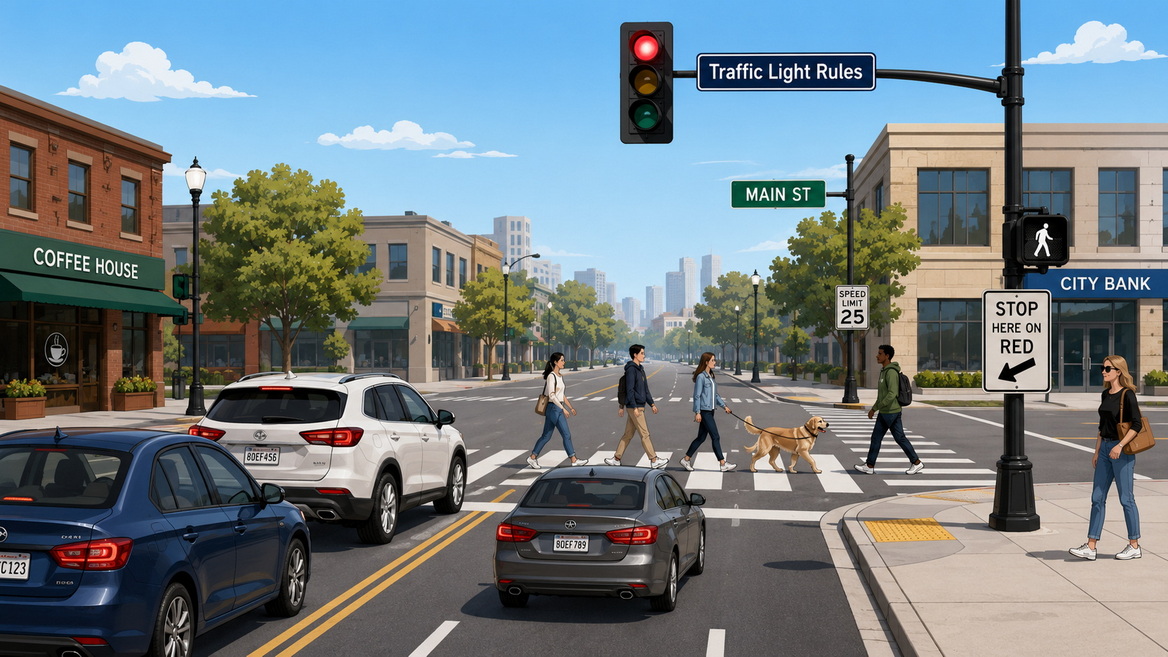
Traffic signal rules in the US exist for one core purpose: to move vehicles, cyclists and pedestrians safely through intersections while minimizing congestion. When every user understands how to react to each light color, authorities can maintain order even in complex, multi‑lane environments.
At a basic level, US traffic lights communicate three actions:
- Red – Stop completely and wait. - Yellow – Prepare to stop; the light is about to turn red. - Green – Proceed, but only when the intersection and crosswalks are clear.
In my work with highway operators and parking lot managers, the biggest behavioral challenge is not the meaning of the colors, but consistency. Drivers may know the rules intellectually, yet still try to "beat the yellow" or roll through a red to save time—behavior that frequently shows up in incident reports and camera footage.
A red signal light always means STOP. Drivers must come to a complete halt before the stop line or crosswalk and remain stopped until the light turns green and the intersection is clear.
From an enforcement standpoint, red light violations are among the most serious, often associated with high‑speed side impacts and pedestrian injuries. In one widely reported California case in 2025, a driver ran a red light, causing the death of a child and multiple injuries—a stark reminder that ignoring red is not a minor mistake but a life‑threatening decision.
Key red light behaviors for drivers:
- Stop fully before the crosswalk or stop line.
- Wait for green and a clear intersection.
- Never assume an empty intersection makes a red light "optional."
A flashing red light functions like a stop sign. Drivers must:
- Stop completely.
- Look for vehicles and pedestrians in all directions.
- Proceed only when the route is clear and right‑of‑way rules are respected.
In practice, we see flashing red signals at complex intersections, work zones and temporary traffic control areas where full signal phases are not necessary but clear stopping behavior is essential.
A red arrow means do not turn in the direction of the arrow until a green arrow or green signal appears.
For example:
- Red right arrow – no right turn.
- Red left arrow – no left turn.
This is especially important at urban intersections with heavy pedestrian crossing volumes, where unauthorized turns can quickly turn into collisions.
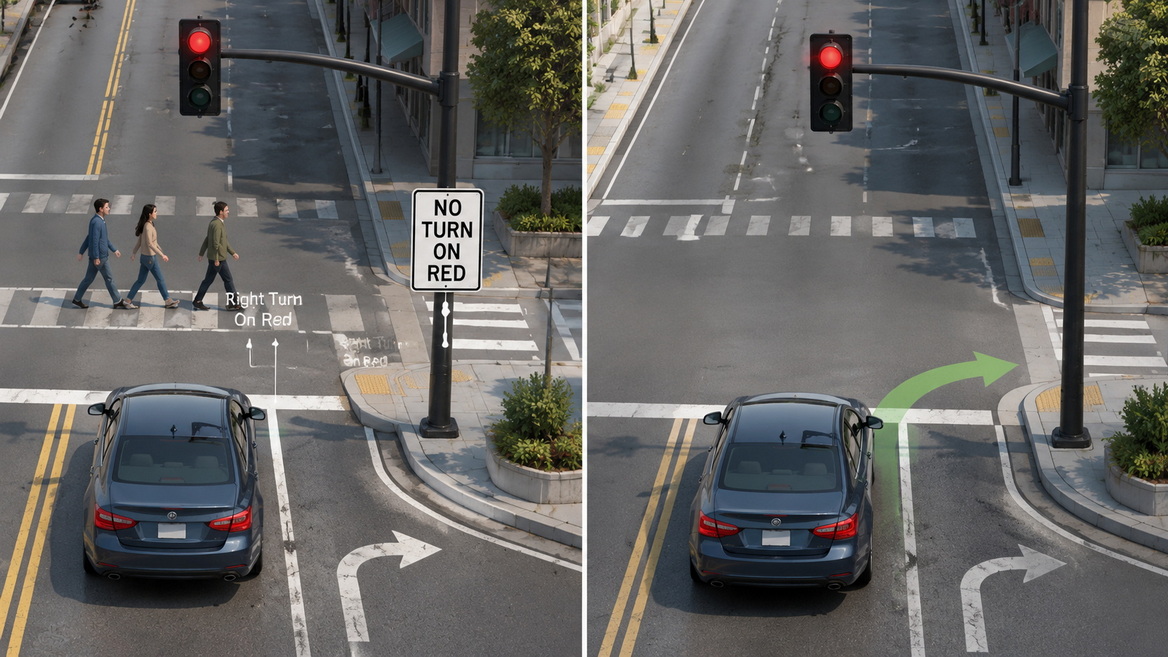
One of the most common US‑specific questions from international drivers and fleet managers is: "Can I turn right on red?" The general answer is yes, but with strict conditions.
Across almost all US states, turning right on red is permitted after a full stop, unless:
- A "No Turn on Red" sign is posted.
- Local regulations (such as in New York City) restrict right turns on red.
- Pedestrians or oncoming traffic have the right‑of‑way.
In New York City, the default rule flips: right turns on red are prohibited unless a specific sign allows them. This is a critical nuance for out‑of‑state drivers and logistics fleets entering NYC for the first time.
From a safety product perspective, we often recommend combining:
- Clear "No Turn on Red" signage
- High‑visibility LED warning signs or beacons near high‑risk intersections
This integrated approach reduces confusion for unfamiliar drivers and supports enforcement efforts.
A solid yellow light indicates the signal is about to turn red and you should prepare to stop. Safe behavior depends on distance and speed:
- When far from the intersection, safely stop before the stop line.
- When too close to stop safely, proceed through with caution and without accelerating.
One of the most dangerous patterns we see in camera data is "racing the yellow"—drivers increasing speed as the light changes. Not only is this behavior illegal when it becomes a red‑light violation, it also erodes public respect for signal systems.
A flashing yellow light means proceed, but with extra caution. Drivers should:
- Slow down.
- Look for cross traffic and pedestrians.
- Yield when necessary.
Authorities use flashing yellow signals where full stops are not required, but risk factors (such as blind curves, minor cross streets or emerging pedestrian volumes) justify heightened awareness.
A green light means you can go through the intersection or make permitted turns—provided the intersection is clear and it is safe to do so.
Drivers must still:
- Yield to pedestrians in crosswalks.
- Yield to oncoming traffic when turning left.
- Respect any "No Turn" signage that modifies standard green behaviors.
In our discussions with city engineers, one recurring theme is that green does not override right‑of‑way rules. Signals are designed to coordinate movements, not to guarantee absolute priority to any user.
A green arrow indicates a protected turn in the arrow's direction. Oncoming traffic is held at red, allowing vehicles to complete the turn without yielding, as long as the intersection remains clear.
Protected phases are critical in high‑volume intersections with:
- Multiple left‑turn lanes
- Complex pedestrian movements
- High truck volumes or limited turning radii
In many of these environments, agencies also deploy LED‑enhanced signs or in‑road warning lights to highlight turn phases and lane assignments.

Modern US crosswalks increasingly use Rectangular Rapid Flashing Beacons (RRFBs)—rectangular signal heads with two high‑intensity yellow LED flashers that activate when a pedestrian pushes a button.
For drivers, the rules are clear:
- When RRFBs begin flashing, slow down and stop for pedestrians.
- Remain stopped until all pedestrians have fully crossed your lane(s).
- Proceed only after the crossing is complete and lights stop flashing, or when traffic law allows.
In our LED manufacturing work, RRFB‑style beacons and similar pedestrian warning lights are some of the most requested products for school zones, mid‑block crossings and large parking lots. US buyers increasingly see these devices not just as accessories, but as core safety infrastructure.
Signal outages can occur due to power failures, hardware malfunction or construction activities. Under New York law, for example, a dark signal must be treated as a four‑way stop. The same principle is widely applied across the US.
Drivers should:
- Come to a complete stop at the intersection.
- Look in all directions for vehicles and pedestrians.
- Apply standard right‑of‑way rules (first to arrive, vehicle on the right, straight traffic before turning).
From the perspective of road operators, adding temporary LED warning signs, portable beacons, or even battery‑powered flashing units during planned outages or upgrades greatly improves driver compliance and maintains safety while the main signals are offline.
When US customers ask us to supply LED traffic warning lights, we always start with regulatory compatibility. Two important frameworks are:
- MUTCD (Manual on Uniform Traffic Control Devices) – Governs the design and use of most traffic control devices, including signs, signals and flashing beacons. It specifies LED colors, sizes and flashing patterns for many applications. - FMVSS 108 and SAE J595 – FMVSS 108 regulates vehicle lighting; SAE J595 defines performance standards for emergency warning lights on vehicles (police, fire, ambulance). These standards specify permitted colors (red, blue, amber, white), intensity and flash patterns.
For roadway‑mounted warning lights and crosswalk systems, MUTCD guidance typically requires:
- White or red LEDs for stop or yield indications.
- White or yellow LEDs for warning and school area signs.
- Flash rates that avoid frequencies associated with seizures and distraction (for example, not between 5–30 flashes per second for certain in‑roadway warning lights).
This is why, when we design LED modules for traffic warning applications, we carefully match:
- Color output to MUTCD categories.
- Flash frequency to mandated or recommended ranges.
- LED diameter and arrangement to specified limits.
US federal regulations also restrict additional flashing lights on vehicles when they impair required lighting systems. A recent interpretation from NHTSA reaffirmed that auxiliary emergency flashing lamps which interfere with standard lighting effectiveness are illegal installations.
For fleet customers and installers, this means:
- Use certified emergency lighting systems that comply with FMVSS 108 and SAE standards.
- Avoid retrofits that add non‑approved flashing devices to general‑purpose vehicles.
- Work with manufacturers who understand US vehicle lighting rules and can provide documentation.
As a Chinese OEM/ODM manufacturer, we routinely support North American partners with compliance checks and data sheets to ensure our LED warning products can be installed without regulatory issues.
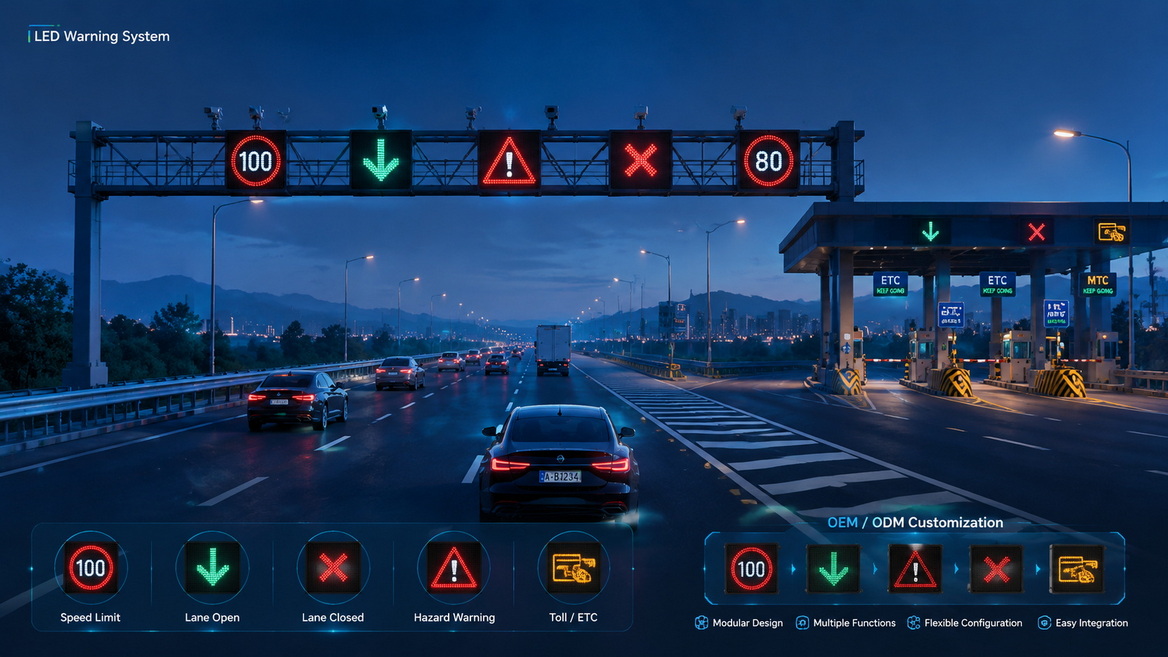
Shenzhen Xingsheng Traffic Facilities Co., Ltd. focuses on OEM and ODM traffic safety solutions, supplying LED traffic warning lights, LED traffic signs and related equipment for streets, highways, toll stations and parking facilities. Our role is to translate regulatory rules into practical product design.
Typical scenarios where our LED traffic warning lights are deployed include:
- Highways and expressways – Lane control signals, advance warning lights for curves or merging lanes, and LED‑enhanced signage.
- Toll stations – LED lane open/close indicators, queue warning lights, and pedestrian crossing beacons.
- Urban streets – School zone flashers, mid‑block crossing beacons and RRFB‑style systems.
- Parking lots – Speed control lights, entry/exit warning signs, and pedestrian crossing LEDs near building entrances.
In OEM projects, we customize:
- Housing structure and mounting methods.
- LED color, luminous intensity and flashing patterns.
- Power options (AC, DC, solar with battery).
- Control interfaces (stand‑alone, networked, sensor‑activated).
In ODM collaborations, we work with US brands and distributors to develop new lines of LED traffic warning products under their label while leveraging our manufacturing experience and compliance knowledge.
To help buyers and engineers bridge the gap between regulations and purchasing decisions, here is a simple, expert‑level checklist:
1. Define the application.
- Intersection approach, pedestrian crossing, toll lane, parking lot, or construction zone.
2. Confirm regulatory category.
- MUTCD sign type, RRFB, lane control signal, or vehicle‑mounted emergency light.
3. Choose compliant LED colors.
- Red/white for stop/yield indications; yellow/white for warnings; amber/blue/white for emergency vehicles as permitted.
4. Set appropriate flash patterns.
- Respect MUTCD guidance on flash rates and avoid frequencies that could cause seizures or visual discomfort.
5. Match hardware to environment.
- IP rating, temperature range, viewing distance, and mounting height suitable for streets, highways or parking lots.
6. Plan integration and maintenance.
- Controller compatibility, wiring or solar options, and ease of part replacement in long‑term projects.
Working through this checklist with your manufacturer or integrator ensures that your LED traffic warning system supports US traffic light rules instead of conflicting with them.
US authorities treat traffic light violations seriously, with consequences ranging from fines and license points to criminal charges when injuries occur. Yet, experience shows that combining clear rules, consistent enforcement and high‑quality LED traffic warning lights delivers the best long‑term safety outcomes.
As a manufacturer working closely with US partners, our goal is to help you design and deploy LED traffic warning solutions that align perfectly with US regulations, support driver understanding and make every intersection, toll station and parking lot safer for everyone.
If you're planning a new traffic safety project or upgrading existing infrastructure, consider partnering with an OEM/ODM supplier that understands both the technical details of LED warning lights and the regulatory framework that governs them—so your investment delivers maximum safety, compliance and reliability.
The main purpose is to control the flow of vehicles, cyclists and pedestrians at intersections, reducing congestion and preventing collisions by assigning clear stop, go and caution phases.
No. While most states allow right turns on red after a full stop, areas like New York City prohibit them unless signs specifically permit the turn, and you must always yield to pedestrians and oncoming traffic.
RRFBs use rectangular LED signal heads that begin flashing when a pedestrian presses a button, alerting drivers to stop and yield until the crossing is complete before proceeding.
No. Federal regulations require that auxiliary flashing lights do not impair required lighting systems, and emergency lights must follow standards such as FMVSS 108 and SAE J595.
You should verify that LED colors, flash patterns and installation methods comply with MUTCD guidelines and applicable federal standards, and work with an OEM/ODM manufacturer experienced in US traffic safety requirements.
1. JACKWIN Safety. "Traffic Light Rules and Regulations in the U. S."
https://jackwinsafety.com/traffic-light-rules-and-regulations-in-the-us/
2. Federal Highway Administration (FHWA). "Roadway Lighting Details – MUTCD LED Requirements."
3. Federal Register. "In‑Roadway Warning Lights at Crosswalks – MUTCD Guidance."
https://www.govinfo.gov/content/pkg/FR-1999-12-30/pdf/99-33406.pdf
4. JW Speaker. "Overview: Vehicle LED Lighting Regulations in the US (FMVSS 108, SAE J595)."
https://www.jwspeaker.com/blog/an-overview-vehicle-led-lighting-regulations-in-the-us/
5. Soft Lights Foundation. "Federal Law Prohibits Emergency Flashing Lights on Vehicles – NHTSA Interpretation."
https://www.softlights.org/wp-content/uploads/2025/07/Vehicle-Flashing-Lights-USA-1.pdf
6. XS Traffic Facilities / Shenzhen Xingsheng Traffic Facilities Co., Ltd. "Company Profile and LED Traffic Sign OEM/ODM Services."
https://www.trafficthing.com/Company-Profile.html
7. ATS Traffic. "Traffic Products for Safer Roads and Parking Areas."
https://www.atstraffic.ca/products/
8. Global Industrial. "Traffic & Parking Lot Safety Products."
https://www.globalindustrial.com/c/safety/traffic_parking_lot_safety
9. Speed Humps Australia. "Traffic Calming Products for Parking Lots."
https://www.speedhumpsaustralia.com.au/traffic-calming-products/
10. Cixi Shuangwei Road Facilities Co., Ltd. "OEM/ODM Manufacturing Solutions for Traffic Safety Products."


