
Please Choose Your Language
Views: 256 Author: XS Traffic Facilities Publish Time: 2026-06-25 Origin: Site


Content Menu
● What Is Reflective Sheeting?
● How Reflective Sheeting Works (In Simple Terms)
● Why Reflective Sheeting Matters For Traffic Safety
● Main Types of Reflective Sheeting (ASTM D4956 Perspective)
>> 3M Engineer Grade Reflective Sheeting (EG / EGP)
>> High-Intensity Prismatic (HIP) Reflective Sheeting
>> Diamond Grade (DG) Reflective Sheeting
>> Commercial-Grade Reflective Films
● Typical Applications of Reflective Sheeting in Traffic Systems
>> Traffic Signs and Road Furniture
>> Work Zones and Construction Areas
>> Safety Clothing and Emergency Vehicles
>> Buildings, Parking Lots and Industrial Sites
● How Reflective Sheeting Integrates With LED Traffic Signs
● Key Standards and Compliance You Should Know
● Practical Buyer's Checklist for Reflective Sheeting & LED Signs
● Industry Case Insight: From Street to Expressway
● Cost, HS Code and Logistics Considerations
● Best Practices to Maximize Safety and Sign Performance
● When to Choose a Chinese OEM/ODM Manufacturer
● Call to Action: Plan Your Next Traffic Safety Project With Us
● FAQ: Reflective Sheeting & LED Traffic Signs
>> 1. What grade of reflective sheeting should I choose for highway signs?
>> 2. Can I use commercial-grade reflective film for regulatory traffic signs?
>> 3. How long does reflective sheeting usually last outdoors?
>> 4. Why do I still need reflective sheeting if my signs already have LEDs?
>> 5. What is the HS code for importing reflective sheeting?
Reflective sheeting is the invisible hero behind every clear traffic sign you see at night, and when it is combined with LED traffic signs, solar road markers and other intelligent devices, it becomes the backbone of modern road safety. As a Chinese manufacturer deeply involved in exporting LED traffic signs and reflective products, I'd like to walk you through how reflective sheeting really works in the field—and how to choose the right grade for streets, highways, toll stations, and parking lots.
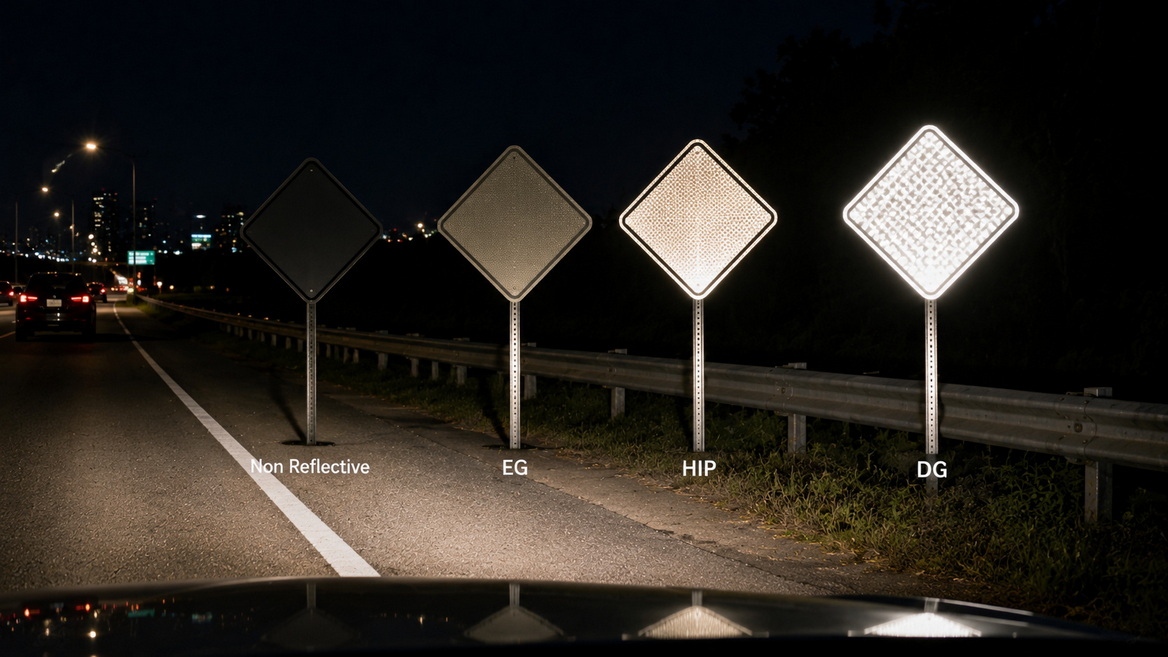
Reflective sheeting is a specialized retroreflective material engineered to bounce light back toward its source, usually vehicle headlights, so that traffic signs and safety devices remain visible at night or in low-light conditions. Instead of scattering light in all directions like ordinary reflective surfaces, retroreflective materials send light back in a narrow cone toward drivers, greatly improving legibility and reaction time.
In practice, reflective sheeting is applied to metal substrates (often aluminum) on traffic signs, road markers, safety cones, and vehicle markings, helping drivers recognize warnings, speed limits, and guidance information early enough to respond safely. This is why regulators such as ASTM D4956, EN 12899-1 and MUTCD specify minimum retroreflectivity performance for traffic control devices.
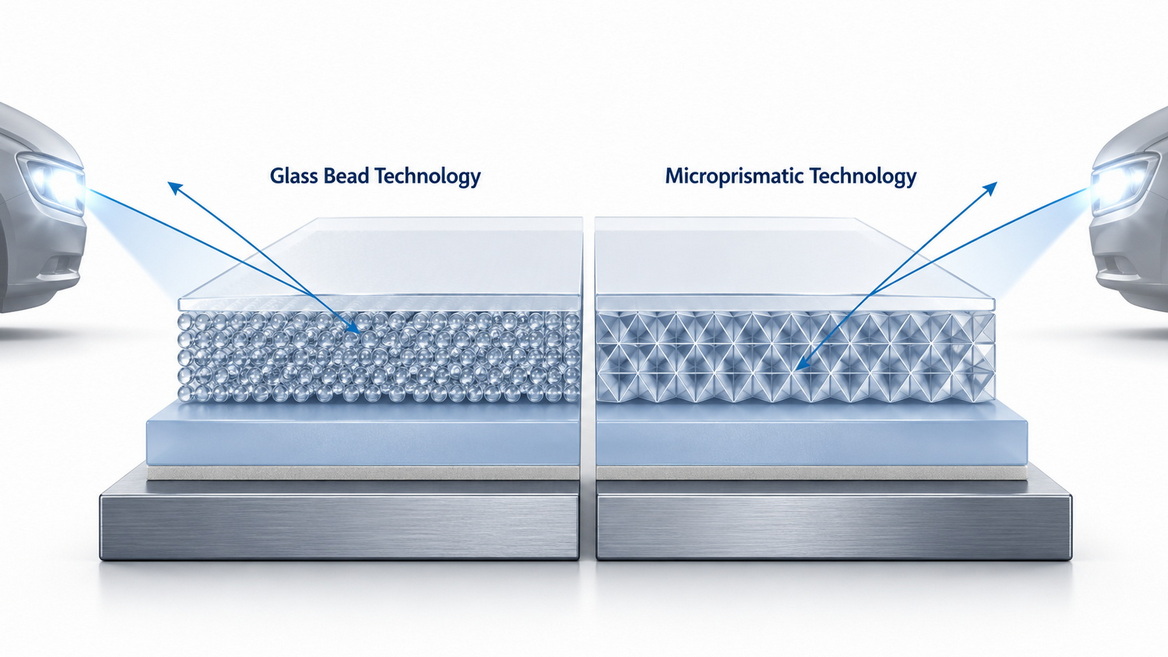
At the core of reflective sheeting are micro glass beads or microprisms embedded in or mounted on a plastic film. When headlights hit the surface, these elements bend and redirect the light back toward the source, making the sign appear bright from long distances and wide viewing angles.
Most reflective sheeting is built in layers:
- A plastic base film (such as PVC, PET, PMMA or PC) provides structure and flexibility. - A thin metallic layer (aluminum or silver) enhances reflectivity. - A retroreflective layer of glass beads or prismatic cells creates the return-light effect. - A transparent protective topcoat resists UV, fading and scratches, and in many cases an adhesive backing allows direct application to sign blanks, cones, jackets or vehicles.
For traffic engineers and buyers, the key takeaway is: different internal constructions lead to different performance levels, lifespans, and price points—so choosing the right grade is critical to balancing safety and budget.
From my experience working with road agencies and private operators, reflective sheeting is not just a "finishing layer"—it is often the difference between a readable sign and a dangerous blind spot at night. Typical applications include: - Regulatory and warning signs on city streets and highways
- LED traffic signs and solar road markers, where sheeting works together with LED light to provide both active and passive visibility
- Cones, barriers, delineators and work-zone devices
- Safety vests, emergency-vehicle markings and building exit signage
Compared with non-reflective films, compliant reflective sheeting is more durable, cost-effective over the life of the sign, easier to apply and significantly more visible in low light, which is why it is required for most permanent traffic signs.
According to ASTM D4956, retroreflective sheeting for traffic control devices is divided into several types, often grouped into glass-bead (engineer-grade) sheeting and microprismatic sheeting. Below is a practical breakdown based on common usage in the field.
Engineer Grade is the entry-level traffic sign sheeting, typically using glass bead technology.
- Typical use cases:
- Street-name signs in low-speed areas
- Parking and private-property signs
- Non-critical or low-priority informational signs
- Performance:
- Moderate reflectivity, suitable where vehicle speeds and decision times are relatively low
- Usually rated for around 7 years of outdoor durability when branded correctly.
If your project involves parking lots, internal roads in industrial parks, or low-speed zones, EGP can be a cost-effective choice as long as it meets local standards.
HIP uses microprismatic construction, which delivers higher brightness and better visibility at wider angles than engineer grade.
- Typical use cases:
- Regulatory signs (speed limit, stop, yield)
- Warning signs and chevrons
- High-speed urban roads and busy commercial areas
- Performance:
- Significantly more reflective than EGP, especially under adverse weather or at long distances
- Typical lifespan: 10–12 years in outdoor use, depending on brand and environment.
For busy city streets, main arterials and approaches to toll stations, HIP is often the minimum practical choice in projects we support.
Diamond Grade is the top tier of traffic sign sheeting, using full-cube prismatic technology that reflects a very high percentage of incoming light.
- Typical use cases:
- High-speed highways and expressways
- Toll plazas and critical decision points
- Major guide signs, lane-control and overhead gantry signs
- Performance:
- Extremely high brightness and conspicuity, visible from long distances and at sharp approach angles
- Designed for 12+ years in harsh weather conditions
- Frequently used to meet the strictest retroreflectivity requirements.
When we work with highway authorities, DG (or equivalent performance) is often specified for critical signs where a missed message could result in severe accidents, particularly at night and in complex interchanges.
Commercial-grade reflective films are lower-cost alternatives typically used for non-regulatory and short-term applications.
- Typical use cases:
- Advertising boards
- Short-term temporary signage
- Labels, helmets, small safety markers
- Performance:
- Lower reflectivity and shorter lifespan compared to EGP, HIP or DG
- Suitable where visibility is desirable but not covered by regulatory standards.
In our OEM/ODM work, we often recommend commercial grade for indoor signage, brand promotions and non-safety graphics, while reserving higher grades for official road signs.
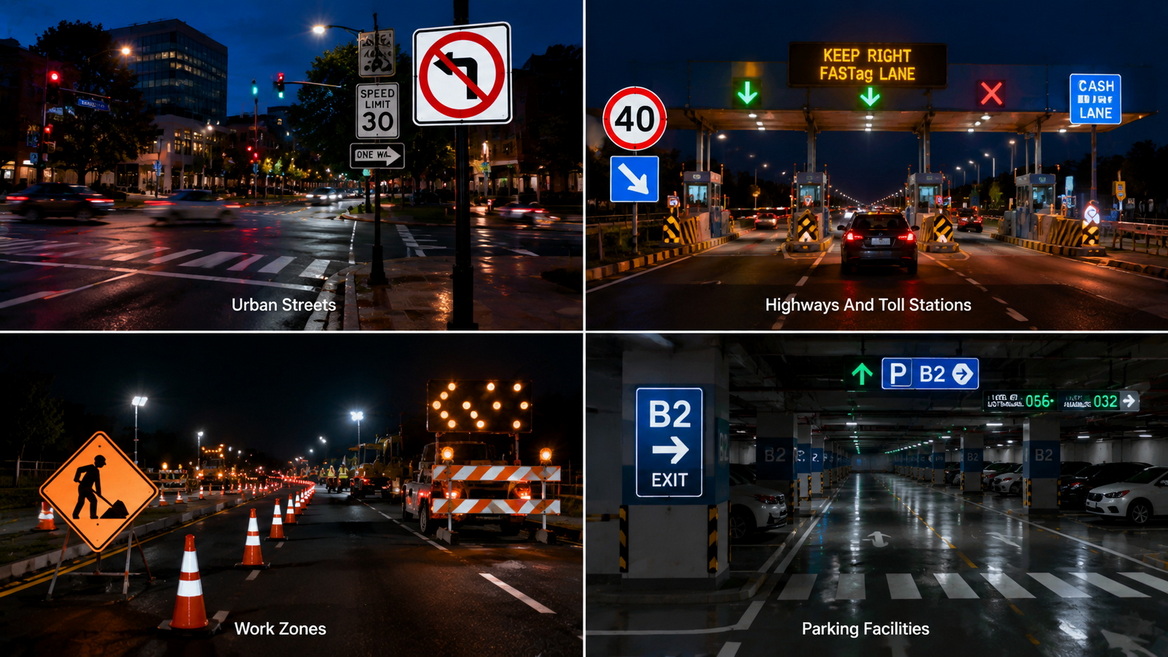
Reflective sheeting is most visible on regulatory, warning, guide and information signs installed along roads, highways and at toll stations. It is also widely used on LED traffic signs, delineators and road markers to ensure visibility even when LED modules fail or power is interrupted.
Beyond traditional signs, reflective materials appear on:
- Traffic cones and drums
- Guardrails and barrier boards
- Solar road studs and markers
These devices help drivers intuitively recognize lane layouts and hazards.
In construction zones, reflective sheeting is applied to cones, safety barriers and temporary signs to warn drivers about lane changes, narrowed shoulders and work areas. Properly specified sheeting reduces rear-end collisions and protects both workers and motorists, especially at night or during poor weather.
Reflective tapes and fabrics are sewn onto safety vests, jackets, shoes, backpacks and bags, making pedestrians and workers more visible to drivers. Ambulances, fire trucks and police cars also rely heavily on reflective markings to strengthen their presence beyond sirens and beacons.
In buildings, underground garages and factories, reflective sheeting is used on exit signs, hazard markings, loading docks and parking guidance systems. For parking lots, combining LED traffic signs, reflective pavement markers and painted lines significantly improves wayfinding and reduces low-speed collisions.
From our factory's perspective, LED traffic signs and reflective sheeting are complementary, not competing, technologies. LEDs provide active illumination powered by grid or solar energy, while reflective sheeting provides passive visibility whenever there is a light source—headlights, street lamps, or even a flashlight.
Key integration points we design for:
- Dual safety layer: Even if an LED module fails, reflective sheeting ensures the sign remains legible. - Optimized contrast: Choosing sheeting colors and brightness levels that work well with LED brightness to avoid glare or washout. - Energy efficiency: In many projects, using high-performance reflective sheeting allows us to reduce LED power and still maintain overall visibility, helping clients meet sustainability and cost targets.
For solar-powered LED traffic signs, radar speed signs, solar road markers and LED tunnel signs, correct sheeting selection is especially important because it ensures visibility even when battery levels drop or in extreme weather conditions.
When you evaluate reflective sheeting and LED traffic products, standards are your best safeguard. The most commonly referenced include:
- ASTM D4956 – Specifies types, performance and testing methods for retroreflective sheeting used on traffic control devices. - EN 12899-1 – European standard for fixed, vertical road traffic signs, including performance requirements for retroreflective materials. - MUTCD (US) – Defines when and where reflective sheeting must be used on traffic signs, and sets minimum retroreflectivity levels for replacement.
As an ISO 9001–certified manufacturer, Shenzhen Xingsheng Traffic Facilities Co., Ltd. follows these standards and adapts to local regulations such as MUTCD, CE and GB, depending on the target market. In our experience, matching the sheeting type, sign design and installation method to local codes is essential for on-time approvals and long-term safety performance.
When traffic engineers, contractors or distributors approach us for OEM/ODM projects, we suggest evaluating at least the following factors before choosing reflective sheeting and LED traffic solutions.
| Factor | What to Check (In Practice) |
|---|---|
| Regulatory compliance | Does the sheeting meet ASTM D4956 / EN 12899-1 / MUTCD / local GB or CE requirements? zgsm-china |
| Application scenario | Urban street, highway, toll station, tunnel, parking lot or industrial area? |
| Traffic speed & volume | Higher speeds and volumes usually require HIP or DG performance. zgsm-china+1 |
| Visibility & viewing distance | Required reading distance, angles, and ambient light conditions. zgsm-china+1 |
| Durability & climate | UV exposure, temperature cycles, humidity, coastal environments, etc. zgsm-china |
| Maintenance capacity | Available budget and manpower for periodic inspection and replacement. ug2 |
| Integration with LED and solar | Need for solar supply, battery backup, radar sensing, dimming or remote control. |
| Total cost of ownership | Balance between initial sheeting cost and lifespan, reduced accident risk and fewer replacements. zgsm-china |
From an expert viewpoint, choosing the "cheapest" film often leads to higher lifetime cost due to premature fading, poor night visibility and frequent replacements. Prioritizing compliant sheeting and robust LED systems usually delivers better ROI and safety outcomes.
In recent years, we have seen a clear pattern across international projects:
- Local streets and parking lots successfully use Engineer Grade or HIP sheeting combined with compact LED traffic signs, solar delineators and reflective road markers to improve low-speed safety. - Expressways and toll stations favor Diamond Grade sheeting plus large-format LED signs, radar speed displays and solar power systems, especially where visibility must be guaranteed under rain, fog or heavy truck traffic.
In many of these deployments, customers initially considered minimal specifications, but after field tests in real night conditions, they upgraded to higher sheeting grades and brighter LEDs to meet safety targets and inspection requirements.
For global buyers, understanding pricing structure and customs classification is crucial:
- Pricing: The price of reflective sheeting varies depending on grade, thickness, brand and order quantity. For example, 3M HIP rolls and DG3 rolls can differ by several hundred USD per roll, reflecting their performance gap. - HS Code: Reflective sheeting is commonly classified under HS code 39209959 for non-cellular, non-reinforced plastic sheets, films, stickers and rolls. Using the correct HS code helps avoid customs delays and unexpected duties.
Working with an export-oriented manufacturer familiar with documentation, mixed-container loading and multi-brand supply (3M, Avery Dennison, ORAFOL, etc.) can significantly simplify sourcing and logistics.
From both a technical and practical standpoint, here are proven ways to get the most out of reflective sheeting and LED traffic products:
Design for clarity first. Use simple messages, standard pictograms and appropriate font sizes so drivers can understand signs in seconds.
Match sheeting grade to risk level. Reserve DG or equivalent for high-speed and high-risk locations; use HIP or EGP for lower-risk areas.
Avoid overloading sign structures. Proper support design, mounting height and location relative to other street furniture are essential for visibility.
Combine reflective sheeting with LED only where it adds real value. Use LEDs for critical points (intersections, crossings, tunnels, school zones) while relying on high-performance sheeting to maintain visibility at all times.
Plan for inspection and maintenance. Dirt, fading and physical damage degrade performance; regular cleaning and periodic retroreflectivity checks help keep systems compliant.
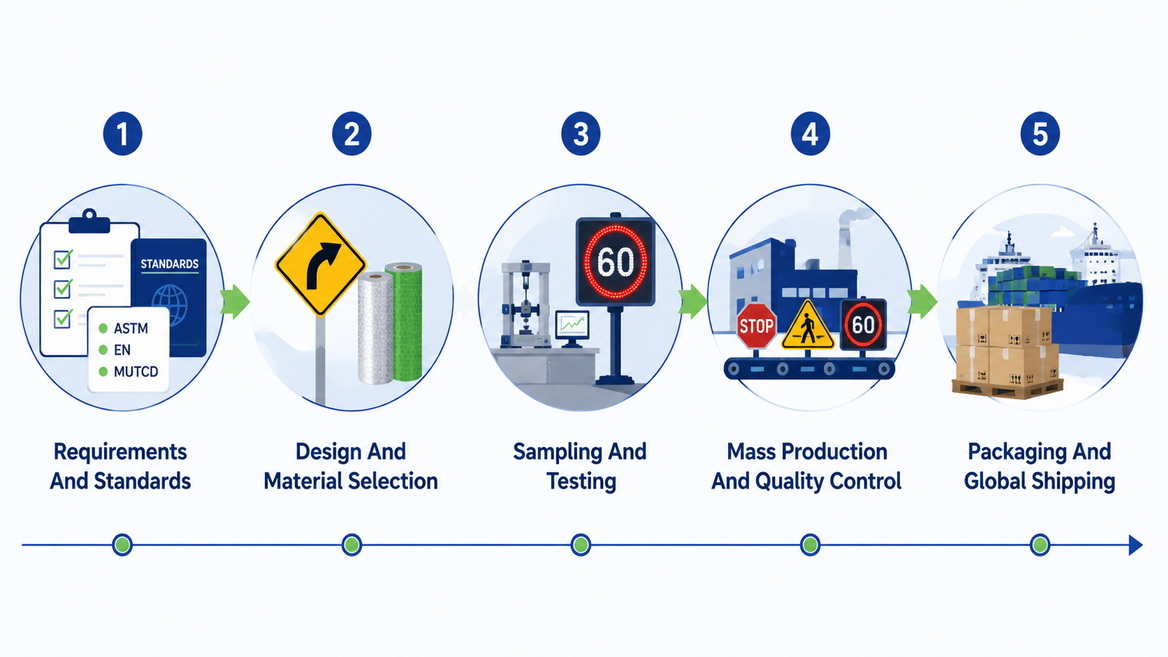
For many international buyers, partnering with a specialized Chinese manufacturer offers flexibility and cost advantages:
- Customized LED traffic signs and reflective sign faces (symbols, languages, colors and layouts) according to regional standards.- OEM and ODM services from design to mass production, including branding, packaging and documentation. - Integrated solutions covering LED traffic signs, LED tunnel signs, solar road markers, delineators, radar speed signs and related traffic safety products, which simplifies project management.
As an ISO 9001–approved, export-oriented high-tech enterprise, Shenzhen Xingsheng Traffic Facilities Co., Ltd. focuses on delivering consistent quality, reasonable pricing and fast delivery, helping distributors, integrators and contractors succeed in competitive markets.
If you are planning a street upgrade, highway expansion, toll station, tunnel or parking facility project, choosing the right combination of reflective sheeting and LED traffic devices will directly impact safety, compliance and lifecycle cost.
Our team at Shenzhen Xingsheng Traffic Facilities Co., Ltd. can support you with:
- OEM/ODM design for LED traffic signs, reflective sign faces and road markers
- Standard-compliant material selection (ASTM, EN, MUTCD, GB, CE)
- Sample production and testing support before bulk orders
- Flexible manufacturing and fast delivery for global markets.
You are welcome to contact us for technical consultation, sample requests or a tailored quotation for your next traffic safety project.
For high-speed highways and expressways, we generally recommend Diamond Grade or equivalent high-performance microprismatic sheeting, as it offers the best visibility at long distances and harsh viewing angles.
Commercial-grade films are typically suitable only for non-regulatory or short-term applications; for official traffic signs governed by standards such as ASTM D4956, EN 12899-1 and MUTCD, higher grades like EGP, HIP or DG are required.
Engineer Grade materials are typically rated around 7 years, High-Intensity Prismatic around 10–12 years, and Diamond Grade often 12+ years, depending on brand and environment. Regular maintenance and proper installation also affect actual lifespan.
LEDs provide active light output, but reflective sheeting ensures the sign remains visible when LEDs are off, dimmed or malfunctioning, and enhances visibility with passing headlights or ambient light. This redundancy is important for safety and compliance.
The commonly used HS code for reflective sheeting is 39209959, which covers non-cellular, non-reinforced plastic sheets, films, stickers, foils, strips and rolls. Using the correct HS code helps avoid customs delays and duty misclassification.
1. Jackwin Safety – "What Is Reflective Sheeting? Their Types and Applications"
https://jackwinsafety.com/what-is-reflective-sheeting-their-types-and-applications/
2. RoadSky – "What is Reflective Sheeting? A Comprehensive Guide"
https://roadskysafety.com/what-is-reflective-sheeting-a-comprehensive-guide
3. Ruina Material – "The Complete Guide to Reflective Sheeting: Types, Uses & Real-World Examples in the U. S."
4. UG2 – "Enhance Safety: Top Practices For Signs And Labels"
https://ug2.com/5-best-practices-effective-safety-signs-signals-labels/
5. Muhammad Bhatti – "Traffic Signs and Best Practices in Their Design" (LinkedIn article)
https://www.linkedin.com/pulse/traffic-signs-best-practices-design-muhammad-bhatti-eufxe
6. Shenzhen Xingsheng Traffic Facilities Co., Ltd. – Company Profile
https://www.trafficthing.com/Company-Profile.html
7. Jackwin Safety – Custom Traffic Signs Manufacturer in China


