
Please Choose Your Language
Views: 222 Author: XS Traffic Facilities Publish Time: 2026-06-06 Origin: Site


Content Menu
● Understanding LED Signs And Reflective Signs In Winter
● Key Winter Visibility Challenges On Roads
● Winter Visibility: LED Signs Vs. Snow‑covered Reflective Signs
>> Night‑time And Low‑light Performance
>> Impact Of Snow And Ice Build‑up
>> Glare, Backscatter, And Driver Comfort
● Winter Reliability, Maintenance, And Lifetime Cost
>> Electrical Reliability In Extreme Cold
>> Maintenance Profiles In Snow Regions
>> Total Cost Of Ownership (TCO) Under Winter Conditions
● Application Scenarios: Where Each Technology Wins In Winter
>> Highways, Mountain Passes, And Tunnels
>> Urban Streets, Intersections, And Parking Areas
>> Toll Stations And Industrial Facilities
● Product Design Considerations For Winter‑ready Signs
>> Optical Design And Material Selection
>> Mechanical And Thermal Design
>> Integration With Road Reflectors And Smart Infrastructure
● Practical Winter‑season Recommendations For Road Operators
>> When To Prioritize LED Signs
>> When Reflective Signs Are Still A Strong Choice
>> Combining Both For Layered Safety
● Quick Comparison: Winter Performance At A Glance
● How Shenzhen Xingsheng Can Support Winter Projects
● Actionable Next Steps For Buyers And Engineers
● FAQs
>> Q1: Are LED signs always better than reflective signs in winter?
>> Q2: How can we reduce snow build‑up on signs?
>> Q3: Do LED signs consume too much energy in remote winter locations?
>> Q4: What role do road reflectors play in winter compared with signs?
>> Q5: How should we evaluate winter‑signage suppliers?
Winter road safety depends heavily on how visible your traffic devices remain in snow, fog, and freezing temperatures. In harsh winter conditions, LED signs and snow‑covered reflective signs behave very differently in terms of brightness, reliability, and lifetime cost.
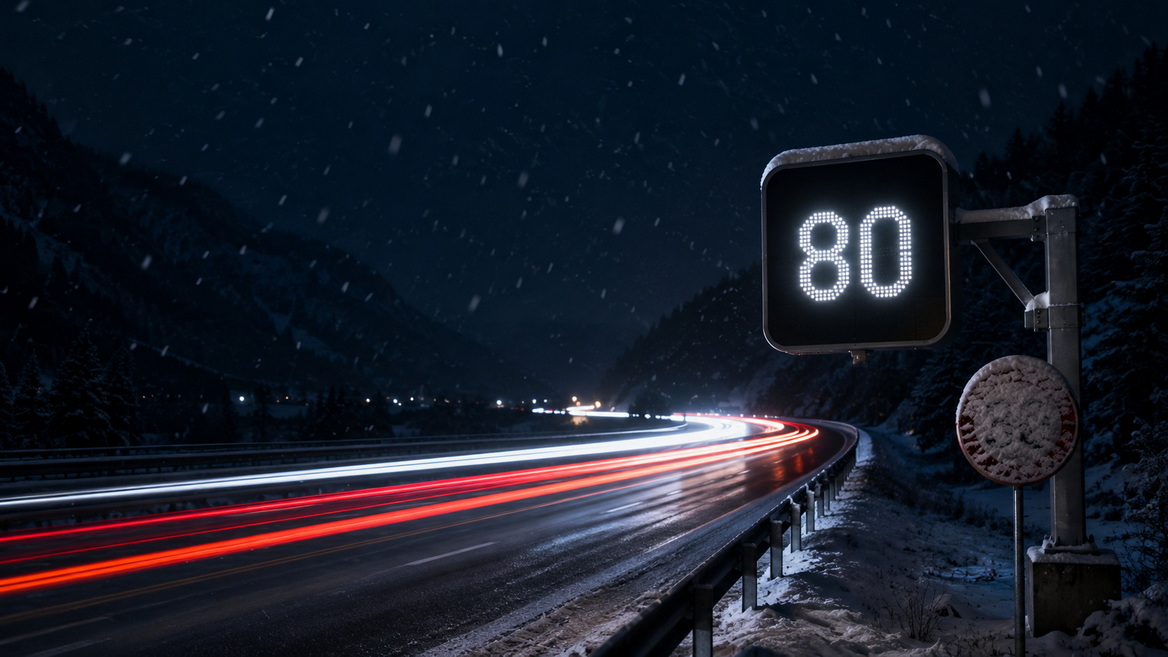
LED traffic signs use built‑in light sources (usually diodes) to actively emit light, which keeps messages visible even in low‑light or stormy conditions. Reflective signs, by contrast, rely on retro‑reflective sheeting that bounces back vehicle headlight beams toward drivers at night.
When snow, slush, or road spray sticks to the face of a reflective sign, it can block those micro‑prisms and dramatically reduce visibility. LED signs can also be covered by snow, but high‑intensity light often penetrates light or partial build‑up better than passive reflective sheeting.
For a Chinese manufacturer like Shenzhen Xingsheng Traffic Facilities Co., Ltd., which already supplies road reflectors and other traffic safety products globally, understanding these differences is critical for advising winter‑road customers on OEM and ODM solutions.
Winter creates a unique mix of low light and low friction that makes any loss of sign visibility especially dangerous.
Typical visibility challenges include:
- Early sunsets and long nights on highways and rural roads
- Snowfall, blowing snow, and freezing fog
- Road spray from trucks that coats signs with dirty slush
- Ice films that diffuse or scatter headlight beams
Because drivers have less tire grip and longer braking distances, they need earlier, clearer warnings about curves, junctions, toll booths, tunnels, and parking access points. This is where the performance gap between LED signs and snow‑covered reflective signs becomes obvious.
LED signs deliver self‑luminous light output, so their visibility depends mainly on LED intensity, viewing angle, and any snow directly covering the diodes. Reflective signs, in contrast, are fully dependent on an external light source like headlights, street lights, or floodlights.
In night‑time snow or freezing fog:
- LED signs cut through low‑light conditions better, especially where ambient lighting is poor.
- Reflective signs may appear dull or disappear entirely if headlights are misaligned or blocked by snow build‑up.
- On curved approaches or downhill ramps, headlight angles can reduce retro‑reflective efficiency.
Example: On a mountain pass with frequent blizzards, an LED‑based sharp‑curve warning sign will typically remain legible sooner and from a longer distance than a snow‑covered reflective sign, especially when drivers use dipped beams.
Snow build‑up is the Achilles' heel of reflective signs. When even a thin snow layer covers the micro‑prismatic sheeting, the incoming headlight beam never reaches the retro‑reflective elements, so almost no light is returned to the driver.
Key winter issues for reflective signs:
- Packed snow and ice can block most of the sign face.
- Road grime combined with slush forms a dark layer that is not easily washed away by later precipitation.
- Frequent manual cleaning is rarely feasible on highways and tolling plazas.
LED signs can also be affected, but bright diodes often remain partially visible through thin, wet snow. Optional heating elements or hydrophobic coatings can further reduce ice build‑up on LED lenses and housings.
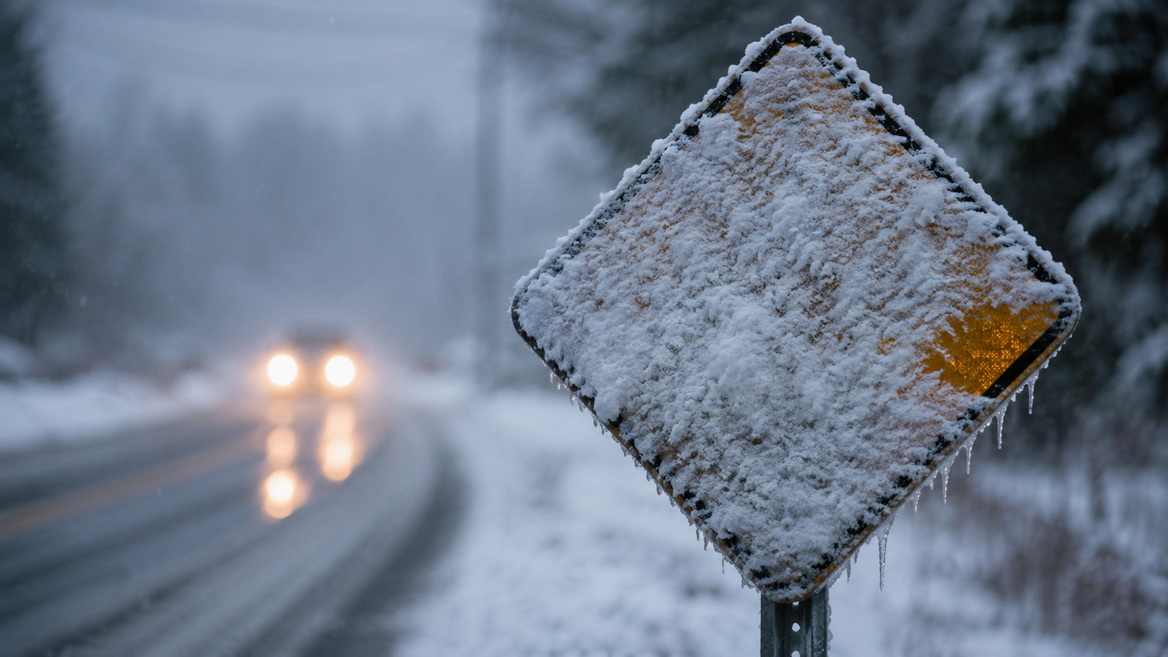
In heavy snow or fog, glare and backscatter can be a serious UX issue.
- High‑intensity LED signs that are not dimmed correctly can cause discomfort glare, especially on dark rural roads.
- Reflective signs typically create less active glare, but in blowing snow the backscatter from headlight beams can still reduce legibility.
Modern LED systems with automatic brightness control and adaptive dimming help mitigate glare while still outperforming snow‑covered reflective signs in legibility. From a UX standpoint, correct brightness calibration is as important as raw intensity.
Cold temperatures are generally favorable for LED efficiency and lifetime, but present challenges for power and control systems. Properly engineered LED signs use sealed enclosures, conformal coatings, and industrial‑grade power supplies rated for sub‑zero temperatures.
Reflective signs contain no active electronics, so they are inherently robust against electrical failure. Their weak point in winter is mechanical wear to sheeting, corrosion at fasteners, and damage from snowplows or thrown ice.
Consider key maintenance activities in winter:
- Snow and ice removal from sign faces
- Inspection of mounting posts and foundations stressed by frost heave
- Replacement of damaged panels after crashes or plow strikes
Reflective signs are cheaper to replace but may demand more frequent cleaning to maintain minimal visibility in snow belts. LED signs require periodic electrical inspection, but their active light output reduces the urgency of manual snow clearing compared with passive signs.
When agencies compare cost, they should move from purchase price to lifetime TCO over 10–15 years.
Typical cost components:
- Initial hardware and installation
- Energy consumption (grid‑tied or solar‑powered LED signs)
- Winter maintenance labor (cleaning, inspection, replacement)
- Accident‑related social cost due to poor visibility
In high‑risk winter locations (mountain passes, major junctions, toll booths), LED signs often deliver lower TCO once accident reduction and reduced emergency call‑outs are considered, even though the unit price is higher.
On high‑speed corridors with severe winters, agencies increasingly specify LED signs for:
- Variable speed limits and lane use control
- Chain‑up areas and snow‑chain reminders
- Avalanche zones and sudden closure points
- Tunnel entrances with icing or fog issues
Reflective signs remain relevant for static warnings and wayfinding on secondary roads, but their winter performance is heavily dependent on regular snow removal from sign faces.
In urban environments, ambient light from buildings and street lamps can partially compensate for reflective signs at night. However, in winter, dirty snow piles and parked vehicles often block sight lines, making self‑illuminated LED signs more visible at oblique angles.
For parking lots and indoor–outdoor parking transitions, LED signs and LED‑based lane indicators provide clearer guidance in snowstorms and low‑visibility events, reducing low‑speed collisions and congestion.
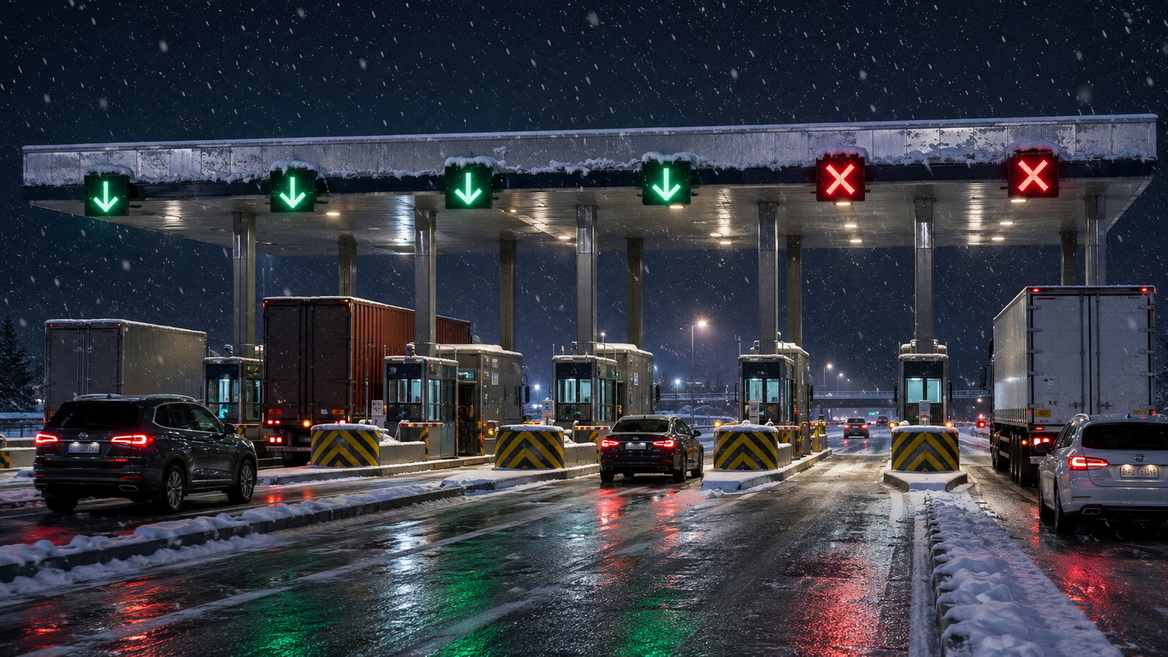
Toll plazas, logistics centers, and industrial parks often operate 24/7, with high volumes of heavy trucks in winter. In these B2B settings:
- LED lane‑control signs and price boards remain legible despite snow, while reflective boards can become unreadable.
- LED stop/go indicators reduce driver confusion when lanes are partially closed due to snow management.
For a manufacturer like Shenzhen Xingsheng, offering custom LED signs combined with high‑grade reflective sheeting gives operators a more resilient mixed portfolio tailored to winter operating windows.
From an engineering standpoint, both LED and reflective signs can be optimized for winter.
Key design levers include:
- Retro‑reflective sheeting grade, color, and micro‑prism design
- LED color (e. g., amber or white for better penetration in snow and fog)
- Lens optics that reduce snow adhesion and avoid ice bridges
- Anti‑fog and hydrophobic coatings to keep surfaces clear
Using high‑intensity, wide‑angle LED modules combined with premium prismatic sheeting ensures some level of visibility even when partial snow coverage occurs.
Mechanical design has a direct impact on winter performance.
- Slightly sloped sign faces and smooth edges encourage snow shedding.
- Robust mounting resists vibration and wind‑induced movement that can crack ice films.
- Optional heating or internal thermal management can prevent ice build‑up on critical LED legends and symbols.
Snow‑belt agencies increasingly specify technical requirements around anti‑icing performance and snow shedding angles in their procurement standards. Manufacturers that understand these standards can capture more winter‑road tenders in North America and Northern Europe.
Reflective road studs and lane markers complement both LED and reflective signs in winter. When plow‑resistant road reflectors maintain striping visibility on the pavement, drivers can keep better lane discipline even when overhead signs are partially obscured.
Emerging "connected road" pilots combine smart LED signs, reflective devices, and vehicle‑to‑infrastructure (V2I) communication to improve safety in bad weather. A Chinese manufacturer with expertise in road reflectors is well‑positioned to extend its portfolio into winter‑optimized LED warning and guidance systems for global partners.
Choose LED signs in winter‑intensive locations when:
- Average winter visibility is low due to frequent snow or fog.
- The road segment is high‑speed or high‑volume with serious crash history.
- You need variable messages (speed limits, lane control, weather alerts).
- You have reliable grid or solar power, or can design independent power systems.
In these cases, LED signs deliver higher safety margins, faster driver recognition, and better support for dynamic traffic management strategies.
Reflective signs remain a good option when:
- Winters are mild and snow coverage is limited.
- The location is remote with no feasible power supply.
- Budget constraints are strict and static messages are sufficient.
- Maintenance teams can routinely clear snow from critical signs.
Upgrading to higher‑grade reflective sheeting and using robust mounting hardware improves winter performance without moving to fully active LED systems.
Many agencies use a layered approach that combines LED and reflective technologies.
Examples:
- LED variable speed signs backed up by reflective static maximum speed plates.
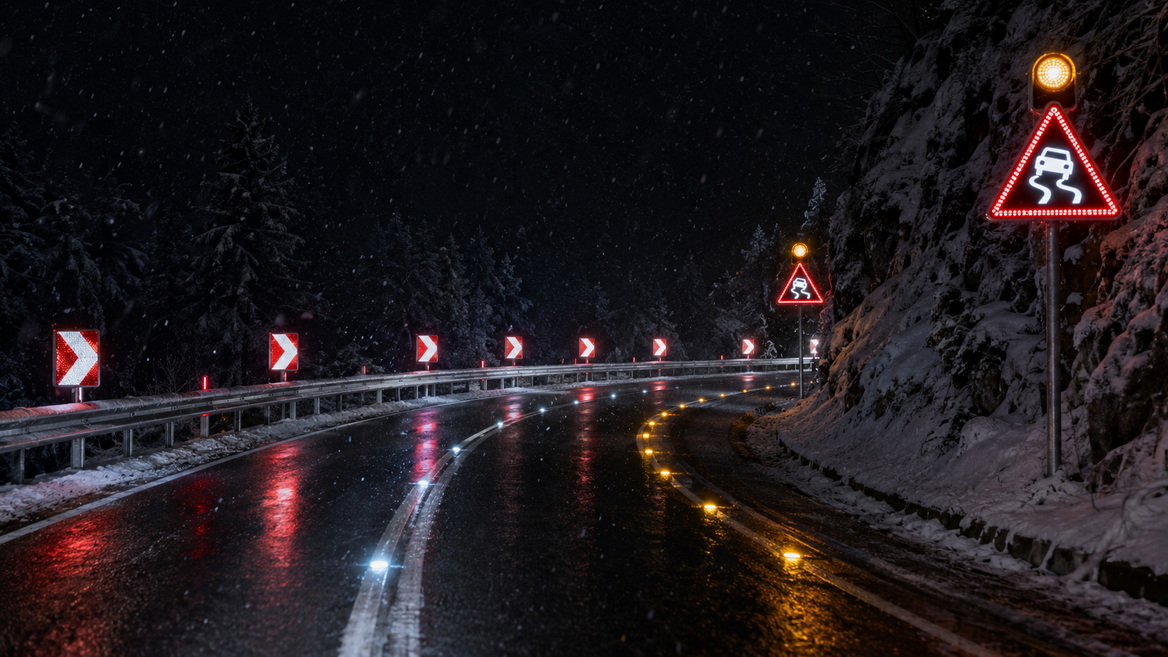
- LED curve warning signs plus reflective chevron boards around the bend.
- LED lane control at toll plazas with reflective direction signs for long‑range wayfinding.
For OEM/ODM projects, Shenzhen Xingsheng can design integrated packages that mix LED and reflective solutions, plus road reflectors, to match local winter risk profiles and budgets.
| Aspect | LED Signs In Winter | Snow‑covered Reflective Signs In Winter |
|---|---|---|
| Light source | Active, self‑luminous LEDs | Passive retro‑reflection |
| Performance in heavy snow | Better, but needs snow‑aware design | Severely reduced when face is snow‑covered |
| Dependence on power | Requires reliable power | No power requirement |
| Night‑time visibility | Excellent with proper dimming | Good when clean and illuminated by headlights |
| Maintenance focus | Electrical and control checks | Cleaning, replacement of damaged panels |
| Upfront cost | Higher | Lower |
| Suitability for dynamic messages | Ideal | Not suitable |
| Best use cases in winter | High‑risk, low‑visibility roads | Low‑risk, low‑budget areas |
As a China‑based manufacturer of road reflectors and traffic safety products, Shenzhen Xingsheng can help global B2B clients design winter‑ready systems that combine LED signs, reflective signs, and durable pavement reflectors.
OEM and ODM services allow road authorities, distributors, and parking operators to:
- Customize LED sign optics, housing, and heating to local winter standards.
- Select appropriate reflective sheeting grades for snow‑belt regions.
- Integrate road reflectors, barriers, and signage into a coherent safety package.
By leveraging both active and passive technologies, customers can achieve higher winter safety, better visibility, and reduced total cost of ownership across streets, highways, toll stations, and parking facilities.
To turn this comparison into a concrete winter‑safety plan:
1. Map your winter hotspots
Identify segments with persistent snow, crash history, or visibility complaints.
2. Classify each location by risk and function
Separate high‑speed curves, ramps, toll approaches, and urban intersections.
3. Specify technology per segment
Assign LED signs to high‑risk, low‑visibility segments and premium reflective signs to lower‑risk zones.
4. Define technical requirements
Include brightness, dimming, anti‑icing design, reflective grade, and integration with road reflectors.
5. Engage an OEM/ODM partner
Work with Shenzhen Xingsheng to co‑engineer winter‑optimized LED and reflective products, including custom housings and mounting tailored to snow‑belt conditions.
A clear procurement specification, combined with the right manufacturing partner, ensures your winter signage investments translate directly into fewer accidents and better driver experience.
If you manage highways, toll facilities, or large parking areas in snow‑affected regions and need to upgrade from snow‑covered reflective signs, consider piloting winter‑optimized LED solutions alongside premium reflective signs and road reflectors.
Contact Shenzhen Xingsheng Traffic Facilities Co., Ltd. to discuss OEM and ODM options for LED signs, reflective signs, and road reflectors tailored to your local winter conditions and regulatory standards.
A1: Not always. LED signs perform better in low‑visibility, high‑risk locations, but reflective signs remain cost‑effective in low‑risk or low‑snow regions, especially where power is limited.
A2: Use sloped faces, smooth housings, anti‑icing coatings, and, for critical LED signs, optional heating to encourage snow shedding and prevent ice accumulation.
A3: Modern LED signs are highly efficient; with correct sizing of solar panels and batteries, they can operate off‑grid even in cold climates, though careful system design is required.
A4: Road reflectors maintain lane guidance at pavement level when overhead signs and markings are obscured by snow, improving lane discipline and reducing run‑off‑road crashes.
A5: Look for proven experience in snow‑belt markets, compliance with relevant standards, documented anti‑icing design features, and the ability to customize products via OEM/ODM projects.


