
Please Choose Your Language
Views: 222 Author: XS Traffic Facilities Publish Time: 2026-06-10 Origin: Site


Content Menu
● What Are Anti-graffiti Coatings and Standard Laminates?
● Performance Comparison – At-a-glance
● Real-world Durability and Visibility on Highways
● Total Cost of Ownership – Not Just Material Price
>> Where Standard Laminate Seems Cheaper (But Isn't)
>> Simple TCO Example (Conceptual)
● Safety, Compliance, and Risk Management
● Expert View – When to Specify Each Option
>> When Anti-graffiti Coating Is the Better Choice
>> When Standard Laminate Can Still Work
● Integration with LED Traffic Signs and Smart Roadside Systems
● Practical Maintenance Workflow – Field-tested Steps
>> Recommended Steps for Anti-graffiti Sign Maintenance
● OEM/ODM Strategy for Export-focused Manufacturers
● How to Choose for Your Next Project – A Simple Checklist
● Clear Call to Action for B2B Buyers
● FAQs: Anti-graffiti Coating Vs. Standard Laminate
>> Q1: Will anti-graffiti coatings reduce sign retroreflectivity at night?
>> Q2: Can I upgrade existing laminated signs with anti-graffiti coating?
>> Q3: Are anti-graffiti coatings compatible with all reflective sheeting brands?
>> Q4: How often do I need to reapply anti-graffiti coatings?
>> Q5: Is standard laminate still acceptable for compliance audits?
Highway agencies and parking operators today face a tough balance: protecting sign visibility while keeping lifecycle costs under control. Graffiti, UV exposure, and harsh weather all accelerate the aging of reflective sheeting, which directly impacts driver safety and regulatory compliance. In this context, many decision-makers now compare anti-graffiti coatings vs. standard laminate as two mainstream surface protection strategies. For manufacturers like Shenzhen Xingsheng Traffic Facilities Co., Ltd., which supply LED traffic signs and static panels with OEM/ODM options, this choice influences product design, pricing, and warranty promises. This article takes both a practitioner's and an industry expert's view to help you choose the right solution for highways, toll stations, and smart parking projects.
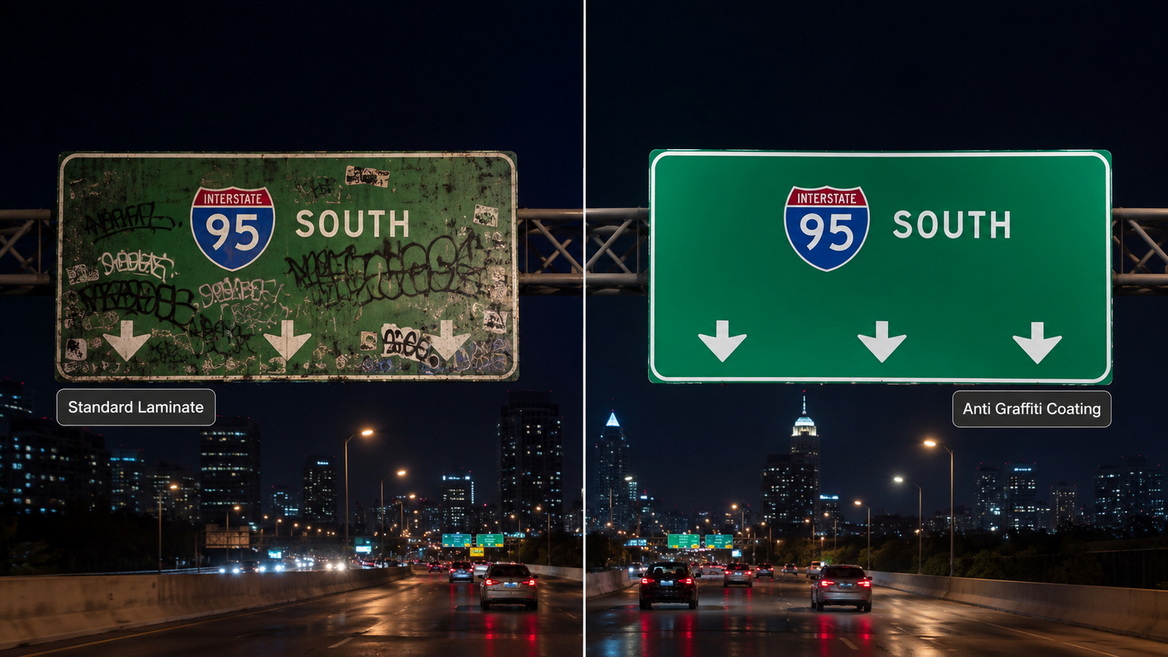
From a traffic sign engineer's standpoint, both solutions aim to protect the retroreflective face of the sign.
- Standard laminate
A clear film (usually PVC, PET, or polyurethane) applied over the printed legend or reflective sheeting. It primarily offers protection against UV, moisture, minor abrasion, and routine cleaning chemicals.
- Anti-graffiti coating
A specialized clear coating or film engineered to resist spray paint, markers, and posters. It allows quick removal of graffiti without damaging the reflective sheeting or printed graphics.
In many modern specifications, anti-graffiti systems are available as either sacrificial (removed during cleaning and reapplied) or non-sacrificial (permanent) coatings. The latter are increasingly popular for high-traffic, high-vandalism corridors where maintenance access is limited.
Below is a concise field-oriented comparison based on typical highway applications.
From my experience working with traffic asset managers, durability and legibility under real conditions drive most specification decisions.
- Anti-graffiti coatings
- Maintain sign legends even after repeated cleaning with approved solvents.
- Reduce "ghosting" effects where old graffiti shadows remain visible.
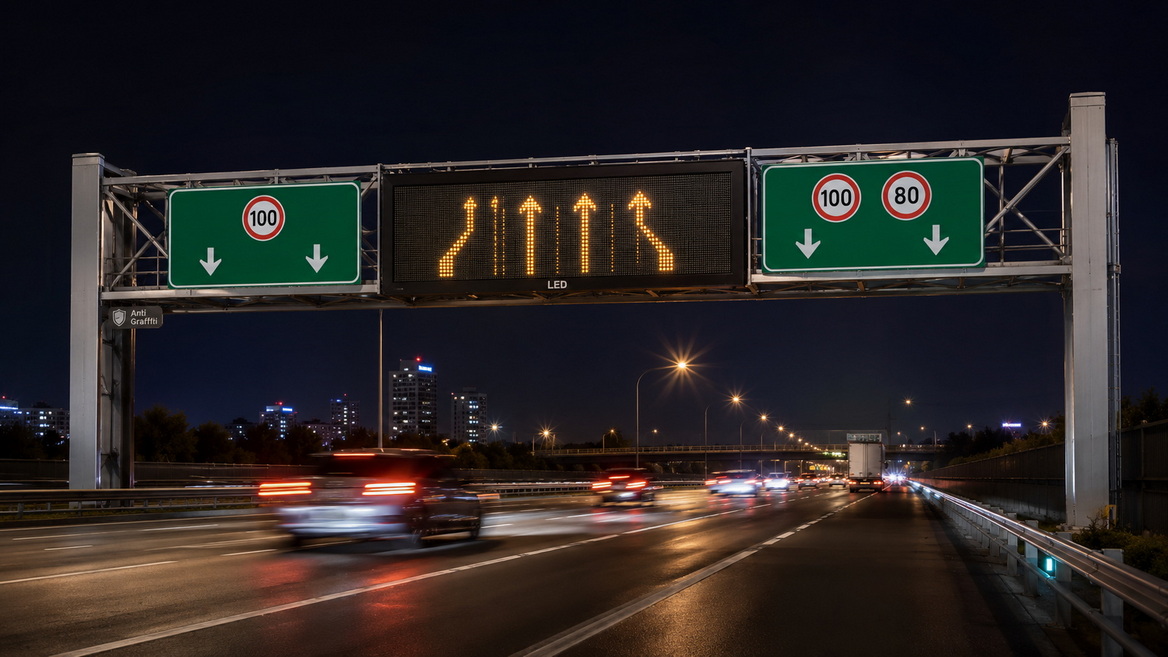
- Help LED-based lane control or variable message signs maintain a clean, professional appearance around static elements such as speed or lane-use panels.
- Standard laminates
- Perform well against UV, road spray, and dust in low-vandalism scenarios.
- Are more prone to micro-scratching and haze when aggressive cleaning is needed.
- Can start peeling at edges if installation or substrate preparation is poor, especially in humid or coastal climates.
In practice, many DOTs and concessionaires report that sign readability after 7–10 years is significantly better on assets protected with high-quality anti-graffiti systems where vandalism is common.
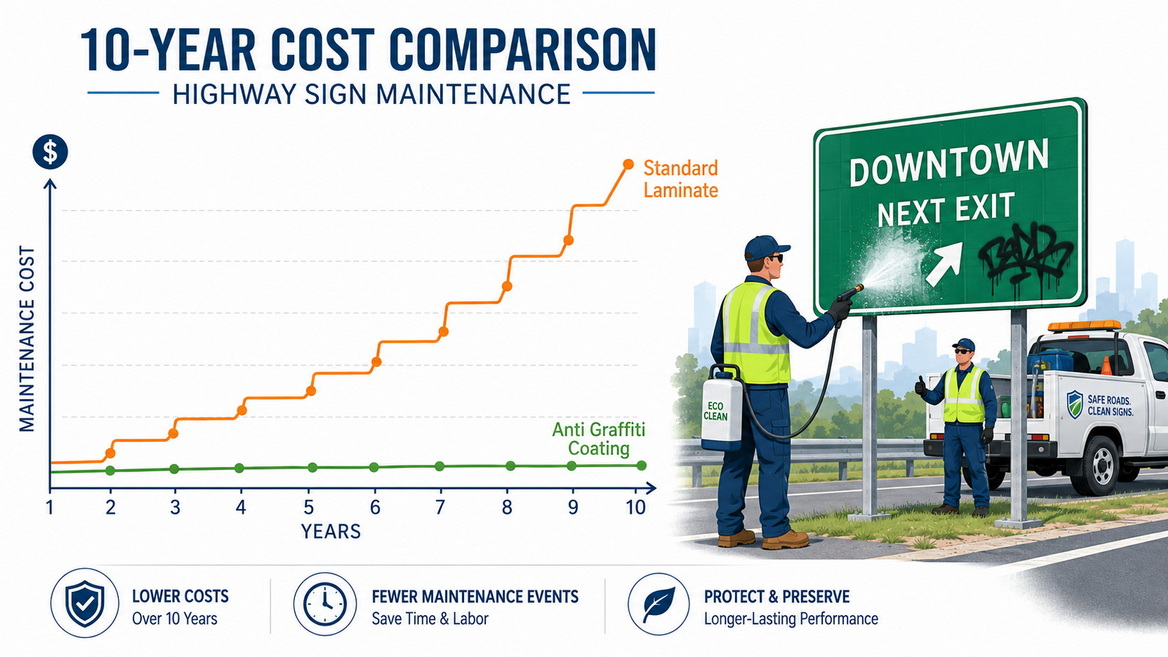
Project teams often see laminate as cheaper per square meter. However, total cost of ownership (TCO) for highway signs must also consider:
- Frequency of graffiti incidents by corridor type.
- Cost of traffic control and lane closures during cleaning.
- Labor and chemical costs for each cleaning cycle.
- Asset lifetime before retroreflectivity no longer meets standards (e. g., MUTCD or local equivalents).
In high-vandalism urban sections, the maintenance and closure costs quickly exceed the small upfront premium of anti-graffiti coatings.
For a 10-year concession on an urban expressway segment:
- Scenario A: Standard laminate
- 5 graffiti events per year per critical sign.
- After 2–3 intensive cleanings, laminate starts to fail; sign requires panel replacement.
- Scenario B: Anti-graffiti coating
- Same graffiti frequency, but most paint removed in minutes with approved cleaner.
- Coating remains functional over dozens of cycles, extending service life.
When you factor lane closures, equipment, and labor, Scenario B often delivers 15–30% lower lifecycle costs, based on industry maintenance case studies for urban freeways.
For Chinese manufacturers exporting to North America, Europe, and the Middle East, safety and regulatory compliance are critical selling points.
- Consistent retroreflectivity
Both EN 12899 and MUTCD-based standards emphasize minimum retroreflective performance. Graffiti, dirt, and ghosting directly compromise that. Anti-graffiti coatings make it far easier to maintain clean surfaces.
- Faster incident response
Road operators can dispatch small maintenance teams to clean graffiti quickly without replacing panels. This lowers the window during which critical signs are obscured or confusing to drivers.
- Reduced liability exposure
In incident investigations, operators are increasingly asked to demonstrate maintenance records and surface condition of signs. A documented anti-graffiti maintenance program can support risk mitigation.
For LED traffic signs, portals, and toll gantries, keeping surrounding static legends clean also contributes to driver trust in the electronic messages.
Drawing on typical highway, toll, and parking projects, here is a practical decision framework.
- Urban expressways, ring roads, and elevated corridors.
- Areas with known graffiti or poster activity (bridges, tunnels, underpasses).
- High-profile toll plazas, airport access roads, and tourist corridors where visual branding matters.
- Smart parking complexes and large logistics parks using LED lane indicators combined with static regulatory signs.
Here, the likelihood and impact of vandalism justify the premium of an anti-graffiti system.
- Low-traffic rural highways or agricultural roads.
- Short-term roadworks, temporary detours, or construction signage.
- Internal plant roads or closed industrial yards with controlled access.
For these environments, a high-quality standard laminate can offer adequate protection with lower initial cost, especially when combined with periodic visual inspections.
As a manufacturer focused on LED traffic signs, highway guidance, toll station, and parking solutions, you have additional design levers beyond static sheeting.
- Hybrid assemblies
Combine anti-graffiti-coated static panels (e. g., speed limits, lane arrows) with LED variable message modules in a single gantry sign.
- Modular replacement design
Use anti-graffiti coatings on the static components that are hardest to access (e. g., over-lane structures) while using standard laminate on modular, easily replaceable sections.
- OEM/ODM customization
Offer anti-graffiti as an upsell option for export clients managing high-risk corridors or premium toll concessions. This can be packaged with extended warranty and remote monitoring for LED modules.
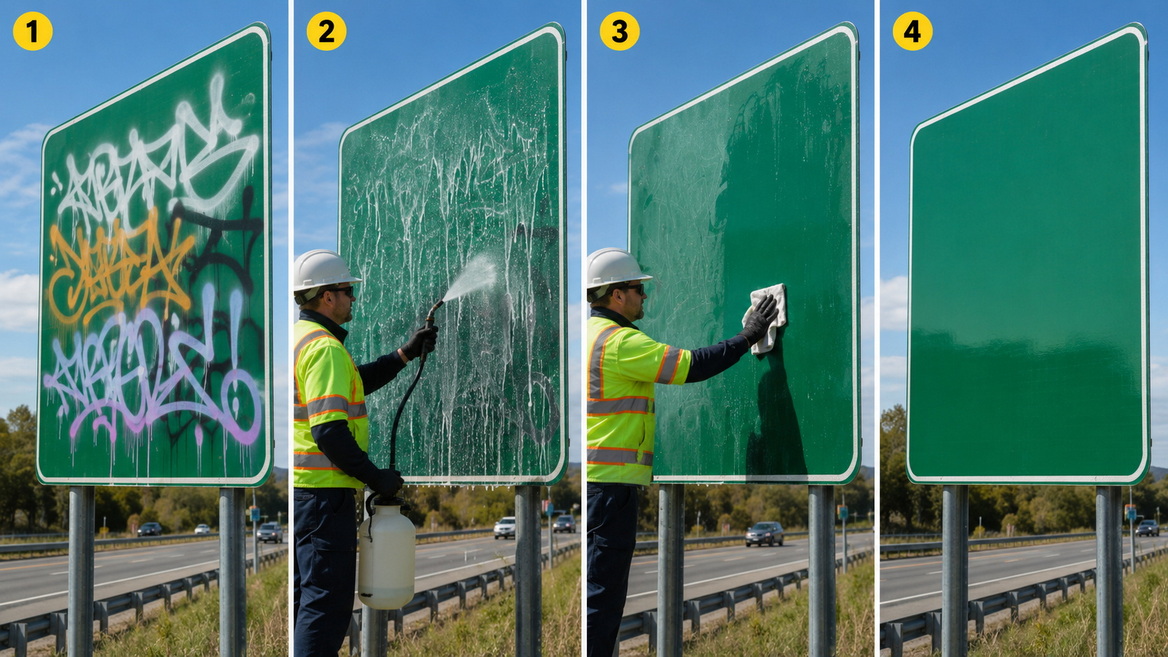
To deliver real-world value, coatings must fit into a repeatable maintenance workflow.
1. Initial inspection
Record sign ID, location, graffiti coverage, and any substrate damage.
2. Select cleaner
Use manufacturer-approved graffiti remover compatible with the coating and reflective sheeting.
3. Test a small area
Check for color fastness and ensure no dulling of the reflective surface.
4. Full cleaning
Apply cleaner, wait recommended dwell time, and gently wipe or rinse; avoid aggressive scrubbing.
5. Final check and documentation
Verify readability at day and night, log cleaning date and chemicals used for warranty and compliance records.
For standard laminate signs, similar steps apply, but you must accept that repeated aggressive cleaning will eventually require full panel replacement.
For a Chinese manufacturer like Shenzhen Xingsheng Traffic Facilities Co., Ltd., this topic is also a positioning opportunity in B2B markets.
- Segment your offer
Provide tiered configurations: standard laminate as the baseline, anti-graffiti as premium and enhanced safety options for key corridors.
- Bundle with service
Offer guidance documents, cleaning protocols, and recommended maintenance schedules as part of your OEM/ODM package.
- Leverage compliance language
Reference alignment with EN, MUTCD-based, or local specification requirements on retroreflectivity and durability.
- Support lifecycle ROI calculations
Equip your sales team with simple TCO calculators comparing anti-graffiti vs. laminate for typical highway segments.
These elements strengthen your by showing practical, experience-based understanding of asset management concerns.
You can guide engineers and procurement teams with a straightforward decision aid:
- Location risk
Is the corridor urban, suburban, or rural?
- Vandalism history
Are graffiti incidents common in nearby infrastructure?
- Access complexity
Are signs on gantries, tunnels, or bridges requiring lane closures to reach?
- Brand and aesthetics
Do stakeholders prioritize a consistently clean, premium appearance?
- Contract model
Under PPP or long-term O&M contracts, does the operator bear lifecycle risk?
If the answer is "yes" to three or more of these factors, anti-graffiti coating is typically the smarter long-term choice.
If you are planning a new highway, toll station, or smart parking project, our engineering team at Shenzhen Xingsheng Traffic Facilities Co., Ltd. can help you select the optimal balance of anti-graffiti coatings and standard laminates for your LED and static signage portfolio. Share your corridor profile and maintenance constraints, and we will prepare a tailored OEM/ODM configuration with lifecycle cost estimates and compliance documentation.
A1: High-quality systems are engineered to maintain retroreflectivity when applied at the recommended thickness and cured correctly, so any impact on night-time visibility is minimal.
A2: In some cases, yes, but compatibility tests are essential; some older laminates or sheeting types may not bond well or may haze after coating.
A3: Most leading coating suppliers test their products against major sheeting brands, but you should always confirm compatibility with both vendors before large-scale deployment.
A4: Non-sacrificial systems are designed to last for many years, even after multiple cleaning cycles, while sacrificial systems may require reapplication after intensive cleaning or as part of a scheduled maintenance program.
A5: Yes, as long as the sign's retroreflectivity and legibility meet the relevant road authority's standards; the main risk is that repeated graffiti and aggressive cleaning may shorten its compliant lifespan.
- OptSigns. "Laminate vs. Anti-Graffiti Coatings for Traffic Sign Maintenance." https://optsigns.com/traffic-sign-maintenance-laminate-vs-anti-graffiti/


