
Please Choose Your Language
Views: 222 Author: XS Traffic Facilities Publish Time: 2026-06-09 Origin: Site


Content Menu
● Why Proper LED Traffic Signal Installation Matters
● Step 1: Data Collection – When Is a Traffic Signal Really Needed?
● Step 2: Designing the Traffic Signal System Layout
>> Determine Timing Parameters
>> Physical Layout of LED Traffic Signals and Signs
>> Simulate and Evaluate the Design
● Step 3: Approvals and Coordination with Authorities
● Step 4: Preparing the Installation Site and Equipment
>> Crew Safety and Work Zone Setup
>> Foundation and Utility Preparation
● Step 5: Step‑by‑Step Installation of Traffic Signal Lights
>> 5.1 Install Traffic Signal Poles
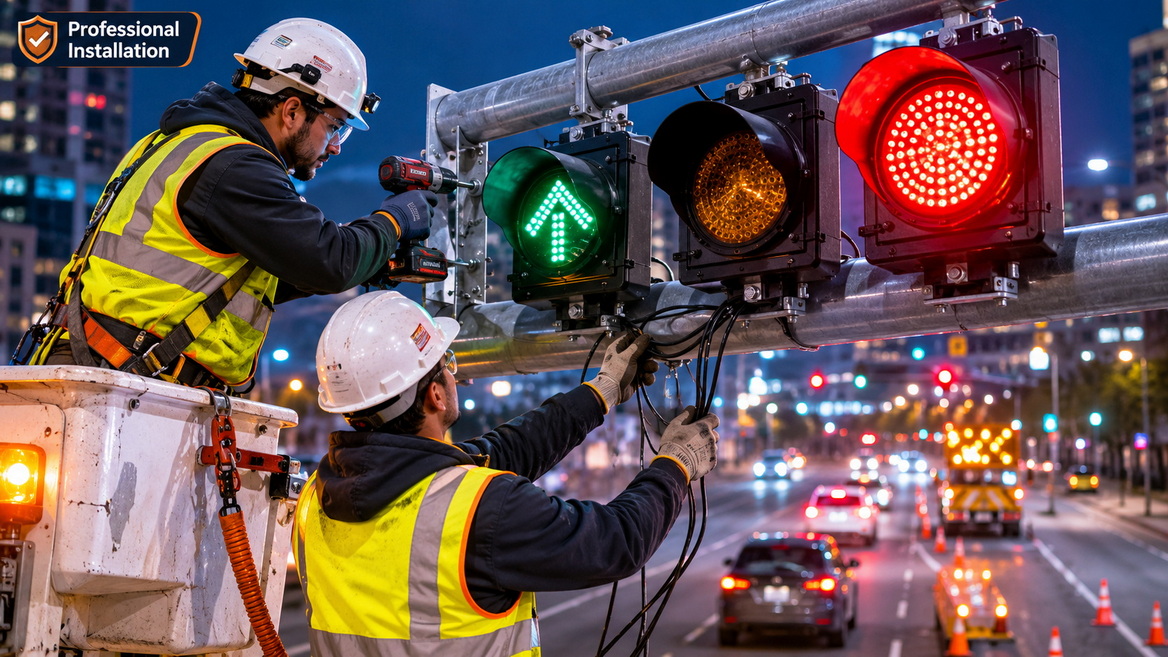
>> 5.2 Install Mast Arms and LED Signal Heads
>> 5.3 Run Wiring and Connect LED Modules
>> 5.4 Install and Program the Signal Controller
>> 5.5 Power Supply, Backup Systems, and Final Testing
● Step 6: Assigning a Signal Technician and Maintenance Planning
● Costs and Timelines: What to Expect
>> How Much Does a Traffic Light System Cost?
>> How Long Does Installation Take?
● Expert Tips for LED Traffic Signs on Highways, Toll Stations, and Parking Lots
● Common Technical Questions about LED Traffic Signal Lights
● Call to Action: Partner with an Experienced LED Traffic Signal Manufacturer
● FAQ: LED Traffic Signal Lights and Signs
>> Q1. What is the most important first step before installing a traffic signal?
>> Q2. How long do LED traffic signal modules typically last?
>> Q3. Can I retrofit existing signal heads with LED modules?
>> Q4. Do I always need a mast arm, or can I use span wire?
>> Q5. Who is usually responsible for traffic signal maintenance after installation?
Installing LED traffic signal lights and LED traffic signs is one of those projects where design, safety, and long‑term maintenance meet in a single system. Done well, it keeps intersections flowing and drivers confident; done poorly, it introduces confusion and crash risk. Drawing on my experience working with traffic safety engineers and our team at Shenzhen Xingsheng Traffic Facilities Co., Ltd., this guide walks you through the full process—from traffic studies to installation and maintenance—with practical tips that come straight from real projects.
For clarity and SEO, we'll focus on core phrases such as LED traffic signal lights, traffic signal installation, traffic light system design, and LED traffic signs for highways and parking lots, and show where each step matters in real-world deployments.
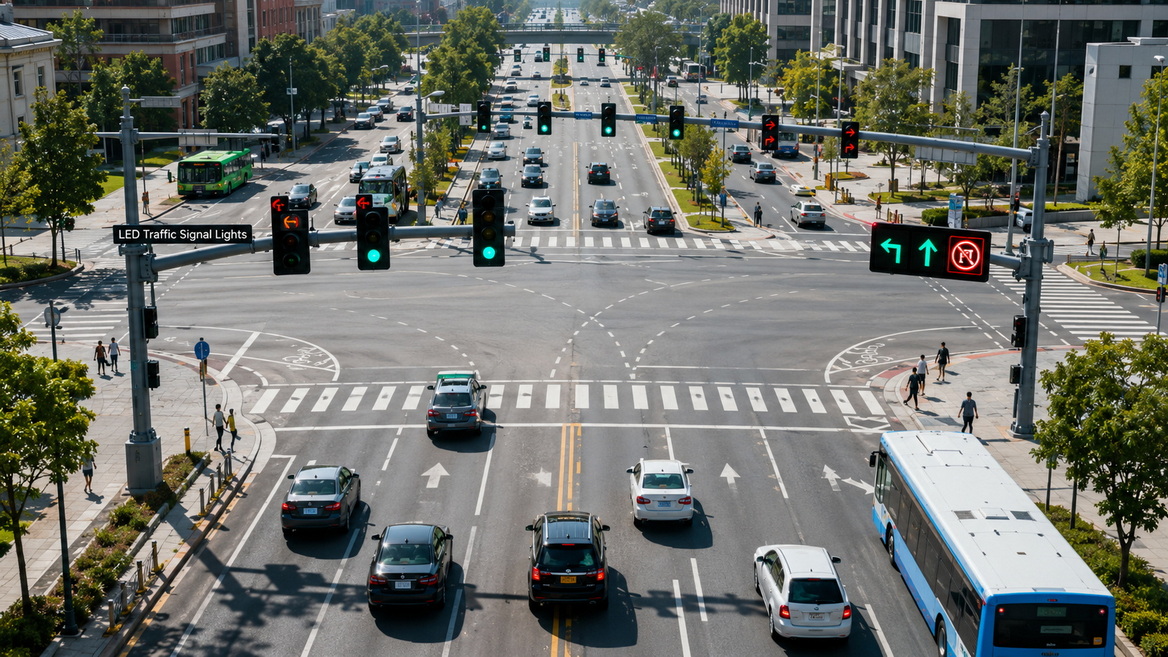
Poorly designed or installed traffic signals can cause misunderstanding between drivers, increase rear‑end collisions, and waste public funds. Modern LED traffic signal lights solve many traditional issues such as high power consumption and short lamp life, but they only perform as intended when the data collection, design, installation, and maintenance phases are handled correctly.
From a field perspective, the most common problems I see are:
- Over‑ or under‑signalization at intersections
- Signal heads hidden behind trees, signs, or poorly placed masts
- Wiring that doesn't meet local codes, causing failures or nuisance blackouts
- No clear plan for maintenance, leading to extended downtime after faults
By following the steps below, agencies and contractors can avoid these pitfalls and get the most out of their LED systems.
Before anyone drills a hole or orders hardware, traffic engineers must confirm that a traffic signal is actually warranted at the intersection. Installing a signal where it is not needed can introduce new crash patterns and driver frustration. In professional practice, I recommend a structured checklist covering at least these factors:
- Traffic volume: Count vehicles by movement (straight, left, right) across multiple time periods to estimate daily volume.
- Pedestrian and cyclist activity: Document crossing demand. At locations with schools or transit hubs, this factor often dominates.
- Crash history: Review police and insurance records for several years to identify patterns, especially angle and left‑turn crashes.
- Delays and queues: Observe side‑street delays and queue lengths during peak hours to see if a stop sign is no longer sufficient.
- School crossings: When students cross the intersection, particularly at fixed times, a signal or dedicated crossing phase is usually essential.
- Coordination with adjacent signals: New signals near existing ones must be timed and synchronized, including backup operation strategies.
- Compliance with national and local standards: Designs must follow standards like MUTCD in the U. S. or equivalent national guidance.
From an OEM/ODM manufacturer's point of view, this early phase is where we recommend specific LED signal heads, countdown timers, pedestrian push buttons, and LED traffic signs that match the warrant and environment (urban arterial vs. school zone, toll station vs. parking exit).
Once data are collected, engineers convert raw numbers into a signal design that addresses real problems instead of just adding hardware.
Using peak‑hour observations and crash data, the design team should identify:
- Movements with frequent backups or blocking (e. g., unprotected left turns)
- Pedestrian crossings with long wait times or risky gap acceptance
- Visual obstructions like trees, sign boards, and existing structures that could block LED traffic signal lights.
In my experience, field walks at different times of day (including at night and during rain) are critical. They reveal glare, unexpected reflections, and how visible your LED lenses really are under real conditions.
To calibrate timings and phases, engineers typically:
- Count vehicles per movement at various times of day
- Count pedestrians and cyclists to evaluate the need for dedicated pedestrian phases
- Conduct speed studies to understand the 85th‑percentile speed, which influences yellow and all‑red times
- Measure queue lengths at peak periods to avoid spillback into upstream intersections
The signal phasing plan defines which movements get green together and how conflicts are separated. A typical plan will:
- Separate conflicting movements into different phases (e. g., protected left)
- Add exclusive pedestrian phases where demand and risk justify it
- Allow compatible movements to share green time where safe (e. g., straight‑through and right‑turn)
After phasing, the team calculates timing parameters such as:
- Cycle length: The total time for all phases to run once
- Green time: Green duration for each movement
- Yellow (amber) time: Transition from green to red
- All‑red time: Interval when all approaches face red, allowing the intersection to clear
From our manufacturing side, we provide controllers compatible with adaptive timing and allow remote adjustments, which is increasingly important as traffic patterns evolve.
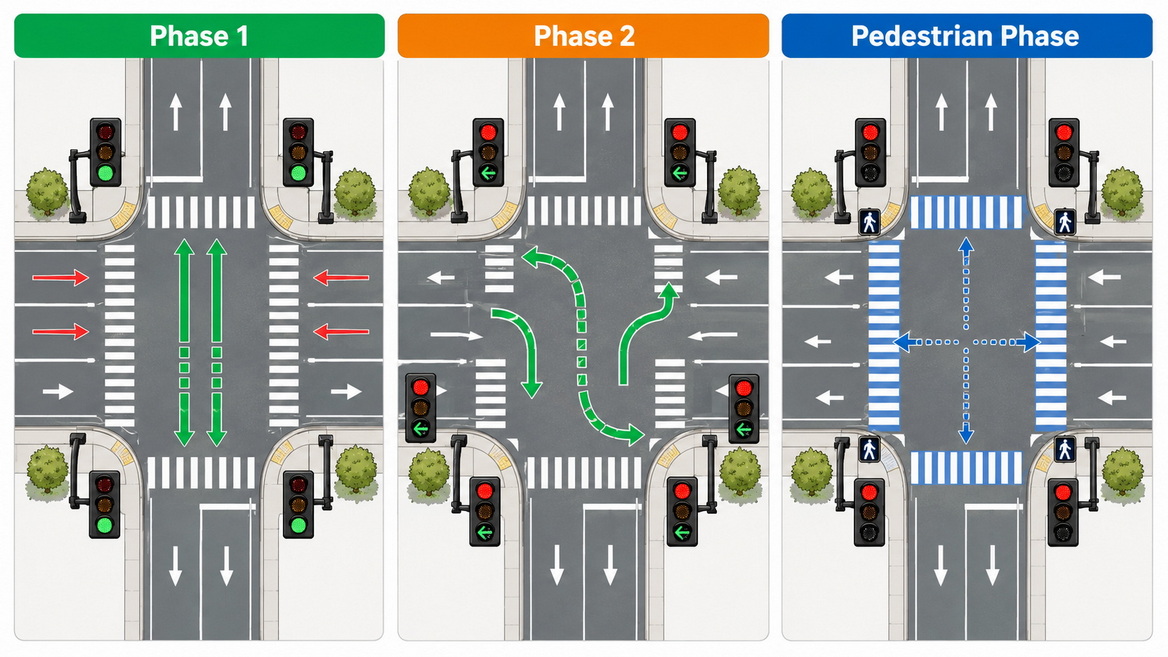
Physical placement is where engineering design meets driver psychology. Best practice includes:
- Mounting signal heads on poles and mast arms to achieve maximum visibility and compliance with clearance standards
- Positioning additional LED warning signs, speed feedback signs, or LED lane control signs to reinforce the signal, especially in complex or high‑speed approaches
- Using detection devices (loops, video detection, microwave radar) to support vehicle actuation
- Providing pedestrian push buttons and LED pedestrian signals at crossings, with accessible placement
Although not always mandatory, many agencies now simulate the proposed design using professional traffic modeling software. This step allows engineers to test different cycle lengths, phasing options, and queue behavior before committing to construction. Based on results, they may adjust lane markings, detection locations, or signal timings for better performance.
With a complete design, the next step is obtaining formal approval from local or regional transportation authorities. In countries like the U. S., U. K., Canada, and Australia, engineers prepare a detailed design brief and submit all plans and calculations for review.
Authorities verify that:
- All warrants are met and justified
- Designs follow national and local standards
- Safety, accessibility, and environmental requirements are addressed
Only after approval and funding allocation should procurement and installation proceed, which is where a reliable OEM/ODM partner for LED traffic signals becomes crucial for on‑time delivery and compliance.
Once approvals are in place, contractors can schedule traffic signal installation. Because the work occurs on active roadways, safety is paramount.
On‑site, I insist on the following as non‑negotiable basics:
- All crew members wear high‑visibility ANSI Type R Class 3 vests, hard hats, safety glasses, gloves, and steel‑toed boots.
- Work zone is protected by cones, barriers, and advance warning signs to redirect traffic safely around the site.
- Any vehicles used are parked off the travel lane and in the direction of traffic, with proper beacons.
A typical site preparation sequence includes:
1. Locate and mark underground utilities to prevent damage during excavation.
2. Excavate foundations for signal poles as per design depth and diameter.
3. Pour concrete bases and let them cure—often up to 28 days—before mounting poles.
For street and regulatory signs, poles are often embedded 1.5–3 feet below ground, with installation height around 5 feet in rural areas and 7 feet in urban or residential environments.
A complete LED traffic signal installation kit usually includes:
- Signal poles and mast arms
- LED signal heads and backplates
- Controller cabinets and conflict monitor units
- Conduits, wiring, and junction boxes
- Detection systems (loops, radar, or video)
- Aerial lifts or bucket trucks for overhead work
From a manufacturer's standpoint, supplying pre‑assembled LED modules, pre‑wired signal heads, and labeled harnesses can significantly reduce installation time and wiring errors.
With foundations cured and materials on site, the installation sequence typically follows these phases.
Before erecting poles, confirm that:
- Concrete foundations are fully cured (often 28 days)
- Anchor bolts are positioned and aligned to specification
Then:
1. Install leveling nuts on anchor bolts and set the baseplate at the desired elevation.
2. Use a crane or lift to position the pole on the leveling nuts.
3. Install washers and nuts above the baseplate and tighten to secure the pole.
4. Check plumb using a level and adjust leveling nuts as needed.
5. Fill the gap between baseplate and foundation with non‑shrink grout to add stability and prevent water ingress.
After vertical poles are in place:
1. Inspect mast arms for damage and verify that all mounting hardware is present.
2. Align the mast arm with the pole bracket and loosely secure it with bolts.
3. Adjust to the specified angle to ensure level alignment.
4. Tighten bolts to the manufacturer's torque specifications.
5. Mount the LED traffic signal heads, brackets, and clamps, and adjust their orientation for optimal visibility at the stop line.
Wiring is the backbone of reliable operation and must comply with local electrical codes.
- Pull wires from the controller cabinet through conduits to each signal head.
- Inside each head, connect wires to the proper terminals using terminal blocks and crimp connectors.
- Label cables and circuits to simplify future maintenance.
- Test each signal head to confirm correct operation before final closing.
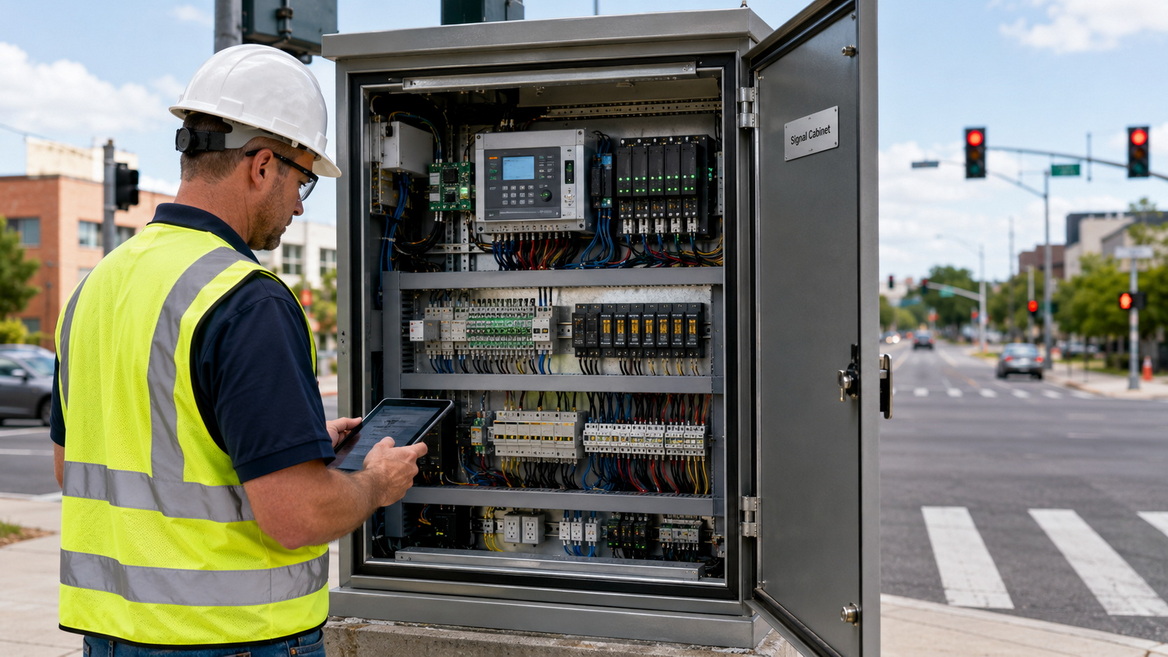
The controller is usually mounted in a dedicated cabinet on a concrete pad near the intersection.
1. Mount the cabinet and ensure it is level and securely anchored.
2. Connect it to a properly grounded and surge‑protected power source.
3. Install the traffic signal controller, conflict monitor unit, and other components inside the cabinet.
4. Terminate field wires from signal heads and detection devices at the appropriate terminals.
5. Program signal timings based on the earlier design: cycle length, green times, yellow intervals, and all‑red times.
6. Run the controller in test mode to verify that all phases and sequences operate as intended.
A certified electrical engineer should connect the system to the grid and, if required, to an uninterruptible power supply (UPS).
- Test both main power and UPS to ensure continuity during outages.
- Conduct a comprehensive functional test, including all signal heads, pedestrian signals, detectors, and communications.
- Coordinate with authorities for a final inspection and approval before opening to full public use.
All test results and inspection reports should be archived for compliance and future troubleshooting.
Even the best LED traffic signal system will fail without ongoing maintenance. Agencies should appoint a qualified signal technician or team to:
- Perform routine inspections and cleaning of lenses and housings
- Verify controller configurations and logs
- Monitor and replace aging LED modules as they approach end of life
- Respond quickly to faults, blackouts, or damage from crashes or weather
Professionally, I see the lowest total cost of ownership when agencies combine high‑quality LED hardware with a clear preventive maintenance schedule, rather than waiting for failures.
A fully installed traffic signal system—including signal heads, poles, controllers, detection, and labor—typically ranges from USD 200,000 to 500,000, depending on complexity, brand, and location. Annual maintenance and electricity costs are often around USD 6,000–8,000 per intersection.
As an OEM/ODM manufacturer, we help agencies optimize costs by:
- Providing efficient LED modules that reduce energy and operating expenses
- Offering integrated solar LED flashers and LED traffic signs for locations with limited power
- Designing modular systems that simplify upgrades and reduce long‑term lifecycle costs
From first study to switch‑on, a complete project can take several months to over a year because it includes:
- Engineering studies and data collection
- Design, simulation, and approvals
- Procurement, foundation curing, and equipment delivery
- On‑site construction and testing
This is why early engagement with both traffic engineers and manufacturers is critical for realistic scheduling.
Beyond conventional intersections, LED traffic signs add value in many environments we serve:
- Highways: High‑brightness LED variable message signs (VMS), lane control signs, and speed feedback signs improve compliance at higher speeds.
- Toll stations: LED lane open/closed indicators, fee display panels, and directional LED arrows help reduce confusion and queue times.
- Parking lots and complexes: LED guidance signs, dynamic parking availability displays, and low‑mount LED arrows improve circulation in tight spaces.
From a design standpoint:
- Use high‑contrast layouts and standard pictograms to support quick recognition.
- Ensure mounting heights and viewing angles align with approach speeds and driver eye positions.
- In outdoor environments, select IP‑rated enclosures, anti‑UV housings, and anti‑vandal fasteners to protect LED modules and electronics.
Engineers and facility managers often ask very similar questions when planning projects. Based on industry data and our experience:
- A typical 3‑section, 12‑inch LED signal head can cost around USD 800, while 5‑section heads may cost around USD 1,300, excluding installation.
- A 4‑way traffic light assembly may range roughly USD 820–860, depending on features and whether it is new or refurbished, again excluding infrastructure costs.
- Microcontroller platforms such as Arduino are useful for lab simulations of signal logic and detector interaction, but they are not suitable or certified for controlling real public intersections.
If you are planning a new traffic signal installation or upgrading from incandescent to LED systems, choosing the right partner is as important as the design. As a specialized Chinese manufacturer, Shenzhen Xingsheng Traffic Facilities Co., Ltd. provides:
- OEM and ODM services for LED traffic signal lights, LED traffic signs, and integrated traffic safety solutions
- Custom configurations for highways, city intersections, toll stations, and parking facilities
- Support for international standards and documentation to help you pass local approvals
Share your intersection drawings, photos, or project requirements with our engineering team, and we will recommend a complete LED traffic signal and LED sign solution tailored to your environment and budget.
A1. The first step is a formal data collection and warrant study to confirm that a signal is needed, based on traffic volumes, crash history, pedestrian demand, and local guidelines.
A2. While lifetimes vary by brand and operating conditions, LED modules are designed for significantly longer service life than incandescent bulbs and lower energy consumption, which reduces maintenance cycles and operating costs.
A3. In many cases, yes. Existing housings can be upgraded to LED modules if they meet dimensional and electrical compatibility, but all changes must still comply with local standards and be tested carefully.
A4. Mast arms are common for new and high‑volume intersections, while span wire is often used for retrofit projects, narrow intersections, or cost‑constrained sites; both must meet visibility and structural requirements.
A5. Maintenance is typically handled by a signal technician employed by the local transportation agency or a contracted service provider who performs inspections, repairs, and periodic upgrades.
1. Jackwin Safety. "Guide to Traffic Signal Lights Installation." https://jackwinsafety.com/traffic-signal-lights-installation/
2. Cat Rental Store. "Guide to Traffic Light Installation." https://rent.cat.com/en_US/blog/traffic-light-installation.html
3. StreetSigns. com. "Sign Installation Guide." https://www.streetsigns.com/sign-installation-guide
4. PacLights. "A Comprehensive Guide to LED Business Sign Installation and Maintenance." https://www.paclights.com/learning-center/a-comprehensive-guide-to-led-business-sign-installation-and-maintenance/
5. China Intelligent Transportation Association (CITSA). "Technical requirements for information interaction in typical signal control scenarios in a connected environment (draft)." https://www.its-china.org.cn/uploads_file/20240627/20240627162857_199.pdf


