
Please Choose Your Language
Views: 222 Author: XS Traffic Facilities Publish Time: 2026-06-07 Origin: Site


Content Menu
● What "Road Work Ahead" Really Means
● Core Difference: Passive vs Active Warning
● Functional Comparison: Road Work Ahead Sign vs LED Traffic Signs
>> Functional Features Overview
● Where Road Work Ahead Signs Excel
● Where LED Traffic Signs Deliver Extra Value
● Design & Compliance: Best Practices from the Field
>> For Road Work Ahead Sign Setups
>> For LED Traffic Sign Deployments
● Expert Case Insight: Integrating LED Signs into Work Zones
● Practical Selection Guide for B2B Buyers
>> When a Standard Road Work Ahead Sign Is Enough
>> When You Should Add LED Traffic Signs
● Implementation Checklist for Safer Work Zones
● Call to Action for B2B Buyers
● FAQs
>> 1. Is a Road Work Ahead sign still required if I use LED message signs?
>> 2. Can LED traffic signs display the Road Work Ahead message?
>> 3. Are LED traffic signs suitable for low‑speed urban work zones?
>> 4. How do LED traffic signs affect driver behavior?
>> 5. What should I look for in an OEM/ODM LED traffic sign partner?
A "Road Work Ahead" sign is a temporary, text‑based work‑zone warning, while LED traffic signs are programmable, high‑visibility devices used for a wide range of permanent and temporary traffic control applications. Understanding how these two types of signs differ—and how they can complement each other—is essential for safer highways, toll stations, and parking facilities.
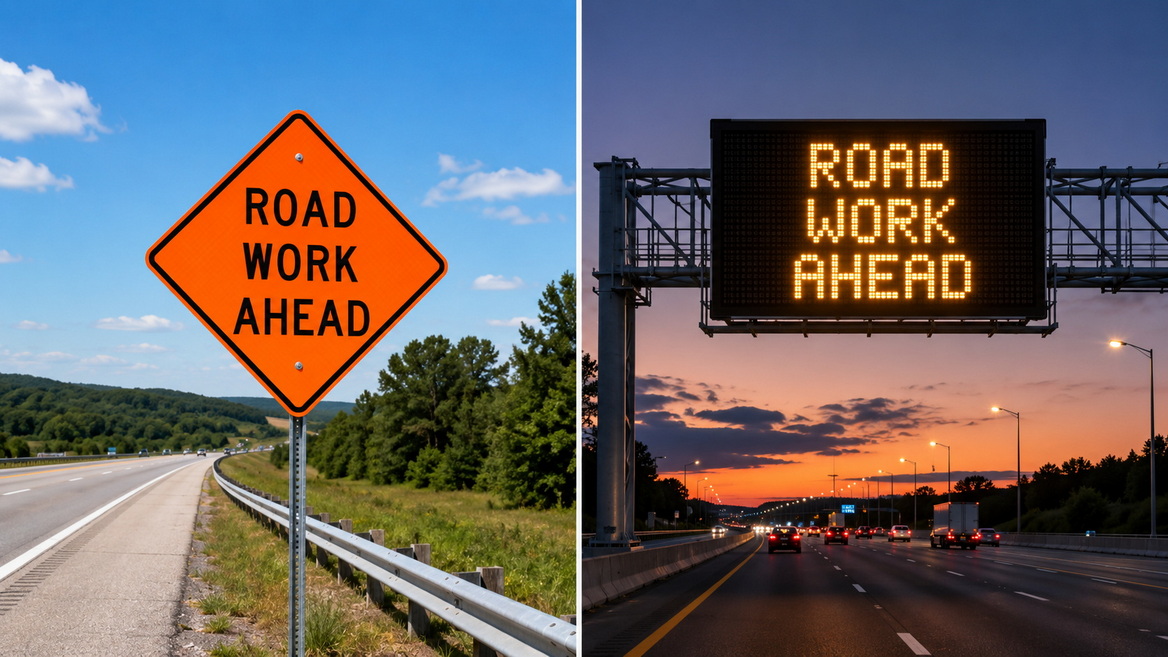
The "Road Work Ahead" (W20‑1) sign is an official advance warning sign defined by the MUTCD, used to alert drivers that construction, maintenance, or utility work is taking place on or near the roadway ahead. It tells drivers that normal driving conditions will change, and they must reduce speed, increase following distance, and prepare for lane shifts, flaggers, or workers on the road.
On high‑speed roads and freeways, this sign is typically placed 500–2,640 feet before the actual work zone, giving drivers time to react safely. It is usually a retroreflective orange diamond sign, sized from 30 × 30 inches on low‑speed roads up to 48 × 48 inches or larger on high‑speed facilities.
LED traffic signs are signs that integrate light‑emitting diodes into the sign face or housing to actively illuminate or flash key messages, symbols, or borders. They are used to improve visibility, especially at night, in bad weather, or in complex environments like toll plazas and parking structures.
These signs can be static (always displaying the same symbol) or programmable, showing different messages such as lane status, speed limits, warnings, or parking availability. Many modern LED traffic signs are also solar‑powered, reducing energy consumption and simplifying installation in remote road or highway locations.
A traditional "Road Work Ahead" sign is a passive, static warning that depends on retroreflective sheeting and available light. In contrast, LED traffic signs provide an active, self‑illuminated warning that can flash, dim, or change content in real time.
From an industry perspective:
- Road Work Ahead sign
- Fixed wording, fixed position, fixed meaning.
- Visibility depends on headlights and ambient light.
- LED traffic sign
- Dynamic message capability; can show "ROAD WORK AHEAD," speed limits, lane closures, or detours on a single device.
- High‑intensity LEDs increase detection distance and legibility.
Research on sign comprehension and visibility shows that larger and brighter signs improve information acquisition and driver response, which is exactly the gap LED technology is designed to fill.
Below is a practical, B2B‑oriented comparison for road authorities, EPC contractors, and parking/toll operators.
For many projects, the optimal approach is not choosing one or the other but integrating both: use a standard "Road Work Ahead" sign to meet baseline MUTCD requirements, and reinforce critical locations with LED traffic signs or LED‑enhanced borders.
From the standpoint of a traffic safety engineer, traditional work‑zone signs remain the regulatory backbone of temporary traffic control.
Key strengths include:
- Universal meaning and standardization – The W20‑1 "Road Work Ahead" symbol and wording are widely recognized, consistently defined in national standards, and supported by decades of driver education.
- Low cost and rapid deployment – For routine maintenance or short‑duration works, crews can deploy sets of temporary signs quickly using portable supports.
- Clear spacing rules – MUTCD and guidance documents define spacing by speed and road type—for example 500–1,500 feet on high‑speed roads or up to 2,640 feet on freeways.
On most major projects, the "Road Work Ahead" sign is the first device in a sequence that might include "RIGHT LANE CLOSED," speed reduction, and "END ROAD WORK" signs.
From a manufacturer's and integrator's point of view, LED traffic signs add a higher level of risk control and operational flexibility beyond standard plates.
Key advantages:
- Superior visibility in critical conditions
Bright LEDs and flash patterns increase conspicuity at night, in tunnels, during heavy rain, or at complex nodes like toll stations.
- Dynamic, real‑time communication
Operators can adjust messages remotely—e. g., from "ROAD WORK AHEAD" to "LANE 2 CLOSED" or "USE LEFT LANE"—based on actual work‑zone status, queues, or incidents.
- Multi‑scenario usage
The same LED sign hardware can support: ramp metering, parking guidance, reversible lanes, oversize‑vehicle warnings, and variable speed limits, increasing lifecycle ROI.
Studies on sign comprehension highlight that better legibility and clearer symbols significantly improve driver understanding, which is one of the primary benefits of well‑designed LED icons and messages.
Work‑zone safety guidelines emphasize systematic temporary traffic control plans (TCPs) and correct sign sequences.
When designing a work‑zone scheme:
1. Start with a TCP that considers speed, volume, work duration, and pedestrian presence.
2. Use "ROAD WORK AHEAD" as the first warning sign in the advance‑warning area, followed by lane closure and speed signs as needed.
3. Size and place signs based on speed: for example, 48 × 48 inch signs with at least 7‑inch letters on roads 35 mph and above.
4. Maintain the signs daily—they must be clean, upright, and retroreflective to retain authority and visibility.
For LED traffic signs on highways, toll stations, and parking facilities:
1. Follow MUTCD and local standards for sign color, legends, symbol design, and placement height.
2. Specify adequate luminance and dimming so signs are bright enough in daytime but not glaring at night.
3. Use simple, tested messages and icons—research shows that complexity and unfamiliar symbols reduce comprehension.
4. Integrate with sensors and control systems, such as work‑zone detection, queue warning, or parking occupancy monitoring, to automate message changes.
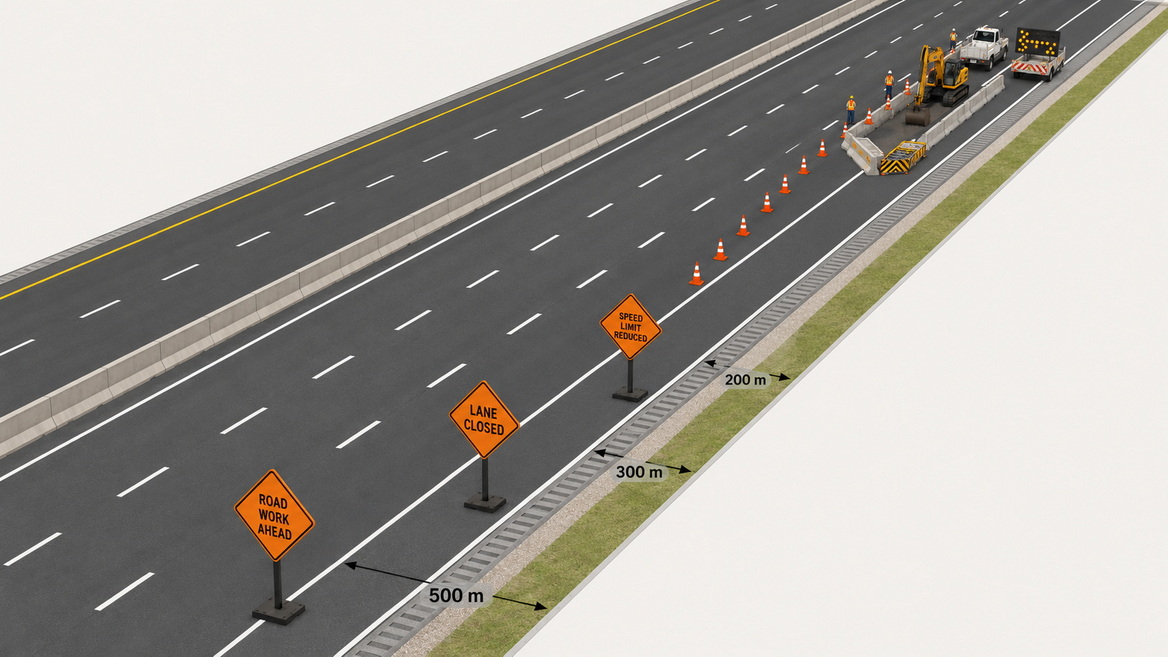
In practice, many agencies are moving from purely static work‑zone signing toward hybrid solutions that blend standard signs with LED technology.
A typical highway maintenance project might use:
- A conventional "ROAD WORK AHEAD" sign sequence placed 500–1,500 feet before the work area, meeting baseline MUTCD prescription.
- Portable LED message boards or LED "ROAD WORK AHEAD / EXPECT DELAYS" signs near lane drop points or queue locations.
- LED arrow boards and lane control signs to guide vehicles around the work area and through narrow sections.
This integrated approach delivers:
- Higher driver compliance with speed reductions and lane changes.
- Better visibility at night or in poor weather conditions.
- The ability to update messages as the work zone shifts or traffic conditions change, without adding extra static signs.
For a manufacturer like Shenzhen Xingsheng Traffic Facilities Co., Ltd., capable of providing OEM/ODM LED traffic signs and related safety devices, this hybrid model opens opportunities to supply customized LED work‑zone solutions alongside traditional signage packages for international clients.
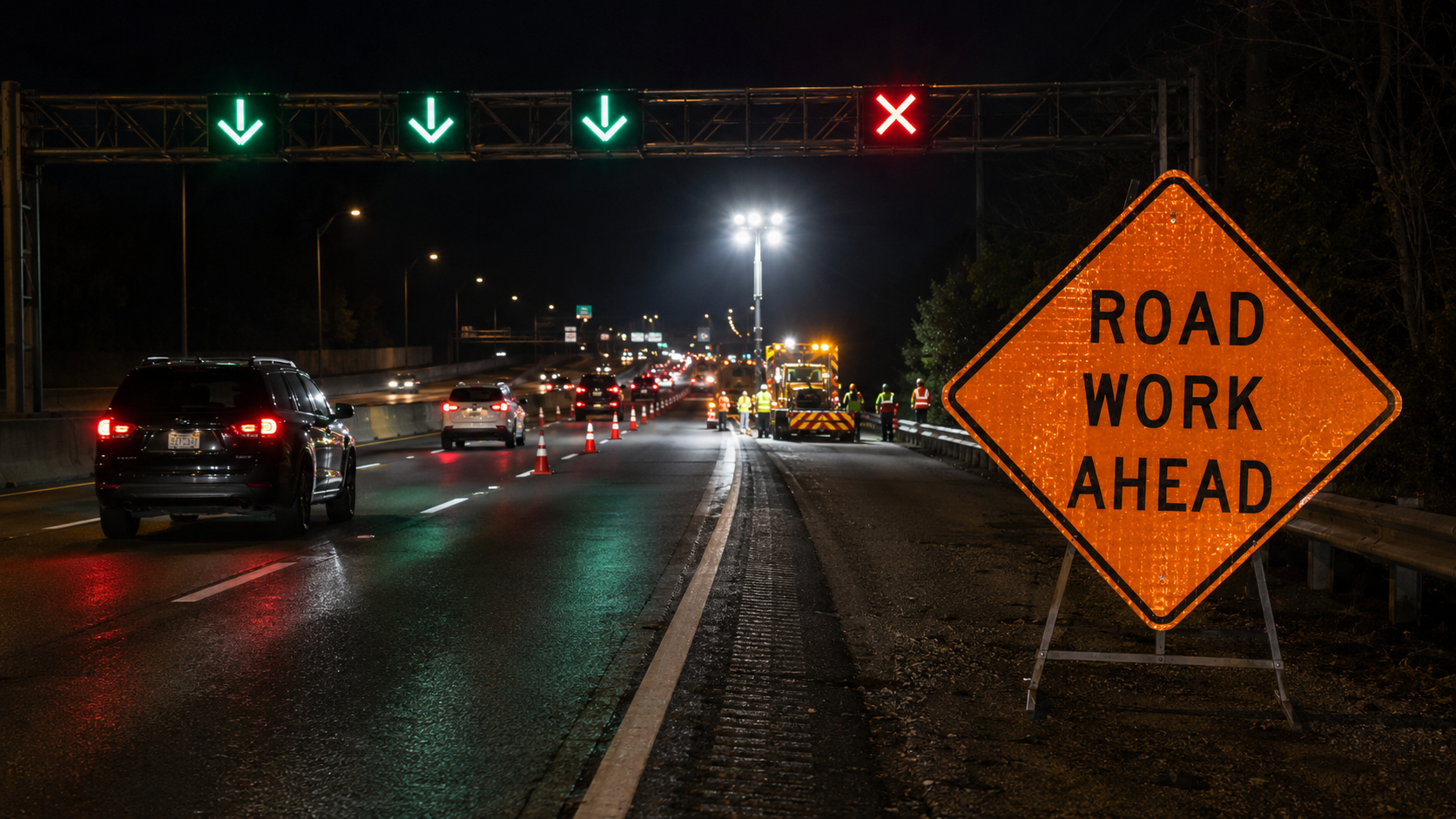
From a project‑owner or contractor's viewpoint, both sign types have clear roles. Below is a simple decision framework.
Choose mainly conventional work‑zone signs when:
- The project is short‑term and low complexity, such as minor utility work or short‑duration lane closures.
- Night work is limited and road lighting is adequate.
- Budget is tight and there is no central traffic management system.
Invest in LED traffic signs when:
- Work zones are on high‑speed roads, freeways, or complex interchanges, where early and clear warnings are critical.
- There are night‑time or adverse weather operations, tunnels, or constrained visibility.
- Your organization operates toll stations, tunnels, or multi‑level parking structures that require continuous, dynamic traffic control.
- You need remote monitoring and control, integrating signage with intelligent transport systems (ITS).
For international B2B buyers, partnering with a specialized manufacturer that can supply both LED traffic signs and standard traffic safety devices under OEM/ODM terms simplifies procurement and ensures technical compatibility across the system.
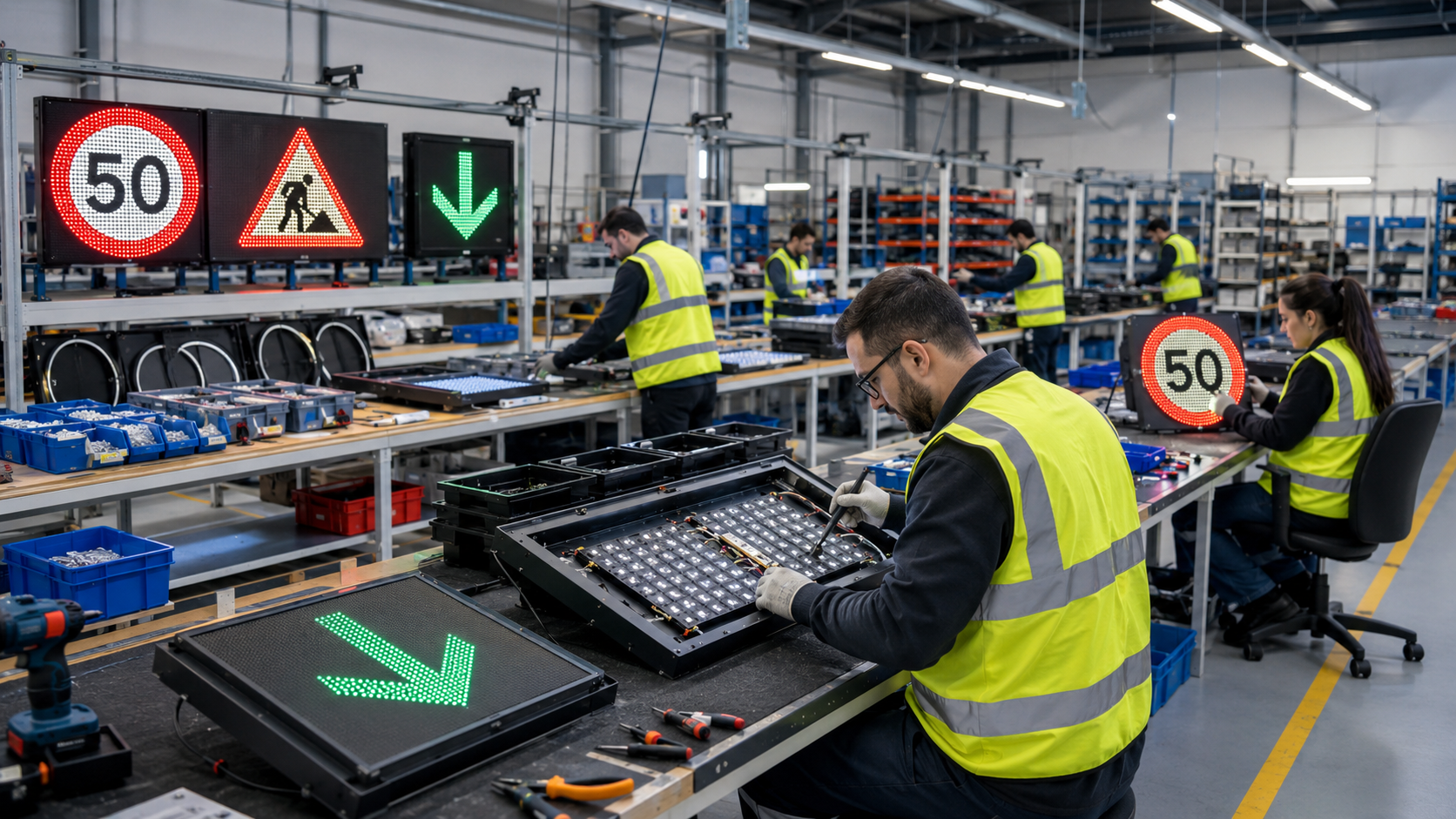
To translate this comparison into action, traffic engineers and contractors can follow these steps:
1. Audit existing work‑zone sign setups
- Verify that "ROAD WORK AHEAD" signs are present, correctly spaced, and correctly sized for each road type.
2. Identify high‑risk locations
- Pinpoint high‑speed segments, curves, tunnels, toll plazas, and night‑work locations where static signs may be insufficient.
3. Add LED reinforcement where it matters most
- Use LED message signs, arrow boards, or LED‑bordered warning signs at critical decision points to boost visibility and compliance.
4. Standardize messages and icons
- Ensure text and symbols used on LED signs follow MUTCD‑compliant wording and have been tested for comprehension.
5. Work with a capable OEM/ODM partner
- Specify custom LED traffic signs that match your local regulations, languages, mounting standards, and power constraints, and integrate them into your existing TCP templates.
If you are planning a road, highway, toll station, or parking project, now is the time to upgrade from basic "Road Work Ahead" signs to a hybrid system that combines standardized temporary signage with high‑visibility LED traffic signs.
By partnering with a specialized Chinese manufacturer like Shenzhen Xingsheng Traffic Facilities Co., Ltd. for OEM and ODM LED traffic signs, solar warning signs, and related traffic safety products, you can:
- Improve safety and compliance in your work zones and permanent facilities.
- Reduce long‑term maintenance and energy costs through LED and solar solutions.
- Customize designs to meet your local standards, languages, and project branding.
You can now review your upcoming projects and specify where LED traffic signs should complement your Road Work Ahead sign strategy, then contact your preferred supplier to discuss a tailored solution.
Yes. In most jurisdictions, the W20‑1 "Road Work Ahead" sign and related temporary signs are still required as part of MUTCD‑compliant work‑zone setups, even when LED message signs are used.
Yes. Many LED traffic signs and portable changeable message signs can display text like "ROAD WORK AHEAD," lane closure messages, and speed advisories, allowing more detailed and dynamic communication.
They can be, especially at complex intersections or night‑time works, but static signs may be sufficient for very short, low‑risk projects; a risk assessment should guide the investment.
Studies on sign visibility and information volume show that brighter, more conspicuous signs improve information acquisition and can support faster, safer driver responses when designed correctly.
Look for proven experience in LED traffic control products, compliance with MUTCD or equivalent standards, support for solar and grid power, and the ability to customize housings, optics, communication protocols, and languages.
- Federal Highway Administration – Manual on Uniform Traffic Control Devices (MUTCD): United States Road Symbol Signs.
https://mutcd.fhwa.dot.gov/services/publications/fhwaop02084/us_road_symbol_signs.pdf
- AQC Traffic – Road Work Ahead Sign: What It Means & Why It Matters.
https://www.aqctraffic.com/blog/road-work-ahead-sign-meaning
- Weekly Safety – Work Zone Temporary Traffic Control Sign Requirements.
https://weeklysafety.com/blog/work-zone-temporary-traffic-control-signs
- Traffic Safety Store – Best Practices for Compliant Work Zone Setup Under 2025 MUTCD Standards.
- SafetySign. com – LED Traffic Control Signs.
https://www.safetysign.com/led-traffic-control-signs
- Signal-Tech – Why Invest in LED Traffic Signs?
https://www.signal-tech.com/information-center/news-and-articles/Why-Invest-in-LED-Traffic-Signs
- NCBI – Analysis of Traffic Signs Information Volume Affecting Driver's Cognitive Load.
https://pmc.ncbi.nlm.nih.gov/articles/PMC9408178/
- ScienceDirect – Traffic Sign: An Overview.
https://www.sciencedirect.com/topics/social-sciences/traffic-sign
- Nature – Comparative Investigation of Safety Signs Comprehensibility.
https://www.nature.com/articles/s41598-023-38065-1
- AQC Traffic – Construction Signs 101: Guide to Work Zone Signage.
https://www.aqctraffic.com/blog/understanding-construction-signs


