
Please Choose Your Language
Views: 222 Author: XS Traffic Facilities Publish Time: 2026-06-05 Origin: Site


Content Menu
● What Is a Rubber Wall Guard Bumper?
● Common Materials Used in Wall Guards
>> Rubber (Natural and Recycled)
>> PVC and Vinyl Wall Protection
>> Metal Backing and Hybrid Systems
● Key Benefits of Rubber Wall Guards
>> Durability and Impact Performance
>> All‑Weather and Chemical Resistance
>> Lower Maintenance and Noise Reduction
● Main Types of Rubber Wall Guards and Corner Protectors
>> Heavy‑Duty Rubber Bumper Guards
>> Dock Bumpers for External Walls
>> Decorative and Branded Guards
● Where Rubber Wall Guards Deliver the Greatest Value
>> Parking Garages and Basement Car Parks
>> Warehouses and Logistics Centers
>> Hospitals, Clinics, and Healthcare Facilities
>> Schools, Universities, and Sports Facilities
>> Industrial and Manufacturing Facilities
● Rubber Wall Guard vs PVC Wall Guard: Expert Comparison
● Market Trends and Safety Design Insights
● Step‑by‑Step Installation Guidelines
● Rubber Wall Guard Pricing Overview
● Why Work with a Professional OEM/ODM Manufacturer in China
● Practical Design Tips from the Field
● Call to Action: Plan Your Next Parking Lot Safety Upgrade
● FAQs About Rubber Wall Guards
>> 1. Are polyurethane wall guards the same as rubber guards?
>> 2. Do I really need car door wall protectors in a private or residential garage?
>> 3. When should I choose corner guards instead of flat wall guards?
>> 4. How do I decide between rubber and PVC for a mixed‑use project?
>> 5. How often should rubber wall guards be replaced?
From my experience working with parking lot safety projects, the facilities that control collision damage best all have one thing in common: they use purpose‑designed wall protection systems instead of relying on paint and concrete alone. Rubber wall guards and corner protectors are at the heart of those systems.
In this guide, I'll explain what rubber wall guards are, where they work best, how they compare to PVC and other materials, typical pricing, installation tips, and how to partner with a professional Chinese manufacturer for OEM and ODM projects.
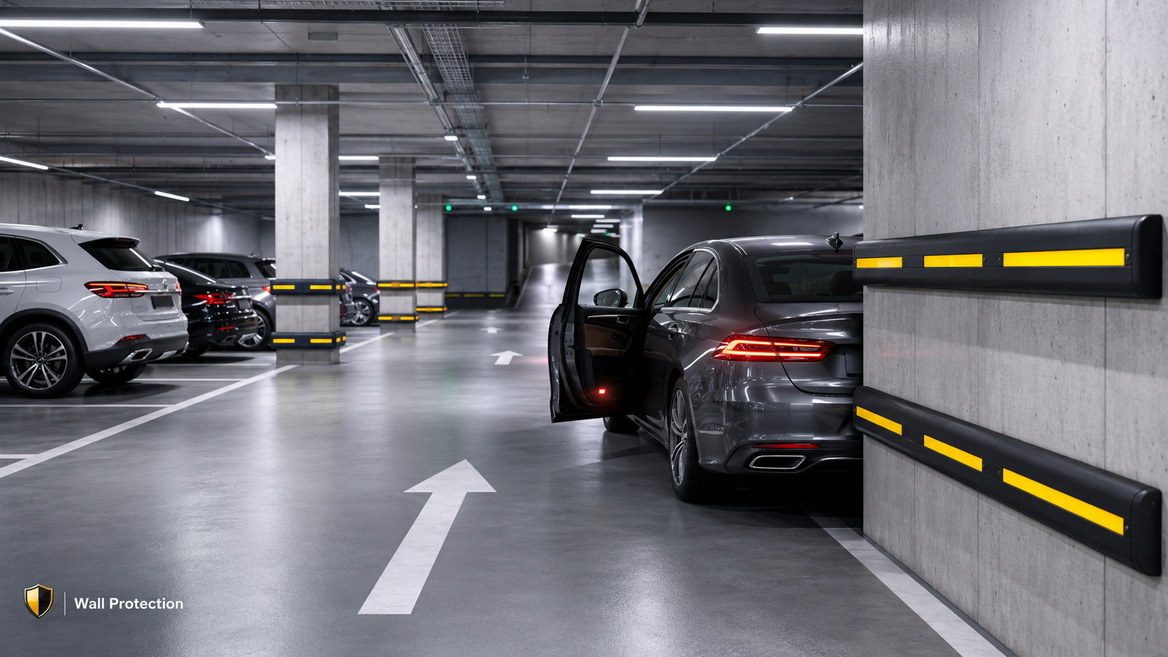
A rubber wall guard bumper is a shock‑absorbing strip or profile installed along walls, columns, or corners to protect them from impacts caused by vehicles, trolleys, carts, forklifts, hospital beds, and other moving equipment. It acts as a sacrificial barrier that deforms on impact and then returns to shape, instead of allowing the wall to chip, crack, or spall.
In practical terms, this means fewer repainting cycles, lower repair costs, and a cleaner, more professional environment for users of your parking garage, warehouse, or public building. Rubber wall guards are especially effective in tight spaces such as underground parking lots and loading bays, where low‑speed collisions are frequent but usually go unreported.
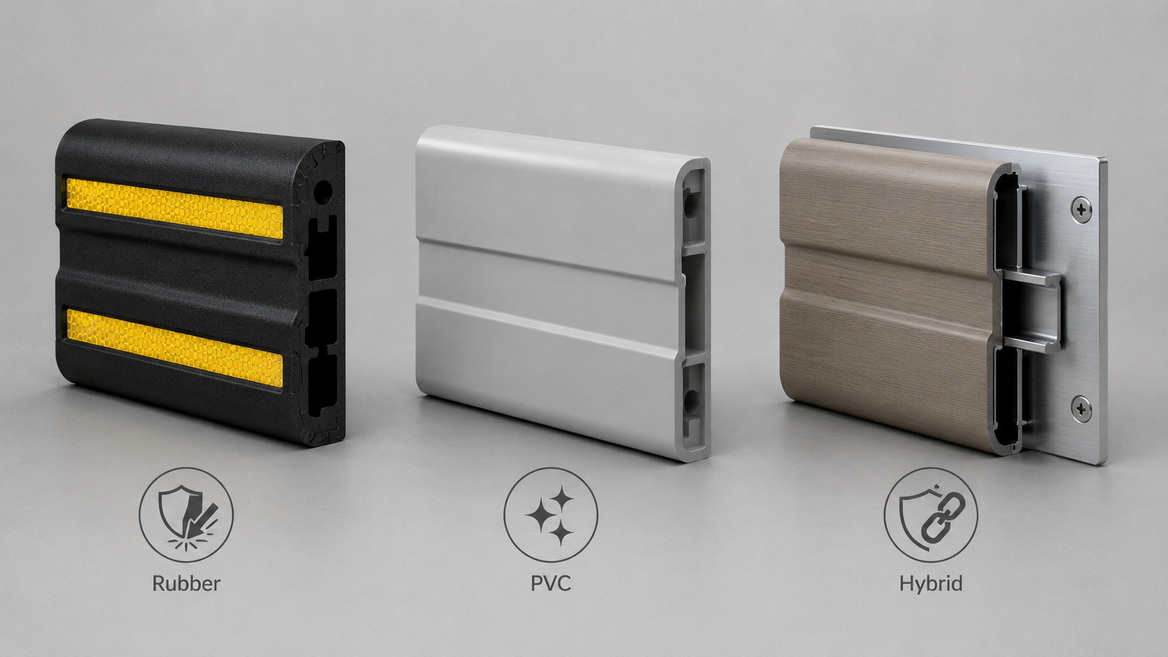
Most industrial‑grade wall guards are made from high‑density natural or recycled rubber compounds designed to combine elasticity and durability. Recycled rubber (often from end‑of‑life tires) is popular because it offers excellent impact absorption and supports sustainability goals.
Rubber wall guards are widely used in parking garages, warehouses, logistics centers, and dock areas that require long‑term resistance to abrasion, weather, and oils. For parking lot safety facilities, rubber is typically the first choice for exposed edges and structural columns.
PVC and vinyl wall guards use rigid or semi‑rigid plastics to provide a smoother, more architectural finish, often in healthcare, hospitality, office, and educational environments. They are lighter than rubber, easy to clean, and available in a wide range of colors and profiles.
These systems are often mounted over aluminum or other backer rails, creating a continuous bumper that protects walls from medical trolleys, beds, and luggage carts without giving an "industrial" look.
In demanding applications, manufacturers may combine rubber or PVC with aluminum or stainless‑steel backplates to increase rigidity and pull‑out resistance, especially on external walls and loading docks. The rubber or plastic layer absorbs impact, while the metal core distributes loads and maintains alignment.
This hybrid construction is common in dock bumpers and heavy‑duty wall guards subjected to repeated collisions from trucks and powered industrial vehicles.
High‑density rubber can withstand thousands of low‑speed impacts without cracking or permanent deformation, making it ideal for car parking walls and corners that receive daily contact from doors and bumpers. Unlike simple paint or plaster repairs, a properly selected rubber wall guard can remain effective for years with minimal attention.
This durability is especially valuable in facilities operating 24/7—such as hospitals, distribution centers, and airport parking—where shutdowns for wall repairs disrupt operations and hurt user experience.
Well‑formulated rubber guard profiles resist UV exposure, rain, temperature swings, road salts, and de‑icing chemicals, making them suitable for outdoor ramps and exposed parking decks. Many rubbers also tolerate oils, greases, and cleaning agents, which is essential in auto repair shops and logistics hubs.
By contrast, unprotected metal corner guards can corrode, and some plastics may become brittle in extreme cold, increasing the risk of breakage on impact.
Dark rubber guards with integrated yellow reflective strips hide scuffs and light contamination, reducing the need for frequent touch‑ups and wall repainting. Routine cleaning usually involves simple wiping or pressure washing.
Because rubber is inherently resilient, it also dampens noise when carts or vehicle doors make contact, which is a significant advantage in residential garages, hospitals, schools, and office buildings where acoustic comfort matters.
Many manufacturers now use recycled rubber feedstocks to produce wall guards, often from post‑consumer tires, supporting circular economy initiatives and helping building owners pursue green building certifications. Choosing recycled rubber products can also support ESG reporting and corporate sustainability communication.
From a specifier's point of view, selecting the right profile and mounting height is as important as choosing the right material. Below are the most common types described in the original article, expanded with practical use cases.
Flat rubber wall guards are continuous strips, usually 4–8 inches (100–200 mm) wide, installed horizontally along walls to protect against side glancing impacts. Their low‑profile design maintains a neat, linear appearance.
They are ideal for corridors, hospital hallways, and parking deck walls where trolleys and car doors may contact the surface but heavy machinery is not used.
D‑shape profiles feature a semi‑circular cross‑section that projects further from the wall, increasing energy absorption and visibility. Many models incorporate yellow reflective bands or chevron patterns to alert drivers in dim areas like underground garages.
These guards are suited to higher‑risk areas such as tight ramps, entry and exit points, and corners where vehicles turn sharply or reverse frequently.
Rubber corner guards protect the most vulnerable zones in any parking facility—the exposed edges of columns, ramps, and wall corners. Standard lengths range from about 600 mm to over 1200 mm, often with 90° or 135° angles.
They are recommended in parking lots, hospitals, schools, and freight corridors, where sharp edges would otherwise chip and damage both vehicles and building finishes.
Heavy‑duty bumper guards are thicker, wider profiles designed for industrial and logistics settings with repeated impacts from forklifts, pallet jacks, and heavy carts. They are usually mounted to concrete walls or steel frames using anchor bolts.
These guards are particularly effective for loading bays, warehouse interior walls, and dock areas where collisions can quickly destroy unprotected masonry or drywall.
Dock bumpers are specialized rubber blocks or strips installed on loading docks to absorb the impact of trucks backing into the bay. They are significantly thicker and higher than interior wall guards and often use steel angles or plates for reinforcement.
Correctly specified dock bumpers protect both the building structure and vehicle trailers, reducing claims and downtime from damaged dock edges.
Some projects call for decorative wall guards that blend safety with wayfinding and brand identity. These systems can integrate colored inserts, printed graphics, or signage to guide drivers and pedestrians through large parking structures and public facilities.
They are common in airports, transit stations, financial institutions, and high‑end commercial interiors where the visual impression is as important as impact protection.
Parking garages and basements are among the most demanding environments for wall protection because of tight turning circles, structural columns, and poor sightlines. Rubber wall guards and corner protectors are typically installed:
- Along side walls at car‑door height
- On column corners facing drive aisles
- Around ramps and turn areas
- Near ticketing or barrier gate equipment
Reflective strips or chevron patterns significantly improve visibility in low‑light conditions, helping drivers judge distance and alignment and reducing minor collisions.
In warehouses and distribution centers, large or rounded rubber guards are placed along interior walls, around door frames, and at the ends of racking aisles to protect against powered industrial trucks and pallet movement. Flat guards can also define pedestrian corridors and protect walkways from side impacts.
By reducing damage to both stock and infrastructure, wall guards support compliance with occupational safety standards and minimize downtime for repairs.
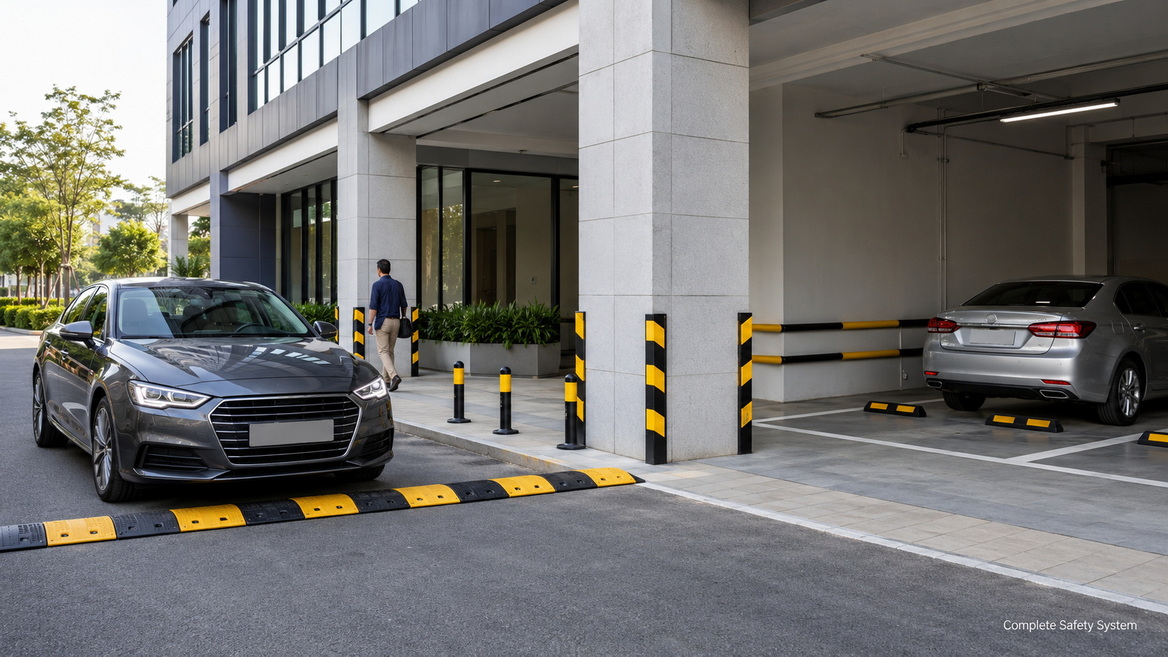
Healthcare buildings rely heavily on wall protection to maintain hygiene and a professional appearance. Flat rubber or PVC wall guards and corner protectors are installed in corridors, patient rooms, emergency departments, and back‑of‑house service routes.
Infection control protocols favor smooth, easy‑to‑clean surfaces because damaged paint and plaster can harbor bacteria in cracks and chips, so robust wall guards contribute directly to patient safety.
In educational facilities, wall guards protect against wear from student traffic, cleaning machines, and sports equipment. Brightly colored or patterned guards can double as wayfinding tools in corridors and gymnasiums.
For indoor sports halls and multipurpose venues, softer profiles also reduce the risk of injury if players collide with walls at speed.
Factories and production lines use rubber wall guards to protect both walls and critical equipment from routine operations, particularly in materials handling areas. In zones with hazardous chemicals or solvents, rubber formulations must be selected for specific chemical resistance.
A properly designed protection system can extend the life of production rooms, reduce contamination risks, and support continuous operation without frequent building repairs.
From a designer or facility manager's perspective, the main decision is often whether to use rubber, PVC, or a combination. The following table summarizes key differences based on the original article, industry practice, and current market data.
| Feature | Rubber Wall Guard | PVC / Vinyl Wall Guard |
|---|---|---|
| Core material | Natural or recycled rubber | Polyvinyl chloride (PVC) or vinyl |
| Flexibility | High – excellent energy absorption | Medium – more rigid feel |
| Impact resistance | Excellent for vehicle and equipment contact | Good for trolleys and pedestrian traffic |
| Weather resistance | Excellent outdoors (UV, rain, temperature) | Best indoors; limited UV resistance |
| Chemical/oil resistance | Good to excellent (depends on compound) | Good to moderate (varies by grade) |
| Appearance | More industrial, usually black with yellow | Sleeker, broad color and finish range |
| Typical applications | Parking garages, docks, warehouses | Hospitals, offices, hotels, schools |
| Noise reduction | Strong due to soft, elastic surface | Moderate |
| Sustainability | Often made with recycled rubber | Recyclability depends on formulation |
| Relative cost | Competitive; higher on heavy‑duty profiles | Competitive for long runs in interiors |
Many modern projects combine both materials—rubber in high‑impact parking and loading zones, and PVC/vinyl in public interiors—to balance durability, aesthetics, and cost.
The global wall protection market is growing steadily, driven by stricter safety standards, higher vehicle density, and asset‑maintenance pressures in commercial real estate. Recent analyses project the broader wall protection segment, including rubber and PVC systems, to continue expanding through 2030 and beyond.
From a design standpoint, modern parking and facility projects focus on:
- Efficient layouts and clear traffic flow
- High‑visibility markings and adequate lighting
- Integrated safety devices such as speed bumps, wheel stops, and wall guards
Well‑designed safety infrastructure, including properly placed wall guards, has been shown to reduce collision incidents and maintenance costs while improving user satisfaction and perceived security.
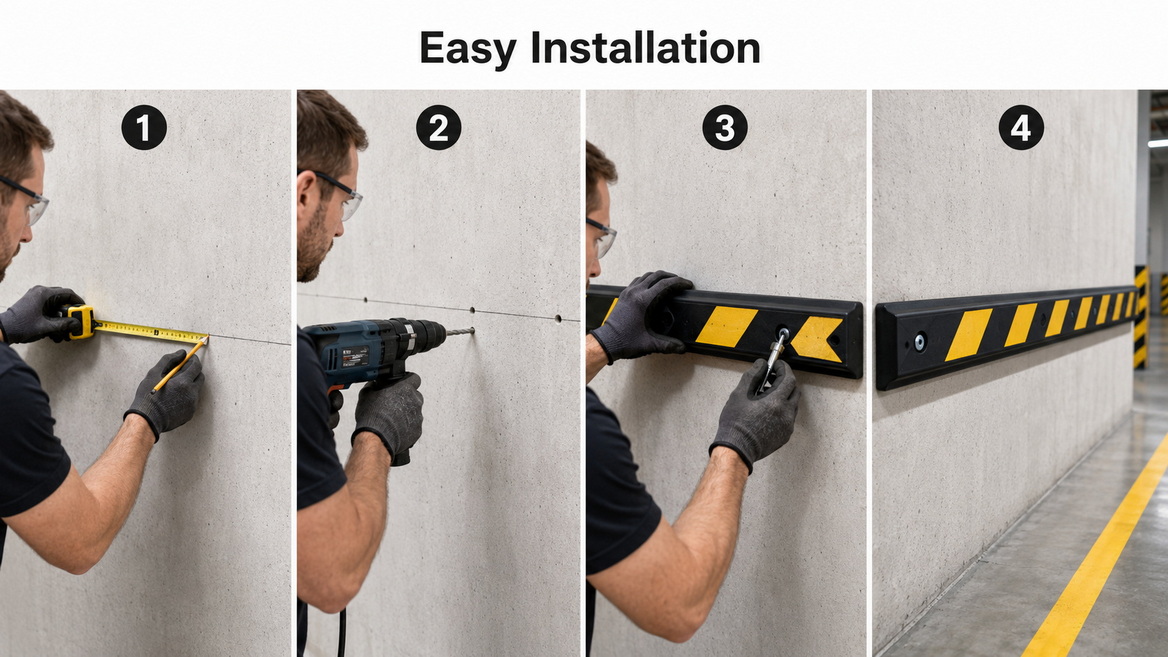
Installing rubber wall guards is relatively straightforward, but details matter for long‑term performance and appearance.
1. Assess the risk zones
Identify walls, columns, and corners with existing damage or high collision probability (tight turns, narrow bays, entrances, and exits).
2. Prepare the substrate
Clean the mounting surface, remove loose paint, dust, and oil, and repair major structural damage before installing guards.
3. Mark installation height and alignment
For parking garages, align guards at typical bumper or door height; in hospitals and warehouses, align with trolley and bed heights.
4. Select fasteners or adhesive
For concrete or masonry, use corrosion‑resistant expansion anchors or sleeve bolts; for lighter applications, high‑strength construction adhesive or double‑sided tapes may be appropriate.
5. Drill and fix the guards
Use 3–4 rust‑resistant screws or anchors per guard segment, starting from one end and working along the profile while maintaining a straight line.
6. Inspect and maintain
Check for missing or loose fasteners during routine inspections, and clean guards periodically with mild detergent to preserve visibility and appearance.
Rubber wall guard pricing depends on dimensions, profile type, material grade, volume, and whether you need custom tooling or branding. Retail and small‑quantity prices quoted in the original article suggest:
- Basic rubber corner guards from around USD 20–25 per piece in small quantities
- Industrial‑grade bumpers and dock‑type systems costing significantly more per assembly, with bulk industrial packages reaching into the thousands of dollars for large projects
For OEM/ODM projects with Chinese manufacturers, unit prices can be substantially optimized at higher volumes, especially when designs are standardized across multiple facilities.
When budgeting, facility managers should account not only for purchase costs, but also for savings from fewer wall repairs, reduced downtime, and lower repainting cycles over the life of the building.
For international buyers, partnering with an experienced Chinese manufacturer of parking lot safety facilities can deliver strong cost‑performance and design flexibility. A capable OEM/ODM supplier can support you not just with catalog products, but with tailored solutions for your specific facility.
Key advantages include:
- Custom profiles and lengths to match your wall geometry and branding
- Integrated reflective sheeting, color bands, and logo options
- Guidance on fixing methods and installation hardware based on your substrate
- Coordinated production of complementary products such as speed bumps, wheel stops, bollards, and parking lot signage
By consolidating your parking lot safety products—wall guards, corner guards, traffic cones, speed humps—with a single professional supplier, you simplify quality control and logistics while maintaining consistent appearance and performance across your sites.
Drawing on real‑world parking and warehouse projects, here are some actionable recommendations for specifying rubber wall guards:
- Always protect external column corners in drive aisles; these are the most frequent collision points in multi‑story car parks.
- Combine guards with high‑contrast markings and adequate lighting to maximize driver awareness.
- In ramps and tight turns, use D‑shape or heavy‑duty profiles with reflective stripes at bumper height.
- In hospitals and hotels, use rubber in back‑of‑house areas and PVC/vinyl in visible guest and patient corridors.
- Schedule periodic inspections and keep a small stock of spare guards for quick replacement after severe damage events.
If you are planning a new parking facility or upgrading an existing site, rubber wall guards and corner protectors should be included early in your safety design, alongside speed bumps, wheel stops, bollards, and signage. The right protection strategy can dramatically reduce repair bills, extend asset life, and improve user confidence in your facility.
To develop a tailored solution for your next project, you can work with a specialized Chinese manufacturer that provides OEM and ODM services for wall guards, corner protectors, and complete parking lot safety systems, ensuring that the products fit your drawings, standards, and branding requirements. Share your layout, target markets, and performance requirements to receive a customized proposal and quotation.
Polyurethane wall guards are made from lightweight, durable polymer resins rather than vulcanized rubber, but they serve a similar protective function. They are often preferred in high‑hygiene and design‑sensitive environments such as hospitals and retail stores because they can be molded into smooth, easily cleaned profiles.
Yes—door‑height wall protectors prevent repeated small impacts that slowly damage both the vehicle's paint and your garage wall, especially in narrow bays. Even in residential settings, low‑profile rubber or foam guards provide an inexpensive way to preserve finishes and resale value.
Use corner guards wherever a structural edge is exposed to traffic, such as column corners, ramp returns, and stairwell projections into parking areas. Flat guards work best on continuous walls; corner guards protect the most fragile edges that tend to chip and spall first.
As a rule of thumb, select rubber for high‑impact, outdoor, or vehicle‑intensive zones, and PVC/vinyl for interior spaces where aesthetics, color coordination, and easy cleaning are more important. Many complex projects successfully combine both materials to optimize performance and appearance.
With correct specification and installation, rubber wall guards in typical parking or warehouse applications can last many years; replacement is usually triggered by severe localized damage or design changes rather than simple wear. Routine inspection will help you identify any sections that need tightening, cleaning, or replacement.
1. Jackwin Safety. "Everything You Need To Know about Rubber Wall Guard." (accessed 2026).
https://jackwinsafety.com/everything-you-need-to-know-about-rubber-wall-guard/
2. Buck Bros. "Parking Lot Safety Tips: A Comprehensive Guide." 14 January 2025.
https://buckbros.com/blog/parking-lot-safety-tips-a-comprehensive-guide/
3. Koffler Sales. "How to Choose the Right Wall Corner Guard for Your Project." 28 December 2023.
https://kofflersales.com/blog/wall-corner-guards/
4. Business Research Insights. "Wall Protection Market Size, Report Growth By 2035." 13 July 2025.
https://www.businessresearchinsights.com/market-reports/wall-protection-market-110075
5. LinkedIn Pulse. "Innovation Unveiled: Trends Driving the Wall Protection Market." 20 March 2024.
6. Tristar. "How to Design a Parking Lot That Stays Safe and Accessible." 17 December 2025.
https://www.tristarbuilt.com/articles/how-to-design-a-parking-lot-that-stays-safe-and-accessible/
7. Made‑in‑China – Rubber Wall Corner Guard products (example listing).
8. Made‑in‑China – Parking Garage Wall Protection products (example listing).
9. OEM/ODM Services – Example Chinese Traffic and Safety Products Manufacturers.


