
Please Choose Your Language
Views: 222 Author: XS Traffic Facilities Publish Time: 2026-06-11 Origin: Site


Content Menu
● Why LED Traffic Sign Installations Matter More Than Ever
● Understanding LED Traffic Signs: Beyond a Brighter Panel
● Key Use Cases: Streets, Highways, Toll Plazas, and Parking
>> City Streets and School Zones
>> Toll Plazas and Interchanges
>> Parking Facilities and Private Sites
● Expert Framework: How to Plan a Successful LED Traffic Sign Installation
>> 1. Start With Risk and Compliance
>> 2. Match Technology to the Use Case
>> 3. Engineer Placement and Mounting
>> 4. Design for Maintenance and Lifecycle
● Why Work With a Specialized OEM/ODM Manufacturer
● New Industry Insight: Smart and Connected Traffic Signs
● Practical Expert Checklist: Installing Radar Speed and LED Signs
● Comparison: Traditional Signs vs LED and Smart Signs
● Call to Action: From Specification to Safe Roads
● FAQ
>> Q1: How high should a radar speed sign be installed?
>> Q2: Can LED traffic signs run on solar power?
>> Q3: Do I need a permit for installing LED traffic signs?
>> Q4: How often should LED traffic signs be inspected and maintained?
>> Q5: What is the main advantage of smart, connected LED traffic signs over standard LED signs?
As someone who has spent years walking sites with engineers, listening to frustrated city planners, and working with OEM buyers, I can tell you this: a well‑designed LED traffic sign installation is not just a product delivery – it is a long‑term safety system. When it is engineered, installed, and maintained correctly, it reduces crashes, improves driver compliance, and lowers your total lifecycle cost more than any paper spec sheet will admit.
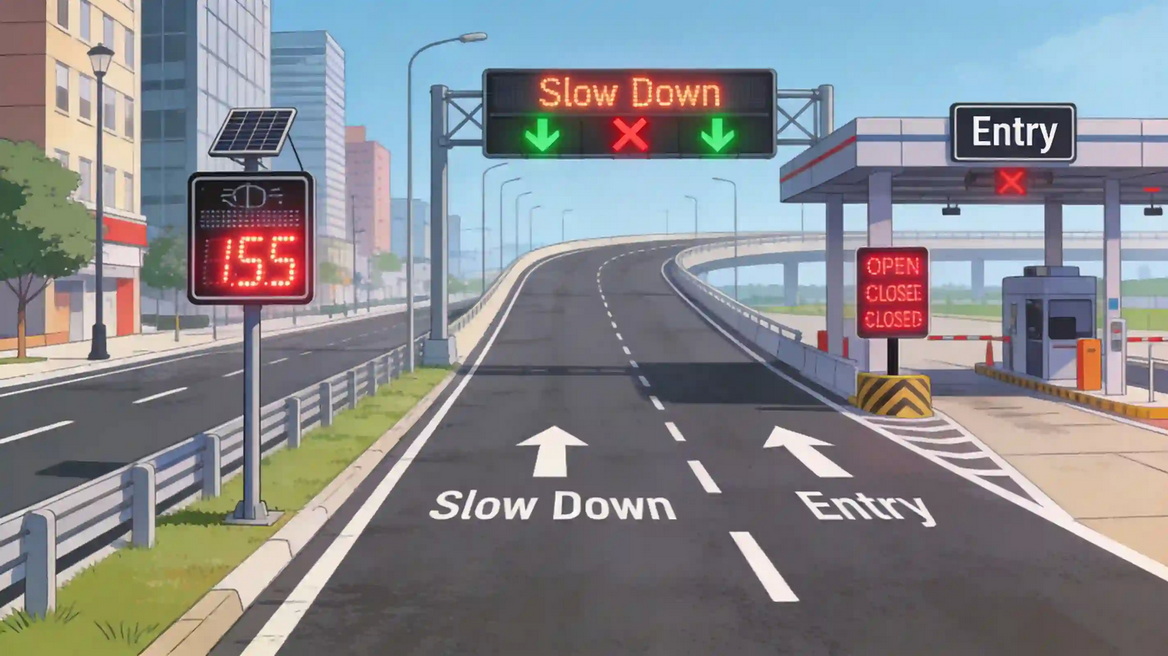
Global road networks are getting busier, drivers are more distracted, and municipalities are under pressure to improve safety with limited budgets. In this context, LED traffic signs and intelligent displays are shifting from "nice to have" to core safety infrastructure.
From my experience supporting projects on expressways, toll plazas, and dense urban streets, three trends are reshaping traffic sign projects today:
- Shift to LED and smart displays for higher visibility and real‑time updates.
- Stricter compliance and permitting expectations from local authorities.
- Growing demand for OEM/ODM customization to match local standards and languages without reinventing the hardware every time.
For buyers and project owners, the challenge is choosing not just the right sign, but the right installation strategy – from design to pole height to power, communication, and maintenance plans.
LED traffic signs cover far more than simple "STOP" or speed limit plates. They now include:
- LED speed feedback signs (radar speed signs).
- Variable message signs (VMS) for lanes, weather, or incident alerts.
- Solar‑powered LED warning signs for schools, crossings, and curves.
- LED traffic lights and lane control signals integrated into ITS systems.
Compared to traditional reflective signs, modern LED solutions offer:
- Much higher visibility in bad weather and at night, reducing reaction time.
- Dynamic messages that respond to speed, congestion, or incidents.
- Lower long‑term power consumption and maintenance needs when engineered correctly.
As an industry practitioner, I always advise clients to stop thinking in terms of "single sign purchase" and start thinking in terms of networked, data‑driven safety assets that evolve with their cities.
Different environments demand different LED traffic sign strategies.
On urban streets, especially near schools and residential areas, driver speed and line of sight are decisive.
- Radar speed signs should be installed on a straight section of road, not in or just after a curve.
- The sign should typically be 7–10 feet above the roadway for optimal detection.
- For streets with parking, the mounted height must be high enough to detect vehicles above parked cars.
These details sound minor, but in practice they determine whether drivers actually see and respond to the sign.
On high‑speed roads, you have only seconds to communicate. LED lane control signs, speed limits, and warning signs must combine high brightness with carefully engineered placement and mounting.
- Ground‑mounted signs require secure foundations designed for wind load and soil conditions.
- Overhead gantries and pylon‑mounted LED signs must meet stricter structural and electrical safety standards.
- Double‑sided or multiple‑angle signage is often needed for multi‑lane, multi‑direction traffic.
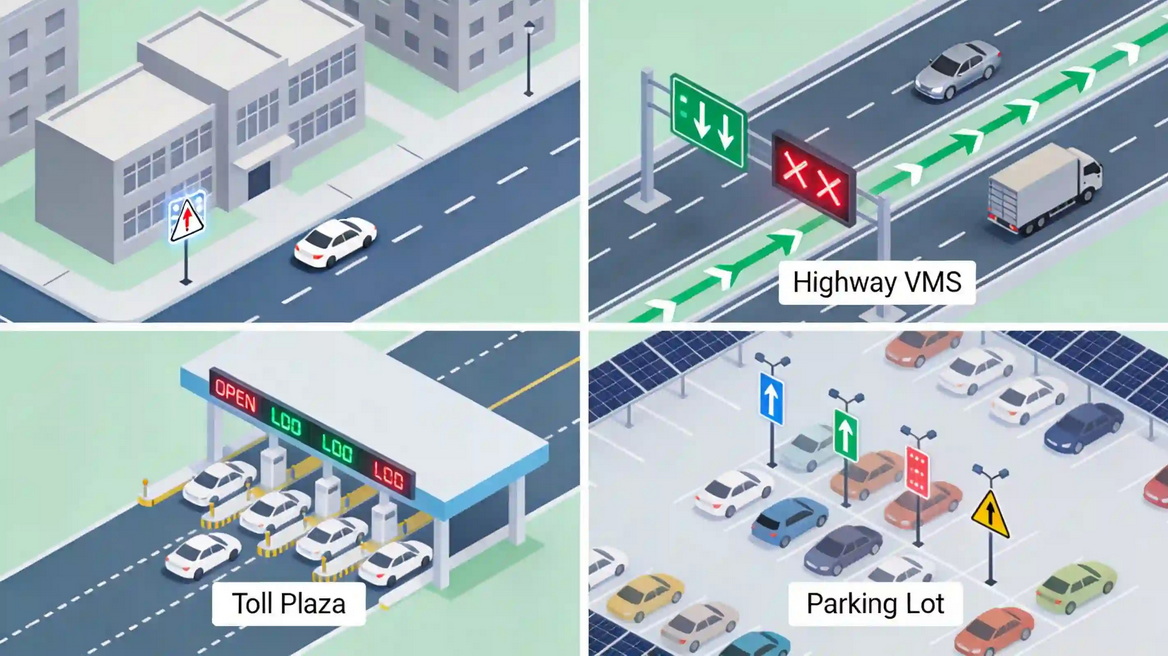
Toll plazas are complex environments with tight spacing, multiple lanes, and mixed vehicle types.
- Clear LED lane status, payment method, and speed limit signs reduce confusion and sudden lane changes.
- Signs must be coordinated with lane markings, barriers, and payment equipment to avoid visual overload.
- Smart message signs can adapt during incidents or peak hours.
For parking garages, logistics yards, and commercial complexes, the risk is often low speed but high density and frequent decision points.
- Eye‑level LED signs help with wayfinding, clearance warnings, and pedestrian crossings.
- Proper anchoring on walls or ceilings is critical to avoid damage and liability.
- Solar options can be used in outdoor lots where cabling is expensive.
Over the past years working with engineering firms and municipal buyers, I have found this practical framework reduces project risk and ensures compliance.
Before choosing specific products, map the risk points: crash history, near‑miss reports, speeding data, and visibility issues. At the same time, confirm permit and zoning requirements for dimensions, lighting, and placement.
- Collect design rules from local road authorities and traffic codes.
- Identify any restrictions on illuminated signs, especially near residential zones.
- Align early with police or traffic departments where needed.
Based on risk and regulations, choose between static LED signs, radar speed feedback signs, VMS, or hybrid solutions.
- Use radar feedback signs in speeding hotspots with clear sightlines.
- Use VMS on highways and toll plazas where conditions change frequently.
- Use solar‑powered LED warning signs where there is no convenient grid access.
From an installation engineer's perspective, placement is where good projects succeed or fail.
- Place signs where they are visible long enough for drivers to react at prevailing speeds.
- Angle them toward the flow of traffic, not just parallel to the road.
- Use calculated footing depth and width for ground‑mounted signs in high‑wind areas.
- For wall mounts, select fasteners that match the facade material and ensure structural support.
The lowest bid is rarely the lowest lifecycle cost.
- Choose LEDs, drivers, and housings tested for long service life and environmental stress.
- Plan bi‑annual inspections to detect structural and electrical issues early.
- Establish a clear process for cleaning lenses, checking brightness, and replacing damaged components.
For agencies and system integrators, working with a specialized OEM/ODM partner in China can significantly accelerate deployment and control cost – if you choose carefully.
As an OEM/ODM‑focused manufacturer of LED traffic signs and related safety products, Shenzhen Xingsheng Traffic Facilities Co., Ltd. typically supports:
- Custom sign dimensions, icons, and languages to meet local standards in different countries.
- Integration of smart controllers, radar modules, and communication units into the sign housing.
- Flexible branding and labeling to match the system integrator's product line.
From a project strategist's point of view, this approach lets you keep a consistent hardware platform while fine‑tuning content, firmware, and protocols for each city or operator.
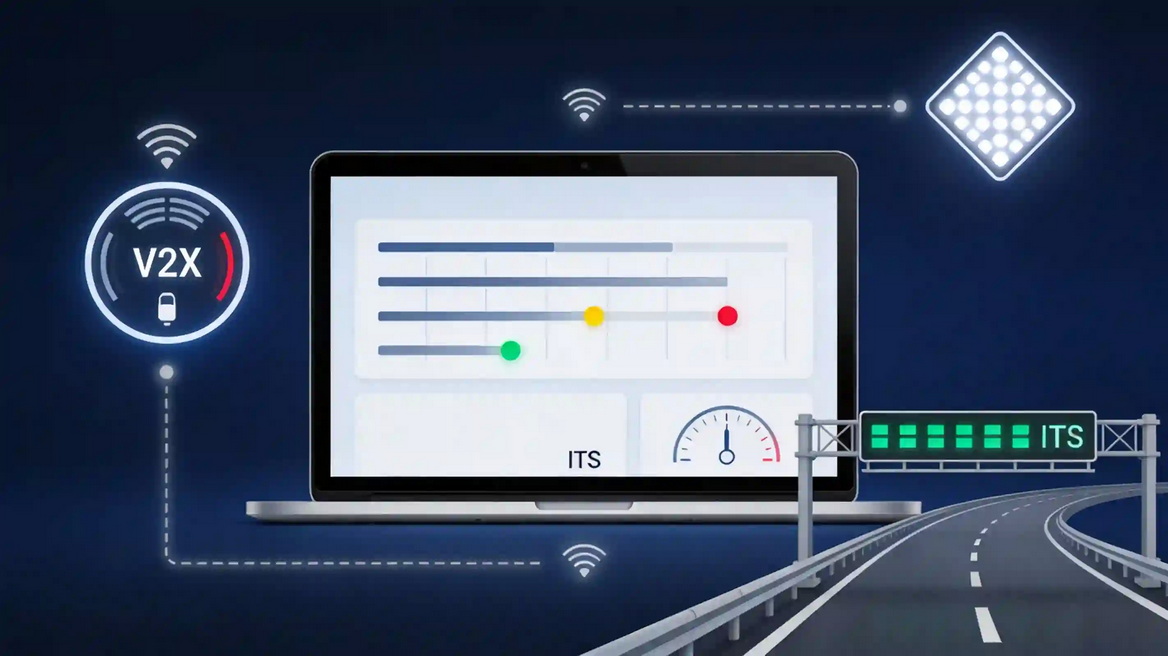
The traffic sign market is changing fast as cities adopt more intelligent transportation systems (ITS). Studies show that the global traffic sign market is expected to grow at an annual rate of around 2.65% to 2033, while smart traffic signs with LED and IoT capabilities are seeing even faster adoption.
From an expert perspective, this shift has three practical implications for your next project:
- Future‑proofing: Even if you do not need cloud connectivity today, selecting hardware that can support it later avoids full replacement.
- Data‑driven safety: Connected LED signs can log speed, traffic volume, and activation events to support policy decisions and funding applications.
- Centralized control: For larger networks, remote management reduces field visits and ensures consistent message quality.
When we design LED traffic signs for OEM/ODM customers, we increasingly treat each unit as a potential edge device in a larger ITS ecosystem, not just a standalone sign.
To make this actionable, here is a condensed, field‑tested checklist for radar speed and LED warning sign installation.
1. Pre‑site assessment
- Verify there are no obstructions like poles, tree limbs, or other signs in the detection area.
- Confirm the road section is straight and offers sufficient visibility distance.
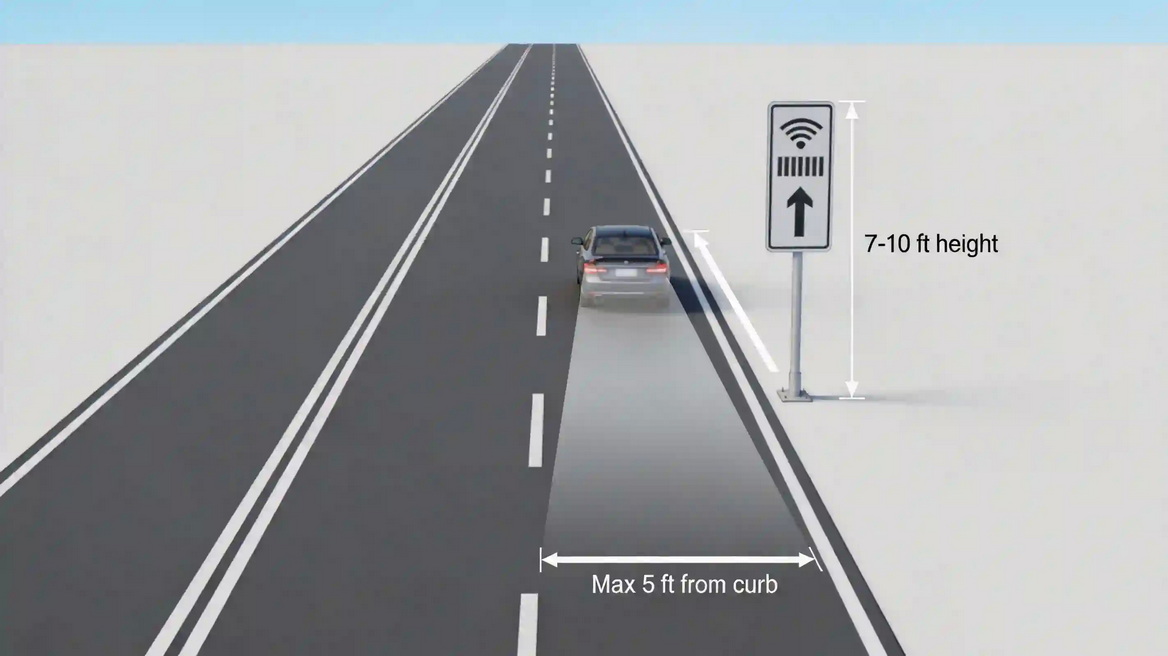
2. Positioning and distance from curb
- Install the radar speed sign no more than 5 feet from the road curb.
- Avoid placing it too far from the roadway, which can cause displayed speeds to appear lower than actual.
3. Mounting height and angle
- Mount the sign 7–10 feet above the road surface.
- For streets with parking, raise the sign high enough to see over parked vehicles.
- Align the radar and display perpendicular to the direction of oncoming traffic, not toward the road center.
4. Safety and structural integrity
- For ground‑mounted signs, use properly engineered concrete foundations matched to soil and wind conditions.
- For wall‑mounted units, anchor to structural elements, not only surface cladding.
- When working at height, ensure installers use appropriate fall‑prevention equipment, and electrical work is handled by certified professionals.
5. Post‑installation validation
- Verify detection range, viewing angles, and brightness at day and night.
- Compare displayed speeds with calibrated measurement tools to confirm accuracy.
- Document settings and installation details for future maintenance.
Below is a simplified comparison to guide procurement and planning discussions.
If you are planning a new traffic safety project – whether a school zone upgrade, a toll plaza modernization, or a smart‑city pilot – it is the right time to move beyond generic catalog items.
By partnering with an experienced LED traffic sign OEM/ODM manufacturer like Shenzhen Xingsheng Traffic Facilities Co., Ltd., you can align sign design, intelligent control, and installation best practices into one coherent safety strategy instead of stitching together inconsistent components.
If you would like expert support on designing, customizing, and installing LED traffic signs for your streets, highways, toll stations, or parking projects, reach out to our technical team with your drawings and local standards. Together, we can turn your specifications into safer, smarter roads.
Most radar speed signs perform best when installed with the bottom of the sign 7–10 feet above the roadway, allowing the radar to detect vehicles at a sufficient range without the beam being absorbed by the road surface.
Yes, many LED traffic signs, especially warning and school‑zone signs, are designed to run on solar power with high‑efficiency LEDs and low‑consumption drivers, which is ideal for locations without easy grid access.
In most regions, local authorities require a permit for new sign installations, and applications typically need drawings, site plans, and details on size, materials, and placement to assess safety and compliance.
A bi‑annual inspection schedule is a practical baseline, covering structural supports, fasteners, electrical components, brightness, and physical damage so that potential issues are caught before they compromise safety.
Smart LED signs add data and remote management: they can adjust messages in real time, integrate with ITS platforms, and provide traffic data that helps cities optimize safety and justify future investments.
1. ZGSM – "LED Traffic Light | Manufacturer – ZGSM." https://www.zgsm-china.com/led-products/led-traffic-light
2. CR Signs – "The Importance of Proper Outdoor Sign Placement for Maximum Visibility." https://www.crsignsinc.com/post/the-importance-of-proper-outdoor-sign-placement-for-maximum-visibility
3. LinkedIn – "Traffic Safety Signs Industry Insights Report: Analyzing Market..." https://www.linkedin.com/pulse/traffic-safety-signs-industry-insights-report-analyzing-market-y3xae
4. CITSA – "Technical requirements for information interaction in typical signal control scenarios in a connected environment." https://www.its-china.org.cn/uploads_file/20240627/20240627162857_199.pdf
5. Yangzhou Xintong Transport Equipment Group – "China Road Traffic Signs Manufacturers and Suppliers." https://www.xttrafficlight.com/road-traffic-signs/
6. Radarsign – "Best Practices for Radar Speed Sign Installation." https://www.radarsign.com/best-practices-for-radar-speed-signs-installation/
7. Business Research Insights – "Traffic Sign Market Size, Share, Demand By 2035." https://www.businessresearchinsights.com/market-reports/traffic-sign-market-110476
8. SAMR – National Standard Project "Road Traffic Signal Controllers." https://std.samr.gov.cn/gb/search/gbDetailed?id=233F9D64DA27561EE06397BE0A0A675D
9. Made‑in‑China – "Custom Traffic Signs Suppliers." https://www.made-in-china.com/manufacturers/custom-7-traffic-signs.html
10. SigSigns – "Sign Permitting & Installation: What to Know." https://www.sigsigns.com/blog-posts/navigating-sign-permitting-installation-what-you-need-to-know


