
Please Choose Your Language
Views: 222 Author: XS Traffic Facilities Publish Time: 2026-04-28 Origin: Site


Stealing a street sign is illegal, and it can create far more serious consequences than most people realize. Because traffic signs are public property and part of a road safety system, removing one can lead to theft charges, restitution, fines, and even felony charges if someone is injured as a result.
For an OEM and ODM traffic safety manufacturer, this topic is also about public safety, not just property law. A missing or damaged sign can confuse drivers, delay emergency response, and increase crash risk, which is why municipalities take sign theft seriously.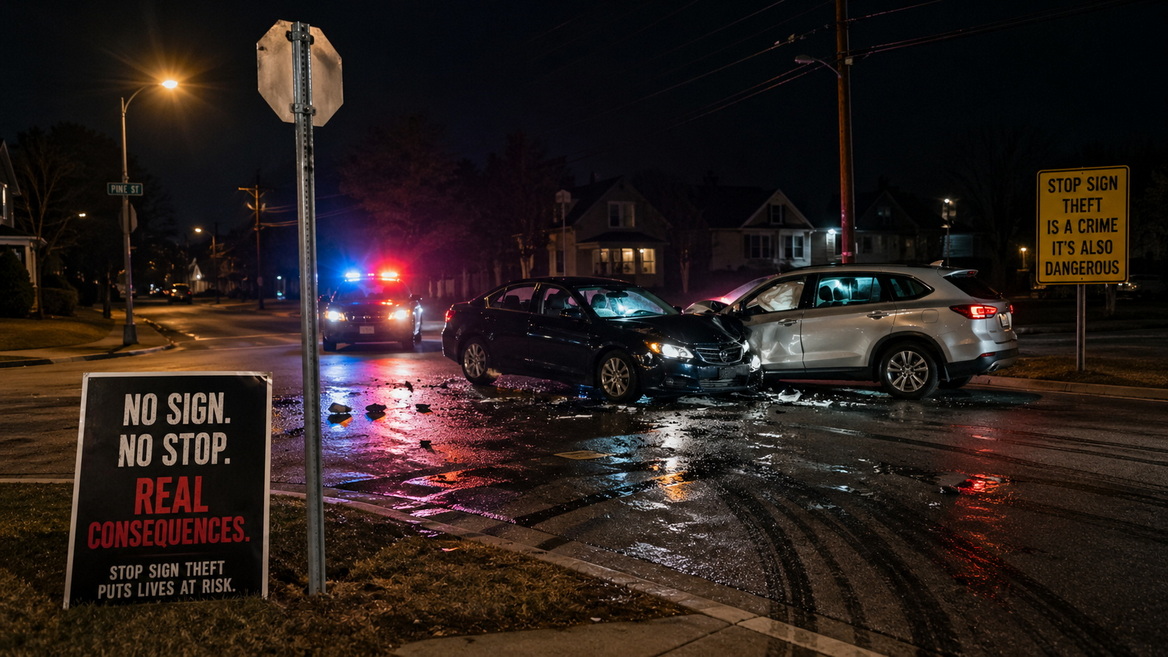
Street signs do more than identify roads. They help drivers make decisions at the right time, support traffic flow, and reduce the risk of collisions. When a sign is missing, faded, or removed, road users may not know where to stop, yield, turn, or slow down.
That is why traffic authorities treat sign protection as a safety issue, not a harmless prank. Even a seemingly small act can have a chain reaction across an intersection, work zone, school zone, or parking lot.
In most cases, yes. Street signs are usually owned by a city, county, state, or transportation authority, which means taking one without permission is theft of public property. Even if the sign is old, bent, or lying on the ground, it still does not automatically become "free to take."
That point is important because many people assume a fallen sign has been abandoned. In reality, local agencies typically expect residents to report damaged signs so they can be recovered, logged, repaired, or replaced properly.
A person caught stealing a street sign may face theft charges, vandalism charges, trespassing charges, or charges related to damaging public property. In many states, the normal result is a misdemeanor, but the final outcome depends on local law, the value of the sign, prior offenses, and whether anyone was harmed.
The practical consequences can be expensive even when jail time is not imposed. Restitution, fines, court costs, attorney fees, and a criminal record can make one "prank" cost far more than simply buying a legal decorative replica.

The risk becomes much more serious if the missing sign contributes to an accident or injury. Some state laws allow felony charges when the removal of a road sign leads to bodily harm or death, because the act is no longer viewed as simple theft—it becomes a public danger issue.
Felony exposure can also increase when multiple signs are stolen, when the sign value crosses a state threshold, or when the person has prior theft convictions. In other words, repeated behavior or larger losses can escalate a local property crime into something far more serious.
Usually, no. A fallen sign is still public property unless a government agency has officially disposed of it or sold it through a legal channel. The safest action is to report the location to the local transportation or public works department so crews can remove it and restore the site safely.
This is especially important for stop signs, warning signs, detour signs, and road closure signs. Those signs are often there to prevent immediate danger, so taking them can put drivers, pedestrians, and workers at risk.
Here is a quick breakdown of the most common risks:
| Risk Type | What Can Happen | Why It Matters |
|---|---|---|
| Theft charges | You may be charged for taking public property. | Even “just one sign” can become a criminal case. |
| Restitution | You may have to pay replacement and labor costs. | Costs often exceed the value of the sign itself. |
| Accident liability | You may be blamed if a crash happens because the sign is missing. | Safety failures can lead to civil and criminal exposure. |
| Felony escalation | Serious injury or death can increase penalties. | The case can move beyond simple theft. |
| Public danger | Drivers may miss critical guidance. | This can create avoidable crashes and confusion. |
From a traffic safety manufacturing perspective, signage is part of the road's communication system. A high-quality sign is only effective when it is installed, visible, and maintained correctly. If one is stolen, damaged, or missing, the site may require urgent replacement to protect road users and meet local safety expectations.
This is one reason many agencies use durable materials, reflective sheeting, inventory tracking, and in some cases unique identifiers. For public roads, the goal is not only compliance, but also fast restoration after damage or theft.

When a sign is reported missing, local agencies may inspect the location, issue a replacement work order, and evaluate whether traffic control needs to be adjusted immediately. In some areas, officials also use cameras, serial numbers, asset logs, or other traceability methods to help identify repeated theft patterns.
For municipalities, the hidden cost is not just the sign itself. Labor, truck dispatch, traffic control setup, and emergency response coordination can all add to the final expense.

If you want a sign for decoration, a man cave, a dorm room, a garage, or a themed business space, use a legal option instead. You can buy replica street signs, custom decorative signs, or officially sold surplus signs from legitimate sellers.
Recommended steps:
1. Buy a replica or custom-made sign from a manufacturer.
2. Ask for documentation if you want proof of lawful purchase.
3. Avoid secondhand listings that do not explain origin.
4. If you found a sign on the ground, report it first.
5. Never remove or keep a traffic sign without permission.
For contractors, distributors, and procurement teams, the difference between a legal traffic sign and an imitation matters. Official traffic signs must be made and installed according to local standards, while decorative or replica products are for non-road use only. Confusing the two can create compliance problems and safety liability.
As a manufacturer, this is also where OEM and ODM capability matters. Buyers often need the right size, reflective level, aluminum thickness, mounting method, and customization format for a specific use case such as streets, highways, toll stations, or parking lots.

If your goal is to source legal, durable, and customized traffic safety signs, work with a manufacturer that can provide OEM/ODM support, reflective materials, and application-specific solutions for streets, highways, toll stations, and parking lots. A trusted supplier can help you choose the correct sign type before installation, which reduces compliance risk and improves road safety.
Contact us to get more information!
Yes. In most places, street signs are public property, so taking one without permission is illegal and may lead to theft or property damage charges.
Usually no. A fallen sign is still typically government property, so you should report it instead of taking it home.
Often yes. A stop sign is critical for safety, so removing it can create a much higher risk of crashes and more serious legal consequences.
Yes. If the missing sign causes injury or death, or if the offense is charged under a felony-level theft threshold, the case can escalate beyond a misdemeanor.
Buy a legal replica or a surplus sign through a legitimate source instead of taking an official road sign.
Report it to your local public works, transportation, or police department so it can be replaced quickly and safely.
1. Criminal Defense Lawyer, "Is Stealing a Road Sign a Felony?"
https://www.criminaldefenselawyer.com/resources/is-stealing-a-road-sign-a-felony.html
2. JACKWIN Safety, "Is It Illegal To Steal a Street Sign? Laws, Penalty & Facts"
https://jackwinsafety.com/is-it-illegal-to-steal-a-street-sign/
3. DuraLabel, "OSHA Safety Labels and Signs That Stay Compliant | Tips and Best Practices"
4. Safety Decals, "How to Conduct a Safety Signage Audit for OSHA Compliance"
https://www.safetydecals.com/blogs/news/how-to-conduct-a-safety-signage-audit-for-osha-compliance
5. Stop Painting, "Best Practices for Compliant & Effective Safety Signs"
https://blog.stop-painting.com/best-practices-for-compliant-and-effective-safety-signs/


