
Please Choose Your Language
Views: 222 Author: XS Traffic Facilities Publish Time: 2026-05-27 Origin: Site


Content Menu
● Understanding Foggy Area Traffic Risks
● Amber LEDs vs. White LEDs: Quick Comparison
● How Fog Affects LED Light: Physics in Plain Language
● Amber LEDs: Advantages for Foggy Area Traffic Signs
>> Better Visibility in Heavy Fog
>> Reduced Glare and Driver Fatigue
>> Strong Association with Warnings and Hazards
● Amber LEDs: Limitations and Design Considerations
● White LEDs: Advantages for Traffic Signs in Mixed Conditions
>> High Legibility and Long‑Distance Readability
>> Compatibility with Existing Standards and Branding
>> Integration with Intelligent Systems
● White LEDs in Fog: Challenges and Mitigation
● Expert View: When to Choose Amber vs. White for Foggy Areas
● Case Snapshot: Active LED Signs in Adverse Weather
● Practical Design Steps for Foggy‑Area LED Signs
>> 1. Analyze Local Weather and Road Class
>> 2. Define Optical and Electrical Specs
>> 3. Integrate Smart Control for UX and Safety
>> 4. Validate with Field Trials
● How Shenzhen Xingsheng Adds Value as OEM/ODM Partner
● Call to Action for B2B Buyers
● Frequently Asked Questions (FAQ)
>> Q1: Are amber LEDs always better than white LEDs in fog?
>> Q2: Can one sign use both amber and white LEDs?
>> Q3: Are there standards that limit the LED color I can use?
>> Q4: How much does an LED traffic sign improve visibility compared to reflective signs?
>> Q5: What IP rating should I choose for foggy‑area traffic signs?
Amber LEDs generally offer better contrast and reduced glare in foggy conditions than pure white LEDs, making them a safer choice for fog‑prone traffic signs when designed and installed correctly. White LEDs, however, still play an important role for long‑distance legibility and standardization on highways when paired with proper optics and brightness control.
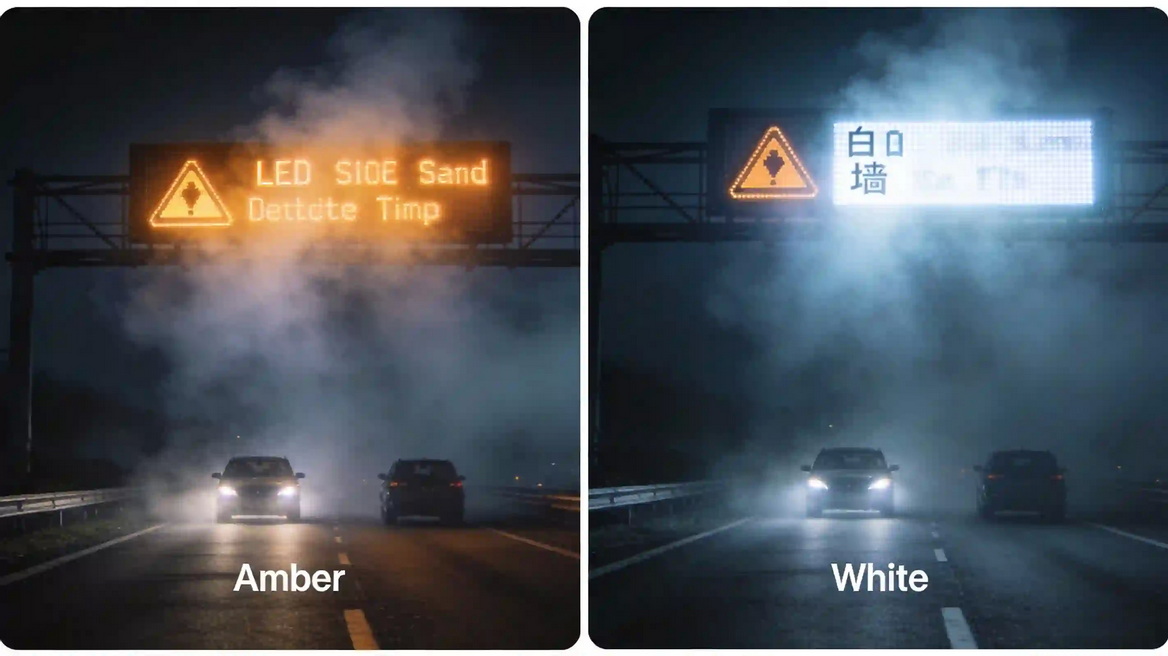
Fog dramatically reduces contrast, depth perception, and reaction time, which makes traffic sign visibility a critical safety factor. Standard reflective signs rely on vehicle headlights and quickly lose effectiveness when light is scattered back to drivers by fog droplets. This is why LED active‑emitting traffic signs are increasingly used on highways, toll stations, and mountain roads with frequent fog.
For a manufacturer like Shenzhen Xingsheng Traffic Facilities Co., Ltd., choosing amber vs. white LEDs is not only a technical decision but also a system‑level safety strategy for different fog scenarios, lane types, and local standards.
| Dimension | Amber LEDs in Foggy Signs | White LEDs in Foggy Signs |
|---|---|---|
| Color temperature & wavelength | Typically warm (around selective yellow/amber, about 3000K range). | Typically cool white (around 5000K–6500K). |
| Fog penetration | Longer wavelengths scatter less; better penetration through fog, rain, and snow. | Shorter wavelengths scatter more; higher tendency to create “white wall” glare. |
| Glare & visual comfort | Lower perceived glare, less eye fatigue for drivers in fog. | Higher back‑scatter, more dazzling in dense fog if not controlled. |
| Contrast & legibility | Enhances contrast for warnings and hazards in low visibility. | Excellent legibility in clear conditions and for long‑distance guidance. |
| Regulatory familiarity | Widely accepted for warning and auxiliary fog lighting; must align with local color codes. | Often preferred for main guide signs to match standard white/green/blue backgrounds. |
| Typical best‑use scenarios | Heavy fog sections, tunnels, dangerous curves, school zones in misty areas. | General highways, toll plazas, parking guidance, and urban arterials. |
Fog is made of countless tiny water droplets suspended in the air. When light hits these droplets, it is scattered in many directions.
- Shorter wavelengths (cool white, bluish light at 5000K–6500K) scatter more strongly, which can create a "bright white wall" effect and reduce the driver's forward visibility.
- Longer wavelengths (selective yellow and amber around 3000K) are scattered less, so more light continues along the road toward the driver's eyes, improving contrast and reducing glare.
This is why industry guidance for fog lighting often recommends selective yellow or warm amber for maximum visibility and comfort under low‑visibility conditions.
Amber LEDs generally provide better penetration and contrast in dense fog, particularly for warning and hazard‑type signs such as sharp curves, steep slopes, and accident‑prone segments. Because the light is less scattered back to the driver, the sign remains visible over a longer distance and with less glare.
In practical deployments of active LED traffic signs, research shows that LED‑illuminated signs can extend recognition distance by 20–60% compared with high‑grade reflective signs, especially in adverse weather. When these active signs use warm or amber tones for warnings, the visibility gain in fog is even more pronounced.
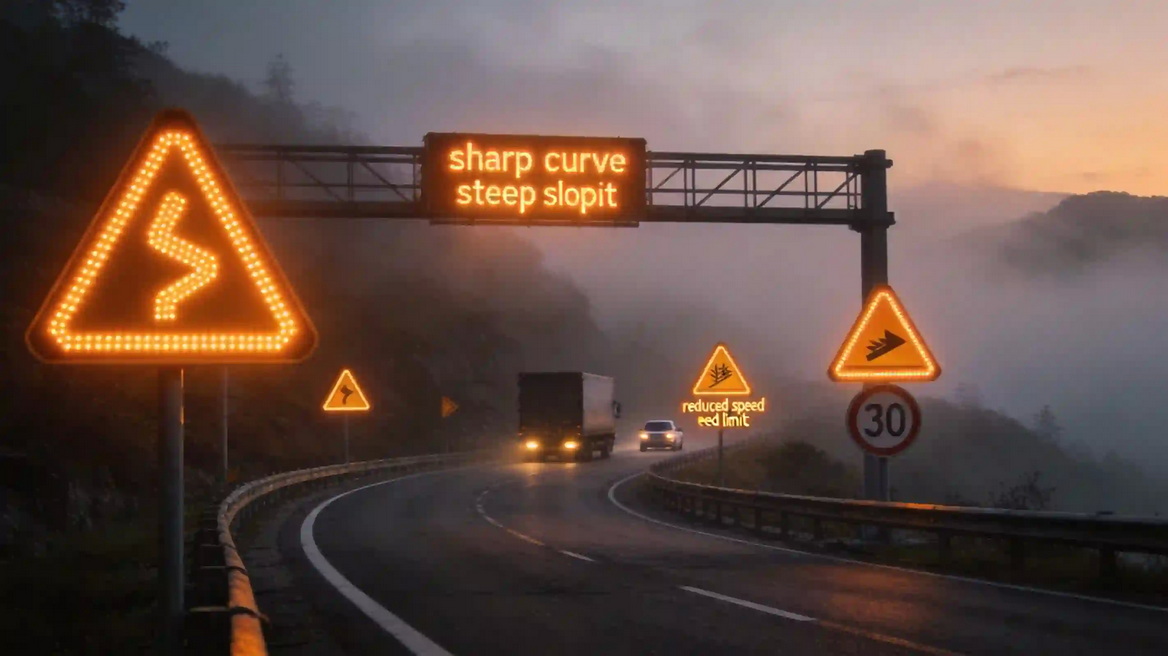
In foggy mountain roads or coastal highways, drivers often pass through long stretches of partial or continuous fog, which makes visual comfort critical. Amber LEDs create a softer visual experience, reducing eye strain and nighttime fatigue, while still delivering strong warning cues.
From a user‑experience perspective, this means:
- Drivers can read the message (speed limits, hazard alerts) without being dazzled.
- The sign can be noticed earlier, allowing more reaction time for braking or lane changes.
Globally, yellow and amber are strongly linked with caution and warnings in driver psychology and traffic standards. When a sign is illuminated in amber, drivers intuitively understand that extra attention is required.
For a manufacturer like Shenzhen Xingsheng, integrating amber LEDs in school zones, intersection warning signs, and fog‑prone hazard sections reinforces both visual and cognitive warning effects.
Despite their advantages, amber LEDs also present some constraints:
- Over‑use of amber on every sign may reduce its warning priority, as drivers become desensitized to the color.
- For long‑distance guide information (e. g., city names, exit directions), pure amber illumination can sometimes reduce the legibility of text compared to high‑contrast white on standard backgrounds.
- Some national standards strictly define sign and light colors for each sign class; in such cases, amber must be applied in compliance with GB 5768 and related guidelines.
This is why amber LEDs are best deployed strategically: priority for hazard, warning, and supplementary fog‑alert signs, rather than universal use.
Cool white LEDs (around 5000K–6500K) provide high brightness and contrast, which is ideal for text‑heavy guide signs, toll plaza information, and parking guidance in clear or moderately foggy conditions. White illumination closely resembles daylight, making it easier for drivers to recognize symbols and wording at long distances.
Studies on LED traffic signage have shown that active LED signs significantly improve recognition distance and visual clarity on highways compared to purely reflective signs, thanks in part to efficient white LED illumination.
Many traffic codes and highway design manuals are based on white text and symbols on colored backgrounds. White LEDs integrate naturally with:
- Green guide signs for expressways.
- Blue information signs for services and facilities.
- White regulatory signs such as speed limits and lane use.
This makes white LEDs especially suitable for standardized highway systems, toll lanes, and smart parking facilities where uniform appearance and brand consistency are important.
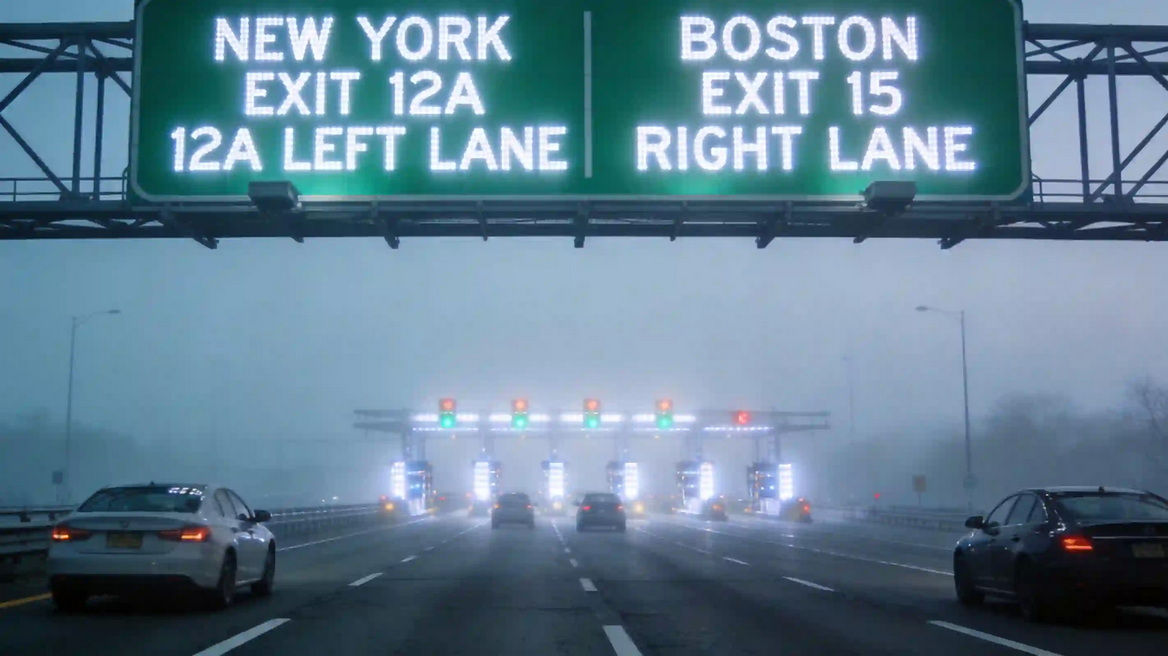
Modern LED traffic signs often integrate sensors, timers, wireless control, and dynamic messages. White LEDs, with their high efficiency and mature driver solutions, are widely used in variable message signs (VMS) and lane control signals, where brightness can be dynamically adjusted according to ambient light and weather.
White LEDs can cause increased glare and halo effects in dense fog because of stronger back‑scatter from the water droplets. If the beam is not well controlled, drivers may see a bright "white wall" rather than clear sign content.
To mitigate this, professional manufacturers use:
- Lower brightness levels for fog‑prone sections (through automatic dimming).
- Optimized optics that distribute light evenly across the sign surface without point hotspots.
- Selective color tuning toward warmer white ranges when fog is detected, if intelligent control is available.
When these design steps are taken, white LEDs can still perform well even in mixed fog conditions, especially for short to medium viewing distances.
Drawing on field experience with LED traffic signage in highways, tunnels, and coastal zones, a hybrid strategy typically delivers the best safety and UX performance.
1. Location has frequent dense fog
- Coastal highways, mountain passes, river bridges, and lake‑side roads.
2. Sign function is warning or hazard
- Dangerous curves, steep slopes, accident hot spots, school zones, and work zones.
3. Driver reaction time is critical
- Short stopping‑sight distances and sections with high crash history.
1. Primary function is guidance or regulation
- Exit directions, toll lane information, parking guidance, lane‑use control.
2. Visibility is generally good but occasionally foggy
- Urban expressways, ring roads, and smart parking structures.
3. Consistency with national standards is prioritized
- Projects requiring strict color uniformity across a network.
Field evaluations of active LED traffic signs show significant gains in visibility over conventional reflective signs:
- For guide signs, LED active signs improved recognition distance by up to 63% compared with diamond‑grade reflective materials in adverse conditions.
- For warning and prohibition signs, active LED signs delivered around 20% longer recognition distances.
These results highlight why many agencies are shifting to LED‑based active signage, and why color selection (amber vs. white) becomes a critical optimization point for fog‑heavy regions.
From a manufacturer's perspective, especially for OEM/ODM projects like those of Shenzhen Xingsheng Traffic Facilities Co., Ltd., a structured process helps ensure both performance and compliance.
1. Collect multi‑year data on fog frequency, duration, and visibility ranges from local transport or meteorological agencies.
2. Categorize road segments by risk: tunnels, bridges, mountain sections, urban arterials, parking areas.
3. Assign color strategy (amber, white, or hybrid) according to risk profile and sign function.
- Color temperature: 3000K–3500K for amber or selective yellow zones, 5000K–6000K for standard white guidance signs.
- Luminous intensity and distribution: Choose LED packages and optics that meet visibility requirements without over‑brightness in fog; follow relevant LED traffic signal classifications.
- Ingress protection (IP): IP67 or higher for signs in harsh environments, ensuring dust‑tight and water‑resistant construction.
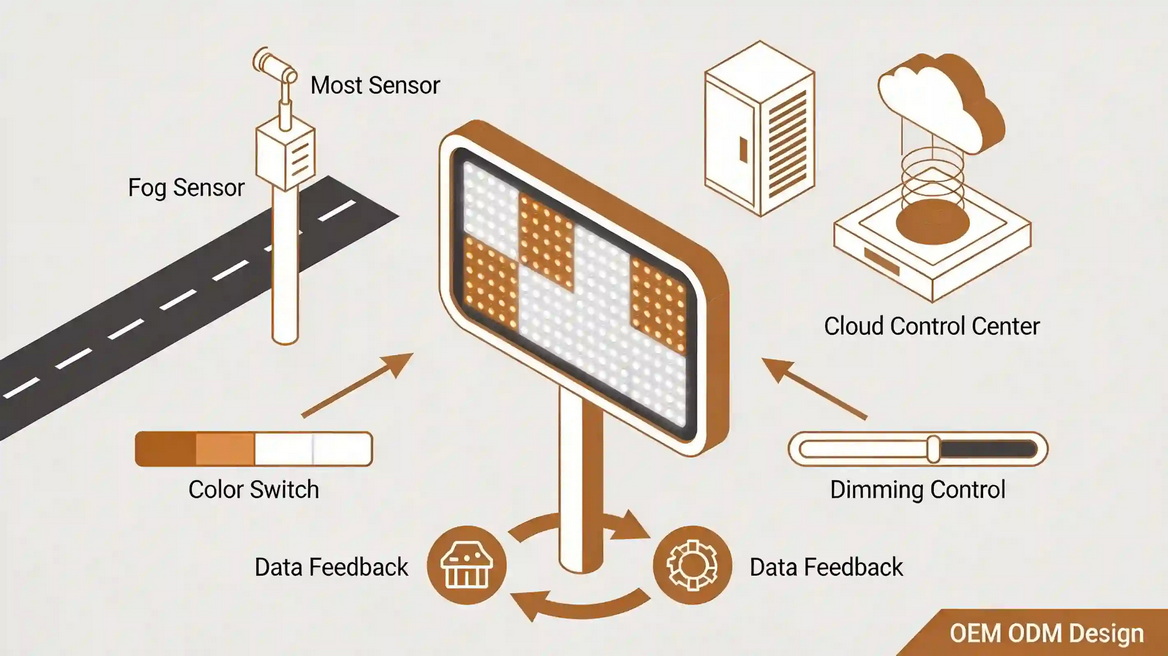
- Automatic brightness adjustment based on ambient sensors.
- Fog detection input (from roadside or central system) to reduce glare and, where applicable, adjust color tone.
- Remote monitoring to detect failures and maintain high uptime.
- Conduct pilot installations in representative foggy zones.
- Measure recognition distance, driver feedback, and incident data before and after deployment.
- Optimize LED color mix, brightness, and optical design based on real‑world performance.
Shenzhen Xingsheng Traffic Facilities Co., Ltd. focuses on LED traffic signs, highway safety facilities, toll‑station and parking guidance systems, serving clients worldwide with OEM and ODM capabilities.
For clients deciding between amber and white LEDs for foggy regions, Xingsheng can:
- Provide custom optical designs combining amber and white LEDs in the same sign, giving both fog performance and clear‑weather clarity.
- Tailor control systems with multi‑stage dimming, time scheduling, and sensor integration for better UX and energy efficiency.
- Align every solution with local standards and project requirements, supporting documentation, photometric testing, and long‑term maintenance plans.
This combination of engineering expertise and flexible manufacturing allows project owners to implement data‑driven, site‑specific solutions rather than relying on one universal color choice.
If you are planning a fog‑area traffic safety upgrade or designing a new highway, toll station, or parking project, you do not have to choose blindly between amber and white LEDs.
Shenzhen Xingsheng Traffic Facilities Co., Ltd. can evaluate your specific routes, visibility conditions, and standards, then design OEM or ODM LED sign solutions that combine amber and white LEDs, smart control, and robust hardware for maximum safety and lifetime value.
Contact our engineering team to discuss your fog‑area traffic sign requirements and request a custom LED sign design proposal tailored to your project.
No. Amber LEDs usually offer better contrast and lower glare in heavy fog, but white LEDs can still be preferable for long‑distance guidance and text readability in moderate or clear conditions when combined with proper dimming and optics.
Yes. Many advanced signs use dual‑color or multi‑channel LED layouts, allowing amber for warning modes and white for standard information display, controlled via sensors or central systems.
Most countries define specific colors for each traffic sign type, and some have raised concerns about active LED signs that deviate from standard colors, so any design should follow local regulations such as GB 5768 in China.
Field tests indicate that active LED signs can increase recognition distance by 20% or more for warning signs and up to around 60% for guide signs in adverse conditions, depending on design and environment.
For outdoor fog‑prone and high‑humidity environments, IP67 or IP68 is generally recommended to ensure the sign is dust‑tight and resistant to heavy rain or temporary immersion.
1. JW Speaker – *Best LED Lights for Maximum Visibility in Foggy Conditions* (2025).
2. Oracle Lights – *Winter Driving Visibility: How White, Yellow, and Amber Lighting Improve Safety* (2025).
3. Signal‑Tech – *Illuminated Traffic Signage and Vision Zero* (2024).
4. Lightway Traffic – *LED Traffic Light Classification: 4 Key Ways to Distinguish Them* (2024).
https://www.lightwaytraffic.com/led-traffic-light-classification-4-key-ways-to-distinguish-them/
5. National SSC – *Why Drivers Prefer LED Traffic Signs* (2025).
https://www.nationalssc.com/why-drivers-prefer-led-traffic-signs
6. Autoclass Magazine – *How to Choose the Best LED Fog Lights for Your Vehicle* (2025).


