
Please Choose Your Language
Views: 222 Author: XS Traffic Facilities Publish Time: 2026-05-29 Origin: Site


Content Menu
● What This Comparison Is About
● Core Definitions And Use Cases
>> What Are Real-Time Programmable LED Signs?
>> What Are Static Vinyl Graphics?
● Visibility, Attention, And Safety Impact
● Content Flexibility And Operational Control
>> Dynamic Programmability (LED) vs One‑Time Printing (Vinyl)
● Cost, ROI, And Total Cost Of Ownership
>> Initial Investment vs Long‑Term Savings
>> Simplified ROI Perspective For Traffic Projects
● Durability, Maintenance, And Environmental Factors
>> Weather, Energy, And Sustainability
● User Experience: Drivers, Operators, And Contractors
>> Contractor And Integrator Perspective
● Technical And Integration Considerations (Expert View)
● When Static Vinyl Still Makes Sense
● Practical Selection Framework For Traffic Projects
● Comparison Table: LED Signs vs Vinyl Graphics
● Where A Shenzhen OEM/ODM Manufacturer Adds Value
● Call To Action For Traffic Buyers
● FAQs About LED Signs Vs Static Vinyl Graphics
>> 1. Are programmable LED signs always better than static vinyl graphics?
>> 2. How long do LED traffic signs typically last?
>> 3. Do LED traffic signs consume a lot of energy?
>> 4. How difficult is it to integrate LED signs into existing traffic systems?
>> 5. When should I still choose static vinyl graphics?
Real-time programmable LED signs deliver higher visibility, flexibility, and long‑term ROI than static vinyl graphics, while static vinyl can still make sense for simple, fixed traffic messages with tight budgets. As a Shenzhen-based LED traffic sign manufacturer, you can position programmable LED solutions as the smarter, future‑ready choice for highways, toll stations, and parking facilities, with vinyl used only for low‑complexity, low‑change scenarios.

In traffic safety projects, decision‑makers often struggle between real-time programmable LED signs and static vinyl graphics for critical locations like highways, toll plazas, city streets, and parking lots. Programmable LED signs are essentially digital signage, controlled by software to push dynamic content in real time; static vinyl graphics are printed, fixed‑message signs that rarely change once installed.
For a manufacturer like Shenzhen Xingsheng Traffic Facilities Co., Ltd., which offers OEM/ODM LED traffic solutions, clarifying these trade‑offs is key to helping engineering teams, EPC contractors, and integrators build safer, more efficient traffic systems.
Real-time programmable LED traffic signs are electronic displays that use LED modules and controllers to show variable messages, speed limits, lane status, and warnings. These signs can be updated remotely via a central control system or cloud platform.
Typical applications in traffic and parking include:
- Variable message signs (VMS) on expressways
- Lane control and toll rate displays at toll plazas
- Parking guidance signs showing available spaces in real time
- Dynamic speed limit, weather, and incident warning signs
Static vinyl graphics are printed signs made with vinyl films applied to metal or composite substrates, showing a single, unchanging message. They are common for:
- Permanent regulatory signs (STOP, speed limit, directional arrows)
- Facility identification, branding, and parking area labeling
- Long‑term wayfinding where content stays stable for years
From a safety and UX standpoint, visibility is often the first decision criterion. Digital signage studies show that dynamic displays can capture up to several times more views than static signs, which translates directly into better driver awareness and reaction time.
Programmable LED traffic signs:
- Use high‑brightness LEDs and can adjust brightness automatically for day/night and bad weather.
- Support animations, flashing elements, and color changes to draw attention to urgent warnings or incidents.
- Maintain visibility at long distances on highways and in tunnels when designed to traffic standards.
Static vinyl graphics:
- Rely solely on retroreflective sheeting and ambient light (headlights, street lighting).
- Work well for simple, familiar symbols but are less effective in complex, real‑time situations (congestion, diversions, adverse weather).
UX takeaway: For high‑risk, high‑speed environments, real‑time LED signs are significantly better at capturing attention than static vinyl, which is why they are widely preferred for variable message and warning applications.
With real-time programmable LED signs, traffic authorities and operators can:
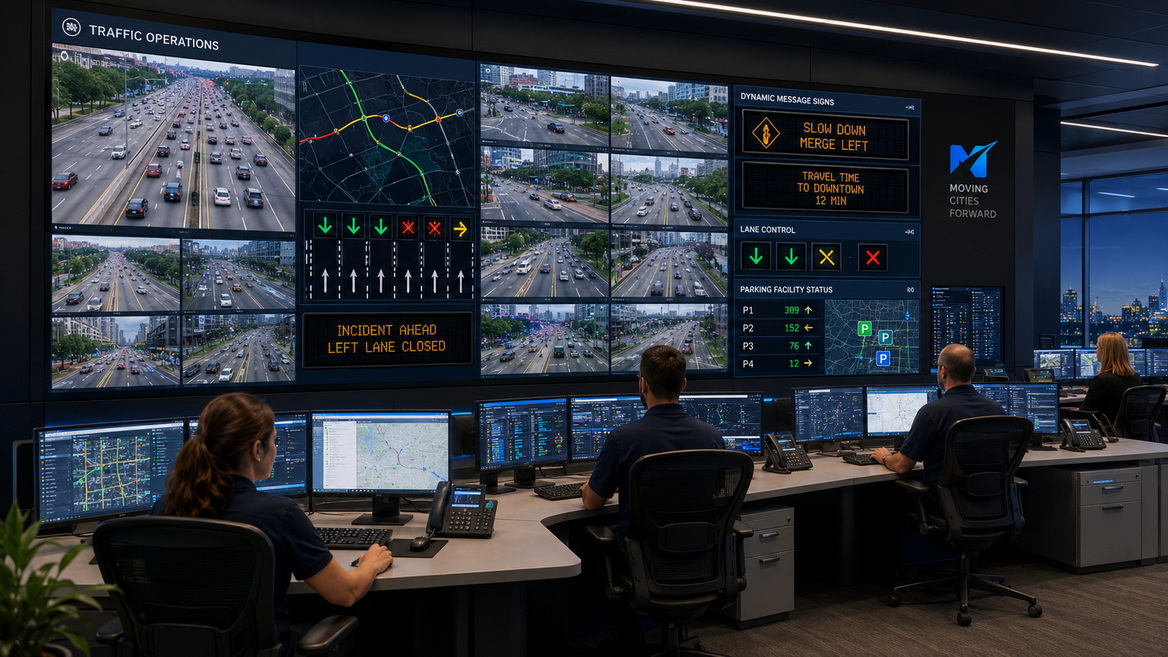
- Change messages instantly across multiple sites from a central control room
- Schedule different content by time of day, traffic conditions, or weather
- Integrate with ITS platforms, sensors, and cameras to trigger automatic messages (accidents, congestion, fog)
Static vinyl graphics, by contrast, require:
- A complete reprint and reinstallation for any content update
- Physical access to each sign, crane trucks, and lane closures in many cases
- Long planning cycles, which make them unsuitable for dynamic or time‑sensitive messaging
For a manufacturer with OEM/ODM capability, programmable LED signs also allow you to customize protocols, interfaces, and control software for different national standards and integrator platforms, creating strong lock‑in and added value.
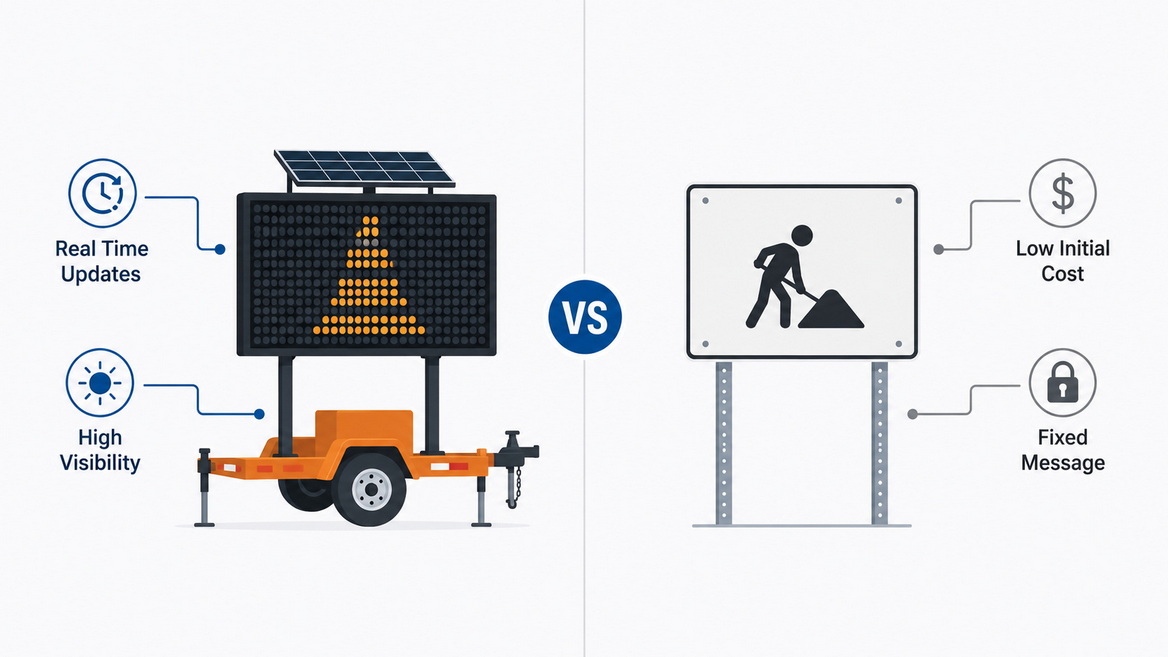
Static vinyl graphics are almost always cheaper upfront, because costs are limited to design, printing, and basic installation. For small projects with stable messaging, this can be attractive.
However, studies and industry analyses consistently show that digital/LED signage offers higher long‑term ROI, especially where messages change frequently. LED signs:
- Require a higher initial capital expenditure (display hardware, controller, communication, structure)
- Operate with very low power consumption compared to older technologies, thanks to LED efficiency
- Reduce content update and maintenance costs, because changes are done via software, not physical interventions
- Enable revenue opportunities (for some users) via advertising, dynamic tolling, or premium lane management
Static vinyl signs:
- Have minimal capex but high lifecycle update costs if content changes often
- Require repeated printing, logistics, and on‑site work with every change
For highway and municipal projects, the ROI of LED traffic signs is driven by:
- Reduced accident risk and incident duration via clearer, faster communication
- Lower lifetime maintenance and reprint costs vs constantly replacing vinyl
- Better utilization of infrastructure, e. g., dynamic lane assignment, variable speed limits
From a procurement and engineering perspective, this often justifies the higher capex, particularly in high‑traffic or safety‑critical corridors.
Modern LED signs typically deliver 5–10 years of effective service life under normal conditions, sometimes more with quality components and proper thermal design. They may require periodic module replacement or controller updates, but the system is designed for modular servicing.
Static vinyl signs can last 7–15 years, depending on material grade and environmental exposure, though colors can fade under UV and harsh weather. In heavy sun, coastal, or polluted environments, vinyl aging is accelerated.
- LED signs consume significantly less energy than older illuminated technologies and can be integrated with solar power or smart dimming.
- LED solutions reduce waste over time by avoiding repeated reprints and disposals of vinyl, especially in projects with frequent content changes.
- Vinyl graphics production and disposal involve plastics and solvents, which raise environmental concerns if signs are frequently replaced.
For traffic and parking infrastructure owners pursuing green or smart city initiatives, LED systems align better with long‑term sustainability goals.
From a driver's perspective, clarity and reaction time are everything. Dynamic LED traffic signs provide:
- Clear, bright, and sometimes color‑coded messages at speed
- Real‑time warnings about lane closures, incidents, and hazards
- Less cognitive load, because messages can be tailored to conditions instead of relying on generic, static warnings
Static vinyl signs are predictable and familiar but can overload drivers when many signs are placed together, and they cannot adapt when conditions change.
Traffic control centers and parking operators benefit from LED signs because they can:
- Respond quickly to incidents without deploying field teams
- Coordinate messaging across multiple corridors or facilities
- Collect data on content performance and system status for better planning
With static vinyl, operators are limited to what was printed; any mistake or policy change means long lead times and higher operational friction.
For EPC contractors and system integrators, programmable LED signs from an OEM/ODM manufacturer offer:
- Custom mechanical designs (gantries, housings, brackets)
- Tailored communication protocols for ITS or parking systems
- Possibility of integrating sensors, cameras, or solar power in a single package
Static vinyl graphics, although simpler, offer less opportunity for differentiation and recurring service revenue.
From an industry expert standpoint, the decision between real-time programmable LED signs and static vinyl graphics often comes down to integration and control strategy.
Programmable LED signs can be designed to support:
- Standard ITS protocols (e. g., NTCIP or equivalent regional standards)
- Redundant communication (fiber, 4G/5G, RS‑485, Ethernet)
- Remote diagnostics and health monitoring (temperature, LED status, door open alarms)
Static vinyl signs simply do not integrate with control systems; they are a passive component of the traffic environment. For smart highways, intelligent parking, and connected city projects, this makes LED solutions practically mandatory.
There are still situations where static vinyl signs are a rational choice:
- Very stable messages (e. g., permanent speed limit, STOP signs)
- Low‑volume roads or private facilities where dynamic messaging is unnecessary
- Ultra‑tight budgets or temporary projects where capex must be minimized
- Backup or redundancy signage in case of electronic failure
In these cases, static vinyl can complement a broader network dominated by programmable LED signs. A hybrid approach is often best: LED for dynamic, safety‑critical content; vinyl for simple, permanent regulatory signs.
To help your B2B audience make decisions, you can guide them through a simple framework:
1. Define content change frequency
- Daily/real time → LED
- Yearly or rarely → Vinyl
2. Assess risk level and traffic volume
- High‑speed, high‑volume, safety‑critical → LED
- Low‑risk, local access or internal roads → Vinyl
3. Evaluate integration requirements
- Need ITS integration, remote control, data → LED
- Standalone regulatory signage → Vinyl
4. Consider lifecycle cost, not just capex
- Multiple updates expected → LED often cheaper over 5–10 years
- One‑time installation → Vinyl may suffice
This kind of structured guidance positions your company as a consultative expert, not just a hardware supplier.
Key Factors In Traffic And Parking Projects
| Factor | Real-Time Programmable LED Signs | Static Vinyl Graphics |
|---|---|---|
| Visibility & Attention | High brightness, dynamic content, strong attention capture in all conditions | Dependent on reflectivity and lighting, less attention‑grabbing |
| Content Flexibility | Instant remote updates, scheduling, sensor‑driven messages | Fixed content, requires reprint and reinstall for updates |
| Initial Cost | Higher hardware and installation cost | Low upfront design and print cost |
| Lifecycle & ROI | Higher long‑term ROI where messages change often | Lower initial cost but higher update cost over time |
| Integration | Supports ITS protocols, remote control, monitoring | No system integration, purely passive |
| Environmental Impact | Energy‑efficient LEDs, fewer physical replacements | Vinyl production and disposal can add waste, especially with frequent changes |
| Best Use Cases | Highways, toll plazas, smart parking, dynamic warnings | Permanent regulatory signs, simple wayfinding, low‑change messages |
As a Chinese OEM/ODM manufacturer of LED traffic signs, your company can strengthen its E‑E‑A‑T by highlighting:
- Project experience with highways, toll stations, parking guidance, and urban traffic systems in multiple regions.
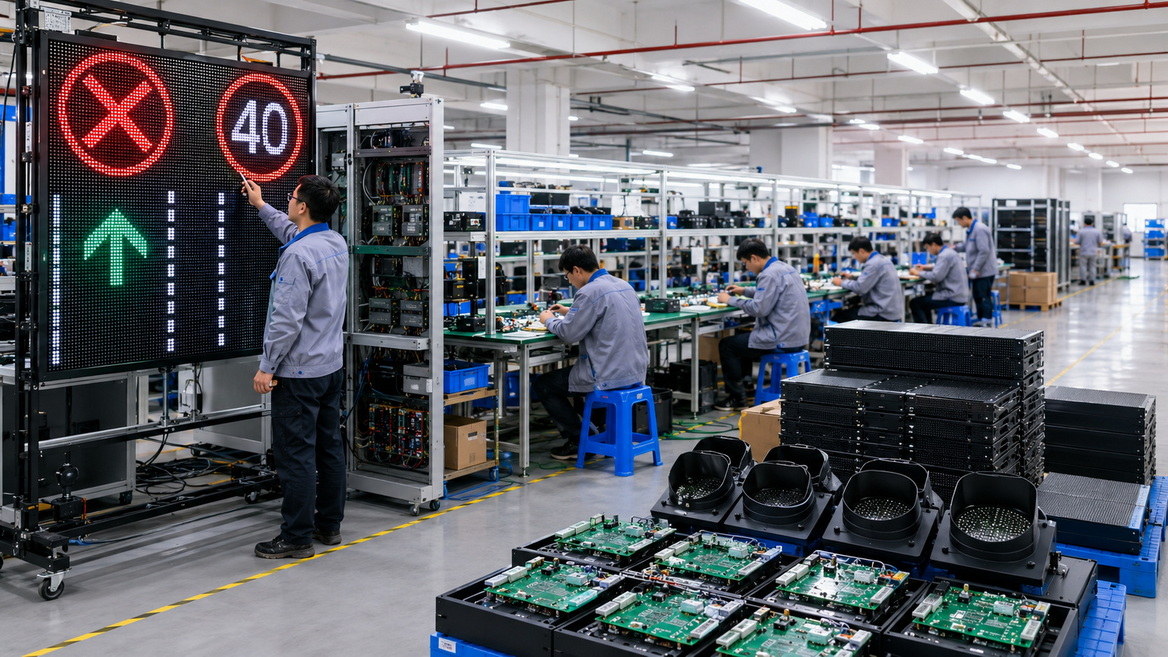
- Ability to customize LED sign size, pixel pitch, optics, control systems, and cabinets based on local standards and environmental conditions.
- Full solution capability, from LED traffic signals and VMS to solar warning signs and parking displays, enabling integrators to source from a single partner.
By positioning your engineering team as experts who can model traffic flow, visibility distances, and power budgets, you build trust with international B2B buyers and consultants.
If you are planning a highway, urban road, toll station, or smart parking project and are unsure whether real-time programmable LED signs or static vinyl graphics are the best fit, our engineering team can help you build the right mix based on traffic volume, risk level, and budget.
Contact Shenzhen Xingsheng Traffic Facilities Co., Ltd. to discuss your project drawings, performance requirements, and OEM/ODM needs, and we will propose a complete LED traffic signage solution that optimizes safety, cost, and long‑term scalability.
No. LED signs are better for dynamic, high‑risk environments, while static vinyl can be sufficient for simple, stable regulatory messages with limited budget and low change frequency.
Quality LED signs usually deliver 5–10 years of service depending on design, usage, and environment, with modular components that can be replaced as needed.
LEDs are highly energy‑efficient, using far less power than older illuminated technologies, especially when combined with dimming or solar power systems.
Modern LED traffic signs can support standard communication protocols and interfaces, enabling relatively straightforward integration with ITS platforms and parking systems when specified correctly.
Use static vinyl for permanent, low‑complexity messages where updates are rare, traffic risk is lower, and budgets are tight, or as a backup to electronic systems.
1. Wavetec – *Static vs Digital Signage: Which One to Choose?*
https://www.wavetec.com/blog/digital-signage/static-vs-digital-signage/
2. AA Sign Company – *The Cost-Effectiveness of LED Signs*
https://aasign.com/led-signs-cost-effectiveness/
3. Plato Graphics – *Comparing Digital and Traditional Custom Signs: Which Is Better?*
https://platongraphics.com/comparing-digital-and-traditional-custom-signs-which-is-better
4. LinkedIn – *Cost-Benefit Analysis: Digital Signage vs. Traditional Static*
https://www.linkedin.com/pulse/cost-benefit-analysis-digital-signage-vs-traditional-n1jvf
5. Cirrus LED – *Traditional Static vs Digital Signs: Pros and Cons*
https://cirrusled.com/blog/traditional-static-vs-digital-signs-pros-and-cons
6. Mega Sign – *LED Signs Vs. Static Signs: Which Sign Is Right For You?*
https://www.megasigninc.com/blog/led-signs-vs-static-signs/
7. Lightway / Henan TUMING Traffic – *Solar Traffic Safety Products Overview*
https://www.lightwaytraffic.com/about/
8. Sinowatcher Technology – *Professional Traffic Signals Lights Supplier*


