
Please Choose Your Language
Views: 222 Author: XS Traffic Facilities Publish Time: 2026-05-30 Origin: Site


Content Menu
● What Does a White Traffic Sign Mean?
● Why White Is Chosen for Regulatory Signs
● Types of White Traffic Signs and What to Do
>> White Road Sign with a Black Line
>> White Traffic Sign with Arrow
>> White Rectangular Traffic Sign
● Shapes of White Signs and Their Meanings
>> White Triangle Traffic Sign
>> White Square or Rectangular Sign
● Other Common White Signs Drivers Should Know
● White Driving Signs in Modern Traffic Systems
● Why LED White Regulatory Signs Improve Safety
● How We Design LED White Traffic Signs as a Manufacturer
● Practical Tips for Drivers: How to Read White Signs Faster
● Where LED White Signs Add the Most Value (Expert Insight)
● OEM/ODM LED Traffic Sign Solutions We Offer
● Call to Action: Design Safer White LED Signs with Us
● FAQs About White Traffic Signs
>> 1. Are all white traffic signs regulatory?
>> 2. What is the difference between a white speed‑limit sign and a yellow advisory speed sign?
>> 3. Why are some white signs illuminated with LED while others are not?
>> 4. Do LED white signs require different driver behavior?
>> 5. How should cities decide where to install LED white regulatory signs?
White traffic signs are the "rulebook" of the road: they tell drivers exactly what is legally required or prohibited, and they are critical to preventing crashes and keeping traffic flowing smoothly. As an LED traffic sign manufacturer serving highways, city streets, toll stations, and parking facilities, I've seen firsthand how clear white regulatory signs—especially when upgraded with LED technology—can dramatically improve visibility and driver compliance in real‑world projects.
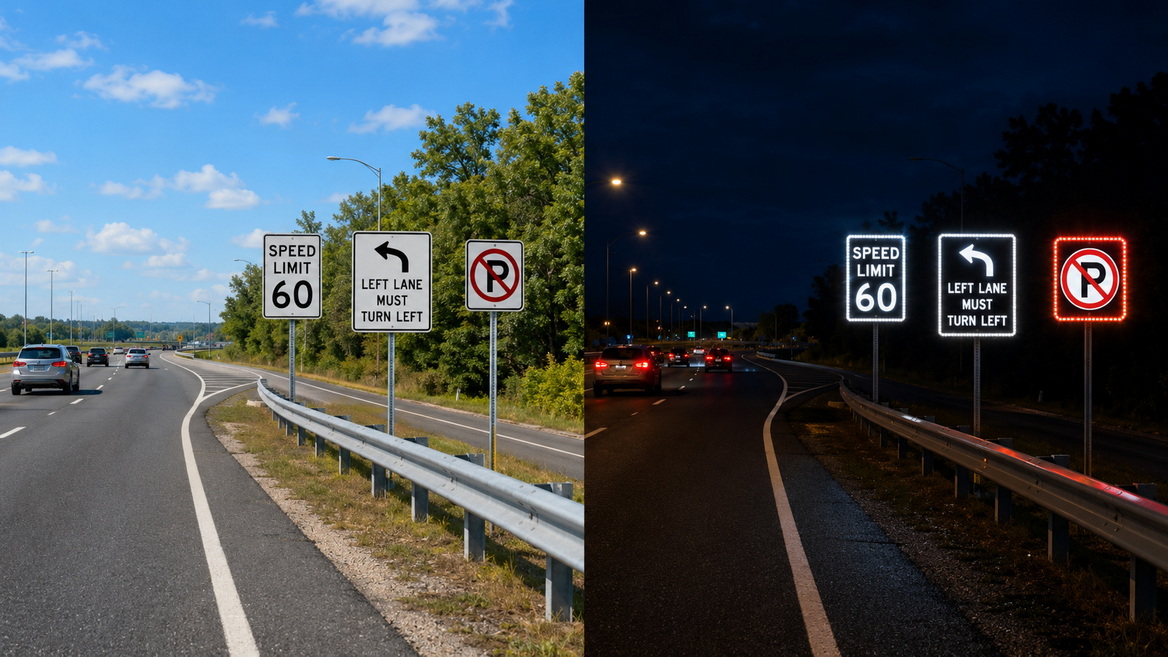
White traffic signs are primarily regulatory signs that communicate rules drivers must obey—speed limits, lane use, turn restrictions, parking rules, and other legal requirements. Ignoring these signs can lead to traffic violations, fines, or even serious accidents, which is why traffic authorities around the world treat white signs as a core safety tool.
In practice, a white background provides a high‑contrast surface for black or red text and symbols, making the message readable at speed and in poor weather conditions. When we design LED traffic signs, we build on this principle by adding light to the classic white‑plus‑black/red combination so drivers can still clearly see the regulation in rain, fog, and at night.
The choice of white is not random; it is rooted in decades of human‑factors research and international standards.
- High luminance and contrast: White reflects more light than darker colors, which improves legibility under headlights and street lighting.
- Consistent color coding: In many countries, white = legal rules, while other colors indicate warning (yellow), construction (orange), and services (blue).
Standards and practice documents for traffic control devices consistently treat white as the base color for regulatory signs, particularly when paired with black legends and red elements for prohibitions. For LED‑embedded versions, these same standards emphasize maintaining color consistency and luminance so the illuminated sign still looks like the non‑illuminated version drivers already recognize.
Below is a streamlined, driver‑focused view of the main white traffic signs covered in the original article—expanded with clear actions you should take when you see each one.
White pavement markings define lanes, separate same‑direction traffic, and guide vehicle positioning.
- Broken/dotted white line: You may change lanes or overtake if it is safe to do so.
- Solid white line: Stay in your lane; lane changes are discouraged or prohibited, especially near intersections, ramps, and tunnels.
For LED‑enhanced applications, embedded LEDs in edge lines and lane lines can significantly increase conspicuity in dark or rainy conditions, and research shows they can improve driver yielding and lane discipline in critical areas like crossings.
In many regions, a white sign with a single black diagonal line marks the end of a lower speed limit or special restriction, and a return to the general (national or default) speed limit.
- What you should do:
- Resume driving at the normal legal speed for that road type.
- Continue to monitor conditions; "normal speed" is not always "safe speed" in bad weather.
Some countries also use similar motifs (white background, black diagonal) to show the end of other restrictions, such as passing bans or vehicle class limitations.
White directional signs with arrows tell you which direction you must or may take—straight ahead, left, right, or a specific turn pattern.
- What you should do:
- Move into the correct lane early.
- Follow the arrow exactly to avoid last‑second swerves and violations.
In complex interchanges, LED arrow signs and lane‑control signals can dramatically reduce erratic lane changes by giving drivers bright, unambiguous guidance where to go.
White rectangular signs are the workhorses of regulatory information: they cover speed limits, lane use, turn requirements, parking rules, and more.
Typical examples include:
- "Speed Limit 50"
- "Left Lane Must Turn Left"
- "No Parking 8:00–18:00"
As a driver, treat these as non‑negotiable rules—unlike some warning signs, you are legally required to obey them.
Drivers often recognize the shape of a sign before they can read it. Shape and color work together to speed up reaction time.
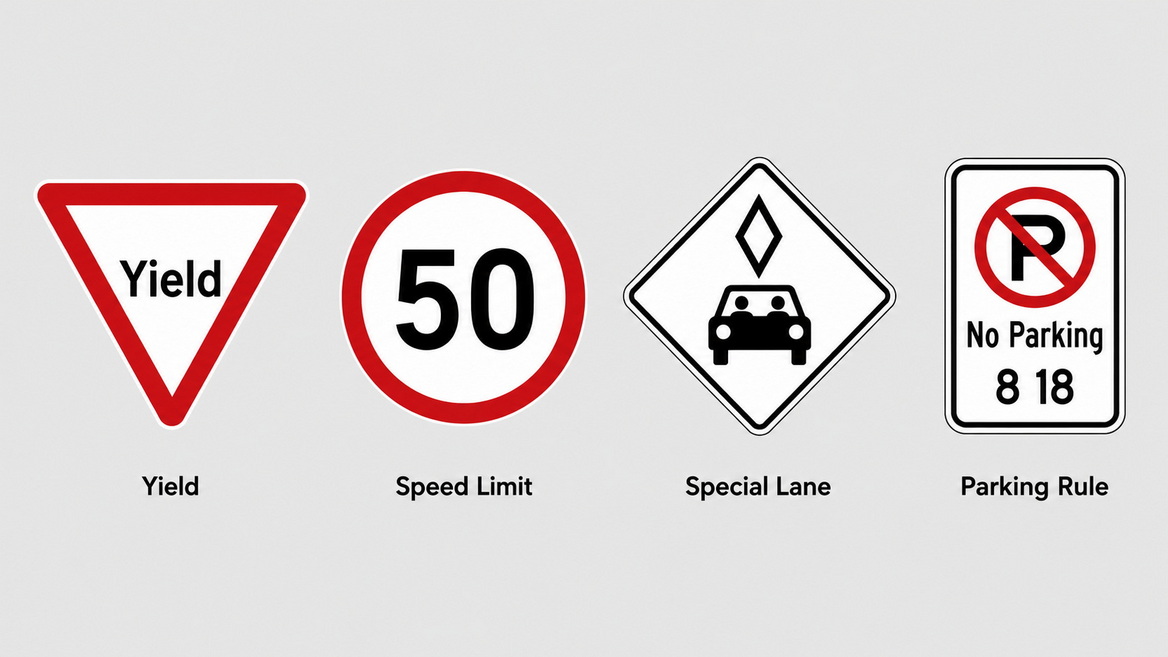
A white triangle with a red border frequently means "Yield" or "Give Way".
- Downward‑pointing triangle: You must slow down and let traffic on the main road pass before you proceed.
- Upward triangle or other warning triangle: Indicates hazards such as narrowed road or junction ahead; slow down and prepare to react.
White diamond signs often mark special or restricted lanes such as:
- HOV (High‑Occupancy Vehicle) lanes
- Bus‑only or bicycle‑only lanes, depending on the jurisdiction
In some countries, white diamonds are also used for warnings in tram or pedestrian areas. When you see a diamond lane marker on the pavement or on an overhead sign, assume you may not enter unless you match the permitted vehicle type or occupancy.
A white circular sign is usually regulatory and may have:
- A red border for prohibitions (no entry, no bicycles, no trucks)
- A black symbol or number for mandatory limits such as speed or axle weight
If you see a plain white circle with a black diagonal stripe, it often means end of previous restrictions for that section of road.
White squares and rectangles with black or red text/symbols provide detailed rules:
- No parking zones
- Time‑limited parking
- Turn restrictions (e. g., "No Left Turn")
- Route numbers and street names
Again, treat red elements as "don't do this" and black text or arrows as "this is how you must drive."
Beyond the core shapes, there are many specialized white signs that carry important safety messages. Here are some of the most common and how to respond.
- No Turn signs: Indicate no left, right, or U‑turn at specific intersections—obey to avoid collisions and tickets.
- Do Not Pass signs: Mark areas where overtaking is unsafe due to curves, hills, or limited sight distance; remain in your lane until the restriction ends.
- Intersection lane control signs: Show which lanes can turn or go straight at upcoming intersections—get into the correct lane early.
- Pedestrian crossing signs: Tell you there is a crossing where drivers must slow down and watch for people on foot.
- Narrow bridge or narrow road signs: Warn you to reduce speed and potentially yield to oncoming traffic.
- Parking regulation signs: Define where and when you may park; always check time limits, days, and special conditions (e. g., permit holders only).
- Unguarded railway crossing signs: Indicate crossings without barriers; approach slowly, look both ways, and cross only when it is clearly safe.
- Emergency stopping only signs: Remind you that shoulders or bays are for emergencies, not convenience parking.
- Weight limit signs: Protect bridges and pavements by restricting heavy vehicles; operators must know their total and axle loads.
Each of these messages can be delivered via static reflective signs or LED‑enhanced versions, with LEDs providing additional conspicuity in high‑risk locations such as rural crossings, tight curves, or fog‑prone areas.
In modern road networks, white signs appear in many specialized contexts that matter to drivers, fleet operators, and city planners.
Typical white driving signs include:
- Overhead clearance signs: Indicate maximum vehicle height allowed under bridges and tunnels.
- Truck route signs: Direct heavy vehicles to appropriate corridors, protecting residential streets and weak structures.
- Bicycle lane signs: Mark exclusive or priority space for cyclists.
- Street‑name signs: Help navigation and emergency response.
- Temporary work‑zone signs: Provide specific rules in construction or maintenance areas, often combined with orange elements.
As road networks become smarter, these traditional signs are increasingly integrated with intelligent transportation systems (ITS) and LED technology to support dynamic speed limits, reversible lanes, and context‑aware warnings.
From a manufacturer's standpoint, the biggest change in recent years is the shift from purely reflective signs to LED‑embedded and fully LED signs, especially for critical white regulatory messages.
Research and field trials have found that:
- LED‑embedded signs increase sign conspicuity and legibility distance, especially at night and in bad weather.
- Driver yielding rates at crossings and compliance with posted rules tend to improve when LEDs emphasize the sign border, legend, or key symbols.
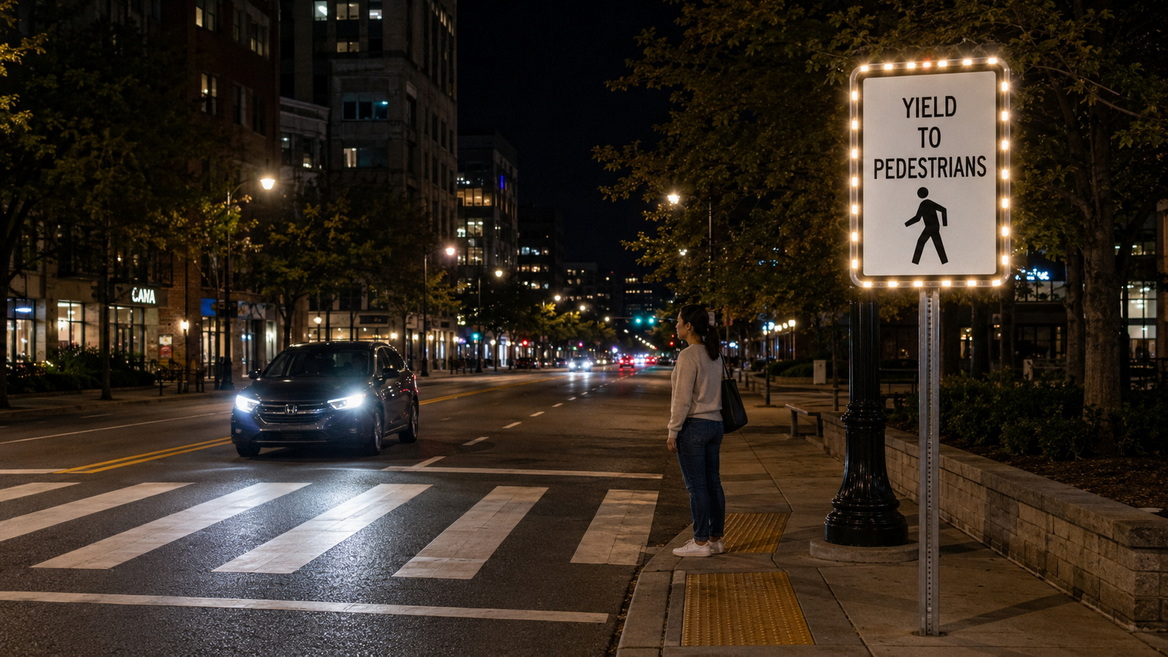
For example, an LED border around a white speed‑limit sign or "Stop"/"Yield" sign can draw attention earlier, giving drivers more reaction time and reducing abrupt braking near intersections and crossings.
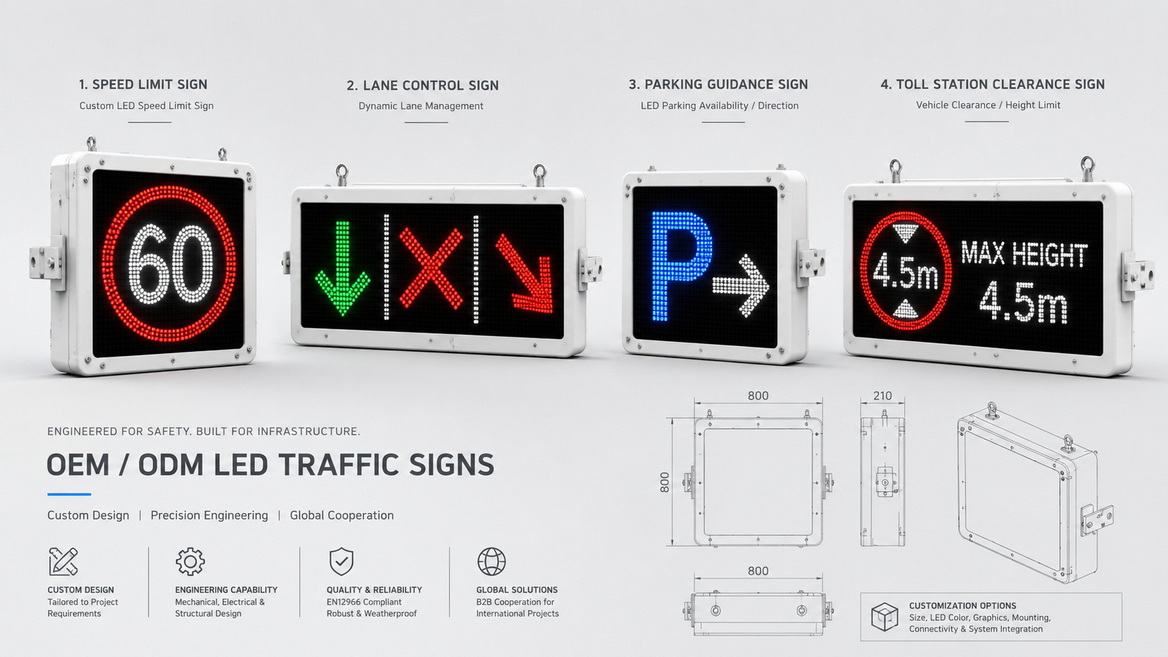
As a China‑based traffic safety manufacturer (Shenzhen Xingsheng Traffic Facilities Co., Ltd.), we design and produce LED traffic signs, LED speed limit signs, lane‑use control signs, and parking guidance signs for highways, toll stations, and urban streets. Our role is not only to supply hardware, but to help traffic engineers translate regulatory needs into reliable, field‑ready LED solutions.
When we design LED white regulatory signs, we typically focus on:
- Optical performance
- High‑efficiency LEDs with uniform brightness and controlled glare.
- Color and luminance tuned to remain consistent with standard white/black/red regulatory designs.
- Structure and durability
- Weather‑resistant housings suitable for roadside, gantry, or overhead mounting.
- IP‑rated enclosures to handle rain, dust, and temperature extremes.
- Control and integration
- Options for steady or flashing modes to highlight critical warnings.
- Interfaces to connect with controllers, speed sensors, or ITS platforms.
Through OEM and ODM projects, we customize layout, LED configuration, and power systems (including solar solutions) to match each customer's regulations and environmental conditions.
From both a safety and user‑experience standpoint, drivers benefit from a simple mental model to decode white signs quickly.
1. Scan color and shape first
- White + red = regulation or prohibition; pay close attention.
- White + black = rule or information you must follow.
- Triangles, diamonds, circles, and rectangles each signal different types of control.
2. Read the symbol before the text
- Arrows, turn symbols, and speed numbers carry most of the meaning.
- If you're driving at speed, use the symbol to react, then confirm using the text.
3. Look for "end of" clues
- Diagonal black stripes or additional markers often mean restrictions are ending and normal rules apply.
4. In LED zones, trust the lit message
- If a variable LED sign adjusts speed or lane rules (for weather, congestion, or incidents), follow the current illuminated indication—it reflects real‑time conditions.
Based on real projects and published research, LED‑enhanced white regulatory signs tend to deliver the highest return in specific high‑risk or high‑complexity areas:
1. Approaches to pedestrian crossings and school zones
- Flashing LED borders around speed‑limit or "Yield to Pedestrians" signs help drivers notice vulnerable users earlier.
2. High‑speed rural curves and narrow bridges
- LED signs and embedded road studs along the edge line can improve lane keeping and reduce run‑off‑road crashes, especially at night.
3. Complex interchanges and lane‑drop areas
- Bright LED lane‑control signs and directional arrows reduce sudden lane changes and missed exits.
4. Tunnels, toll plazas, and parking structures
- LED white signs for speed, clearance, and lane instructions remain visible despite low light, glare, or "visual noise" from other equipment.
As cities move toward Vision Zero–style safety strategies, strategically upgrading critical white regulatory signs to LED is often one of the most cost‑effective ways to improve compliance and reduce severe crashes.
Because every road network is different, we work with global customers in OEM and ODM modes to tailor white LED sign solutions to their standards and branding.
Typical OEM/ODM options include:
- Custom sign dimensions and layouts for speed limits, lane control, and parking guidance.
- Integrated LED modules (static, flashing, or variable message) built into standard white regulatory sign faces.
- Solar‑powered systems for remote or off‑grid road sections.
- Smart connectivity for integration with ITS platforms, sensors, and remote monitoring.
By combining our manufacturing experience with local traffic regulations, we help agencies and integrators deploy white regulatory signs that are not only compliant and durable but also highly visible and intuitive for drivers.
If you are a traffic engineer, system integrator, distributor, or parking operator, and you are planning to upgrade your regulatory signage, it is the right time to consider LED‑enhanced white signs.
We can support you with:
- Custom OEM and ODM LED traffic signs for highways, city streets, toll plazas, and parking facilities.
- Engineering support to align designs with your local traffic standards and environmental conditions.
- Scalable production for both pilot projects and large‑volume deployments.
Tell us about your project requirements (sign types, road environment, standards), and our team will help you design an LED white traffic sign solution that improves visibility, compliance, and road safety.
Most white traffic signs are regulatory, especially those with black legends and red borders, but some white signs also provide route or location information such as street names.
A white speed‑limit sign shows a legal maximum speed you must not exceed, while a yellow advisory sign suggests a safe speed for conditions like curves but is not a strict legal limit in many jurisdictions.
LED white signs are typically used in locations with higher crash risk, poor visibility, or complex maneuvers, because research shows they improve conspicuity and driver compliance compared with standard reflective signs.
No—LED signs communicate the same rules as traditional signs; the LEDs simply make the message clearer and more noticeable in difficult conditions.
Agencies usually prioritize sites with high crash histories, vulnerable users (schools, crossings), complex lane arrangements, and poor lighting, then evaluate performance after installation using speed, yielding, and crash data.
1. TrafficSign. com – *Road Signs Explained: Colors and Shapes*
https://www.trafficsign.com/road-signs-explained
2. Side‑Line – *What Do the White Traffic Signs Mean?*
https://www.side-line.com/what-do-the-white-traffic-signs-mean/
3. U. S. Transportation Research / GovInfo – *Embedded LEDs in Signs*
https://www.govinfo.gov/content/pkg/GOVPUB-TD2-PURL-gpo8634/pdf/GOVPUB-TD2-PURL-gpo8634.pdf
4. Center for Transportation Safety – *Multistate Analysis Investigating LED‑Embedded School‑Crossing Signs*
https://cts.tti.tamu.edu/files/2023/05/LED-EM-Signs.pdf
5. TAC – *Recommended Practices for LED‑Embedded Traffic Signs*
https://www.tac-atc.ca/wp-content/uploads/ptm-ledsgn-e.pdf
6. LED Lighting Solutions – *Traffic Safety, Road & Stop Signs*
https://ledlighting-solutions.com/traffic-safety.html
7. FHWA – *Roadway Visibility and Lighting Requirements*
8. KioskIndustry. org – *How To Choose the Right Shenzhen OEM/ODM Partner (Checklist)*


