
Please Choose Your Language
Views: 285 Author: XS Traffic Facilities Publish Time: 2026-07-09 Origin: Site


Content Menu
● What Is a Stop Sign Shape Called?
● Why Do Stop Signs Have Eight Sides?
● A Brief History of the Stop Sign
>> Early Chaos and the Need for Rules
>> The 1923 Shape‑Coding Breakthrough
>> From Yellow to Red: Color Standardization
● Advantages of the Octagon Shape for Stop Signs
● Are All Stop Signs Octagons?
● The Geometry Behind Better Road Safety
● How Octagonal Stop Signs Improve Parking Lot Safety
● Practical Design Tips for Installing Stop Signs
● OEM and ODM Traffic Safety Solutions from Shenzhen Xingsheng
● FAQs
>> 1. Is a stop sign an octagon or a hexagon?
>> 2. Are octagons only used for stop signs?
>> 3. Do all countries use octagonal stop signs?
>> 4. Why were early stop signs yellow instead of red?
>> 5. How do OEM/ODM stop sign projects work with a manufacturer?
When you drive through a busy intersection, that red octagon telling you to stop is doing far more than reminding you of basic road rules—it is a piece of safety engineering that has been refined for over a century. As a Chinese manufacturer focused on parking lot safety facilities and traffic control products, I see every day how the shape, color, and placement of a sign can be the difference between a near miss and a serious accident.
In this article, I'll walk you through why stop signs are octagons, how this shape evolved, and what it means for modern road and parking lot safety—drawing on industry standards, historical data, and my experience supporting OEM/ODM traffic safety projects around the world.
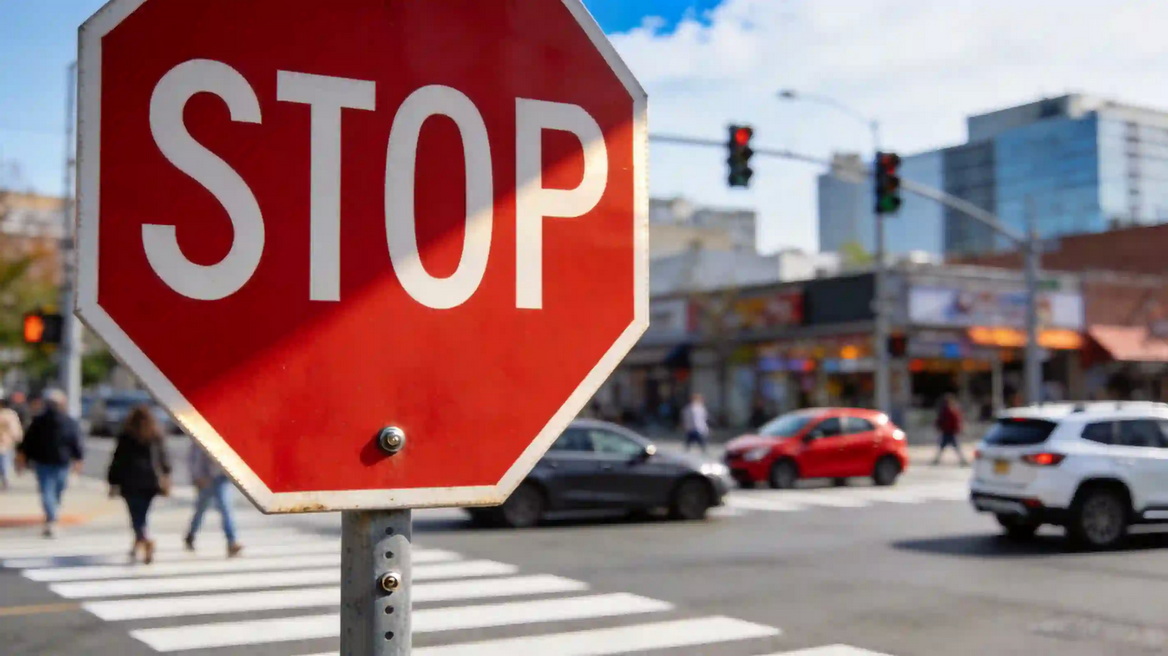
A standard stop sign is a regular octagon: eight equal sides and eight equal angles, with white "STOP" lettering on a red background. In most countries, this octagonal shape is reserved only for stop signs, which makes it immediately recognizable even when the text is obscured by dirt, snow, or poor lighting.
From a design perspective, the octagon is treated as a regulatory symbol: it carries a clear, non‑negotiable command that drivers must obey. Because drivers around the world are trained to associate this shape with a mandatory stop, the octagon itself has become a universal safety language on the road.
Stop signs have eight sides so that drivers can recognize them quickly from any angle and at various distances. When you approach an intersection, you typically have only a few seconds to notice the sign, process the message, and react safely. Research in visual cognition shows that simple, distinctive shapes are processed faster than text in urgent situations, which is exactly what happens at a busy junction.
Key reasons why the octagon works so well:
- Distinct silhouette that stands out from circular, triangular, or rectangular signs.
- Visibility from the back, so opposing traffic can recognize the stop condition even when only the rear of the sign is visible.
- Angle‑independent recognition: from slightly skewed or oblique views, drivers can still infer the eight‑sided shape.
- Faster reaction time because shape recognition does not depend on reading the word "STOP."
In practice, this means a driver can identify a stop sign before they can clearly read the letters, which is crucial on high‑speed roads, in bad weather, or in complex parking facilities.
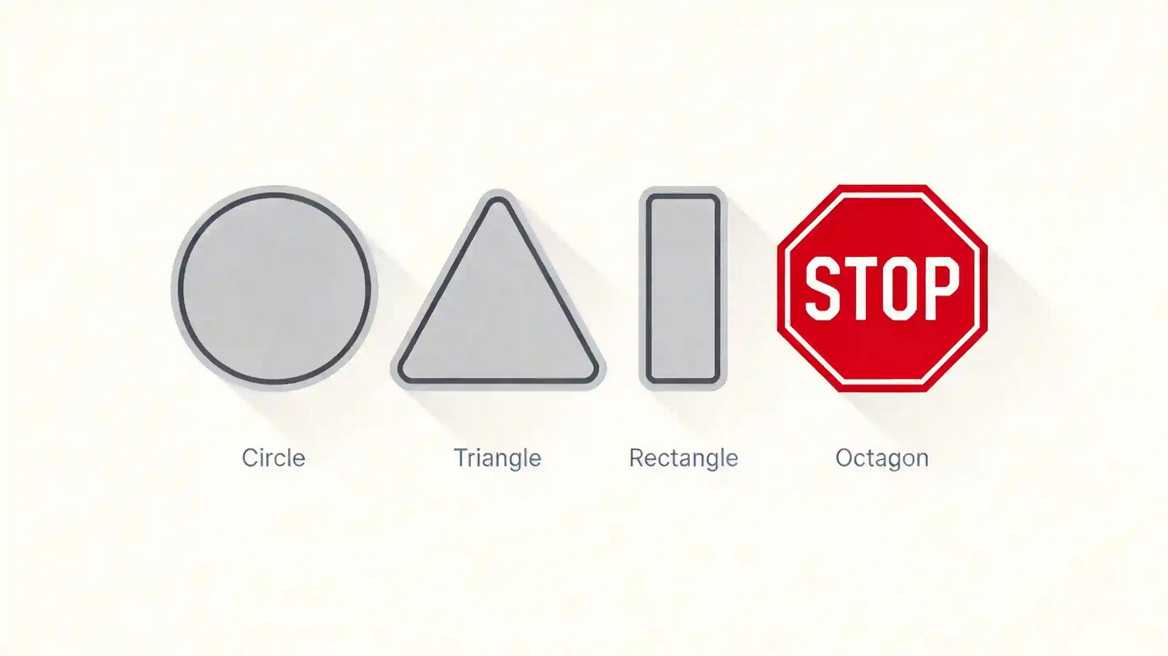
After 1900, the rapid rise of automobiles turned city streets and highways into crowded and often dangerous environments, with few standardized rules. Early traffic authorities experimented with various shapes—triangles, squares, and rectangles—for stop signs, but drivers struggled to notice and interpret them quickly.
William Phelps Eno, often called the father of traffic safety, proposed early concepts for stop signs and road rules at the beginning of the 20th century. His work laid the foundation for later standardization, including the adoption of distinct shapes for different levels of caution.
In 1923, the Mississippi Valley Association of State Highway Departments introduced a shape‑based classification system for traffic signs. Signs were ranked by the degree of caution they conveyed: circles for the highest danger, followed by octagons, then downward triangles and rectangles for less urgent information.
The octagon was chosen for stop signs because it was:
- Unique among other traffic sign shapes.
- Highly noticeable even at night and in low‑visibility conditions.
- Easy to recognize from front and back because of its symmetric geometry.
This decision turned the octagon into the global symbol of stopping, and over time drivers began to associate "eight sides" with the duty to come to a complete stop.
Early stop signs were often yellow because durable red reflective materials were not yet available. With improvements in retroreflective technology in the mid‑20th century, authorities could finally combine the octagon shape with a deep red color that remains visible under headlights at night.
The Manual on Uniform Traffic Control Devices (MUTCD) in the United States mandated the red octagonal stop sign as the national standard, and by the 1950s this design was widely adopted. Today, red octagonal stop signs are used across most countries that follow international conventions on road signs.
From a traffic engineering perspective, the octagon shape offers a combination of recognition, safety, and standardization that simpler shapes cannot match.
Major benefits include:
- Easy to recognize
The unique eight‑sided silhouette is rarely used for other signs, making it easy to pick out in busy visual environments like city intersections and large parking lots.
- Visible from the back
Drivers can identify a stop sign even when approaching from behind or from an adjacent road, reducing confusion about right‑of‑way at complex junctions.
- Standardized meaning
International standards and conventions reserve the red octagon for stop signs, reinforcing consistent driver education and reducing misinterpretation.
- Improved reaction times
Because the shape itself carries meaning, drivers can begin braking even before they fully read the text, which is critical in emergencies or high‑speed scenarios.
- Reliable in bad weather
Retroreflective materials and the strong geometric outline help the sign remain visible in rain, fog, and nighttime conditions, supporting safer decisions in low visibility.
For parking lot safety facilities, using stop signs with the correct octagonal shape, reflective surface, and mounting height significantly improves driver behavior and reduces minor collisions at internal intersections and exit points.
Not all countries use octagonal stop signs exclusively, even though the red octagon is the dominant global standard. In many regions, local regulations and legacy designs result in other shapes being used while keeping the same core meaning: "stop completely before proceeding."
The table below summarizes several common variations:
| Country | Stop Sign Shape | Color | Key Features |
|---|---|---|---|
| United States | Octagon | Red with white text | Standard MUTCD design; widely recognized.allstate+1 |
| Australia | Octagon | Red background, white text | Very similar to US stop sign.insureonthespot |
| France | Octagon | Red with white border | Follows international traffic conventions.insureonthespot+1 |
| Japan | Inverted triangle | Red | Emphasizes color over shape; still indicates a mandatory stop.insureonthespot+1 |
| United Kingdom | Circle in some locations | Red border, white center | Focus on the word “STOP,” less on shape.insureonthespot |
Even where triangles or circles are used, the regulatory meaning remains the same: drivers must come to a complete stop, check for cross‑traffic and pedestrians, and proceed only when safe.
From the perspective of geometry, a stop sign is a regular octagon, which means all sides and angles are equal. This gives the sign a balanced, symmetrical appearance that stays recognizable from multiple directions.
Several geometric and optical factors contribute to safety:
- Multiple reflective facets
The eight sides reflect headlights from different angles, enhancing nighttime visibility.
- Symmetry and balance
Symmetry helps the human brain quickly classify the object as familiar, which speeds up reaction time.
- Unique polygon profile
In a landscape filled with rectangles (billboards, buildings, other signs), an octagon naturally draws the eye.
For manufacturers like Shenzhen Xingsheng Traffic Facilities Co., Ltd., understanding this geometry is essential when designing parking lot signs, speed limit markers, and internal stop points so that they work with driver psychology rather than against it.
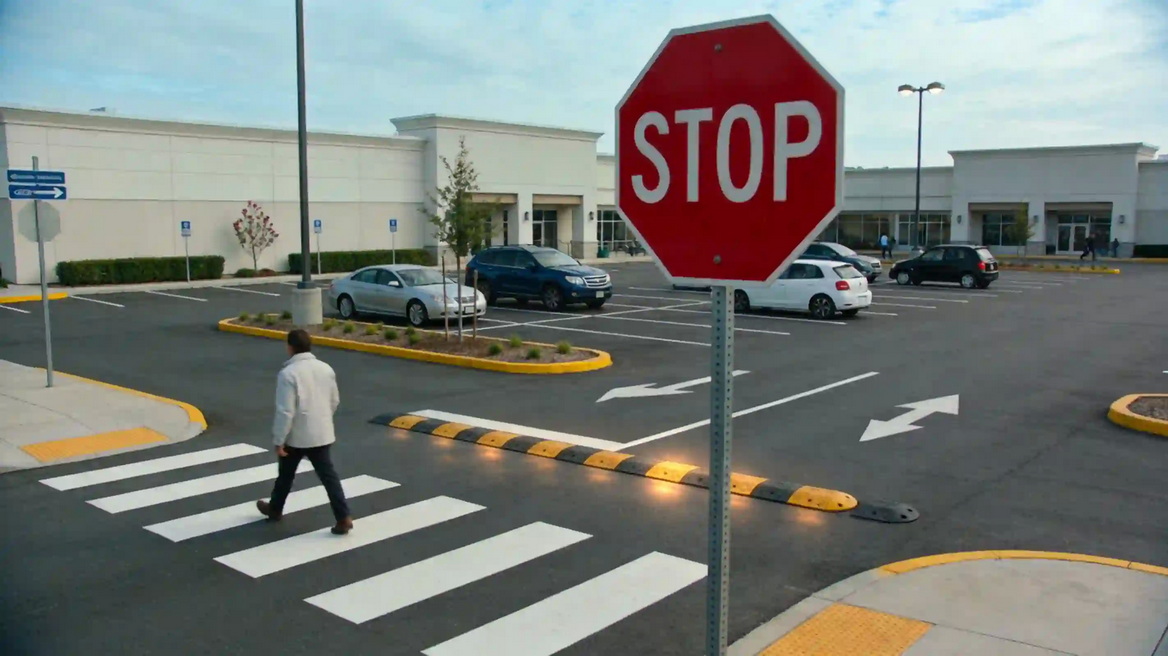
As a company focused on parking lot safety facilities, we see how octagonal stop signs play a critical role in managing low‑speed but high‑risk environments such as multi‑level garages, retail parkings, and logistics yards.
In parking lots, drivers often face:
- Tight turning radii and limited sight lines.
- Mixed traffic: cars, delivery trucks, pedestrians, and sometimes bicycles.
- Distractions such as searching for spaces or checking navigation.
Strategically placed octagonal stop signs can:
1. Clarify right‑of‑way at internal intersections and ramp exits, reducing confusion.
2. Slow vehicles before pedestrian crossings near elevators, stairwells, and entrances.
3. Segment zones between public parking and restricted operational areas (e. g., loading docks).
When combined with other safety products—such as speed bumps, wheel stops, convex mirrors, and reflective road studs—octagonal stop signs help create a coherent safety system that guides drivers intuitively.
From an industry practitioner's standpoint, effective stop sign use depends not only on shape but also on placement, height, and integration with other safety devices.
Best practices include:
- Correct mounting height
Install signs at a height that keeps them within the typical driver's field of view, avoiding obstruction by parked vehicles or landscaping.
- Adequate distance from conflict points
Place the sign far enough before an intersection, exit lane, or pedestrian crossing so drivers have time to decelerate smoothly.
- Use of retroreflective materials
Choose materials that maintain brightness over years of exposure to sunlight and weather, especially in poorly lit parking structures.
- Consistency of shape and color
Avoid mixing shapes (e. g., rectangular "STOP" boards) with octagons in the same facility, as this can weaken driver conditioning.
For OEM/ODM projects, we often collaborate with clients to customize logo placement, mounting systems, and integrated lighting while still maintaining the essential octagonal geometry and red‑white color scheme required by local regulations.
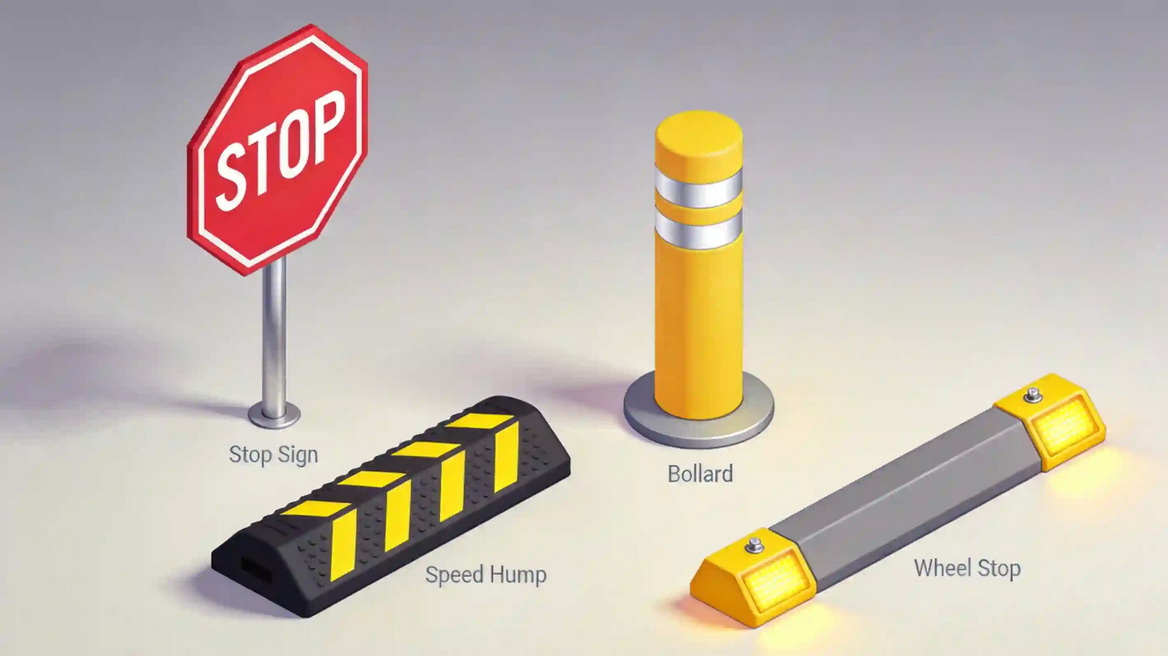
Shenzhen Xingsheng Traffic Facilities Co., Ltd. specializes in street, highway, toll station, and parking lot safety solutions, providing tailored OEM and ODM services to global partners. While stop signs are only one component of a complete traffic control system, they often anchor critical decision points where accidents are most likely to occur.
Our product and service capabilities include:
- Parking lot safety facilities such as stop signs, speed humps, parking barriers, bollards, and wheel stops.
- Roadway safety equipment including guardrails, traffic cones, lane dividers, and reflective markings.
- Customized OEM/ODM designs, from branding and color matching to material selection and mounting hardware.
By combining international standards for stop sign design with local regulatory requirements, we help customers build safer road and parking environments that are easy for drivers to understand and follow.
A stop sign is an octagon, not a hexagon. It has eight sides and eight corners, whereas a hexagon has only six.
In traffic safety, the red octagon is reserved almost exclusively for stop signs, which helps drivers instantly recognize its meaning even from the back or in poor visibility.
Most countries that follow international road sign conventions use red octagonal stop signs, but some regions—like Japan and parts of the UK—still use triangular or circular designs with the same "STOP" message.
Early stop signs were yellow because durable red reflective materials were not available yet. Once retroreflective red became practical, standards shifted to the red octagon we know today.
In OEM/ODM projects, we start from the required standards and local regulations, then customize materials, branding, mounting, and packaging to match the client's safety goals and infrastructure, while preserving the essential octagonal geometry and red‑white color scheme.
1. Jackwin Safety. "Why Are Stop Signs Octagons? Surprising Historical Reason." https://jackwinsafety.com/why-are-stop-signs-octagons/
2. Technology. org. "Why Are Stop Signs Octagons?" https://www.technology.org/how-and-why/why-are-stop-signs-octagons/
3. Allstate. "The History of the Stop Sign Shape." https://www.allstate.com/resources/car-insurance/stop-signs
4. All About Geometry (YouTube). "Why Are Stop Signs Octagonal?" https://www.youtube.com/watch?v=IHJZwWxsgIM
5. Oreate AI Blog. "The Unmistakable Shape of Stopping: Why Stop Signs Are Octagons." https://www.oreateai.com/blog/the-unmistakable-shape-of-stopping-why-stop-signs-are-octagons/18c3db4f70913d199a4bcd27353d311f


