
Please Choose Your Language
Views: 222 Author: XS Traffic Facilities Publish Time: 2026-04-10 Origin: Site


Content Menu
● Why Work Zone Lighting Matters More Than Ever
● Key Factors When Selecting Lighting for Road Work Zones
>> 1. Match Lighting Type to the Work Task
>> 2. Consider Work Zone Size, Layout, and Phasing
>> 3. Minimize Glare for Workers and Drivers
>> 4. Account for Traffic Volume, Speed, and User Types
>> 5. Choose LED Over Legacy Lighting Technologies
>> 6. Integrate LED Traffic Signs and Warning Devices Into the Lighting Plan
>> 7. Design for Energy Efficiency, Power Management, and Sustainability
>> 8. Comply With Standards and Best Practices
● New Expert Sections to Deepen Value
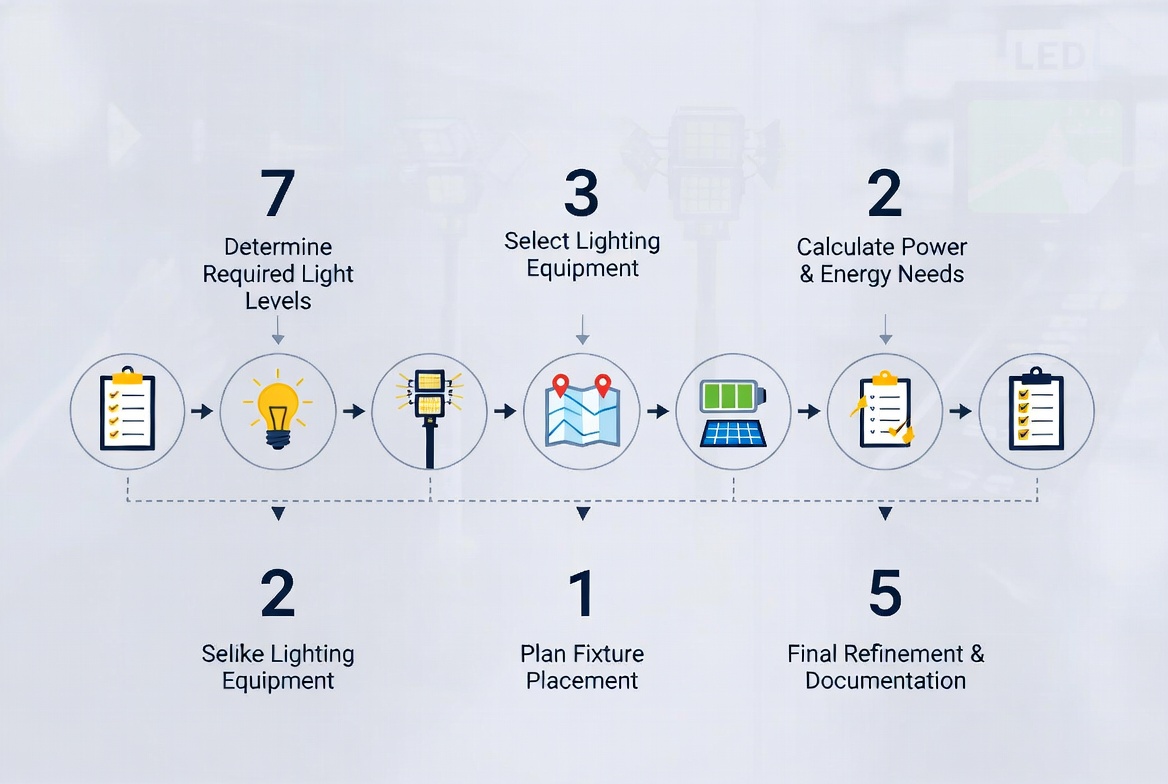
>> 9. Practical Step‑by‑Step Process to Plan Work Zone Lighting
>> 10. Case-Type Example: Upgrading to LED Work Zone Lighting
>> 11. How a Specialized LED Traffic Sign Manufacturer Adds Value (OEM/ODM View)
● Common Work Zone Lighting & LED Devices
● Frequently Asked Questions (FAQ)
When you design lighting for road work zones, you are not just "adding brightness" – you are actively shaping driver behavior, worker safety, and project productivity. From my own experience working with contractors and traffic engineers on night work, the difference between a well‑designed LED work zone lighting plan and an improvised one is often the difference between a smooth shift and a near‑miss incident. [workzonesafety]
Modern road work zones are more complex, more congested, and more time-constrained than they were a decade ago. [ops.fhwa.dot]
- Drivers expect clear visual guidance at higher speeds and in all weather. [ledlighting-solutions]
- Contractors push more activities into nighttime windows to avoid daytime congestion. [ops.fhwa.dot]
- Agencies are raising performance expectations for illumination, glare control, and safety outcomes. [workzonesafety]
According to U.S. work zone safety research, nighttime work without adequate lighting significantly increases crash risk and reduces the quality of finished work. That is why agencies and contractors are increasingly moving from ad‑hoc "throw some towers on site" to structured lighting plans supported by LED floodlights, LED traffic signs, and intelligent control systems. [topslab.wisc]
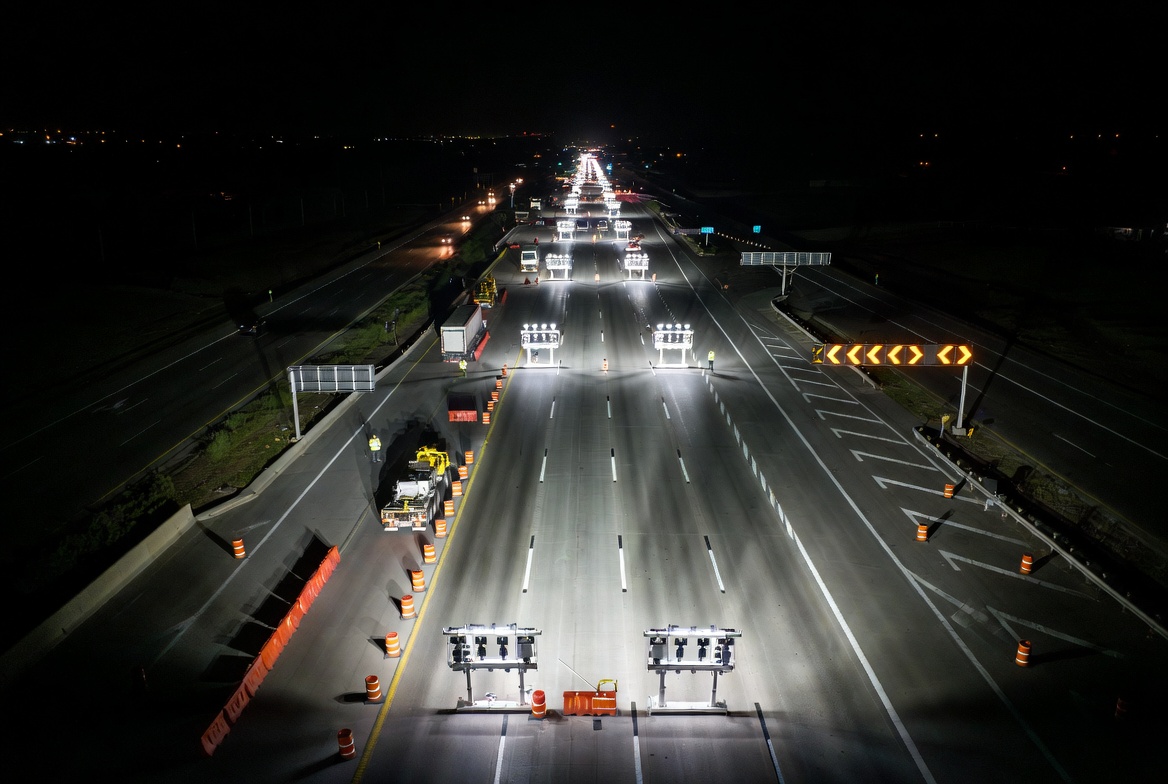
Not every work activity needs the same intensity or type of light. [topslab.wisc]
- General work (staking, excavation, rolling) typically requires lower illumination than precision tasks like joint repair. [topslab.wisc]
- Specialized activities (milling, paving, pavement marking) demand medium levels of illuminance so crews can see texture, edges, and color. [topslab.wisc]
- Precision work (electrical work, crack filling, joint work) needs higher, uniform lighting with minimal shadows. [topslab.wisc]
A widely cited guideline for night work suggests approximate target ranges such as: general work around 55–110 lux, specialized work 110–160 lux, and precision work in the 220–320 lux range. [topslab.wisc]
In practical terms:
- For localized tasks, equipment‑mounted LED lights and small portable units are often sufficient. [ops.fhwa.dot]
- For full-lane or multi‑lane closures, LED light towers or high‑mast temporary lighting may be required to achieve uniformity without gaps. [workzonesafety]
The original article correctly highlights that some tasks only require smaller lamps and equipment-mounted units, while larger projects benefit from floodlights that cover the entire job site. The key enhancement is to link that choice directly to measurable work‑task requirements. [highways.dot]
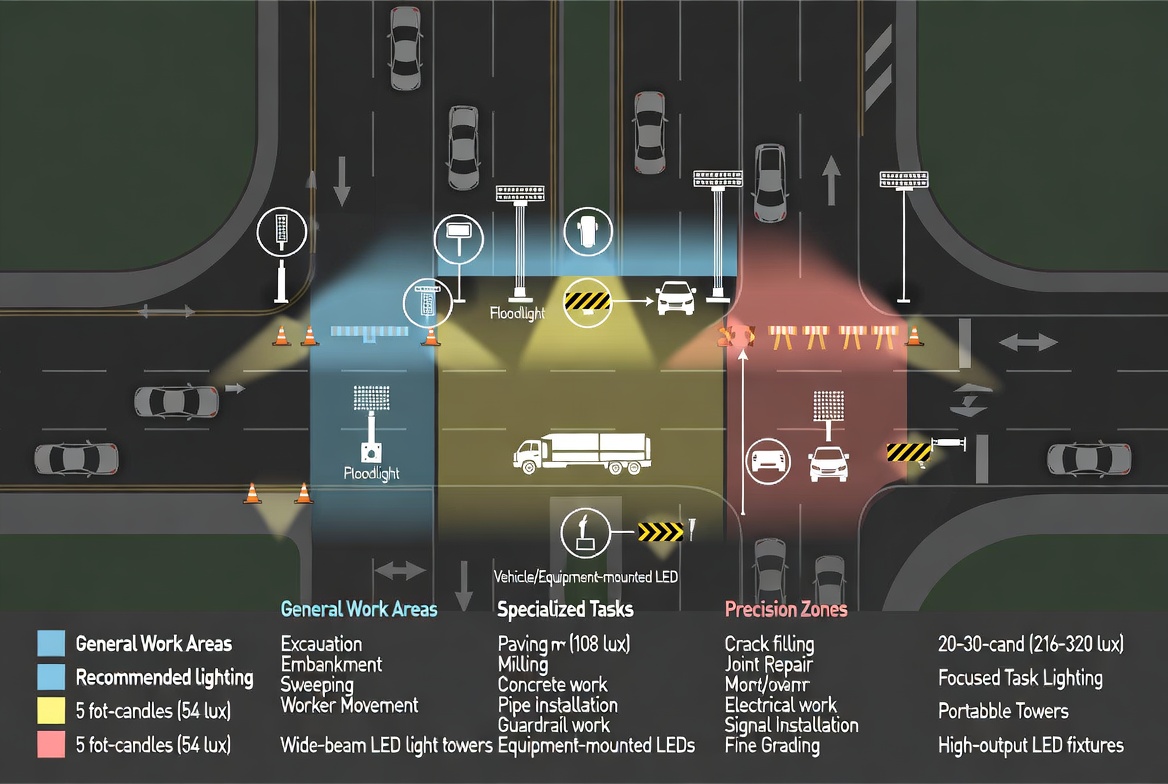
The size and geometry of your work zone drive how many lights you need, how tall they should be, and how you aim them. [workzonesafety]
- Long linear projects often benefit from a repeating pattern of towers to maintain consistent illuminance. [workzonesafety]
- Complex interchanges, ramps, and toll plazas require mixed solutions: towers, equipment lights, and LED traffic signs for guidance. [ledlighting-solutions]
The source article notes that light plants provide more saturation, while machine headlights can provide a wider but dimmer range when spaced out. This is accurate but incomplete. For a robust plan, you should also: [highways.dot]
- Map the critical work areas (flagging positions, taper, work space, conflict points). [workzonesafety]
- Decide where uniformity is more important than raw brightness (e.g., paving or line striping). [workzonesafety]
- Avoid leaving "dark pockets" at transitions between zones. [workzonesafety]
As a rule of thumb, you design from worker and driver sight lines, not from equipment placement convenience. [workzonesafety]
Glare is one of the most overlooked, yet most dangerous, side effects of poor work zone lighting. [workzonesafety]
The original article correctly warns against oversaturating the area and aiming light into the flow of traffic, especially at night. Glare can: [highways.dot]
- Temporarily blind drivers and increase crash risk at lane shifts and tapers. [ops.fhwa.dot]
- Fatigue workers and reduce their ability to see hazards and tools clearly. [workzonesafety]
Industry guidelines emphasize:
- Using full cut-off or good optical control to limit light spillage. [highways.dot]
- Mounting portable LED towers at appropriate heights (often 4–5 m in many guidelines) and tilting them downward toward the work surface. [ops.fhwa.dot]
- Avoiding direct beams into opposing traffic or residential areas, which cause light trespass and skyglow. [highways.dot]
Whenever I review a lighting plan in the field, I walk (or drive) through it from the driver's perspective at typical approach speeds. If I can feel my eyes strain or lose lane edge definition, glare mitigation becomes priority one.
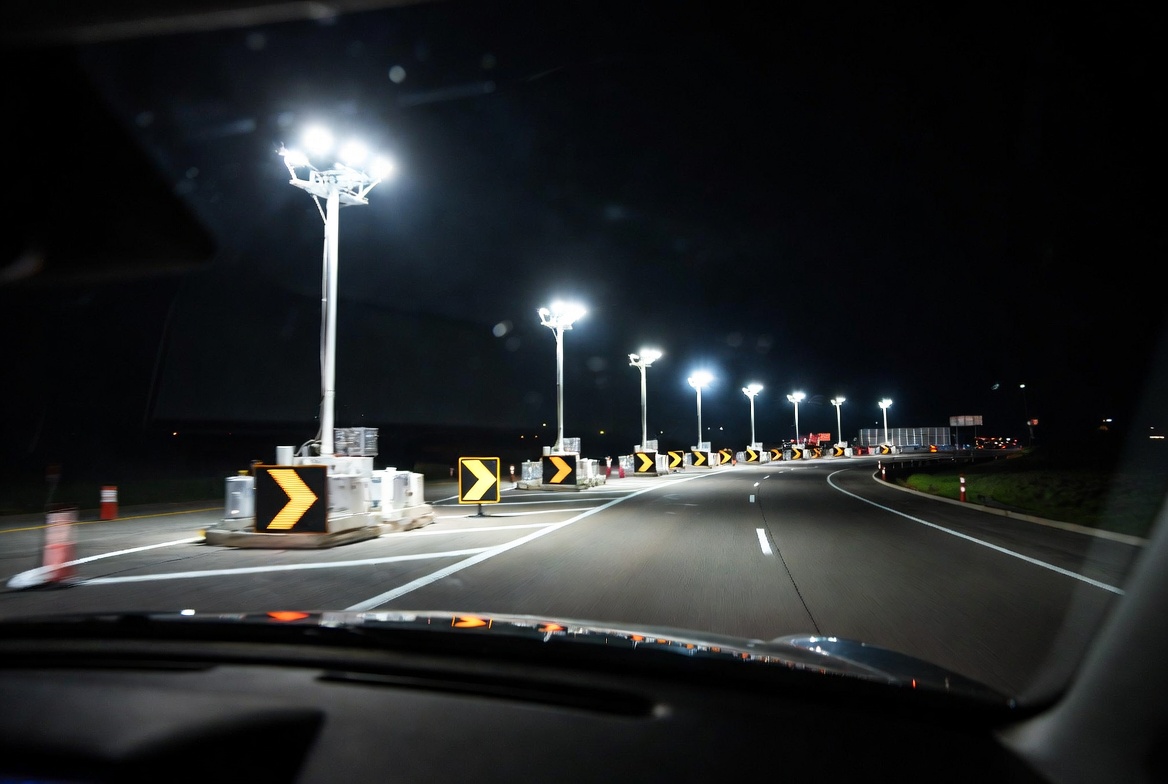
The busier and faster the road, the more critical your lighting and visual communication strategy becomes. [ledlighting-solutions]
The original content notes that on busy roads, flaggers must be well lit with LED batons, LED signs, vests, and barricade lights. Building on that: [highways.dot]
- High‑volume, high‑speed roads often require stronger advanced warning, including LED-enhanced signs and portable message signs. [ledlighting-solutions]
- On urban arterials, you must consider pedestrians and cyclists who rely heavily on visual cues and contrast. [thornlighting]
Typical considerations include:
- Using LED-enhanced STOP/SLOW paddles and high‑intensity retroreflective garments for flaggers. [roadsafetraffic]
- Adding arrow boards and portable LED message signs (VMS/PCMS) at lane drops and detours. [ledlighting-solutions]
- Ensuring that temporary signs and channelizing devices are visible in both lit and unlit segments. [ledlighting-solutions]
In short, lighting is part of the overall traffic control system, not an isolated element.
Many agencies and contractors are phasing out legacy HID and balloon lights in favor of high‑efficiency LED solutions. [ops.fhwa.dot]
Research and field practice show that LED work zone lighting typically offers: [ops.fhwa.dot]
- Improved visibility with crisp, high-contrast illumination.
- Lower power consumption, allowing longer runtimes, especially with solar‑hybrid systems.
- Longer lifespan and reduced maintenance downtime.
- Better optical control for directing light exactly where it is needed while reducing glare and spill.
For example, FHWA best practice notes that portable LED tower lights can provide high-quality illumination at lower operating costs and with better glare control compared to traditional high-intensity discharge lamps. [ops.fhwa.dot]
Similarly, LED traffic signs (flashing stop, speed limit, school zone, etc.) offer greater visibility than traditional static signs, especially in poor weather or at night. [blog.whitecap]
Lighting is not only about illuminating the work surface; it is also about communicating clearly with road users. [workzonesafety]
High‑quality LED traffic signs and warning lights are now central to modern work zone safety strategies: [trafficthing]
- Flashing LED regulatory signs (STOP, SPEED LIMIT, YIELD, PEDESTRIAN) draw attention at critical conflict points. [blog.whitecap]
- Portable changeable message signs (PCMS) provide dynamic information about closures, detours, and delays. [ledlighting-solutions]
- Arrow boards and lane control signs guide drivers through complex tapers and merges. [highways.dot]
Manufacturers specializing in LED traffic signs, solar road markers, and LED tunnel signs provide integrated solutions that combine visibility, energy efficiency, and durability for highways, toll stations, and parking facilities. [trafficthing]
When you build your lighting strategy, treat these LED devices as primary visual anchors that complement floodlighting, not as an afterthought.
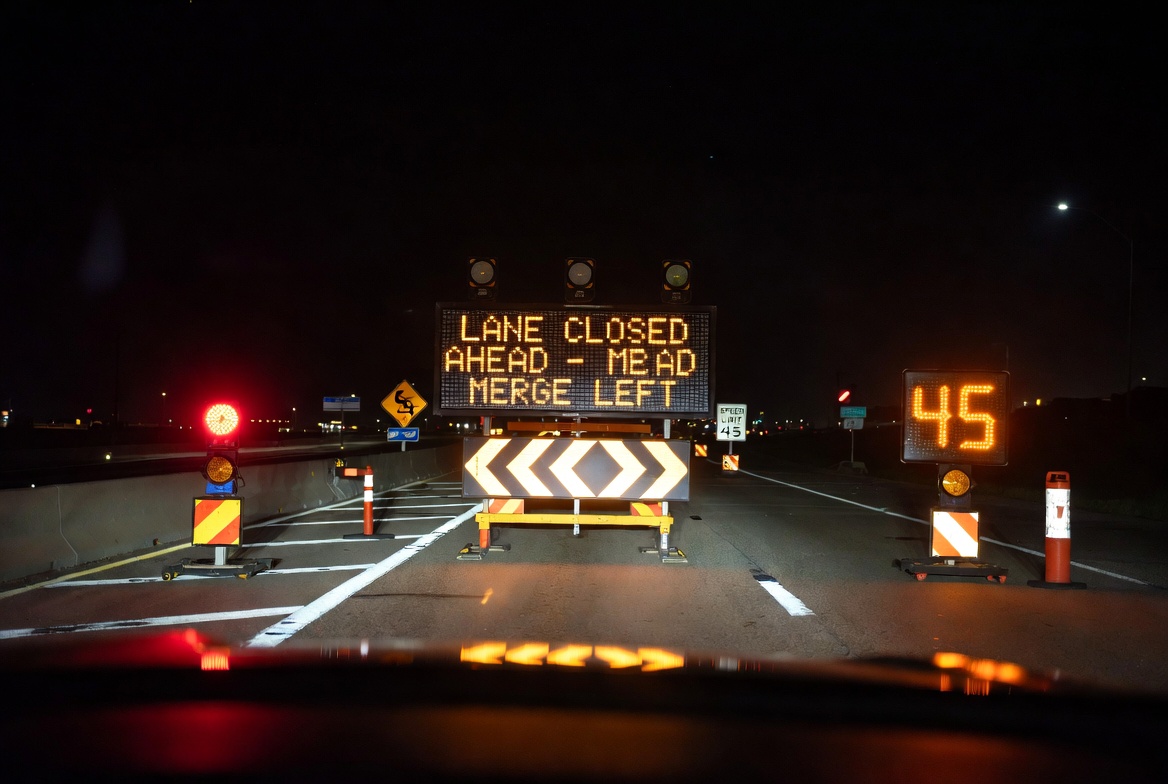
A poorly planned lighting layout can waste fuel or battery capacity, drive up operating costs, and complicate logistics. [ops.fhwa.dot]
LED systems already reduce energy usage compared to legacy lighting, but you can optimize further by: [ops.fhwa.dot]
- Using solar-powered LED signs and delineators where feasible, especially for long-term or remote work zones. [trafficthing]
- Selecting low-power, high-output LED floodlights that provide the required illuminance with fewer units. [ops.fhwa.dot]
- Deploying smart controls (timers, photocells, remote monitoring) to ensure lights operate only when needed. [dot.ca]
Many DOT guidelines emphasize that roadway lighting should be no brighter than necessary and should be controlled to operate only during darkness, to minimize light pollution and operating cost. [dot.ca]
For contractors, this translates to fewer refueling trips, less generator noise, and more predictable operating costs over the life of the project. [ops.fhwa.dot]
Even though specific requirements vary by country and region, several core themes are consistent across standards. [thornlighting]
Key points include:
- Meeting minimum illuminance and uniformity levels for the type of work and area. [thornlighting]
- Controlling disability and discomfort glare for both workers and drivers. [workzonesafety]
- Limiting light trespass and skyglow into adjacent neighborhoods or environmentally sensitive areas. [dot.ca]
- Using fluorescent orange and specified sizes for temporary work zone signs, and respecting placement and spacing guidelines. [ledlighting-solutions]
Technical references, such as FHWA handbooks and state DOT specifications, provide recommendations on lighting levels, mounting heights, and layout approaches for night work. [ops.fhwa.dot]
For global projects, pairing international best practice with local regulations is essential, especially when supplying OEM/ODM LED traffic products into multiple markets. [trafficthing]
To help site supervisors and engineers, here is a short, practical process that we use in real projects:
1. Define the work activities and schedule
Identify which tasks occur at night, their locations, and their required precision. [topslab.wisc]
2. Classify each activity by illumination need
Assign approximate target ranges (general, specialized, precision) based on guidelines like lux ranges. [topslab.wisc]
3. Map the work zone geometry and traffic control plan
Mark tapers, lane closures, work spaces, flagger positions, and access points. [workzonesafety]
4. Select lighting equipment and LED devices
Choose combinations of LED towers, equipment lights, LED traffic signs, arrow boards, PCMS, and barricade lights. [trafficthing]
5. Lay out the lighting pattern
Decide tower spacing, mounting heights, and aiming angles, ensuring uniformity and minimizing glare. [workzonesafety]
6. Check from driver and worker perspectives
Conduct a nighttime field review from both viewpoints and adjust aiming, tilt, or positions. [workzonesafety]
7. Document and refine
Record settings and positions; update the plan when work phasing changes. [ops.fhwa.dot]
This systematic approach reduces guesswork and improves repeatability across projects.
Consider a highway resurfacing project that initially used a mix of older halogen towers and basic static signs. Workers reported shadows on the paving surface, and drivers complained about glare at lane shifts.
After upgrading to a plan centered on LED tower lights and LED-enhanced warning signs, the team achieved: [ledlighting-solutions]
- Higher uniformity on the work surface, improving paving quality. [topslab.wisc]
- Reduced glare by using better optical control and revised aiming angles. [highways.dot]
- Increased driver awareness at tapers using flashing LED signs and arrow boards. [ledlighting-solutions]
- Lower fuel consumption due to more efficient lighting equipment. [ops.fhwa.dot]
The combination of better illumination and clearer visual communication significantly improved perceived safety and work quality.
From the perspective of a dedicated LED traffic sign and safety product manufacturer, there are several ways to support contractors, integrators, and public agencies. [trafficthing]
- Application‑driven design: Tailor LED signs, solar markers, and delineators for highways, toll stations, city streets, and parking facilities, matching local regulations and MUTCD‑type requirements where applicable. [trafficthing]
- OEM/ODM customization: Provide custom symbols, legends, languages, sizes, and communication interfaces so that LED signs integrate smoothly into existing control systems. [trafficthing]
- System-level guidance: Advise customers on combining flashing LED signs, LED warning lights, and work zone lighting to build a coherent, high‑visibility safety solution rather than isolated devices. [trafficthing]
With more than a decade of specialization, manufacturers of LED traffic signs and related solar safety devices help clients move beyond "commodity products" to traffic-safe, regulation-ready systems that support long-term safety and branding goals. [trafficthing]
| Solution type | Typical use case | Key benefits |
|---|---|---|
| LED light towers | Full-lane nighttime construction | High output, good control, lower energy use (ops.fhwa.dot) |
| Equipment‑mounted LEDs | Localized tasks near machinery | Flexible, task-focused, low setup time (workzonesafety) |
| Flashing LED traffic signs | Critical decision points (STOP, speed) | Strong driver attention, high visibility (blog.whitecap) |
| Arrow boards | Lane shifts and tapers | Clear directional guidance at speed (ledlighting-solutions) |
| Portable message signs | Detours, closures, travel time info | Dynamic, long‑range communication (ledlighting-solutions) |
If you are planning or upgrading lighting for your next road work zone, do not treat lighting and LED traffic signs as last‑minute add‑ons. Start with a task‑based lighting plan, integrate high‑visibility LED signs and warning devices, and work with a specialized OEM/ODM manufacturer who understands highway, street, toll station, and parking applications. [trafficthing]
Well‑designed LED work zone lighting does more than meet minimum specs – it protects your people, your road users, and your reputation as a professional contractor. [workzonesafety]
Q1: What is the most important factor when choosing lighting for a road work zone?
A1: The most important factor is matching the lighting type and level to the specific work tasks and geometry of the work zone, while controlling glare for drivers and workers. [workzonesafety]
Q2: Why are LEDs preferred over older lighting technologies in work zones?
A2: LED solutions provide higher-quality illumination, better optical control, lower power consumption, and longer lifespan, which makes them more cost-effective and safer than traditional lamps. [ops.fhwa.dot]
Q3: How can I reduce glare for drivers at night?
A3: Use fixtures with good glare control, mount lights at appropriate heights, aim them toward the work surface rather than traffic, and avoid oversaturating the area with unnecessary brightness. [highways.dot]
Q4: Do I really need LED traffic signs if I already have floodlights?
A4: Yes. Floodlighting helps workers see, but LED traffic signs, arrow boards, and message signs provide clear, targeted information to drivers, which is essential for safe navigation through the work zone. [trafficthing]
Q5: How early in the project should I plan the lighting?
A5: Plan lighting at the same time as your traffic control plan—before construction begins—so that illumination levels, LED signs, and device placement are coordinated with lane closures and work phasing. [ops.fhwa.dot]
1. Federal Highway Administration (FHWA). "5 Considerations Concerning Lighting Systems."
https://highways.dot.gov/safety/other/visibility/fhwa-lighting-handbook-august-2012/5-considerations-concerning-lighting [highways.dot]
2. Work Zone Safety Information Clearinghouse. "Optimizing Work Zone Lighting."
https://workzonesafety.org/publication/optimizing-work-zone-lighting/ [workzonesafety]
3. Work Zone Safety Information Clearinghouse. "A Guide for Developing a Lighting Plan for Nighttime Work Zones."
https://workzonesafety.org/publication/nighttime-lighting-guidelines-for-work-zones/ [workzonesafety]
4. Traffic Safety Warehouse. "What to Consider When Selecting Lighting for Road Work Zones."
https://www.trafficsafetywarehouse.com/Resources/what-to-consider-when-selecting-lighting-for-road-work-zone.asp [highways.dot]
5. Traffic Safety Warehouse. "Flashing LED Traffic Signs."
https://www.trafficsafetywarehouse.com/Flashing-LED-Traffic-Signs/products/132/ [blog.whitecap]
6. TOPS Lab, University of Wisconsin. "Designing Lighting for Night Work Zones."
https://topslab.wisc.edu/wp-content/uploads/2022/05/Designing-Lighting-for-Night-Work-Zones.pdf [topslab.wisc]
7. FHWA Work Zone Best Practices. "Portable LED Lighting for Work Zones."
https://ops.fhwa.dot.gov/wz/practices/best/view_document.asp?ID=388 [ops.fhwa.dot]
8. FHWA Work Zone Best Practices. "Night Lighting for Work Zones."
https://ops.fhwa.dot.gov/wz/practices/best/view_document.asp?ID=193 [ops.fhwa.dot]
9. LED Lighting Solutions. "Work Zone, Road Work & Traffic Signs – LED Lighting Solutions."
https://ledlighting-solutions.com/workzonesigns.html [ledlighting-solutions]
10. XS Traffic Facilities. "Customized LED Traffic Sign Manufacturer / Company Profile."
https://www.trafficthing.com/led-traffic-sign.html
https://www.trafficthing.com/Company-Profile.html [trafficthing]
11. RoadSafe Traffic Systems. "LED Enhanced Signs."
https://www.roadsafetraffic.com/led-stop-slow-paddles/ [roadsafetraffic]
12. Caltrans. "Roadway Lighting – Chapter 205 Part 1."
https://dot.ca.gov [dot.ca]
13. Thorn Lighting. "10 Best Practices for Road Lighting Projects."
https://www.thornlighting.com/en/news/10-best-practices-for-road-lighting-projects [thornlighting]


