
Please Choose Your Language
Views: 249 Author: XS Traffic Facilities Publish Time: 2026-07-05 Origin: Site


Content Menu
● What Does a Flashing Yellow Light Really Mean?
● How Flashing Yellow Lights Work (Including Solar Systems)
● What To Do at a Flashing Yellow Light (By Location)
>> At Crosswalks and School Zones
>> At Intersections and Junctions
>> On Service and Construction Vehicles
● Flashing Yellow Arrow: Turning With Caution
● Rules, Violations, and Legal Risks
● Flashing Yellow vs Solid Yellow: Key Differences
● Why Solar Flashing Yellow Lights Are Growing Fast
● Expert Insight: Where Flashing Yellow Lights Work Best
● OEM/ODM Solutions From Shenzhen Xingsheng Traffic Facilities Co., Ltd.
● Practical Driver Checklist at Flashing Yellow Lights
● FAQs About Flashing Yellow Lights
>> Q1: Is a flashing yellow light safer than a solid yellow?
>> Q2: Do flashing yellow lights operate 24/7?
>> Q3: Can cyclists follow the same rules as drivers at flashing yellow signals?
>> Q4: Are solar flashing yellow lights reliable in cloudy weather?
>> Q5: How can project owners customize flashing yellow lights for specific sites?
A flashing yellow light is a caution signal that tells drivers and pedestrians to slow down, stay alert, and only proceed when the way is clearly safe. It plays a crucial role in modern road safety, especially when combined with solar traffic lights that keep intersections visible and reliable in all conditions.
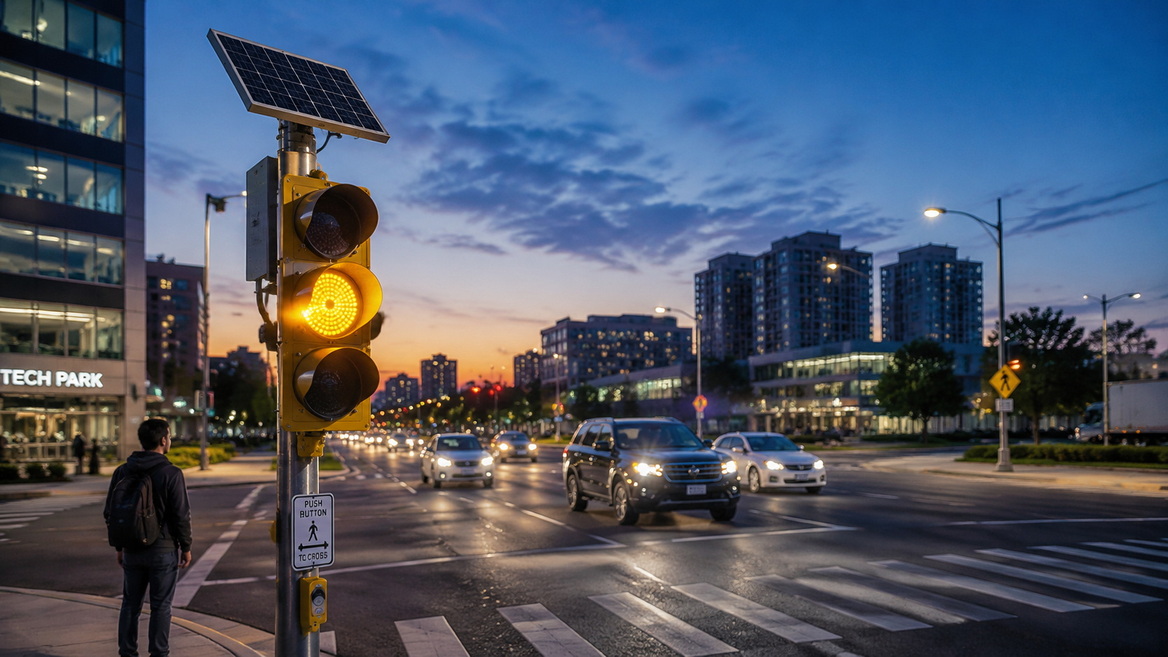
A flashing yellow light is a warning signal, not a full stop command. It tells you there may be a potential hazard ahead and that you must adjust your speed and attention accordingly.
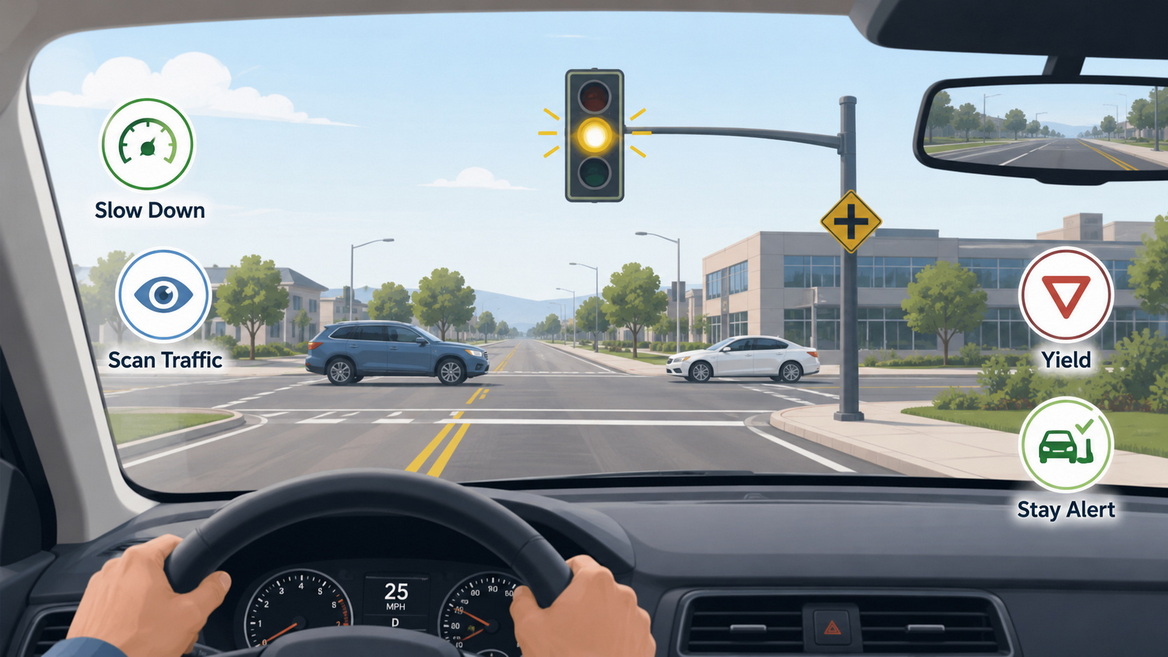
In practice, a flashing yellow light means you should:
- Slow down and prepare to react.
- Scan for cross‑traffic, pedestrians, cyclists, and obstacles.
- Yield to anyone already in the intersection or crosswalk.
- Proceed only when you are confident it is safe.
From a road safety professional's perspective, this signal helps maintain traffic flow while still reducing collision risk at complex, low‑to‑medium risk locations where a full red‑green system may be unnecessary or too expensive.
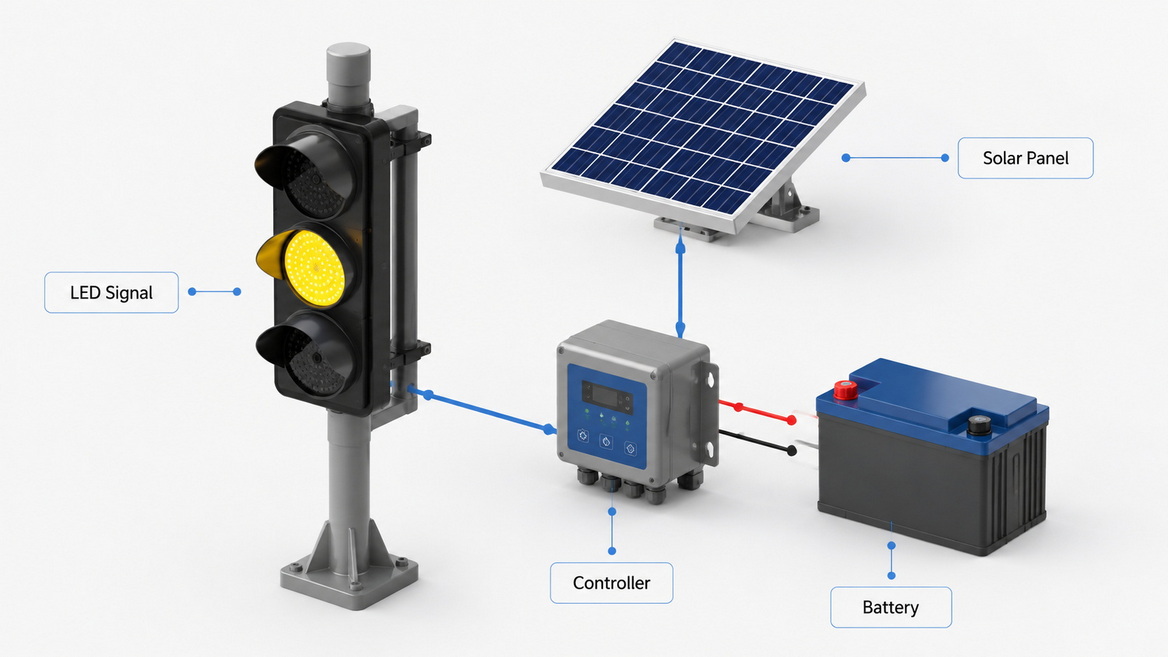
Traditional flashing yellow lights use a controller and timer to turn the lamp on and off at a fixed rate. Inside the unit, the control circuit regulates the flash frequency to ensure the signal is visible and consistent.
Modern solar traffic lights add several key components:
- High‑efficiency LED modules for bright, low‑power yellow indication.
- Solar panels sized to local irradiance and load requirements.
- Battery packs to store energy for night and low‑sun conditions.
- Intelligent controllers for flash patterns, timing plans, and remote diagnostics.
- Weather‑resistant housings designed for highways, toll stations, and parking lots.
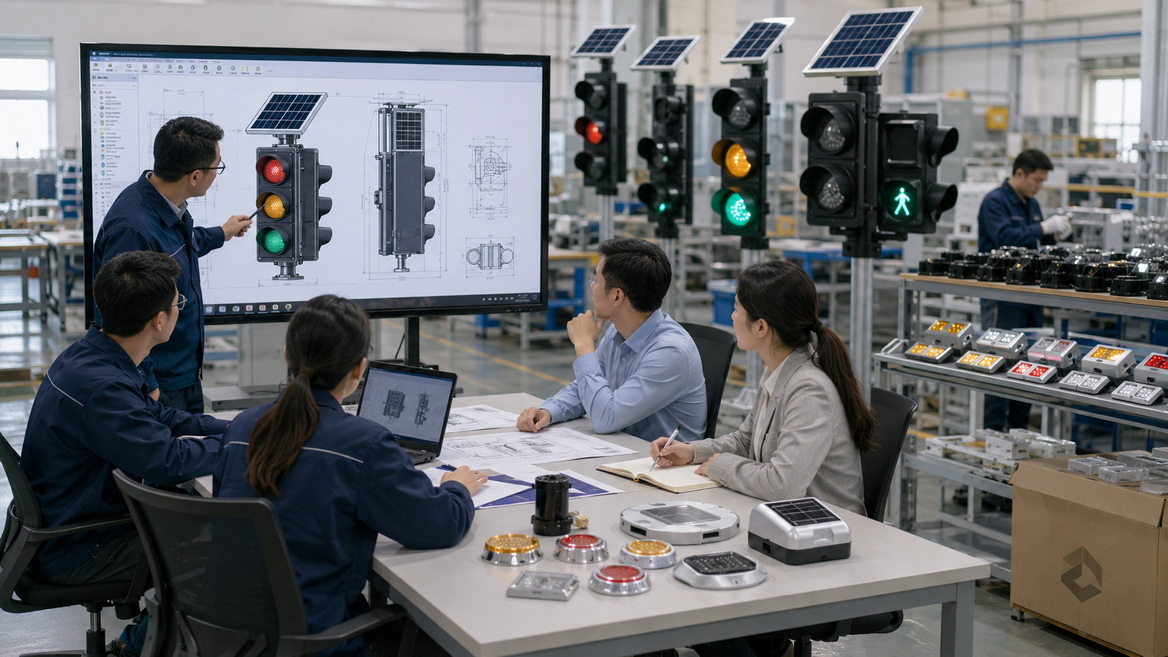
As a manufacturer, Shenzhen Xingsheng Traffic Facilities Co., Ltd. designs end‑to‑end OEM/ODM solar signaling systems, from LED optics and controller firmware to bracket structures and wiring harnesses, so integrators can deploy reliable flashing yellow solutions with minimal on‑site custom work.
When you see a flashing yellow at a crosswalk or school zone, it means pedestrians may be present and you must slow down and prepare to yield.
Key behaviors:
- Reduce speed before entering the marked area.
- Watch for children, elderly pedestrians, or people with limited mobility.
- Yield to anyone already in the crosswalk.
- Avoid aggressive lane changes or sudden turns.
For cities, upgrading these points to solar flashing pedestrian beacons ensures visibility even during grid outages or in rural zones with limited infrastructure.
A single flashing yellow at a junction tells you that cross‑traffic may be entering, but you still have conditional right‑of‑way.
Safe practice:
- Approach at a controlled speed.
- Scan left, right, and ahead before proceeding.
- Yield to vehicles that have already entered the intersection.
- Never assume other drivers will react correctly—keep margin for error.
Many jurisdictions pair flashing yellow on the busier road with flashing red on the minor road, effectively creating a priority‑yield configuration that reduces delays while still managing risk.
Where full barrier systems are not installed, flashing yellow lights at rail crossings warn that the track area demands extra attention, though not necessarily a complete stop every time.
Drivers should:
- Slow down and visually check both directions along the track.
- Listen for train horns or vibration on rails.
- Only cross when you are sure the track is clear.
For remote crossings, solar‑powered flashing beacons are increasingly used because they are easier to deploy than grid‑connected systems, and they can be combined with motion or track sensors for event‑based activation.
Flashing yellow beacons on maintenance, construction, and escort vehicles indicate unusual or slow‑moving operations.
Best driver responses:
- Lower speed and increase following distance.
- Avoid overtaking unless you have full visibility.
- Expect lane closures, debris, or workers on or near the carriageway.
Manufacturers like Xingsheng supply vehicle‑mounted solar warning lights with magnet or bolt‑on bases, designed for fleets that need mobile, high‑visibility signaling without constant re‑wiring.
A flashing yellow arrow means you may turn in the direction of the arrow, but the turn is unprotected—you must yield to oncoming traffic and pedestrians.
Core rules:
- Wait for a safe gap in opposing traffic.
- Yield to pedestrians and cyclists in the crosswalk.
- Do not force the turn if visibility is limited.
Many agencies have adopted flashing yellow arrows instead of older solid green arrows because research shows they reduce angle crashes and clarify driver expectations at complex intersections.
Even though a flashing yellow light does not force a full stop, you are still legally required to drive with reasonable caution.
Common mistakes that can lead to violations:
- Accelerating through the flashing signal to "beat" other traffic.
- Ignoring pedestrians already in the crosswalk.
- Turning without checking blind spots and opposing flow.
- Blocking the intersection while waiting.
In many regions, police can issue tickets if your behavior at a flashing yellow light is reckless or causes danger, even if you technically had the right to proceed. This is why professional drivers treat every flashing yellow as a risk indicator rather than a permission to maintain full speed.
| Aspect | Flashing Yellow | Solid Yellow Before Red |
|---|---|---|
| Message | Proceed with caution; hazard or special condition ahead datainsightsmarket+1 | Signal will soon turn red; prepare to stop datainsightsmarket+1 |
| Driver action | Slow down, yield if needed, then continue if clear datainsightsmarket | Stop if safe; avoid entering if it will turn red before you clear datainsightsmarket |
| Typical use | Intersections, crosswalks, work zones, mid‑block warnings datainsightsmarket+1 | Standard traffic signal phase change at junctions datainsightsmarket+1 |
| Impact on flow | Maintains throughput but with higher driver vigilance datainsightsmarket | Begins to reduce flow as drivers prepare to stop datainsightsmarket |
Understanding this difference helps reduce confusion and ensures drivers respond correctly to both types of yellow indications.
Global demand for solar traffic lighting, including flashing yellow beacons, is rising rapidly as cities pursue lower energy costs and more resilient infrastructure. Market studies project strong growth for solar street and traffic lighting into the 2030s, driven by sustainability policies and rural road upgrades.
Solar systems deliver several advantages:
- Energy independence from the grid, ideal for remote highways and toll stations.
- Lower lifecycle operating costs due to reduced power consumption and minimal cabling.
- Faster deployment in new industrial zones or parking facilities.
- Continued operation during blackouts, protecting critical junctions.
From an engineering standpoint, pairing LED optics with optimized solar and battery packs allows the flashing yellow indication to stay bright and consistent while keeping total system power demand low.
From an industry practitioner's view, flashing yellow lights are most effective when applied with clear risk‑based criteria, not just to "add more lights."
High‑value applications include:
- Rural intersections with limited night visibility.
- Transition zones before sharp curves or narrow bridges.
- School and hospital areas with mixed pedestrian and vehicle flows.
- Industrial park entrances and logistics hubs with heavy truck traffic.
Solar-powered flashing yellow units are particularly suitable where cabling is difficult or costly—such as mountain highways, temporary detours, or large outdoor parking sites. In these cases, manufacturers like Xingsheng customize pole height, lamp size, flash rate, and power system to match local regulations and site risk profiles.
Shenzhen Xingsheng Traffic Facilities Co., Ltd. is a China‑based, export‑oriented manufacturer focused on road safety installations, including solar traffic lights, LED traffic signals, solar road studs, tunnel signs, and parking safety devices.
As an ISO 9001‑approved enterprise, Xingsheng offers:
- OEM manufacturing for branded traffic products and customized specifications.
- ODM development of new solar flashing systems tailored to project concepts.
- Integrated solutions from optical and electronic design through to mass production.
- Deployment guidance for streets, highways, toll stations, and parking lots.
For international buyers and project owners, working with an experienced OEM/ODM partner helps align flashing yellow light systems with local standards, while optimizing cost, durability, and installation time.
To make the rules easy to remember, use this step‑by‑step checklist whenever you approach a flashing yellow signal:
1. See the signal early – identify the flashing yellow as you approach.
2. Ease off the accelerator – reduce speed smoothly, no sudden braking.
3. Scan in all directions – check lanes, mirrors, shoulders, and crosswalks.
4. Identify who has priority – yield to vehicles and pedestrians already in the conflict zone.
5. Commit to a safe action – either proceed carefully or wait; avoid half‑moves that confuse others.
Following these simple steps consistently reduces your risk of side‑impact collisions and pedestrian incidents at warning‑controlled points.
A flashing yellow is designed to warn of specific hazards while still allowing traffic to flow, so it can be safer at certain locations if drivers follow caution and yield rules correctly.
Many systems run continuously, but some controllers adjust flash timing based on traffic volume or time of day, activating only during peak or high‑risk periods.
Yes, cyclists are expected to obey the same indications: slow down, watch for cross‑traffic and pedestrians, and proceed only when the path is clear.
Well‑designed solar traffic lights use battery storage and efficient LEDs to maintain normal operation through cloudy days and at night, as long as the system is correctly sized.
By working with OEM/ODM manufacturers, buyers can specify lamp diameter, flash rate, solar capacity, mounting height, controller logic, and integration with other road safety devices to match local standards and risk profiles.
- Jackwin Safety – "What Does a Flashing Yellow Light Mean and What To Do?" (article content and rules explanation). [page:1](https://jackwinsafety.com/what-does-a-flashing-yellow-light-mean/)
- In Control Crash Prevention Training – "Solid Yellow Means STOP" (flashing yellow definition and intersection behavior). [](https://www.driveincontrol.org/yellow)
- EZ Street Driving School – "4 Traffic Signal Lights (YELLOW)" (driver guidance on flashing yellow and flashing yellow arrows). [](https://www.ezstreetdrivingschool.com/info/4-Traffic-Signal-Lights-YELLOW/p368/CD_46_57)
- Shenzhen Xingsheng Traffic Facilities Co., Ltd. – Company Profile (product scope, OEM/ODM capabilities, application scenarios). [](https://www.trafficthing.com/es/Company-Profile.html)
- WiseGuy and related market reports – Solar traffic/street lighting market growth data and trends. [](https://www.wiseguyreports.com/reports/solar-traffic-light-market) [](https://www.researchandmarkets.com/reports/5792839/solar-street-lighting-market-report) [](https://www.stalwartresearchinsights.com/product/Solar%20Street%20Lighting%20Industry%20Outlook,%202026%20%E2%80%93%202036)
- Ruichen / solar traffic sign trends – Future‑oriented solar traffic sign features and reliability focus. [](https://www.rctraffic.com/exhibition-news/news/the-future-of-solar-traffic-signs-in-2026-smarter,-more-durable,-and-built-for-re)


