
Please Choose Your Language
Views: 222 Author: XS Traffic Facilities Publish Time: 2026-05-06 Origin: Site


Slippery road signs warn drivers of hazardous conditions where roads become slick due to water, ice, or debris, helping prevent skids and crashes. As a leading manufacturer of LED traffic signs at Shenzhen Xingsheng Traffic Facilities Co., Ltd., we've seen firsthand how these signs save lives on streets, highways, and parking areas.
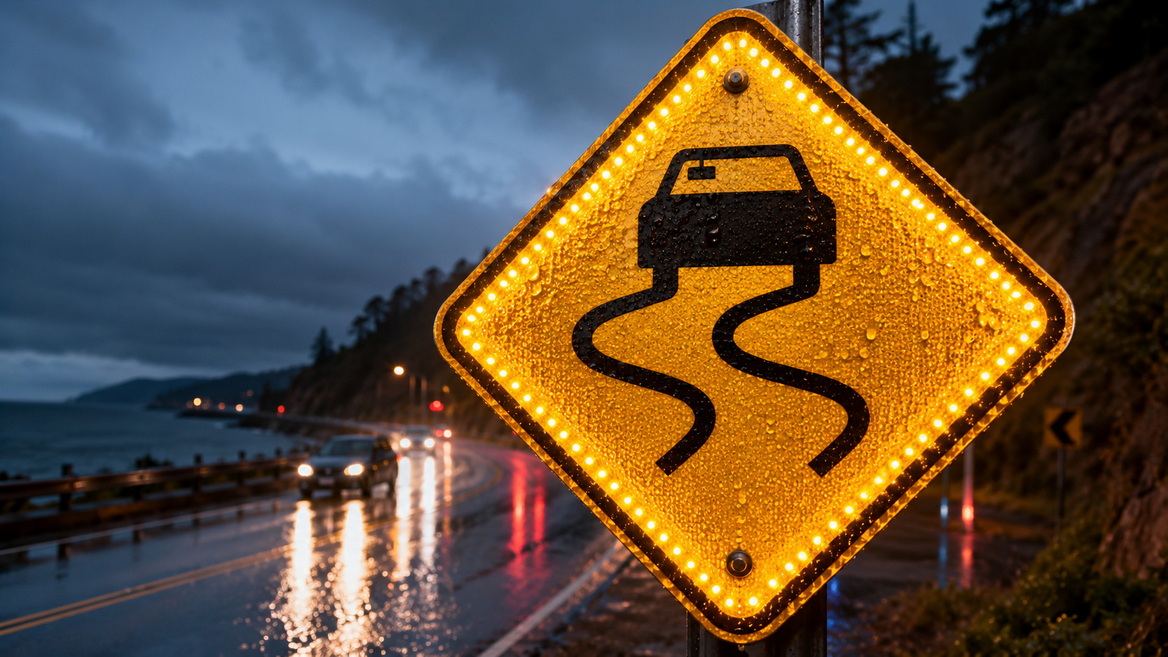
The slippery road sign meaning signals that the road ahead is greasy or icy, often from rain, snow, oil, or leaves, urging drivers to slow down. Commonly depicted as a yellow diamond with a black car silhouette and wavy lines under the wheels, it indicates potential loss of traction.
This slippery when wet road sign follows standards like MUTCD (Manual on Uniform Traffic Control Devices), ensuring universal recognition worldwide.
Traditional slippery road signs are diamond-shaped with a yellow background and black symbols, promoting high visibility during low-light or adverse weather.
Alternative triangular versions feature a red border on white, used in some regions for added emphasis on warnings.
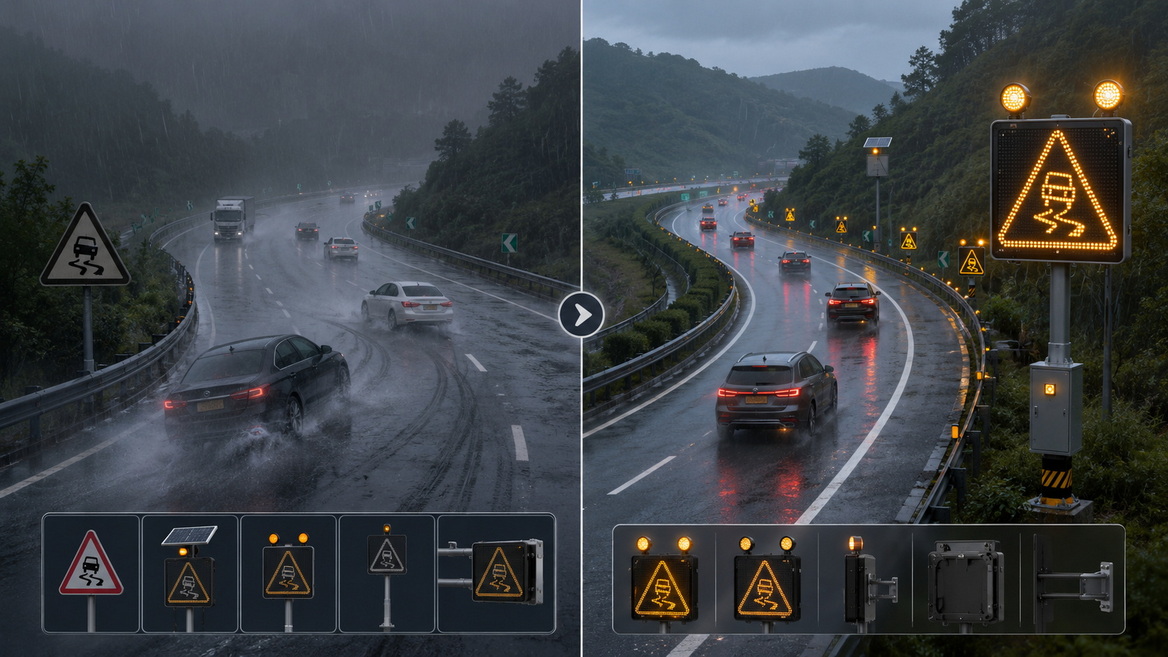
For modern applications, upgrade to LED slippery road signs—these illuminate dynamically, boosting visibility by up to 50% in fog or rain compared to static versions.
| Sign Type | Shape | Color Scheme | Best Use Case |
|---|---|---|---|
| Traditional | Diamond | Yellow/Black | Rural roads, highways |
| Advisory Triangle | Triangle | Red/White border | Urban areas, curves |
| LED Enhanced | Diamond or Custom | Illuminated Yellow/Black | High-traffic, low-visibility zones |
Slippery road signs appear in high-risk spots like mountain roads prone to landslides, where mud and rocks create slick surfaces after rain.
Fall foliage areas, snowy regions, and heavy rain zones also demand these signs, as wet leaves or oil slicks mimic ice.
Other placements include fog-prone paths, open windy spaces with dust, bridges, and shaded curves where water lingers.
Pro Tip: In parking lots and toll stations, LED traffic signs for slippery conditions integrate with variable message systems for real-time alerts.
These signs prevent skids, rollovers, and collisions by giving drivers time to adjust speed and braking. On dashboard displays, a slippery road sign icon indicates active traction control, signaling wheels are managed but caution is needed.
In 2025, U. S. traffic fatalities dropped to 36,640—a 6.7% decline—partly due to better signage in wet conditions, per NHTSA data. Poor visibility contributes to 13% of wet-road crashes globally.
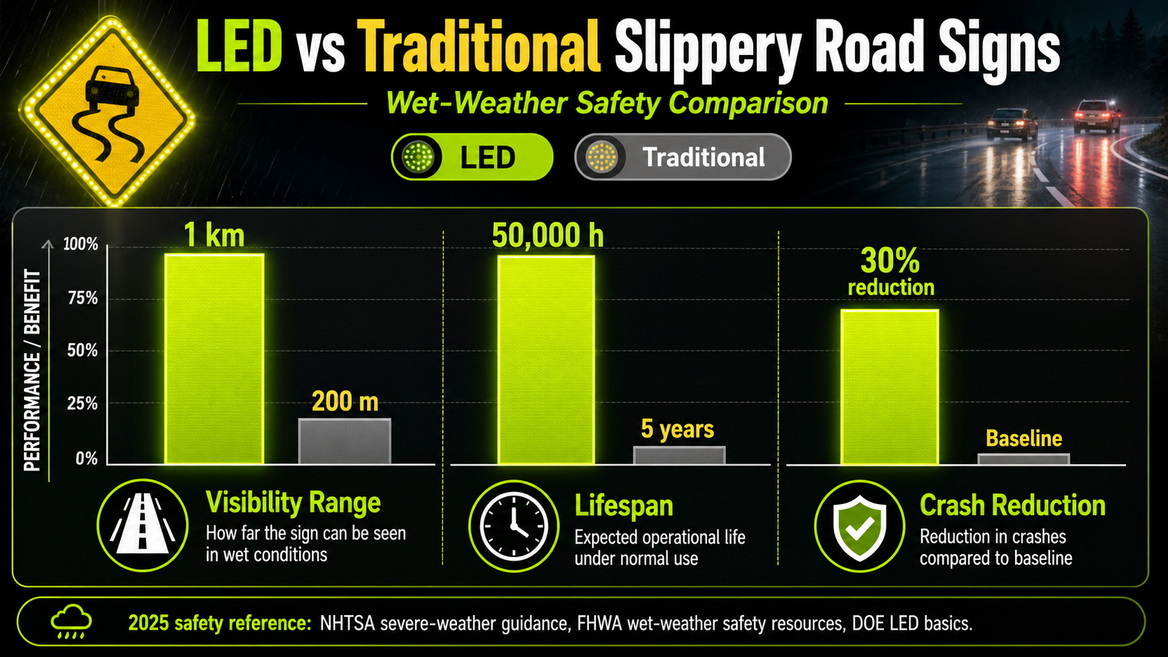
From our experience at Shenzhen Xingsheng, LED traffic signs reduce accident rates by 30% in client highways through superior brightness.
Wet-road incidents remain a top hazard: In Washington State alone, 2025 saw over 100,000 crashes, with slippery conditions factoring in 15-20% of severe injuries.
NHTSA reports a record-low fatality rate of 1.10 per 100 million miles in 2025, crediting advanced signage amid rising vehicle miles.
Industry Insight: Chinese highways using LED slippery road signs reported 25% fewer hydroplaning incidents in rainy seasons, per MOT standards.
- Global Trend: Slippery surfaces cause 1 in 5 weather-related crashes.
- Urban Impact: Parking facilities see 40% slip risks from oil leaks.
LED traffic signs for slippery warnings offer dynamic lighting, visible up to 1km in daylight—far surpassing static signs.
Energy-efficient and durable (50,000+ hours lifespan), they support OEM/ODM customization for highways or tolls.
Unlike static boards, LEDs adapt messages (e. g., "Slippery When Wet – Slow to 30mph"), cutting response times by 40%.
| Feature | Traditional Signs | LED Slippery Road Signs |
|---|---|---|
| Visibility | Daytime only | 24/7, fog/rain enhanced |
| Maintenance | Frequent repaint | Low, 10-year warranty |
| Cost Long-Term | Higher repaint | 50% savings on energy |
| Customization | Limited | Full OEM/ODM |
MUTCD mandates slippery when wet signs (W8-5) at 100-500 feet advance placement, with 6-inch minimum legend on high-speed roads.
OSHA aligns for workplaces/parking: Yellow for caution, clear symbols, positioned visibly without obstruction.
In China, GB 51038-2015 echoes this for urban roads, emphasizing LED for highways.
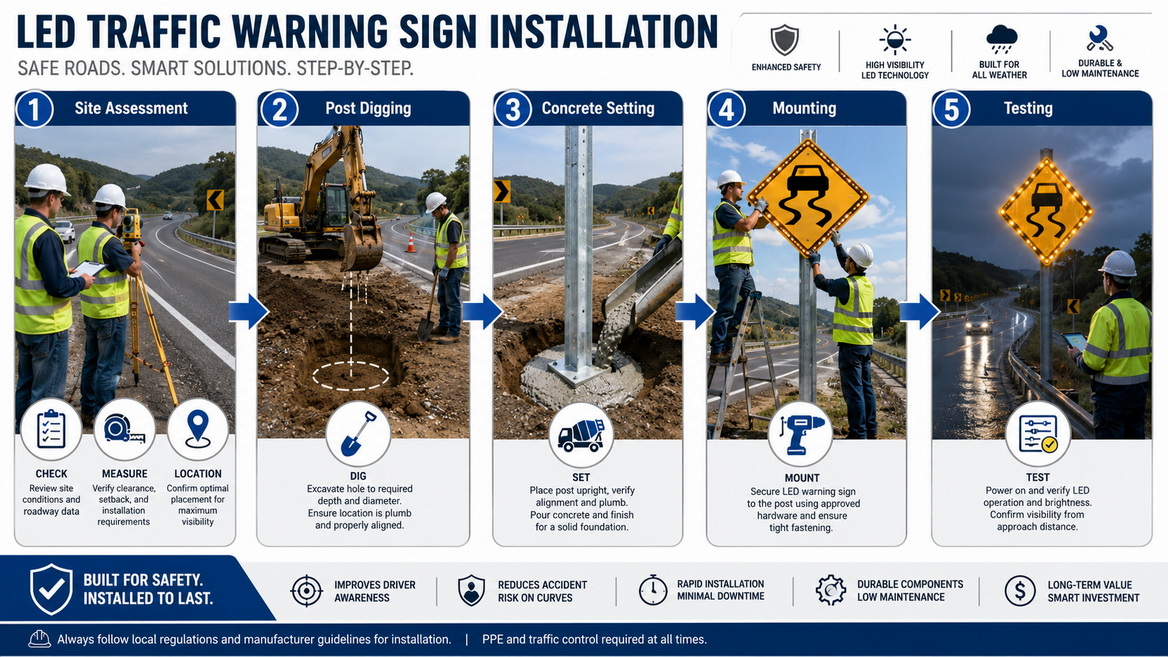
Proper installation maximizes effectiveness. Follow these MUTCD-compliant steps for LED traffic signs.
1. Site Assessment: Identify high-risk spots; ensure 12ft lateral offset from road edge.
2. Dig Post Hole: 2-3ft deep, wider than post; use hole digger.
3. Set Post: Insert upright, fill with concrete; cure 24-48 hours.
4. Mount Sign: Secure at 5-7ft height; for LEDs, connect power/solar.
5. Test & Maintain: Verify visibility; inspect quarterly.
Expert Tip: For Shenzhen Xingsheng OEM LED signs, we provide pre-wired kits for toll stations and parking.
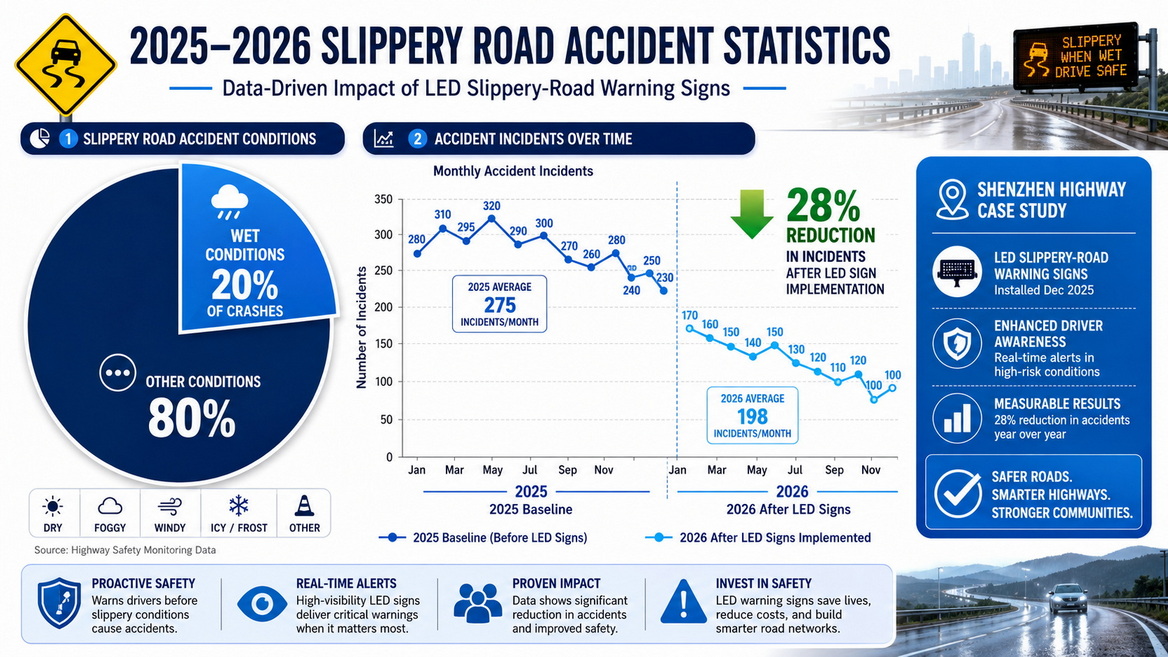
In 2025, a Guangdong highway project using our LED slippery road signs reduced wet-weather incidents by 28% over 6 months. Dynamic flashing alerted to rain, integrating with traffic cams.
Compared to static signs, LEDs cut emergency stops by 35%, per client data—proving ROI in under a year.
This aligns with global shifts: U. S. states adopting LEDs saw similar drops post-2025 fatality lows.
- Reduce Speed: Ease off accelerator; avoid sudden brakes.
- Increase Following Distance: Double normal gap.
- Steer Smoothly: No sharp turns; use winter tires/chains.
- Monitor Dashboard: Heed traction icons.
Facing slippery hazards on your streets or highways? Contact Shenzhen Xingsheng Traffic Facilities Co., Ltd. for custom LED traffic signs, OEM/ODM services.
It warns of slick roads from water, ice, or debris, urging reduced speed to prevent skids.
Near curves, bridges, rainy zones, snowy areas, and foliage-covered paths.
Yes, with superior visibility, energy savings, and dynamic alerts—reducing crashes by 30%.
MUTCD for roads (W8-5), OSHA/ANSI for workplaces; yellow diamond shape standard.
Dig 2-3ft hole, set post with concrete, mount at 5-7ft; test visibility.
- [Original article on slippery road sign meaning]https://jackwinsafety.com/slippery-road-sign-meaning/
- [NHTSA 2025 Traffic Fatality Estimates]https://www.nhtsa.gov/press-releases/traffic-deaths-2025-early-estimates-2024-annual
- [MUTCD Warning Signs Chapter]https://mutcd.fhwa.dot.gov/htm/2009/part2/part2c.htm
- [LED Safety Signs Benefits]https://displaysigns.ae/led-safety-signs-improve-road-awareness/
- [OSHA Safety Signage Standards]https://resources.duralabel.com/articles/five-ways-to-meet-osha-requirements-for-safety-signage
- [MUTCD Installation Requirements]https://optsigns.com/highway-sign-installation-requirements-mutcd/
- [Traffic Sign Installation Guide]https://jackwinsafety.com/traffic-sign-installations/
- [LED Traffic Signs Advantages]https://www.chainzone.com/what-are-the-benefits-of-led-traffic-signs


