
Please Choose Your Language
Views: 234 Author: XS Traffic Facilities Publish Time: 2026-07-17 Origin: Site


Content Menu
● Understanding the Role of Traffic Signs
● Main Categories of Traffic Signs
>> Guide and Informational Traffic Signs
● Typical Applications of Traffic Signs
>> City Streets and Urban Roads
>> Toll Stations and Parking Facilities
>> Residential Areas, Schools, and Hospitals
>> Special Zones and Hazard Areas
● How LED Traffic Signs Enhance Visibility and Safety
>> Key Benefits of LED Traffic Signs
>> Practical Comparison of Traditional and LED Traffic Signs
>>> Visibility and Message Clarity
>>> Flexibility and Maintenance
● Selecting and Planning Traffic Sign Systems
>> Steps for Effective Traffic Sign Planning
>> OEM and ODM Support for LED Traffic Signs
● Building Safer Roads with Smarter Traffic Signs
● FAQs
>> 1. What are the main types of traffic signs used on roads?
>> 2. Why are LED traffic signs important in modern road systems?
>> 3. Where are LED traffic signs most commonly used?
>> 4. How do traffic signs improve safety in residential and school areas?
>> 5. What factors should be considered when planning a traffic sign system?
Traffic signs are the visual language of the road. They guide drivers, protect pedestrians, and keep traffic flowing smoothly in cities, on highways, at toll stations, and in parking facilities. As a manufacturer working daily with LED traffic signs and other traffic safety products, we see how a carefully planned system of signs can significantly reduce confusion and accidents for all road users.
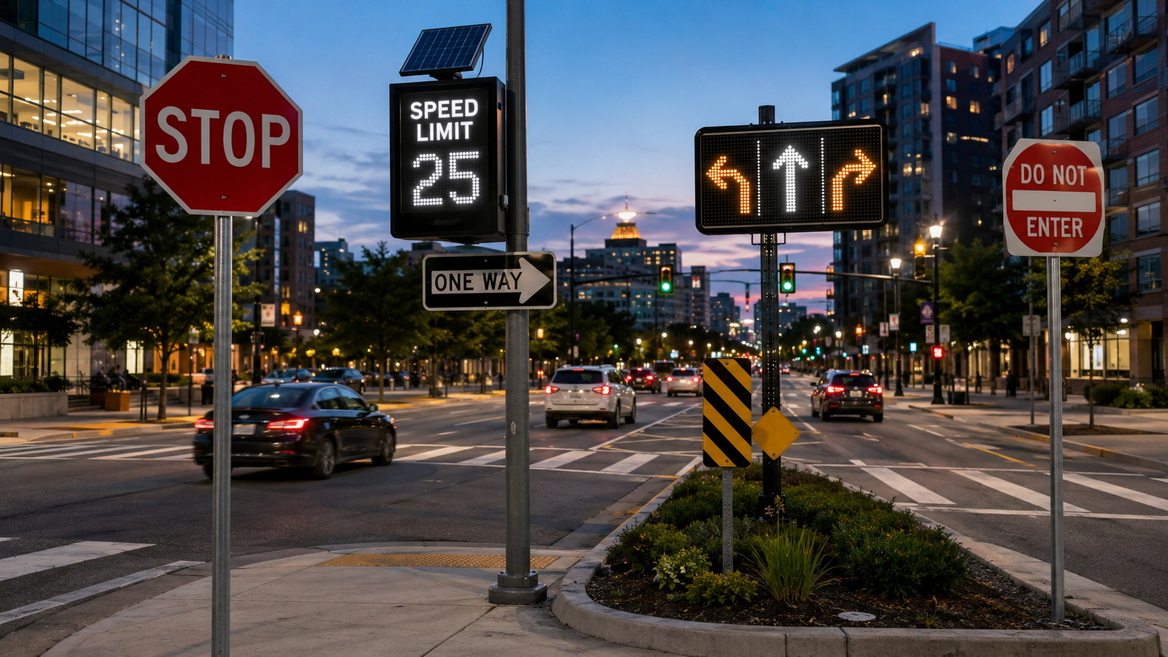
Traffic signs are standardized symbols that communicate rules, warnings, and guidance to everyone who uses the road. When they are well‑designed and correctly installed, they help to:
- Reduce the risk of collisions
- Improve traffic flow in busy areas
- Protect vulnerable groups such as children and the elderly
- Support safer driving behavior in complex environments
In practice, the most effective traffic sign systems combine clear messages, proper placement, and high visibility, especially at night and in adverse weather conditions. This is where modern LED traffic signs play an important role.
Regulatory traffic signs communicate mandatory rules. They tell drivers what they must do or must not do. These signs typically use strong colors and simple symbols so that the message is understood quickly, even at speed.
Common regulatory signs include:
- Stop
- Do Not Enter
- Yield
- Speed Limit and End of Speed Limit
- One Way
- No U‑Turn
- No Overtaking
- No Stopping or No Parking
- Restricted Zone
There are also signs that control specific vehicle types and loads:
- Truck Prohibited
- All Motor Vehicles Prohibited
- Cycle Prohibited
- Bullock Carts and Hand Carts Prohibited
- Tongas Prohibited
- Weight, Height, Width, Length, Axle Load and Load Limit signs
Compulsory signs tell drivers what they must do, such as:
- Compulsory Sound Horn
- Compulsory Ahead or Turn Left
- Compulsory Ahead or Turn Right
- Compulsory Cycle Track
- Compulsory Bus Stop
These regulatory signs are often the backbone of any road safety system, and their visibility is crucial. When key regulatory signs are delivered in LED formats, drivers can see and understand them more easily at night or in low‑light environments.
Warning traffic signs alert road users about hazards or changes in road conditions ahead. Their purpose is to give drivers enough time to adjust speed, change lanes, or prepare for a potential danger.
Typical warning signs cover:
- Left Hand Curve and Right Hand Curve
- Left Hand Hairpin Bend and Right Hand Hairpin Bend
- Left Reverse Bend and Right Reverse Bend
- Steep Ascent and Steep Descent
- Bump and Dangerous Dip
- Rough Road and Loose Gravel
- Risk of Ice
Warning signs also indicate upcoming intersections and crossings:
- Pedestrian Crossing
- Cycle Crossing
- Train Crossing
- Level Crossing with Barrier
- Level Crossing Without Barrier
- Cross Road Ahead
- Side Road Left and Right
- Y‑Intersection
- T‑Intersection
- Staggered Intersection
- Gap in Median
- Major Road Ahead
- Roundabout
Other warning signs focus on special conditions:
- Narrow Road
- Narrow Bridge Ahead
- Barrier Ahead
- Ferry Ahead
- Mini Roundabout
When these warning messages are delivered via LED traffic signs, especially on high‑speed roads and in areas with frequent fog or heavy rain, drivers can detect hazards earlier and respond more smoothly.
Guide and informational traffic signs help drivers and pedestrians find destinations, services, and facilities. They support orientation and decision‑making so that people can reach their destinations with fewer delays and less stress.
Common examples include:
- Directional signs showing cities, towns, road numbers, and major locations
- Recreation signs indicating leisure areas
- Service signs for petrol stations, eating places, light refreshments, resting places, first aid, hospitals, and public telephones
- Flood gauge signs for areas prone to high water levels
There is also a group of signs focused on parking and stands:
- Parking this side
- Parking both sides
- Parking scooter and motorcycle
- Cycle parking
- Taxi stand
- Auto rickshaw stand
- Parking cycle rickshaw
Temporary traffic signs and incident management signs are used to guide traffic during construction, roadworks, accidents, or special events. When guide and informational signs are enhanced using LED technology, drivers can see lane assignments, exits, and services more clearly, which reduces sudden lane changes and confusion.
On city streets and urban roads, traffic signs must manage a mix of cars, buses, trucks, cyclists, and pedestrians. Key applications include:
- Stop signs and Do Not Enter signs at junctions and one‑way streets
- Pedestrian crossings and school zone warnings near education and residential areas
- Speed limit signs to control driving behavior in dense neighborhoods
- Parking signs to reduce illegal parking and improve curbside organization
In crowded city environments, high‑visibility LED traffic signs can be especially useful at busy intersections and in areas with intense night‑time activity.
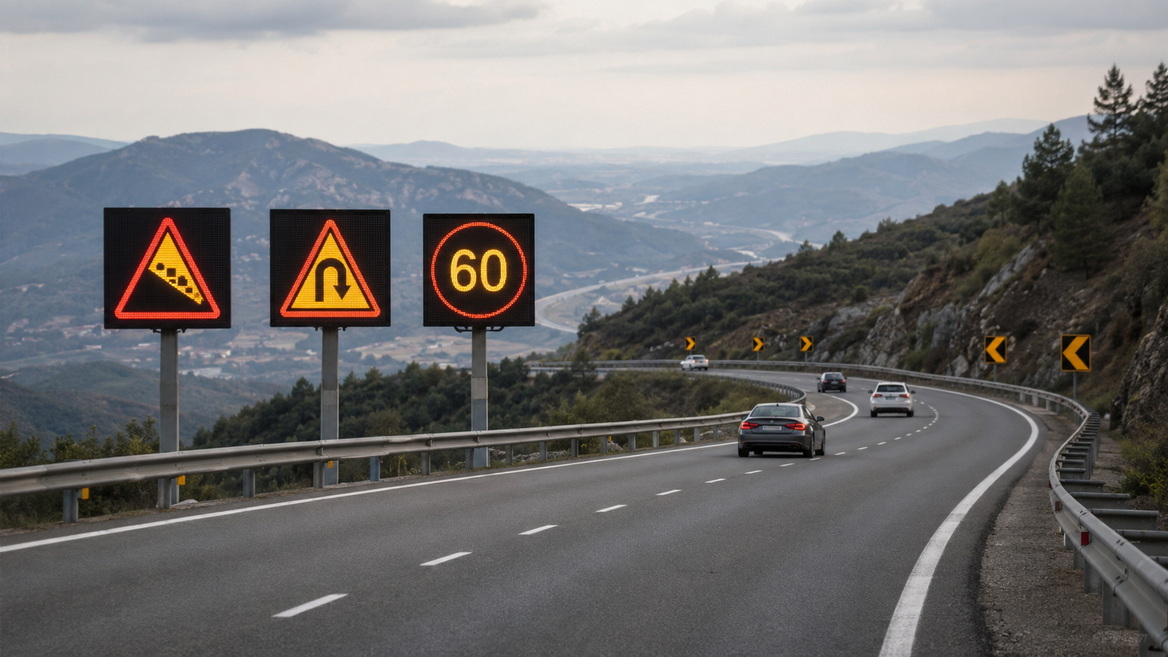
Highways and expressways operate at higher speeds and carry more vehicles, which makes clear communication vital. Typical signs include:
- Speed Limit and variable speed limit boards
- Warning signs for sharp curves, steep slopes, and narrow bridges
- Exit and directional signs for interchanges
- Lane control signs at toll plazas and tunnel entrances
On these routes, LED traffic signs help drivers anticipate changes in speed, lane status, or direction well in advance. When combined with consistent placement and standardized symbols, they support safer and smoother driving.
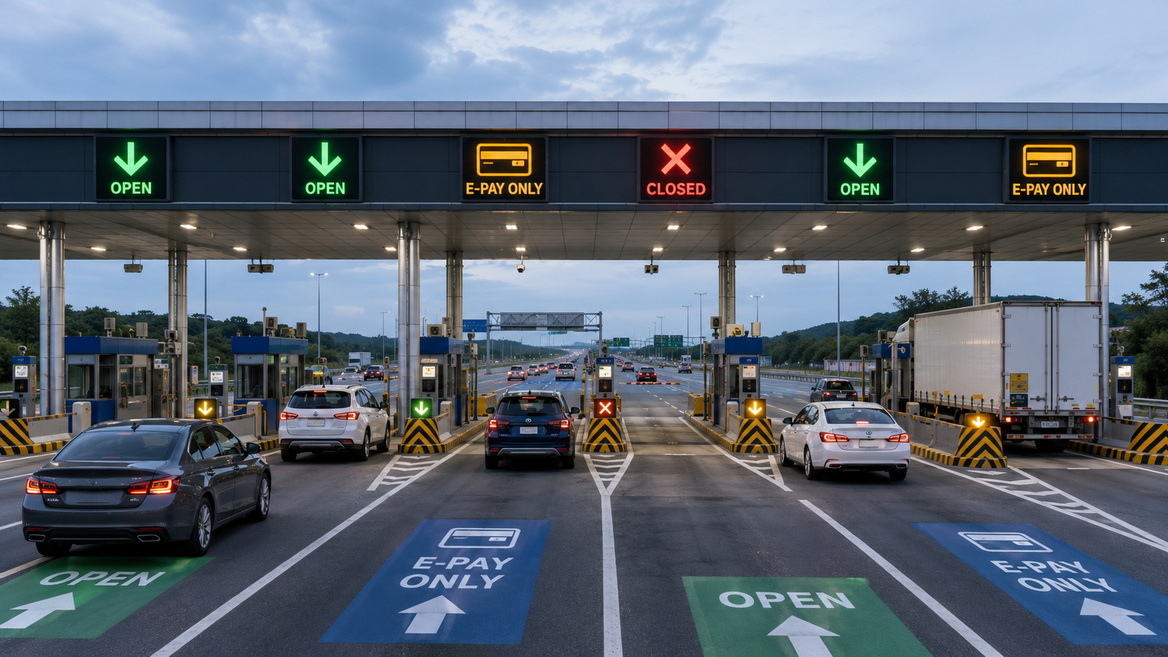
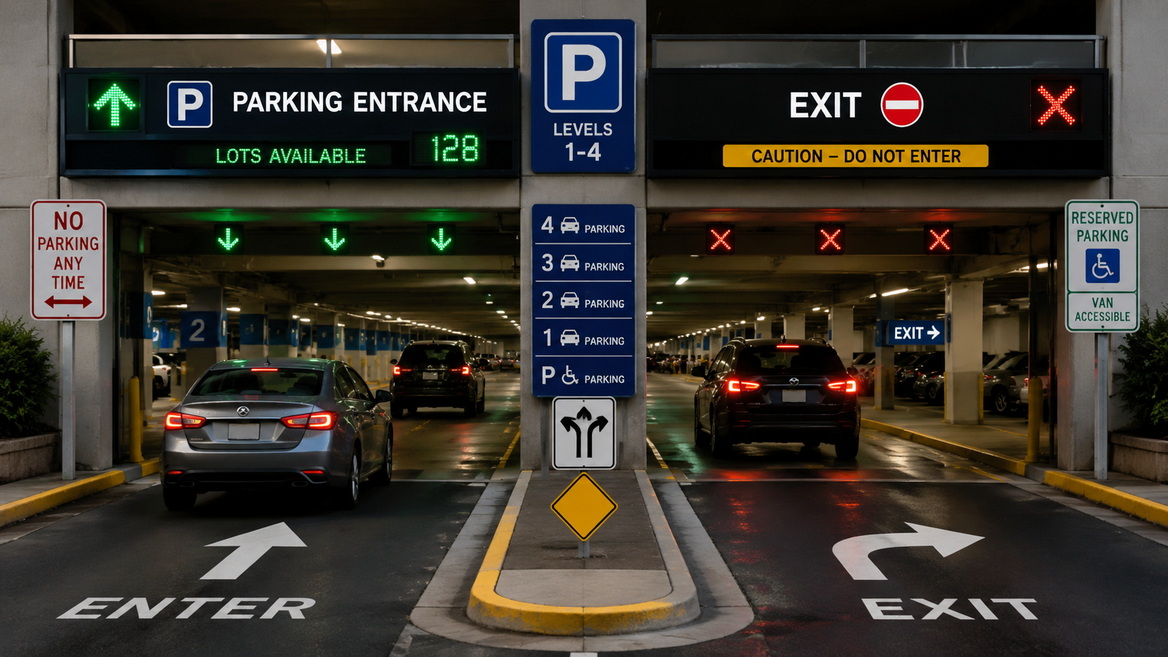
Toll stations and parking lots create complex decision points where drivers must choose lanes, payment options, and parking areas quickly. Important signs include:
- Lane assignment signs (for different vehicle classes or payment methods)
- Speed control signs approaching and leaving toll booths
- Parking guidance signs showing entry, exit, and available zones
- No parking or restricted zone signs to keep circulation routes clear
LED traffic signs are particularly valuable in these environments because they can:
- Display variable messages based on time of day, traffic volume, or incident status
- Highlight open and closed lanes
- Direct vehicles to specific parking areas or exits
This helps reduce congestion, improve throughput, and make the overall experience more predictable for drivers.
Residential areas, schools, and hospitals demand stronger protection for pedestrians and vulnerable road users. Important traffic signs in these zones include:
- Low speed limit signs
- Children at play or school zone warnings
- Pedestrian crossing signs
- No horn and restricted zone signs
- Parking signs to control curb usage
LED traffic signs used in these locations can draw extra attention to speed limits and crossings, reinforcing safer behavior and encouraging drivers to slow down when it matters most.
Certain environments require special attention due to weather, animals, or infrastructure conditions. Typical examples are:
- Forest areas with animal crossing signs
- Mountain roads with steep descent, risk of ice, and hairpin bend warnings
- Flood‑prone zones marked with flood gauge indicators
- Railway crossings and bridges with load limit and barrier signs
In such areas, LED traffic signs help ensure that critical warnings remain visible under fog, heavy rain, low‑light, or other challenging conditions.
LED traffic signs are designed to improve the clarity and visibility of messages. Compared with traditional reflective signs, they offer several advantages:
- Strong visibility at night and in poor weather
- Consistent brightness across the sign surface
- Ability to display dynamic content, such as changing speed limits or lane statuses
- High energy efficiency and long service life
These features make LED traffic signs suitable for roads and facilities where drivers must make quick decisions, such as:
- High‑speed highway segments
- Toll stations and tunnels
- Major intersections and roundabouts
- Large parking structures
By making important messages easier to see and understand, LED traffic signs contribute to smoother traffic flow and more predictable driver behavior.
Traditional reflective signs rely on vehicle headlights and ambient light. They work well in daytime conditions and in many standard situations. However, their effectiveness drops in heavy rain, thick fog, and areas with limited light.
LED traffic signs use internal or edge illumination to keep messages visible even when natural light is weak. This improves detection distance and helps drivers recognize warnings and instructions earlier.
Traditional signs have static messages. Once installed, their content does not change unless the sign is replaced. LED traffic signs can display variable messages, allowing operators to:
- Adjust speed limits
- Indicate lane closures or diversions
- Share incident alerts or temporary restrictions
While LED systems require power and some electronic maintenance, modern designs are built for durability and offer long life spans with relatively low energy consumption.
Designing a traffic sign system for streets, highways, toll stations, or parking facilities involves several practical steps:
1. Define the function of the road or facility.
2. Identify critical risk points such as sharp bends, merges, crossings, and busy junctions.
3. List all required regulatory, warning, and guide signs according to local standards.
4. Decide which signs must be visible in all weather and light conditions and prioritize these for LED formats.
5. Organize sign placement so drivers receive information in a logical sequence, without clutter or overload.
6. Plan inspection, cleaning, and maintenance schedules for both traditional and LED signs.
This structured approach helps ensure that the final system is not only compliant but also intuitive and comfortable for daily road users.
Manufacturers with OEM and ODM capabilities can support project owners, contractors, and distributors in building complete traffic sign solutions. Typical services include:
- Custom design of LED traffic signs for highways, streets, toll stations, and parking lots
- Engineering support to match local standards, languages, and symbol systems
- Production of both standard and customized sign formats, with different sizes and mounting options
- Integration of power, control, and communication systems for dynamic message signs
Working with an experienced manufacturer makes it easier to coordinate technical specifications, performance requirements, and project schedules. It also allows project teams to take advantage of proven designs while still tailoring details to local conditions.
Traffic signs are one of the most cost‑effective tools for improving road safety and managing traffic. When the right mix of regulatory, warning, and guide signs is combined with modern LED technology, road users receive clearer messages, earlier warnings, and more predictable guidance in all conditions.
Whether the environment is a city street, a highway, a toll station, or a parking facility, planning and deploying a well‑structured traffic sign system creates a safer and more comfortable experience for drivers, pedestrians, and other users. As traffic volumes grow and infrastructure becomes more complex, upgrading to smarter, more visible traffic signs is a practical way to support safer journeys every day.
The main categories are regulatory signs that set rules, warning signs that alert about hazards, and guide or informational signs that provide directions and service information.
LED traffic signs offer strong visibility, dynamic content, and energy efficiency. They help drivers see and understand key messages more clearly, especially at night and in bad weather.
LED traffic signs are widely used on highways, at toll stations, in tunnels, at major intersections, and in large parking facilities where fast decisions and clear guidance are essential.
Traffic signs set low speed limits, highlight pedestrian crossings, and discourage unnecessary noise or parking in sensitive zones. This reduces risks for children and residents.
Important factors include road function, risk points, legal requirements, visibility needs, driver workload, and maintenance. Prioritizing clarity and logical sequencing leads to better overall results.
1. "Types of Traffic Signs – 93 Important Types You Should Know," Jackwin Safety.
https://jackwinsafety.com/types-of-traffic-signs/
2. "Premium Road & Traffic Signs Manufacturer in China," Jackwin Safety.
https://jackwinsafety.com/traffic-signs/
3. "Custom Traffic Signs Manufacturer in China," Jackwin Safety.
https://jackwinsafety.com/custom-traffic-signs/
4. "Creating Helpful, Reliable, People‑First Content," Search Central documentation.
https://developers.google.com/search/docs/fundamentals/creating-helpful-content
5. "3 Best Practices for Sign Companies," WebFX industry guidance.
https://www.webfx.com/industries/professional-services/sign-companies/seo/


