
Please Choose Your Language
Views: 254 Author: XS Traffic Facilities Publish Time: 2026-10-04 Origin: Site


Content Menu
● How LED Traffic Signs Support Traffic Calming
>> Main Benefits of LED Traffic Signs
>> LED Signs Improve Driver Awareness
● Key LED Traffic Sign Applications
● LED Speed Feedback Signs for Safer Streets
>> Where Radar Speed Signs Work Best
>> Combining Speed Signs With Road Design
● LED Pedestrian Crossing Signs
>> Suitable Locations for LED Crossing Signs
● LED Traffic Signs for Toll Plazas and Highway Approaches
>> Common Toll Plaza LED Sign Functions
>> Highway Work Zones and Temporary Traffic Control
● Traffic Safety in Parking Lots and Private Facilities
>> Recommended Parking and Facility Signs
● A Practical Planning Process
>> Step 1: Identify the Main Safety Issue
>> Step 2: Review Site Conditions
>> Step 3: Select the Appropriate Sign Configuration
>> Step 4: Evaluate Results After Installation
● OEM and ODM LED Traffic Sign Solutions
>> Available Customization Considerations
● Choosing the Right LED Traffic Sign Solution
● Build Safer Traffic Environments With LED Traffic Signs
>> What are LED traffic calming signs?
>> Can LED traffic signs help reduce vehicle speed?
>> Where should radar speed feedback signs be installed?
>> Are LED traffic signs suitable for toll plazas?
>> Can LED traffic signs be powered by solar energy?
Traffic calming is not simply about telling drivers to slow down. It is a coordinated safety strategy that uses road design, visual guidance, speed management, and warning systems to encourage safer behavior.
For streets, highways, toll plazas, school zones, parking lots, industrial parks, and commercial access roads, LED traffic signs can provide a highly visible layer of protection. They help drivers identify speed limits, pedestrian crossings, lane changes, queues, work zones, and other risks before reaching the point of conflict.
Shenzhen Xingsheng Traffic Facilities Co., Ltd. focuses on LED traffic signs and traffic safety products for a wide range of road environments. The company supports OEM and ODM requirements for distributors, contractors, project owners, and system integrators seeking customized traffic safety solutions.
Unlike major road reconstruction projects, LED traffic signs can often be installed more quickly and adapted to the needs of a specific location. When selected and positioned correctly, they can improve driver awareness, reinforce traffic rules, and support safer movement for vehicles, pedestrians, cyclists, and road workers.
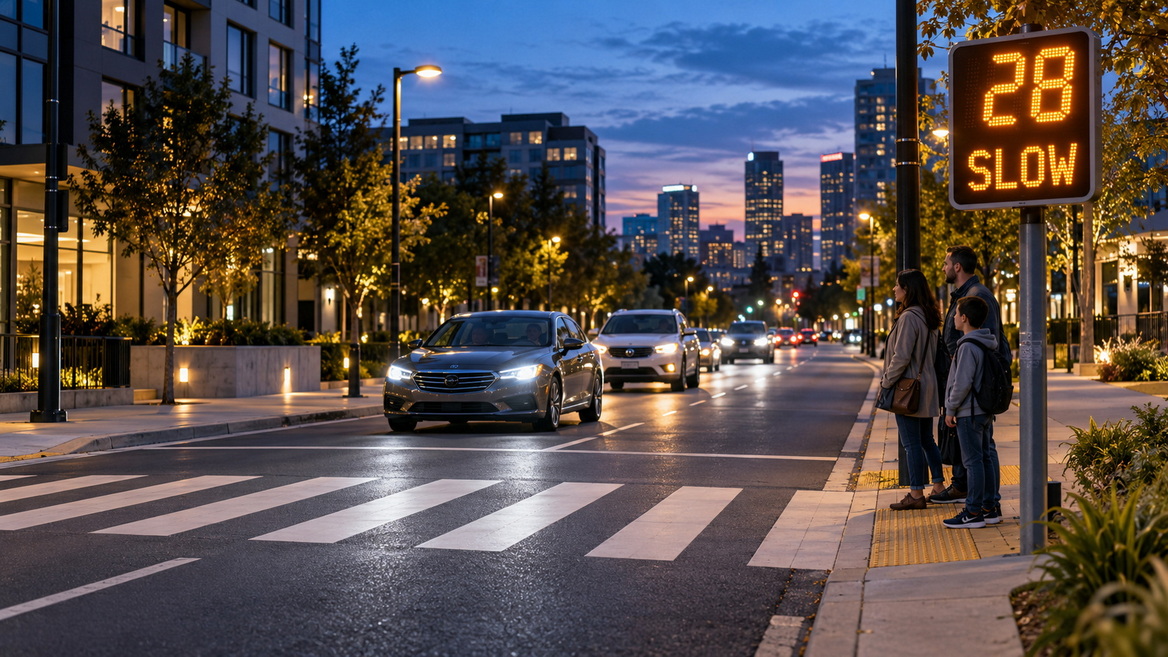
Traffic calming refers to a group of physical, visual, operational, and behavioral measures that encourage drivers to travel at safer speeds.
The purpose is not to stop traffic flow. Instead, traffic calming helps create roads and public spaces where vehicle speed matches the surrounding environment. A quiet residential street, a school entrance, a busy crosswalk, and a toll plaza all require different driver behavior.
Common traffic-calming measures include:
- Speed humps and speed tables
- Raised pedestrian crossings
- Curb extensions
- Median islands
- Roundabouts
- Lane narrowing
- Pavement markings
- Directional signs
- Speed limit signs
- Radar speed feedback displays
- LED pedestrian crossing signs
- Flashing warning beacons
- Dynamic lane-control signs
A successful traffic-calming system makes the intended behavior easier to understand. Drivers should be able to see where they need to slow down, which lane they should use, where pedestrians may cross, and what potential hazards exist ahead.
Vehicle speed is one of the most important factors in road safety. Higher speeds reduce the time available for drivers to recognize a hazard, react, brake, and avoid a collision.
Speed also affects crash severity. When a vehicle strikes a pedestrian, cyclist, motorcyclist, or another vehicle at a higher speed, the likelihood of serious injury increases significantly.
This is especially important in locations where road users interact closely, including:
- School zones
- Residential neighborhoods
- Pedestrian crossings
- Commercial streets
- Hospital entrances
- Factory roads
- Logistics parks
- Parking facilities
- Toll station approaches
- Construction zones
- Tourist areas
A posted speed limit alone may not always change behavior. Drivers can overlook static signs, become familiar with a route, or fail to recognize how quickly they are traveling. LED traffic signs help reinforce the message at the moment when attention is needed most.
Traditional traffic signs remain essential for road management. However, LED traffic signs can provide additional visibility, contrast, brightness, and real-time communication.
An illuminated sign is often easier to notice at night, during rain, in fog, at dawn, or in visually crowded environments. This can be particularly useful near crosswalks, highway ramps, toll plazas, parking entrances, construction zones, and industrial facilities.
LED traffic signs can support traffic calming by helping drivers:
- Notice speed limits earlier
- Recognize pedestrian crossings more clearly
- Respond to approaching hazards
- Understand lane-use instructions
- Identify closed or restricted lanes
- Detect queueing conditions
- Follow directional guidance
- Reduce speed before entering high-risk areas
- Make safer decisions in low-light conditions
- Improve compliance with internal road rules
For example, a radar speed feedback sign may display a driver's current speed as they approach a school zone or residential street. If the driver sees a bright LED display showing that they are traveling above the intended speed, they may reduce speed before reaching a crosswalk, driveway, or intersection.
A driver can become less responsive to familiar road signs over time. This is sometimes called sign fatigue. On a route used every day, a standard static sign may no longer receive the same level of attention.
LED traffic signs create stronger visual recognition because they can use:
- Bright LED illumination
- Flashing borders
- Dynamic speed displays
- Programmable messages
- Directional arrows
- Color contrast
- Warning symbols
- Real-time lane information
- Vehicle detection technology
The goal is not to distract drivers. The goal is to provide a clear and timely message that supports a safer decision.
Different road environments require different traffic-calming strategies. A LED warning sign that works well for a school-zone entrance may not be suitable for a highway work zone or toll plaza.
The most effective solution begins with a simple question: What behavior needs to change at this location?
| Location | Primary Risk | Recommended LED Sign Application | Main Safety Objective |
|---|---|---|---|
| School zone | Children crossing and sudden stopping | LED school-zone sign, speed feedback display, pedestrian warning sign | Reduce approach speeds and improve awareness |
| Residential street | Through-traffic speeding | Radar speed sign, flashing speed reminder | Encourage lower operating speeds |
| Urban crosswalk | Low pedestrian visibility | LED pedestrian crossing sign, flashing beacon | Improve yielding behavior |
| Toll plaza | Lane confusion and vehicle queueing | LED lane-control sign, directional arrow, queue warning sign | Improve lane discipline |
| Highway work zone | Lane shifts and road workers | Portable LED warning sign, variable message sign | Provide early warning |
| Parking lot | Pedestrian and vehicle conflicts | LED stop sign, speed reminder, directional sign | Control low-speed vehicle movement |
| Factory or logistics park | Trucks, forklifts, and pedestrians | LED truck speed sign, crossing warning, route guidance sign | Separate movements and reduce risk |
| Parking garage | Low clearance and blind turns | LED height limit sign, directional arrow, warning display | Prevent collisions and improve navigation |
Radar speed feedback signs are among the most widely used LED traffic-calming products. These signs detect the speed of approaching vehicles and display that speed in bright LED digits.
Depending on the product configuration, the sign may:
- Show the actual vehicle speed
- Flash when the speed exceeds a preset threshold
- Display a "SLOW DOWN" message
- Show a speed-limit reminder
- Record traffic speed data
- Support solar power
- Operate with wireless remote control
- Store speed and volume information for later analysis
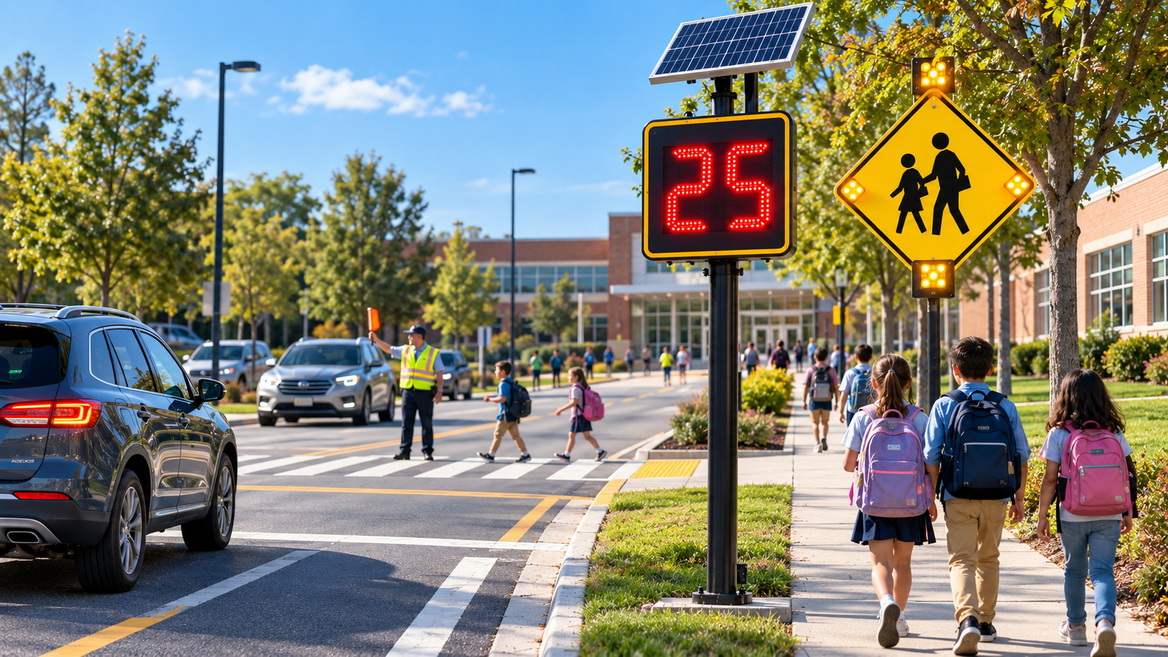
Radar speed feedback signs are particularly useful in locations where drivers need a reminder before reaching a high-risk area.
Typical installation locations include:
- School-zone approaches
- Residential roads
- Community entrances
- Public parks
- Hospital roads
- Factory access roads
- Industrial campuses
- Warehouse and logistics parks
- Parking garage entrances
- Commercial streets
- Village roads
- Tourist attractions
A radar speed sign is most effective when drivers can see it early enough to reduce speed gradually. The sign should be placed before the key conflict point rather than directly at it.
For example, if a pedestrian crossing is located near the entrance to a school, the speed feedback sign should be positioned in advance of the crossing. This gives drivers time to recognize their speed, release the accelerator, and prepare to stop if necessary.
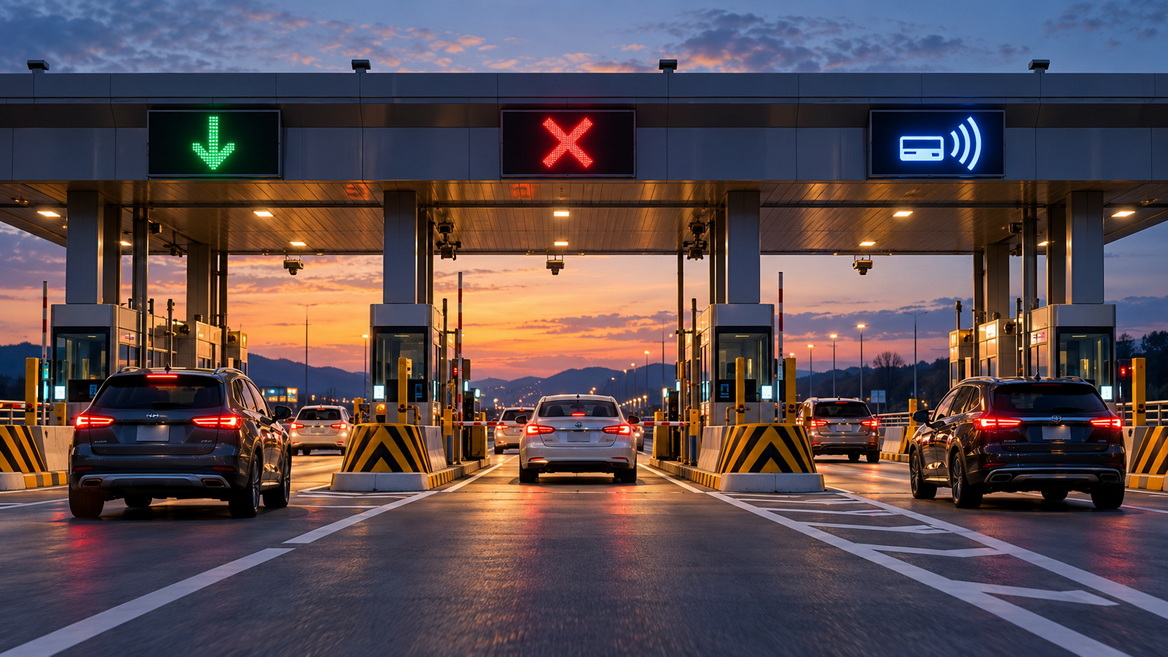
LED speed feedback signs can improve awareness, but they are often more effective when supported by the road environment.
A residential street with wide lanes and long uninterrupted sight lines may naturally encourage faster driving. In this situation, an LED speed sign can be combined with:
- Lane markings
- Raised crossings
- Curb extensions
- Speed humps
- Median islands
- Tree planting
- Parking management
- Gateway signs
- Narrower travel lanes
- High-visibility crosswalk markings
This approach creates several layers of safety. The road layout influences driver expectations, while the LED traffic sign reinforces the message in real time.
Pedestrian crossings are high-priority locations because pedestrians are less protected than vehicle occupants. A crossing may become especially dangerous when drivers are traveling too fast, visibility is poor, traffic volumes are high, or pedestrians include children, older adults, people with disabilities, and tourists unfamiliar with the area.
LED pedestrian crossing signs improve visibility by making the crossing warning easier to identify from a greater distance.
LED pedestrian signs can be used near:
- Schools
- Hospitals
- Shopping centers
- Bus stops
- Railway stations
- Tourist attractions
- Parks
- Residential communities
- Factory gates
- University campuses
- Stadiums
- Government buildings
- Parking areas
A well-planned pedestrian crossing system may include several elements:
1. Advance warning signs placed before the crossing area.
2. LED pedestrian signs installed near the crossing point.
3. Flashing beacons that improve nighttime and bad-weather visibility.
4. High-visibility pavement markings that define the pedestrian route.
5. Speed management measures that encourage drivers to slow down.
6. Adequate lighting so pedestrians are visible after dark.
Nighttime conditions create challenges for drivers and pedestrians. Headlights may not always provide enough contrast to identify a crossing early, especially in rain, fog, glare, or areas with mixed background lighting.
LED traffic signs can improve nighttime safety by creating a more visible warning signal. However, brightness should be selected carefully. A sign that is too dim may be difficult to see, while a sign that is excessively bright may create glare or distraction.
The right configuration depends on:
- Road speed
- Viewing distance
- Ambient lighting
- Weather conditions
- Sign location
- Sign size
- LED brightness
- Flashing mode
- Local traffic-control requirements
Toll plazas, highway ramps, and lane-control areas often require drivers to make decisions quickly. Drivers may need to select a lane, slow down, stop, merge, change direction, or respond to queueing traffic.
These locations benefit from clear and highly visible guidance.
LED traffic signs used at toll plazas may include:
- Open-lane indicators
- Closed-lane signs
- Green arrows
- Red crosses
- Speed-limit displays
- Queue-ahead warnings
- Lane-selection signs
- Electronic toll collection lane indicators
- Height-limit warnings
- Directional arrows
- Keep-left or keep-right instructions
- Maintenance-lane warnings
- Vehicle-class guidance
The primary objective is to communicate information early enough for drivers to act safely. A driver should not need to make a sudden lane change because the lane status was unclear or visible too late.
Highway work zones are another important application area. Temporary road conditions may change frequently, and drivers may encounter lane shifts, narrowed lanes, workers, equipment, construction barriers, and reduced speed limits.
Portable LED traffic signs can help communicate temporary conditions clearly.
Common work-zone messages include:
- ROAD WORK AHEAD
- REDUCE SPEED
- LANE CLOSED AHEAD
- MERGE LEFT
- MERGE RIGHT
- DETOUR
- EXPECT DELAYS
- QUEUE AHEAD
- WORKERS PRESENT
- FOLLOW TRAFFIC CONTROL
- USE CAUTION
For work-zone applications, durability, weather resistance, battery capacity, visibility, mounting stability, and message flexibility are all important procurement considerations.
Parking lots are often treated as low-speed environments, but they can involve complex movement patterns. Pedestrians, passenger cars, delivery trucks, motorcycles, bicycles, forklifts, and service vehicles may all share limited space.
Risks increase when drivers reverse, turn around blind corners, rush to find parking, or fail to yield at internal intersections.
LED traffic signs can improve internal traffic management in facilities such as:
- Shopping malls
- Supermarkets
- Hospitals
- Airports
- Residential communities
- Office parks
- Factories
- Warehouses
- Logistics centers
- Hotels
- Universities
- Exhibition centers
- Sports venues
Useful LED traffic signs for parking and private-road environments include:
- LED stop signs
- LED yield signs
- LED speed limit signs
- LED pedestrian crossing signs
- LED directional arrows
- LED one-way signs
- LED truck-route signs
- LED loading-zone signs
- LED low-clearance warnings
- LED no-entry signs
- LED parking guidance signs
- LED emergency route signs
In a logistics park, for example, a truck speed feedback sign can remind drivers to slow down near loading bays. An LED pedestrian crossing sign can warn truck drivers where staff regularly cross internal roads. Directional LED signs can help separate truck traffic from passenger vehicles.
These measures can reduce confusion and improve the predictability of vehicle movement.
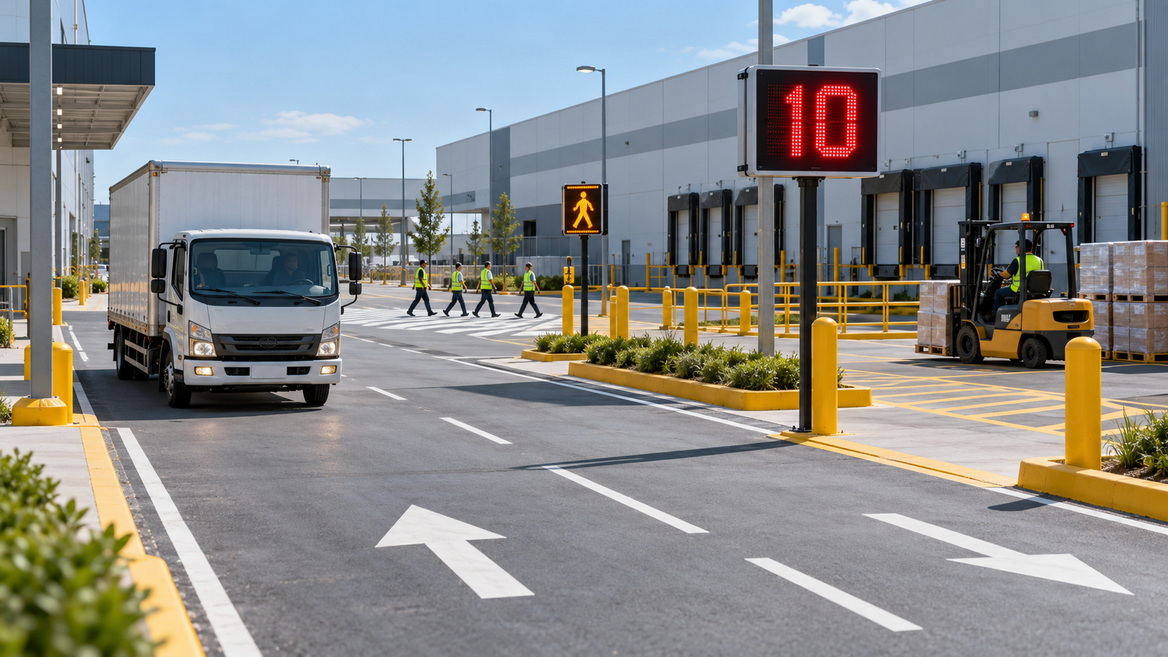
The best LED traffic sign solution begins with a clear understanding of the site. Product selection should follow an evaluation of traffic conditions, road geometry, user behavior, and operational requirements.
Start by defining the problem as specifically as possible.
Examples include:
- Vehicles are speeding near a school entrance.
- Drivers do not yield at a pedestrian crossing.
- Toll-plaza users are selecting the wrong lane.
- Truck drivers are moving too quickly inside a logistics facility.
- Vehicles are entering a parking area in the wrong direction.
- A highway work zone has poor advance warning.
- A curve has insufficient nighttime visibility.
- Pedestrians are crossing near a factory gate.
A clear problem statement makes it easier to select the right sign type, location, brightness level, message content, and supporting traffic-control measures.
A site review should consider:
- Road type
- Road width
- Lane count
- Traffic volume
- Vehicle types
- Average operating speed
- Speed-limit requirements
- Pedestrian activity
- Bicycle activity
- Parking activity
- Sight distance
- Street lighting
- Weather conditions
- Existing traffic signs
- Power availability
- Solar exposure
- Installation space
- Local regulations
Photographs, site drawings, video recordings, traffic counts, and speed data can all help define the requirements accurately.
Not every LED traffic sign requires the same features. The configuration should match the operating environment.
| Selection Factor | Questions to Consider |
|---|---|
| Viewing distance | How far away must drivers see and understand the sign? |
| Road speed | Is the sign being used in a low-speed parking lot or a high-speed highway environment? |
| Power source | Is grid power available, or is a solar-powered system more practical? |
| Sign content | Does the project need a fixed symbol, dynamic speed display, or programmable message? |
| Weather resistance | Will the product operate in rain, heat, snow, dust, humidity, or coastal conditions? |
| Installation method | Will the sign be pole-mounted, wall-mounted, trailer-mounted, or installed on an existing structure? |
| Communication | Is remote control, wireless connectivity, or data collection required? |
| Customization | Are special language, graphics, branding, dimensions, or mounting requirements needed? |
| Maintenance | Can the buyer access the sign easily for inspection, cleaning, and component replacement? |
Traffic safety improvements should be measured after installation. A sign may be highly visible, but the project should also confirm whether it changes real behavior.
Useful indicators include:
- Average vehicle speed
- Percentage of vehicles exceeding the speed limit
- 85th-percentile speed
- Hard-braking events
- Pedestrian yielding rates
- Queue length
- Traffic conflicts
- Vehicle routing behavior
- Near-miss reports
- Crash records
- Community feedback
- Maintenance requirements
A before-and-after review helps project owners understand whether the selected solution is achieving the intended result.
Standard LED traffic signs can meet many common project requirements. However, traffic environments vary greatly across countries, cities, industrial sites, and private facilities.
A school zone in a dense city may require a compact solar-powered sign with flashing LEDs. A highway construction project may require a portable variable message sign with a larger display and extended battery capacity. A toll plaza may require lane-control signs with directional arrows, red crosses, and remote control functions.
Shenzhen Xingsheng Traffic Facilities Co., Ltd. provides LED traffic safety products and supports OEM and ODM projects for customers requiring customized solutions.
Depending on the project, customization may include:
- Sign dimensions
- Housing materials
- LED color
- LED brightness
- Display layout
- Static or programmable message content
- Speed radar integration
- Solar panel capacity
- Battery configuration
- Charge controller design
- Wireless communication
- Remote-control options
- Traffic symbols
- Language requirements
- Customer logo
- Private-label branding
- Mounting brackets
- Pole-mounting structures
- Portable trailer configurations
- Customized packaging
- Technical documentation
Customization should be based on a confirmed technical specification. Buyers should provide installation photos, road dimensions, local requirements, intended viewing distance, power conditions, and required sign content whenever possible.
This information helps ensure the final product matches the actual operating environment.
An LED traffic sign should not be selected only by price or visual appearance. The right product must be appropriate for the road environment, driver behavior, power conditions, visibility needs, and long-term maintenance requirements.
A well-designed traffic-calming solution should answer the following questions:
- What safety problem needs to be addressed?
- Which road users face the greatest risk?
- At what distance must drivers recognize the message?
- What speed reduction is required?
- Does the location need a fixed warning sign or a dynamic display?
- Is solar power practical?
- Will the sign be used day and night?
- Does the site require data collection?
- Are local traffic-control standards applicable?
- Is a customized design required?
Traffic calming is most effective when it is treated as a complete safety system. Road geometry, pavement markings, pedestrian facilities, lighting, directional information, speed management, and LED traffic signs should work together.
A high-quality LED traffic sign can improve visibility and awareness. Combined with thoughtful road design and clear operating rules, it can help create safer, more predictable, and more efficient traffic environments.
Every road, toll station, parking facility, school zone, and industrial site has different traffic risks. A suitable LED traffic sign solution should reflect the real conditions on site rather than relying on a one-size-fits-all product.
Shenzhen Xingsheng Traffic Facilities Co., Ltd. provides LED traffic signs and customized traffic safety solutions for streets, highways, toll plazas, parking areas, factories, logistics parks, and other traffic environments.
For projects requiring customized LED sign size, graphics, solar power, radar speed detection, programmable messages, mounting options, private labeling, or specialized packaging, OEM and ODM support can help create a product that fits the intended application.
LED traffic calming signs are illuminated traffic-control products designed to improve driver awareness and encourage safer behavior. They may include radar speed feedback signs, pedestrian crossing signs, flashing school-zone signs, lane-control signs, parking guidance signs, and variable message signs.
Yes. LED traffic signs can remind drivers of the speed limit, display their actual vehicle speed, and provide visible warnings before high-risk locations. Radar speed feedback signs are particularly useful in school zones, residential streets, parking facilities, industrial parks, and other areas where drivers need to slow down.
Radar speed feedback signs are commonly installed before school zones, pedestrian crossings, community entrances, factory gates, parking lots, logistics parks, commercial streets, and residential roads. They should be positioned far enough before the risk area to allow drivers to slow down safely.
Yes. LED traffic signs are suitable for toll plazas because they can display open-lane status, closed-lane warnings, speed limits, directional arrows, queue warnings, lane-selection guidance, and other information that helps drivers make safer decisions.
Many LED traffic signs can be configured with solar panels, batteries, and charge controllers. Solar-powered systems are useful where grid power is unavailable, installation flexibility is important, or trenching and electrical work would be costly.
1. Carmanah Technologies. "[What Is Traffic Calming?]"
2. Federal Highway Administration. "[Traffic Calming ePrimer]"
3. Federal Highway Administration. "[Module 2: Traffic Calming Basics]"
4. Federal Highway Administration. "[Speed Management Countermeasures]"
5. National Association of City Transportation Officials. "[Speed Reduction Mechanisms]"
6. Insurance Institute for Highway Safety. "[Vehicle Height Compounds Dangers of Speed for Pedestrians]"
7. Institute of Transportation Engineers. "[Measures for Managing Speed]"


