
Please Choose Your Language
Views: 259 Author: XS Traffic Facilities Publish Time: 2026-07-07 Origin: Site


Content Menu
● Top Benefits of Traffic Lights in the Solar Era – A Road Safety Expert's Perspective
● Why Traffic Lights Matter More Than Ever
● Core Safety Benefits of Traffic Lights
>> Reducing Collisions and Conflict at Intersections
>> Protecting Pedestrians and Vulnerable Road Users
● Traffic Management and Efficiency Gains
>> Smoother Flow, Less Congestion
>> Supporting Emergency and Special Vehicles
● Environmental and Economic Benefits of Solar Traffic Lights
>> Cutting Energy Use and Emissions
>> Lower Operating Costs and Long Service Life
● Practical Advantages of Solar Traffic Lights in Real Projects
>> Easy Installation and Off‑Grid Deployment
>> Intelligent Control and Reliable Performance
● Expert Insight: OEM/ODM Solar Traffic Light Solutions from Shenzhen
>> Manufacturer Perspective – Shenzhen Xingsheng Traffic Facilities Co., Ltd.
>> Customizing Solar Traffic Systems for Different Scenarios
● User Experience: Visibility, Noise and Driver Behavior
>> Improving Visibility and Driver Compliance
>> Reducing Noise and Stress in Urban Environments
● Practical Checklist – Choosing Solar Traffic Lights for Your Project
>> Key Evaluation Factors for Buyers
● Summary Table – Traditional vs. Solar Traffic Lights
● Call to Action – Building Safer, Greener Roads with Solar Traffic Systems
● FAQs
>> Q1: Are traffic lights only used for vehicle control?
>> Q2: What are the main advantages of solar traffic lights compared with traditional systems?
>> Q3: Can solar traffic lights work reliably in bad weather or during power outages?
>> Q4: In which scenarios are solar traffic lights most useful?
>> Q5: How can road authorities and project owners choose the right solar traffic light supplier?
Solar traffic lights and modern signal systems are no longer just "red–yellow–green"—they are core infrastructure for safer, greener and smarter roads, especially when powered by the sun and backed by reliable OEM/ODM manufacturing.
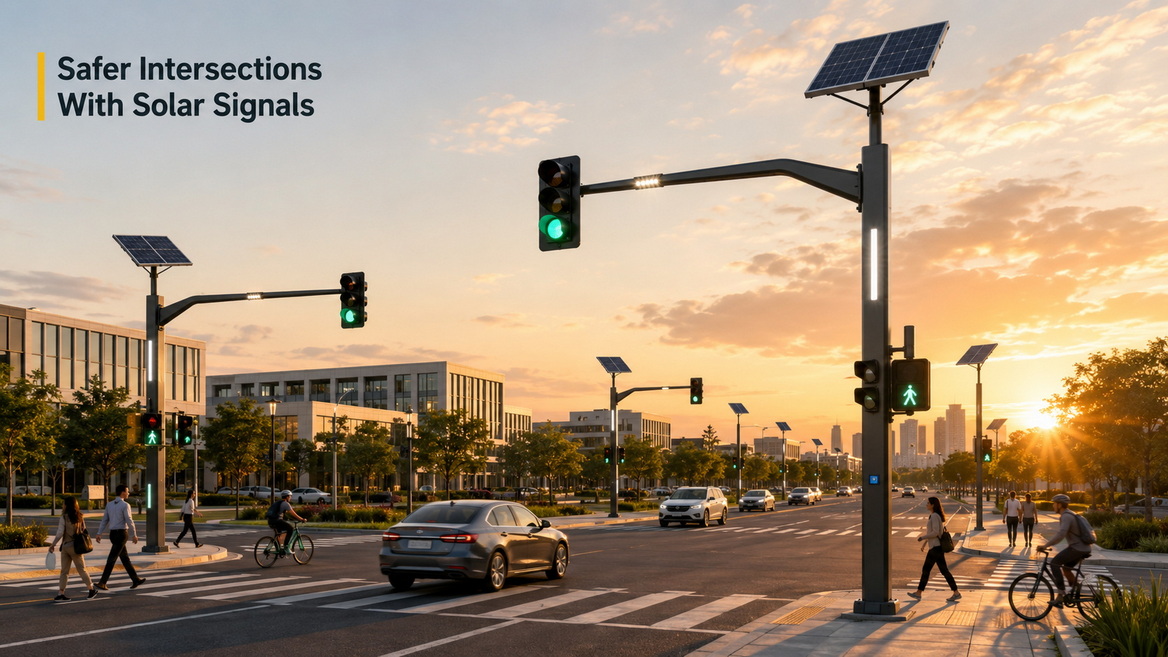
As someone who has spent years working with traffic safety products, export projects and SEO-driven content in the road safety niche, I've seen how traffic lights evolve from simple control devices into intelligent, energy‑efficient systems that protect drivers, pedestrians and cyclists at every intersection. In this article, I'll combine real‑world manufacturing experience, industry data and user feedback to explain why solar traffic lights, LED signal systems and smart controllers are reshaping how we design streets, highways, toll stations and parking facilities.
Modern traffic lights are powerful tools that create order and predictability on today's busy roads. By clearly assigning right of way, they reduce the need for drivers to make risky independent judgments at complex intersections. In practice, this means fewer conflicts, smoother traffic flow and a safer environment for all road users, from truck drivers on expressways to children crossing at school zones.
Traffic signals have also become central to urban planning and smart transport strategies. Authorities can tune signal timing, implement "green waves" and integrate sensors to optimize throughput while reducing emissions and noise in dense city centers. When these systems are powered by solar energy, they add resilience and sustainability to the equation—two priorities that every modern city is actively pursuing.
Busy intersections are where most serious crashes occur, especially angle collisions and left‑turn conflicts. Well‑timed traffic lights transform this disordered flow into an orderly sequence where each movement gets its own protected phase. This structured allocation of green time significantly reduces right‑angle collisions and lowers the risk of misjudgment by drivers.
Industry analyses show that signalized intersections can cut certain types of accidents by double‑digit percentages when compared with uncontrolled junctions, especially pedestrian injuries. Combined with clear lane markings and high‑visibility LEDs, this delivers a tangible safety improvement that is visible in both crash statistics and driver confidence on the road.
From an on‑the‑ground perspective, pedestrian signals are often the first line of defense for people on foot or on two wheels. Dedicated walk phases and countdown timers give pedestrians a predictable window to cross, while red signals and flashing warnings stop them from stepping into high‑risk traffic flows.
Many modern installations also include special signals for cyclists, encouraging greener transport while reducing the risk of side impacts between cars and bikes. This kind of targeted visual guidance is especially effective in school zones, shared spaces and mixed‑traffic urban corridors where traditional signs alone are not enough.
Traffic lights do far more than simply signal "stop" and "go". They manage the overall rhythm of traffic, balancing green time between conflicting approaches and coordinating multi‑lane movements through complex junctions. When signals are planned well, vehicles spend less time idling, and queues dissipate more quickly during peak hours.
Some cities apply "green wave" concepts, using coordinated signals that allow vehicles traveling at a recommended speed to catch multiple green lights in sequence. This approach has been shown to increase average travel speeds while lowering fuel use and emissions by reducing stop‑and‑go driving. In practice, drivers experience a more predictable, calm journey, which also tends to reduce aggressive behavior and noise pollution.
Modern signal controllers can detect and prioritize emergency vehicles such as ambulances, fire trucks and police cars. Once a priority vehicle is detected, signals can rapidly turn green along its route, clearing the way and shaving crucial seconds off response times.
Special phasing can also be programmed for buses, trams or heavy trucks to improve public transport reliability and freight efficiency in congested corridors. From an operations point of view, this multi‑mode support is essential for building genuinely smart, inclusive transport networks.

One of the biggest shifts in the industry is the move from grid‑powered incandescent signals to solar‑powered LED traffic lights. Solar systems draw energy from the sun and store it in batteries, eliminating the need for grid electricity and the associated greenhouse gas emissions from power generation.
LED technology further reduces energy consumption thanks to its high efficiency and long lifespan—often tens of thousands of hours of reliable service. When you combine solar panels with LEDs, you get systems that are both low‑carbon and cost‑efficient, a combination that appeals to municipalities and private operators alike.
From a lifecycle perspective, solar traffic lights provide significant cost savings. Once installed, they require no electricity bills, and LED modules demand far less maintenance than traditional lamps. This reduces truck rolls, labor costs and disruption to traffic for routine replacement.
The durability of modern housings—with waterproof, dust‑proof and flame‑retardant designs—also extends operational life and maintains brightness even in harsh outdoor conditions. For road authorities and facility managers, this means more predictable budgets and fewer unexpected outages at critical intersections.
Solar traffic lights are self‑contained systems that can be installed without trenching, underground cabling or major civil works. Because they do not rely on the local grid, they are ideal for remote highways, rural roads, temporary construction sites and areas with unreliable power supply.
This plug‑and‑play nature also makes them valuable during disaster response and emergency scenarios, when conventional infrastructure may be damaged or unavailable. Portable solar signal units can be quickly transported and deployed by police or relief teams to restore order and guide traffic around hazards.

Many solar traffic light systems incorporate intelligent controllers that optimize energy use, automatically adjust brightness and manage voltage to protect batteries. They can detect day/night cycles and switch operating modes accordingly, ensuring visibility while extending battery life.
Battery backup and smart energy management provide reliable operation even during long periods of bad weather or grid failures. In regions prone to natural disasters or frequent outages, this energy independence becomes a key resilience feature that maintains safety when people need it most.

From a manufacturing and project perspective, Shenzhen Xingsheng Traffic Facilities Co., Ltd. is a high‑tech, export‑oriented enterprise that has focused on road safety products for more than a decade. Its product portfolio includes LED traffic signals, solar traffic lights, solar road studs, LED tunnel signs, parking safety facilities and related accessories widely used on streets, highways, toll stations and parking lots.
With a dedicated R&D team and ISO 9001‑approved quality management systems, the company supports both OEM and ODM services, providing end‑to‑end solutions from concept design to mass production. This combination of engineering capability, quality control and flexible customization is especially valuable for international clients who require regional compliance (MUTCD, CE, GB), tailored specifications and reliable delivery schedules.
In practical projects, solar traffic lights and related devices must be tuned to the specific environment:
- Highways and expressways need high‑intensity LED signals and solar delineators that remain visible at speed and in adverse weather.
- Toll stations require coordinated lane signals, barrier indicators and clear speed displays to keep vehicles moving safely and efficiently.
- Parking lots benefit from solar warning lights, lane indicators and speed feedback signs to guide drivers in confined spaces without adding grid load.
- School zones and village entrances on highways rely on solar warning flashers and red‑blue lights to alert drivers in areas with high pedestrian activity but limited access to electricity.
Through OEM/ODM collaboration, clients can specify lens designs, LED colors, housing materials, mounting options, communication interfaces and control logic to match local standards and site conditions. This level of customization ensures that each solar traffic solution is not only safe and durable but also optimized for long‑term performance and total cost of ownership.
From the user's point of view, the most noticeable feature of modern traffic lights is visibility. High‑brightness LEDs and carefully designed lenses keep signals clear both day and night, even at long distances or in rain and fog. Dynamic, flashing warnings and illuminated signs actively influence driver behavior, prompting faster reactions and higher compliance than static signs.
Solar traffic signs and LED signals also enhance pedestrian protection, especially when combined with crosswalk warning systems and radar speed feedback displays. When drivers see bright, attention‑grabbing signals at crossings, they are more likely to slow down and yield, reducing speeding and risky maneuvers in sensitive zones.
Well‑designed traffic signal timing reduces unnecessary stops and starts, which in turn lowers engine revving, horn use and the overall noise level around intersections. In many cities, this quieter environment is an important quality‑of‑life factor for nearby residents, schools and businesses.
By smoothing flow and clarifying right of way, signals also help reduce driver stress and road rage. Drivers understand that they will get a dedicated phase and are less tempted to push into gaps or block junctions, which contributes to more civil, predictable behavior on the road.
When selecting solar traffic lights and related safety products, professional buyers should consider:
- Regulatory compliance – Ensure products meet relevant standards (e. g., MUTCD, CE, GB) for visibility, materials and installation.
- Visibility and optical performance – Check LED intensity, lens design and night/day performance.
- Durability and weather resistance – Look for waterproof, dust‑proof, UV‑resistant housings and robust mounting hardware.
- Energy system quality – Evaluate panel efficiency, battery capacity, controller intelligence and protection features.
- Implementation and maintenance – Favor modular, easy‑to‑install designs with low maintenance requirements.
- Supplier support and after‑sales service – Work with manufacturers that can provide technical guidance, documentation and long‑term support.
For many international projects, partnering with an experienced OEM/ODM manufacturer like Shenzhen Xingsheng helps ensure that these factors are addressed in a single integrated solution.
| Aspect | Traditional grid‑powered lights | Solar traffic lights |
|---|---|---|
| Power source | Connected to electrical grid wikipedia | Independent solar panels and batteries bbmled+1 |
| Installation complexity | Requires trenching and cabling bbmled | Quick installation, minimal civil works bbmled+1 |
| Operating costs | Ongoing electricity bills bbmled | No grid power costs, low maintenance bbmled+1 |
| Resilience during outages | Vulnerable to grid failures sdgs.un | Continues operating off‑grid bbmled+1 |
| Environmental impact | Higher emissions from power generation bbmled | Lower carbon footprint, renewable energy bbmled+1 |
| Ideal application scenarios | Urban cores with strong grid infrastructure fonrochesolarlighting | Remote roads, disaster zones, smart‑city upgrades wistronchina+1 |
For cities, contractors and facility managers planning new road projects or upgrades, now is the time to integrate solar traffic lights and advanced LED signal systems into your traffic safety strategy. By combining proven traffic engineering principles with clean energy technology, you can reduce accidents, cut operating costs and future‑proof intersections against grid disruptions.
If you need OEM/ODM support for customized solar traffic lights, warning flashers, solar road studs or parking safety facilities, partnering with a specialized manufacturer like Shenzhen Xingsheng Traffic Facilities Co., Ltd. can help you move from concept to installation quickly and reliably. Contact a professional supplier to discuss your road safety requirements, regulatory environment and project timeline, then design solutions that make every intersection safer—for drivers, pedestrians and the planet.
No. Modern traffic lights also guide pedestrians and cyclists through dedicated signals, protected phases and clear visual cues, reducing conflicts between different road users at intersections and crossings.
Solar traffic lights offer energy independence, easy installation without trenching, lower maintenance, strong weather resistance and long‑lasting performance thanks to efficient panels and LEDs.
Yes. Intelligent controllers and battery systems are designed to ensure uninterrupted operation, even during grid failures, extended cloudy periods or extreme weather conditions.
They are particularly effective in remote areas without grid access, temporary construction zones, disaster response situations, rural highways, school zones and village entrances with high accident risk.
Look for manufacturers with strong R&D, ISO‑certified quality systems, OEM/ODM capabilities, compliance with regional standards, documented performance data and long‑term after‑sales support.
1. Jackwin Safety – "Top 15 Benefits of Traffic Lights Which Keep Everyone Safe." https://jackwinsafety.com/top-15-benefits-of-traffic-lights/
2. Qixiang Traffic – "Advantages Of Traffic Lights." https://www.yzqxtraffic.com/news/advantages-of-traffic-lights/
3. Solar Road Studs – "What are the Advantages of Traffic Lights." https://www.haroadstud.com/blog/what-are-the-advantages-of-traffic-lights.html
4. BBM Traffic Light – "Solar Traffic Lights: Reducing Environmental Impact and Energy Consumption." https://www.bbmled.com/a-news-solar-traffic-lights-reducing-environmental-impact-and-energy-consumption
5. Wistron China – "What Are Solar Traffic Lights Used For?" https://www.wistronchina.com/what-are-solar-traffic-lights-used-for/
6. Qixiang Traffic – "Advantages Of Solar Powered Traffic Lights." https://www.yzqxtraffic.com/news/advantages-of-solar-powered-traffic-lights/
7. Wikipedia – "Solar traffic light." https://en.wikipedia.org/wiki/Solar_traffic_light
8. SolTech – "How Solar Traffic Signs Are Revolutionising Road Safety." https://soltech.eco/solar-traffic-signs-road-safety/
9. United Nations – "Application of solar energy for traffic light system in developing countries." https://sdgs.un.org/sites/default/files/2022-05/2.4.10-19-Ha-solar%20energy%20for%20traffic%20lights.pdf
10. Shenzhen Xingsheng Traffic Facilities Co., Ltd. – Company Profile. https://www.trafficthing.com/es/Company-Profile.html


