
Please Choose Your Language
Views: 234 Author: XS Traffic Facilities Publish Time: 2026-08-05 Origin: Site


Content Menu
● Why Road Striping Paint Matters
● Main Types of Road Striping Paint
>> Solvent-Based Traffic Paint
>> High-Durability Marking Systems
● How to Choose the Right Paint
>> Consider the Application Area
>> Check Climate and Weather Conditions
● Surface Preparation and Application
>> Surface Preparation Checklist
● New Trends in Traffic Marking Materials
● Road Striping as Part of a Complete Safety System
>> Parking Lots
● Why Custom Manufacturing Support Matters
● Summary
● FAQ
>> 1. What is road striping paint used for?
>> 2. Which paint is best for parking lot striping?
>> 3. How long does road striping paint last?
>> 4. Can road striping paint be used in cold weather?
>> 5. Why is surface preparation so important?
Road striping paint is much more than a visual marking material. It helps organize movement, reduce confusion, and improve safety in places where vehicles and pedestrians share space. A well-marked road or parking lot makes driving easier, parking more efficient, and traffic flow more predictable.
In parking lots, striping defines stalls, fire lanes, no-parking zones, loading areas, and pedestrian crossings. On roads and highways, it supports lane guidance, merging behavior, warning zones, and crossing visibility. In industrial and logistics facilities, it separates forklifts, employees, trucks, and restricted areas.
Clear pavement markings are especially important in busy environments. When markings are faded, inconsistent, or poorly applied, safety and efficiency both decline.
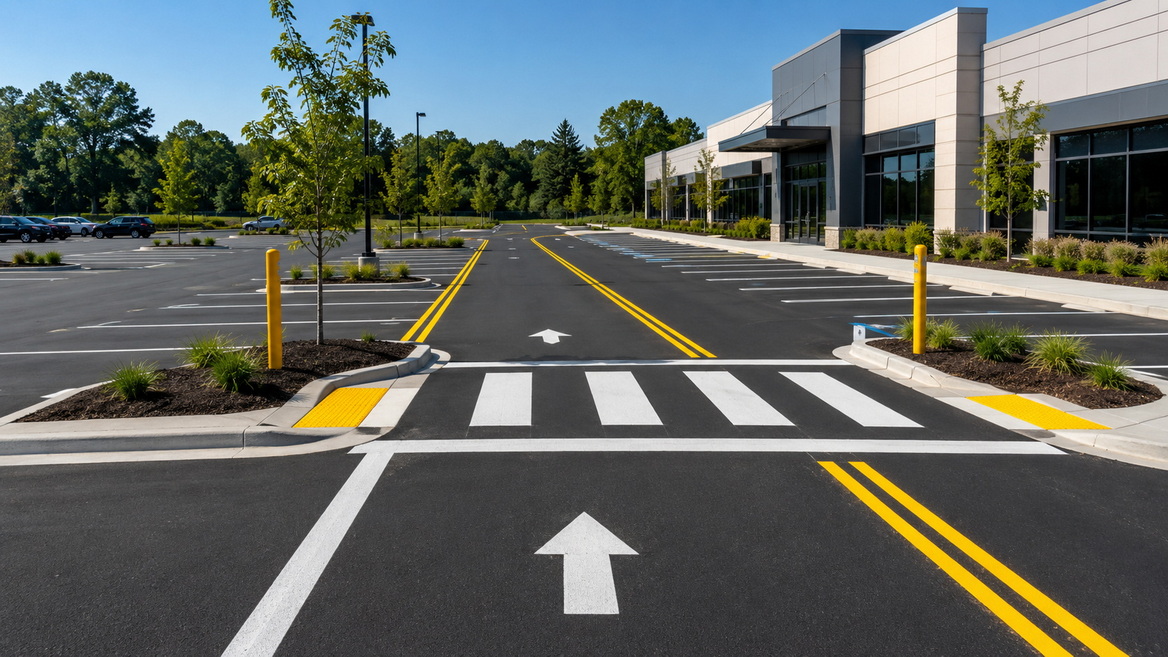
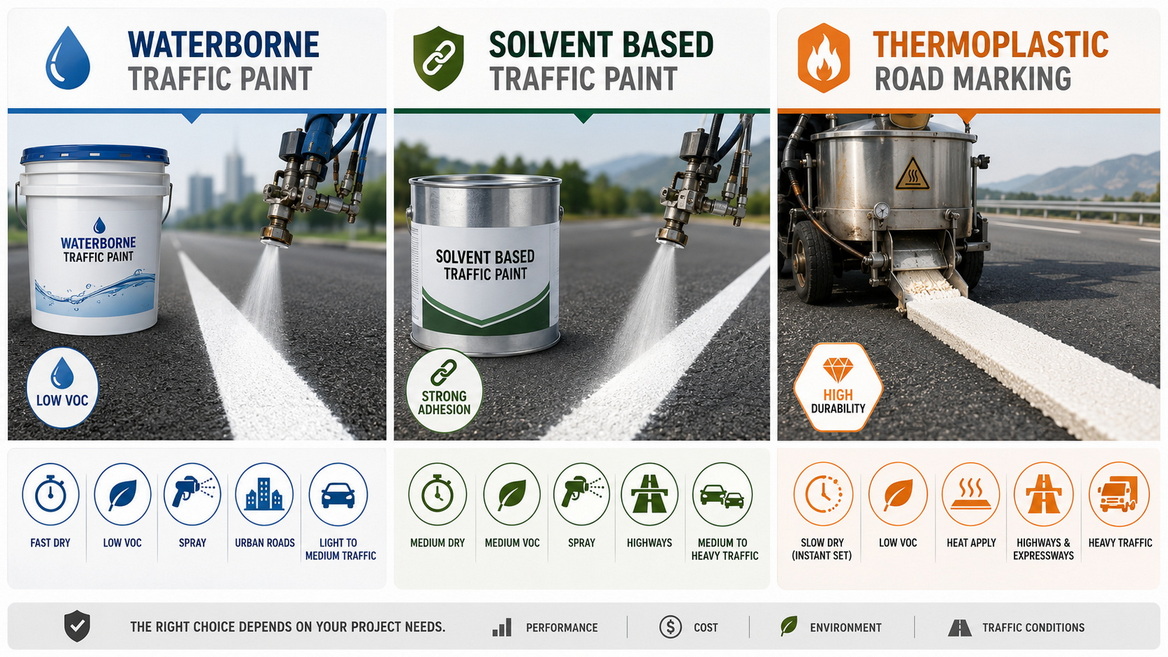
Different projects call for different paint systems. The most common options are waterborne traffic paint, solvent-based traffic paint, and high-durability marking systems.
Waterborne traffic paint is one of the most widely used options for pavement marking. It is often chosen for parking lots, urban roads, and general traffic marking because it is practical, easy to apply, and suitable for many everyday projects.
This type of paint is valued for its fast drying, lower odor, and easier cleanup. It is also commonly used in projects where environmental considerations and application convenience matter.
Solvent-based traffic paint is still used in certain situations where application conditions make it more suitable than waterborne products. It is often selected for specific climates, maintenance work, or projects where different drying or adhesion behavior is needed.
This type of paint can be a good option when the working environment requires added flexibility. In colder conditions, it may perform better than some waterborne systems.
For projects exposed to heavy wear, long service cycles, or demanding operating conditions, specialty marking systems may be a better choice. These can include thermoplastic materials or two-component systems.
They are often used in high-traffic roads, toll stations, logistics yards, industrial facilities, and locations where abrasion resistance is important. Although these systems may require more planning and higher initial investment, they can provide stronger long-term performance.
The best road striping paint is not always the most expensive one. It is the one that matches the real conditions of the project.
A parking lot does not face the same demands as a highway. A warehouse does not need the same striping system as a toll station. Start by identifying where the paint will be used and how much wear it will face.
- Parking lots usually need practical, visible, and easy-to-maintain markings.
- Streets and urban roads need clear guidance and reliable day-to-day performance.
- Highways often require stronger durability and visibility.
- Industrial facilities may need specialized markings for forklifts, pedestrians, and work zones.
Traffic volume has a direct impact on service life. Light traffic may allow standard marking paint to perform well. Heavy traffic, turning vehicles, and constant braking can wear markings down quickly.
If the area experiences frequent tire movement, sharp turning, or heavy truck traffic, a more durable system should be considered.
Temperature, humidity, and rainfall all influence application quality and curing time. Paint that performs well in dry, warm conditions may not behave the same way in cold or wet weather.
Before selecting a product, consider:
- expected temperature during application,
- drying time required before reopening traffic,
- rain risk during curing,
- seasonal weather variation,
- and local maintenance schedules.
Visibility is one of the most important functions of road striping. Markings should remain easy to see in daytime, at night, and in changing weather conditions.
High-visibility striping improves driver response, reduces confusion, and helps define movement more clearly. This is especially important for crosswalks, arrows, stops, lane dividers, and parking boundaries.
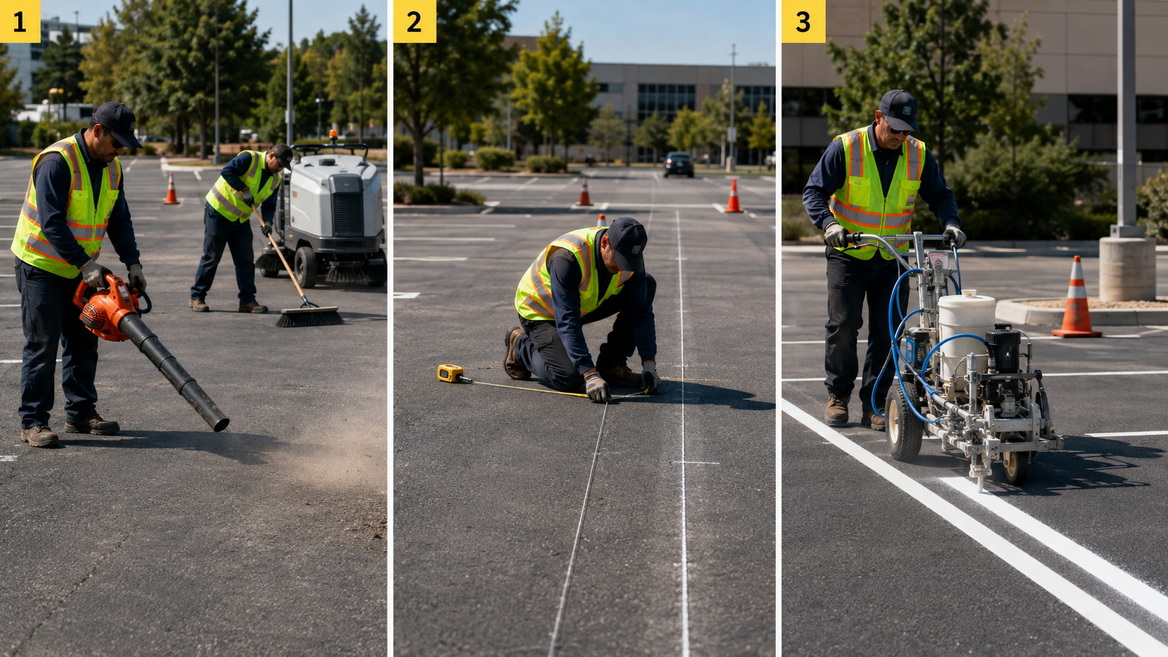
Even the best paint will fail if the surface is not prepared correctly. Good application begins before the first line is sprayed.
Before painting, the surface should be:
- clean,
- dry,
- free from loose debris,
- free from oil or grease,
- and stable enough for adhesion.
A poorly prepared surface shortens the life of the markings and reduces their appearance quality.
1. Measure the layout carefully before work begins.
2. Confirm that weather conditions are suitable.
3. Use the proper striping equipment.
4. Apply the paint in even width and thickness.
5. Allow enough drying or curing time before traffic resumes.
- Painting over dust, moisture, or dirt.
- Using the wrong material for the climate.
- Applying lines too thin or too thick.
- Rushing reopening time.
- Ignoring layout accuracy.
These mistakes can lead to uneven markings, short service life, and unnecessary rework.
The road marking industry has been moving toward products that are easier to apply, more efficient to maintain, and more adaptable to different project needs. Waterborne systems have become increasingly popular in many applications because they combine practical performance with easier handling.
At the same time, durable systems continue to play an important role in high-wear environments. That means the market is not moving toward one universal solution. Instead, buyers are choosing materials based on specific project conditions.
For contractors, distributors, and manufacturers, this means product selection has become more strategic than ever. Clients are not just asking for paint. They are asking for long-term performance, operational efficiency, and lower maintenance demand.
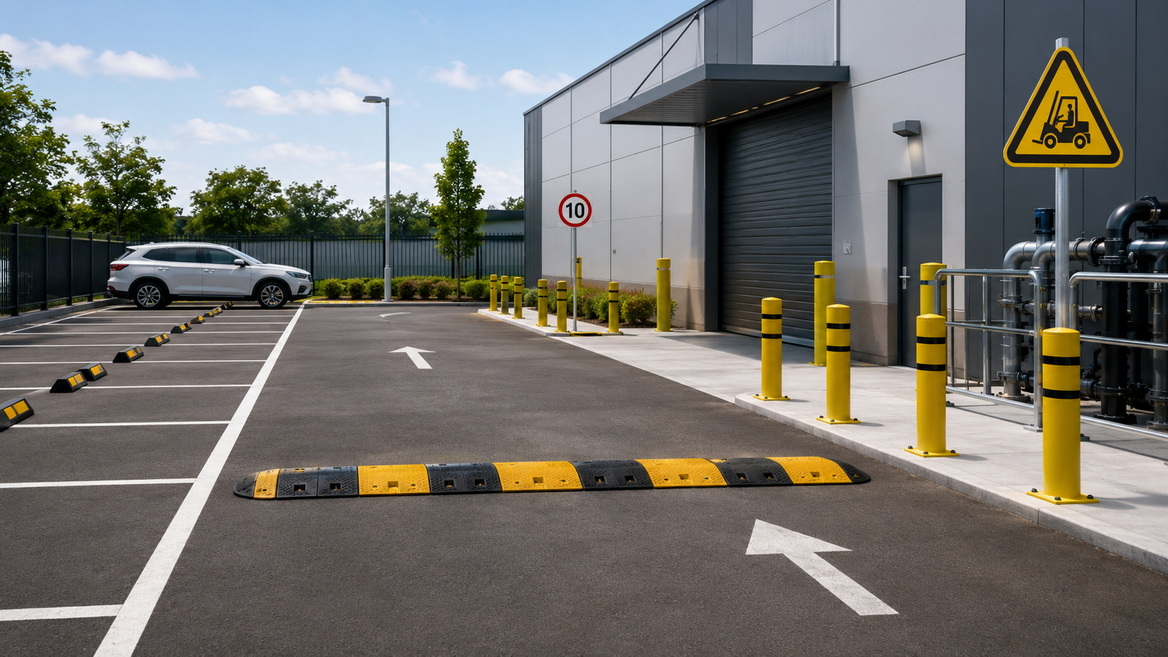
Road striping should not be treated as a standalone item. It works best as part of a complete traffic safety layout that includes physical and visual guidance products.
In parking lots, for example, striping is more effective when combined with:
- wheel stops,
- speed humps,
- corner guards,
- bollards,
- warning signs,
- and reflective traffic devices.
In industrial facilities, lane markings often work together with barriers, safety posts, and pedestrian guidance systems. This combination creates clearer movement patterns and stronger protection.
When markings and safety products are planned together, the entire site becomes easier to use and safer to manage.
Parking lot striping helps organize vehicles, define pedestrian routes, and improve site order. It is commonly used for parking spaces, accessible stalls, directional arrows, loading zones, and no-parking areas.
On streets and roads, striping supports movement control, lane separation, intersections, and pedestrian crossing visibility.
Toll stations require markings that remain visible under constant vehicle movement, frequent braking, and repeated turning.
Factories, warehouses, and logistics yards use striping to separate forklifts, truck lanes, pedestrian pathways, and restricted work areas.
Many buyers need more than standard products. They need custom sizes, branded packaging, color matching, and product combinations that fit different markets or project requirements.
For overseas customers, OEM and ODM support is especially useful because it allows greater flexibility in branding, specification, and project design. This is particularly valuable for distributors, contractors, and importers working across different regions and customer types.
Choosing the right road striping paint requires more than comparing price. The best choice depends on the surface, traffic level, climate, application method, and expected service life. Waterborne paint works well for many standard applications, while solvent-based and high-durability systems remain important for more demanding environments.
Road striping is also most effective when it is part of a broader safety plan. When markings are combined with physical traffic safety products, the result is a more organized, more visible, and more dependable site.
For parking lots, streets, highways, toll stations, and industrial facilities, the goal is the same: create markings that are clear, durable, and easy to maintain.
If you are planning a traffic safety or parking lot project, Shenzhen Xingsheng Traffic Facilities Co., Ltd. can support you with OEM and ODM solutions tailored to your market needs.
Road striping paint is used to create pavement markings such as lane lines, parking spaces, arrows, crosswalks, and safety zones.
Waterborne traffic paint is commonly used for parking lots, while more durable systems may be better for heavy-traffic areas.
The lifespan depends on traffic volume, weather, surface preparation, and paint type. Durable systems usually last longer than standard paints.
Yes, but the product must be selected carefully. Some solvent-based systems may perform better than waterborne products in lower temperatures.
Because paint adheres better to clean, dry, and stable surfaces. Poor preparation reduces durability and appearance.
1. PPG – ENNIS-FLINT® by PPG Traffic Paint
https://www.ppg.com/en-US/traffic/products/traffic-paint
2. Sherwin-Williams – Traffic Markings
https://images.sherwin-williams.com/content_images/PDF-TRAFFIC-PAINT-INFO.pdf
3. CoatingsTech – Overcoming Challenges to Adoption of New Traffic Paint Technologies
4. CoatingsTech – Road Markings and Traffic Paints—Making Roads and Highways Safer
5. Traffic Safety Warehouse – The Guide to Parking Lot and Road Striping Paints
https://www.trafficsafetywarehouse.com/Resources/Guide-to-Road-Striping-Paints.asp
6. Natcap – Road Striping Guide for Work Zones & Road Safety
https://natcap.com/road-striping-guide/
7. Rays Traffic – Which Paint is Used for Marking Road Lines?
https://raystraffic.com/which-paint-is-used-for-marking-road-lines/


