
Please Choose Your Language
Views: 289 Author: XS Traffic Facilities Publish Time: 2026-07-20 Origin: Site


Content Menu
● What Are Fluorescent Road Markers for Tunnels?
● What Are Standard Outdoor Road Markers?
● Why Tunnels Need Dedicated Fluorescent Markers
● Strengths of Standard Outdoor Markers on Open Roads
● When Fluorescent Tunnel Markers Are the Best Choice
● When Standard Outdoor Markers Make More Sense
● Integration with LED Traffic Signs and Guidance Systems
>> In Tunnels
● Customized Solutions Through OEM and ODM Services
● Practical Checklist for Selecting Marker Types
>> Scenario 1: Urban Road Tunnel with High Traffic
>> Scenario 2: Mountain Highway with Short Tunnels
>> Scenario 3: Large Parking Facility with Underground Access
>> 1. Can fluorescent tunnel markers be used outdoors?
>> 2. Do fluorescent tunnel markers always require electrical power?
>> 3. How often do tunnel markers need cleaning or replacement?
>> 4. Are standard outdoor markers suitable for all climates?
>> 5. What role do manufacturers play in marker and sign integration?
Choosing between fluorescent road markers for tunnels and standard outdoor markers is not a cosmetic decision. It directly influences driver safety, asset longevity, and the long-term performance of road networks. From the perspective of a practitioner working closely with LED traffic signs and active guidance systems, these two marker categories each solve distinct visibility challenges and should be deployed with a clear strategy in mind.
In this article, we will explore how fluorescent road markers for tunnels differ from standard outdoor markers in function, design, and performance. Drawing on project experience with highways, tunnels, toll stations, and parking facilities, we will look at how both marker types can be combined with LED traffic signs and customized solutions from professional manufacturers.
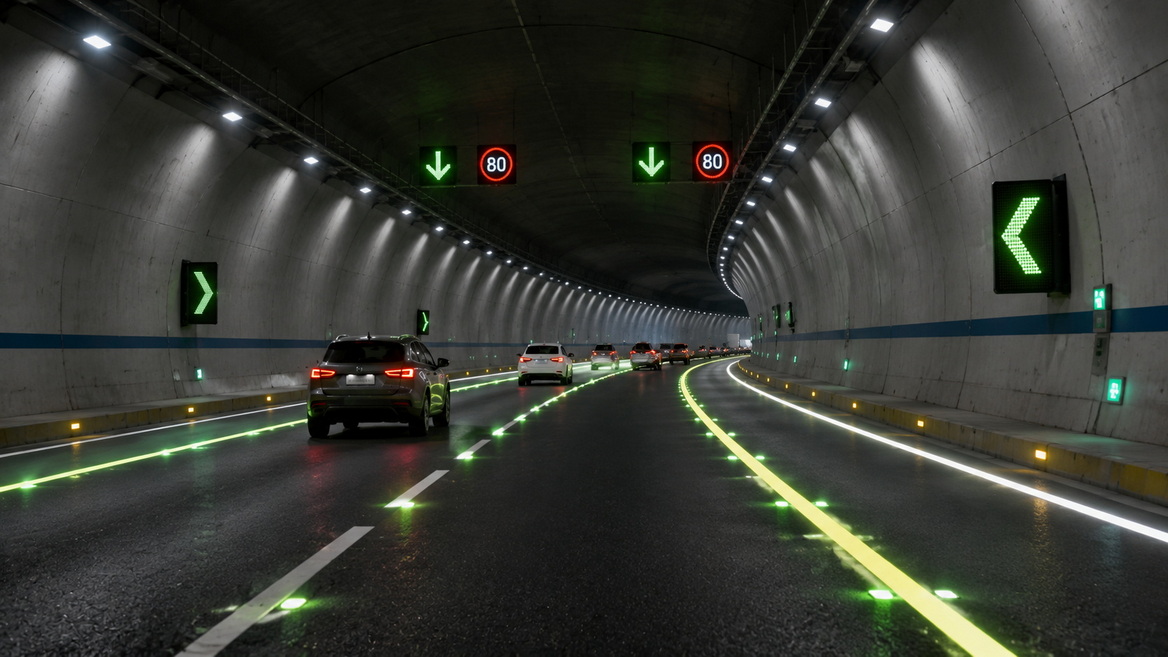
Fluorescent road markers for tunnels are specialized guidance elements designed for enclosed or semi-enclosed environments where natural light is limited or completely absent. These markers often rely on high-performance fluorescent pigments, and in advanced systems they are combined with internal light sources or integrated LEDs to maintain strong visual cues along the driving path.
In tunnels, drivers move from bright outdoor conditions into a darker environment in a matter of seconds. Their eyes need time to adapt, which creates a critical safety window. Fluorescent tunnel markers are designed to bridge this adaptation gap by providing vivid, high-contrast guidance lines along the lanes and tunnel walls. They help drivers perceive lane edges, curves, and transitions earlier and more clearly.
Another characteristic of tunnel-specific fluorescent markers is their resistance to tunnel-specific contaminants. Exhaust fumes, humidity, water spray, cleaning chemicals, and dust all influence how markings perform over time. Tunnel markers are engineered to maintain luminance and contrast under these harsh conditions, often in combination with tunnel lighting and LED signage.
Standard outdoor road markers are the general-purpose markings used on highways, city streets, ramps, and open parking areas. These include painted lines with glass beads, thermoplastic markings, raised pavement markers, and reflective studs. Their main function is to stay visible under natural daylight and at night under vehicle headlights.
Outdoor markers rely heavily on retroreflection: they bounce light back toward the driver so that lines and studs appear bright when illuminated by headlights. They are optimized for open environments where weather, UV radiation, rainfall, snow, and mechanical wear are the dominant stress factors.
While outdoor markers can be used in many different contexts, they are usually designed as passive elements. They do not emit light themselves; instead, they depend on external light sources. In many road networks, they are combined with overhead or roadside lighting, but they are not typically integrated with internal illumination as tunnel markers often are.
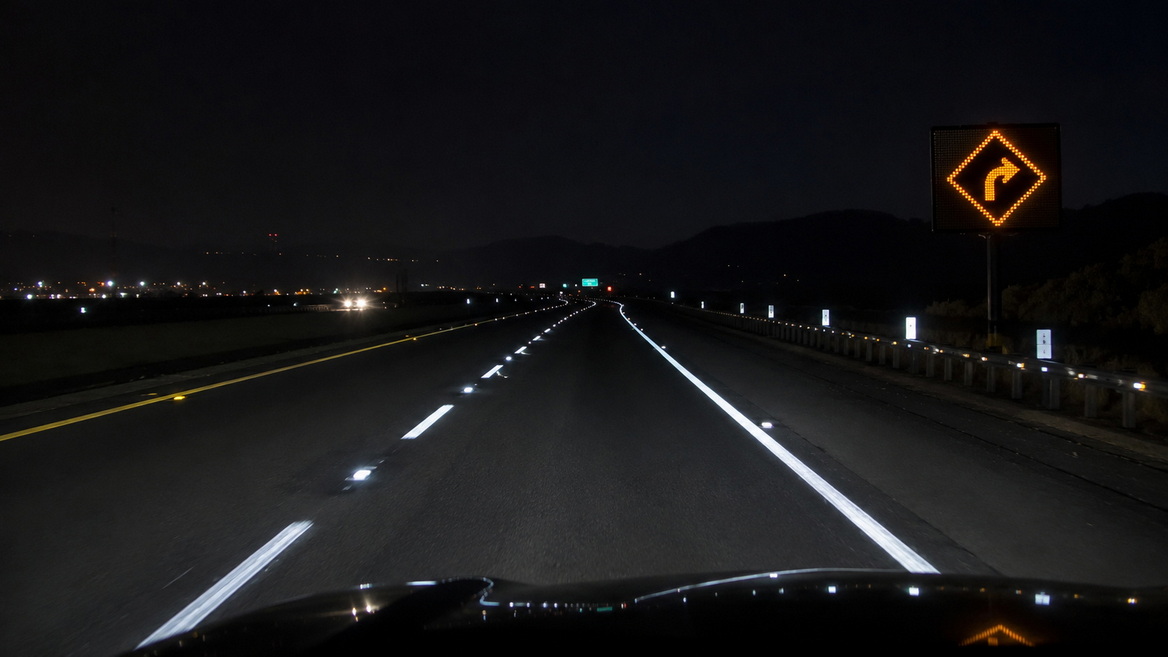
To understand when to use fluorescent tunnel markers and when to use standard outdoor markers, it helps to compare them across several core dimensions.
- Environment
- Fluorescent tunnel markers: Enclosed tunnels, underground roads, covered ramps, and underpasses.
- Standard outdoor markers: Open highways, arterial streets, intersections, parking lots.
- Visibility Mechanism
- Fluorescent tunnel markers: Fluorescent pigments and, in many modern designs, LED or internally illuminated structures to maintain constant brightness.
- Standard outdoor markers: Retroreflective beads and studs that rely on external lighting and headlight beams.
- Lighting Conditions
- Fluorescent tunnel markers: Designed for low or artificial light, where rapid adaptation from bright daylight to darkness is a critical safety factor.
- Standard outdoor markers: Designed for variable daylight and night conditions with headlight support.
- Durability Factors
- Fluorescent tunnel markers: Resist exhaust deposits, moisture, tunnel washing systems, and frequent cleaning cycles.
- Standard outdoor markers: Resist UV exposure, rainfall, snow, de-icing agents, and abrasion from vehicles and maintenance equipment.
- Integration with Advanced Systems
- Fluorescent tunnel markers: Often integrated with LED traffic signs, in-pavement LED guidance devices, and tunnel monitoring systems.
- Standard outdoor markers: May be combined with LED signs in critical road sections, but many installations remain purely passive.
These differences show that neither marker type is "better" in all contexts. Each is optimized for specific conditions and risk profiles.
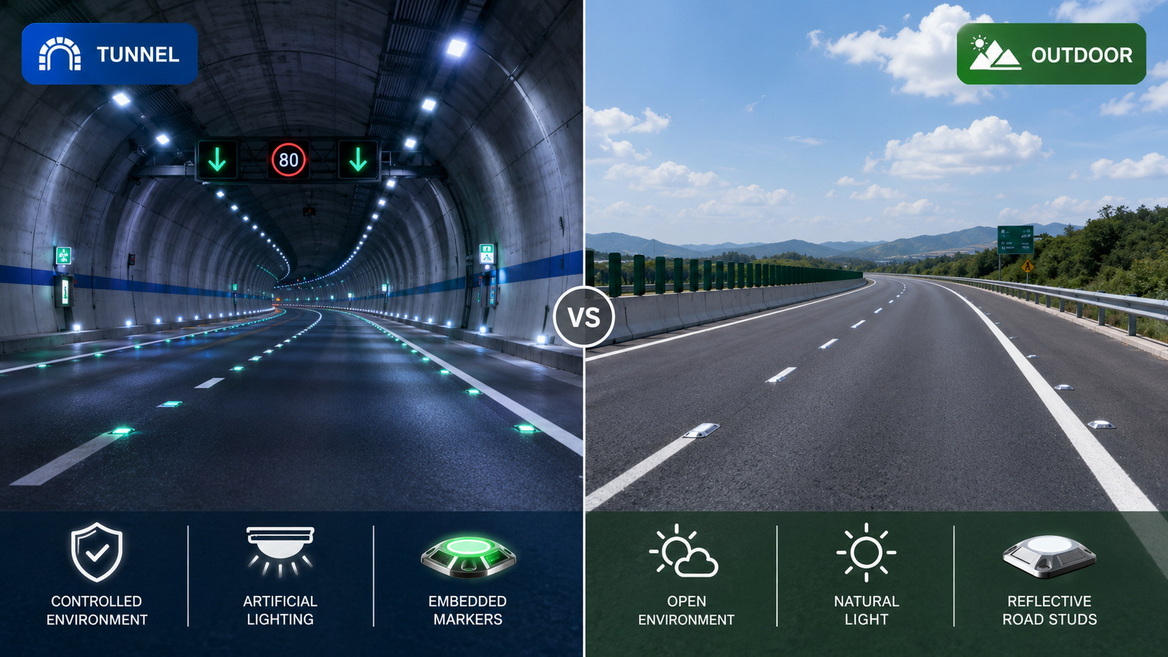
Tunnels are high-risk locations where a small visibility issue can quickly escalate into a major accident. The enclosed geometry, limited escape routes, potential for smoke accumulation, and rapid lighting changes create an environment where clear guidance is non-negotiable.
Fluorescent tunnel markers address several key needs:
- Continuous Lane Guidance
They provide a bright, consistent reference line along the lane, helping drivers maintain position and anticipate curves even when headlight beams are disrupted or reduced by traffic or road spray.
- Improved Perception During Adaptation
When drivers transition from daylight to tunnel lighting, their vision is less sensitive for a short period. Fluorescent markers help maintain visible cues during this adaptation window, especially near tunnel portals and early segments.
- Support for Emergency Situations
In emergencies, markers combined with illuminated signage can guide drivers toward safe stopping areas, exits, and escape routes. Fluorescent and LED markers make these pathways more obvious under stress.
- Compatibility with LED Traffic Signs
Fluorescent markers work particularly well when coordinated with LED traffic signs that display speed limits, lane status, and warning messages. Together, they form a continuous visual system that reinforces driver expectations.
From a practical standpoint, tunnel operators who adopt fluorescent markers often see a reduction in lane-departure incidents and improved driver discipline, especially in long or complex tunnels with curves, ramps, and multi-lane configurations.
On open roads, the main visibility challenges differ. Instead of sudden changes from light to dark, road authorities deal with issues like glare, rain, fog, and varying headlight patterns.
Standard outdoor markers are effective because they are:
- Cost-Efficient Over Long Distances
Large highway networks require thousands of kilometers of markings. Standard reflective paints, thermoplastics, and studs offer a proven balance of cost and performance for these extensive networks.
- Robust Under Weather Extremes
They are designed to withstand constant exposure to sun, rain, snow, and temperature changes. Many products can handle snowplows, de-icing chemicals, and heavy trucks without rapid degradation.
- Compatible with Existing Maintenance Practices
Road managers typically have established routines for repainting and replacing outdoor markers. Standard products fit into these existing cycles with minimal adjustment.
In many cases, standard outdoor markers are complemented by LED traffic signs and special treatments at high-risk locations, such as sharp curves, bridge approaches, or areas prone to fog. However, their core role remains to provide reliable, predictable guidance across the majority of the network.
Fluorescent tunnel markers are not limited to long highway tunnels. They can be applied wherever the combination of enclosure and limited lighting creates a higher risk.
Typical applications include:
- Long urban and intercity road tunnels with high traffic volumes.
- Underground access roads leading to large parking structures, logistics terminals, or industrial sites.
- Underpasses and covered sections where sudden shade and structural obstacles reduce visibility.
- Complex tunnel segments with tight curves, branch points, or multi-level ramps.
In these settings, fluorescent markers offer a level of visibility and redundancy that passive outdoor markers cannot easily match. When combined with LED signage and proper tunnel lighting, they form an integrated guidance system tailored specifically for the confined environment.
Standard outdoor markers continue to be the default choice in many scenarios, and for good reason.
They are particularly suitable for:
- Open highway stretches where lighting conditions are predictable and headlight performance is sufficient.
- Rural and regional roads requiring broad coverage with limited budgets.
- Toll plazas, ramps, and interchanges where overhead or roadside lighting supports visibility.
- Parking lots and access roads where a robust but cost-conscious solution is needed.
In such applications, upgrading to more advanced systems can be done selectively. For example, operators might enhance only the highest-risk segments with additional reflective studs or localized LED devices, while keeping standard markers in most areas.
Both fluorescent tunnel markers and standard outdoor markers become more effective when they are part of a broader visual system that includes LED traffic signs and active guidance devices. A coordinated approach ensures that drivers receive consistent messages through multiple channels.
In tunnel environments, LED traffic signs can:
- Display speed limits and lane status at tunnel portals and inside the tunnel.
- Provide intuitive symbols for lane closures, maintenance works, or incidents.
- Work alongside fluorescent markers and in-pavement LED strips to form continuous guidance lines.
This layered approach is especially valuable when visibility is compromised by smoke, fog, or lighting failures. Drivers can still rely on multiple cues: bright markers along the pavement, illuminated wall signs, and dynamic overhead displays.
On open roads, LED signs complement standard markers by:
- Highlighting hazardous curves, intersections, or sections with frequent accidents.
- Offering dynamic messages related to weather, temporary works, and traffic congestion.
- Reinforcing lane control and speed management in busy corridors, toll stations, and parking exits.
When properly configured, LED signs and markers support each other. Painted or thermoplastic lines show the lane geometry, while signs provide context and real-time information.
Every road network and tunnel project has its own constraints, standards, and performance targets. This is where collaboration with specialized manufacturers becomes critical.
Through tailored design and production, OEM and ODM services can offer:
- Customized Marker Dimensions and Materials
Road authorities can specify marker shapes, thicknesses, and materials that fit their pavement types, speed limits, and traffic loads.
- Integrated LED and Power Systems
For projects using LED-based markers or illuminated signs, manufacturers can design systems that match power supply conditions, control room requirements, and communication interfaces.
- Compliance with Local Standards
Markers and signs can be produced in line with national specifications, language requirements, color codes, and brightness norms, simplifying approval and certification.
- Branding and Visual Identity
Where desired, manufacturers can align the visual design of signs and markers with the operator's overall branding, without compromising functionality or safety.
For tunnels and high-profile corridors, this level of customization enables operators to deploy combinations of fluorescent tunnel markers and standard outdoor markers that are tailored to each segment's risk profile and usage pattern.
To apply these insights in real projects, decision-makers can use a simple checklist:
1. Define the Environment
- Is the section enclosed (tunnel, underpass, underground ramp) or open?
- What is the typical lighting condition: bright daylight, artificial lighting, or mixed?
2. Evaluate Risk Factors
- Are there rapid transitions from light to dark?
- Are curves, gradients, or branch points concentrated in specific segments?
- Are there known accident clusters or near-miss reports?
3. Determine Performance Requirements
- What speeds and traffic volumes are expected?
- How critical is lane discipline and spacing in the given section?
- Are there special needs such as evacuation guidance or dangerous goods routes?
4. Assess Budget and Lifecycle Costs
- What funding is available for initial deployment and long-term maintenance?
- How often can the road or tunnel be closed for cleaning, repainting, or replacement?
- What is the acceptable balance between upfront investment and reduced incident risk?
5. Plan Integration with LED Systems
- Which locations should host LED traffic signs, lane control indicators, or in-pavement LEDs?
- How will markers and signs work together to create a coherent visual language?
6. Engage with Manufacturers for Customization
- Where do standard products suffice, and where is customization essential?
- Are there opportunities to leverage OEM/ODM capabilities for better fit and performance?
By following this structured approach, operators can assign fluorescent tunnel markers and standard outdoor markers to the segments where they bring the greatest benefit.
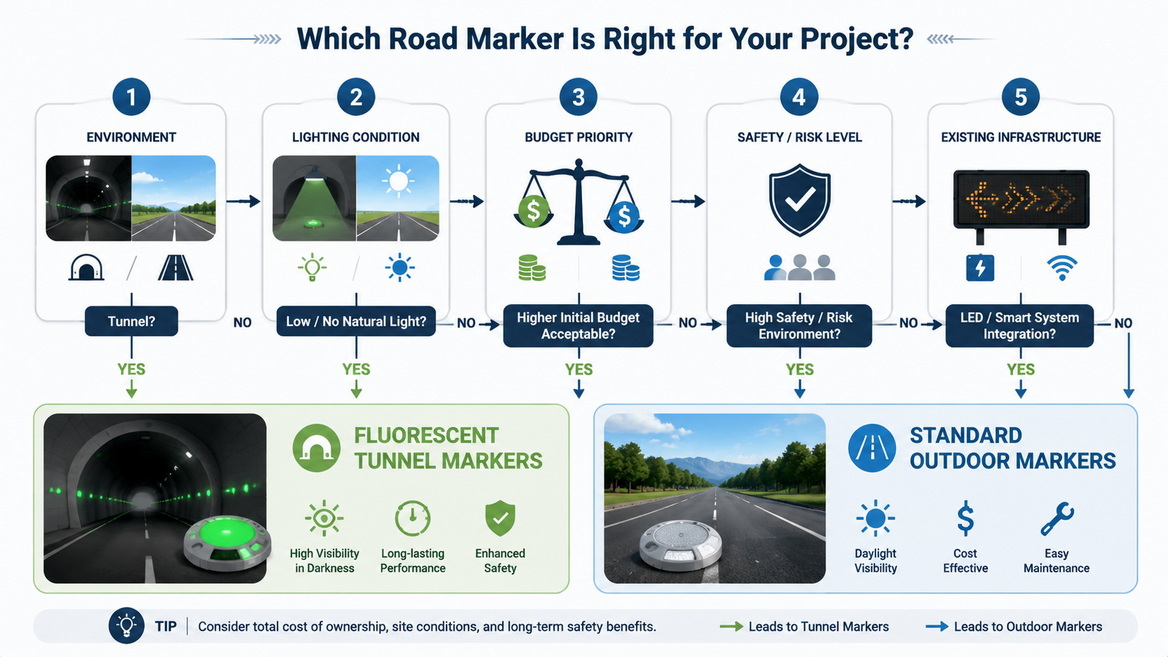
To illustrate how this framework works in practice, consider three common project types.
An urban tunnel carries mixed traffic at moderate speeds. The entrances are in bright daylight, while the interior is dim and heavily ventilated.
- Use fluorescent tunnel markers along all lanes and tunnel walls, especially near entrances and curves.
- Combine these markers with LED traffic signs at portals and inside the tunnel to manage speeds and lane status.
- Apply customized designs to integrate evacuation signage and in-pavement LEDs in emergency bays.
A mountainous highway includes several short tunnels and many open curves.
- Reserve fluorescent tunnel markers for the longer or more complex tunnels.
- Use standard outdoor markers along open stretches and shorter tunnels, reinforcing curves with reflective studs and LED warning signs.
- Introduce a hybrid design at transition zones where roads move from open sun to darker covered segments.
A multi-level parking facility has underground access ramps that connect to an open road.
- Equip underground ramps and internal circulation lanes with fluorescent markers to support low-light navigation.
- Use standard outdoor markers, reflective lines, and clear directional arrows on the open approaches and at exits.
- Coordinate marker design with LED entry and exit signs to streamline traffic flows and reduce confusion.
In each scenario, the mix of marker types reflects specific environmental conditions and risk priorities.
Fluorescent road markers for tunnels and standard outdoor markers are complementary tools for building safer and more intelligible road networks. Fluorescent tunnel markers excel in enclosed, low-light environments where driver adaptation and redundancy are critical. Standard outdoor markers deliver cost-effective, robust guidance across extensive open networks.
When both types are coordinated with LED traffic signs and, where appropriate, customized through OEM and ODM services, road operators can build systems that are not only compliant with regulations but also aligned with real-world driver behavior and local constraints.
For tunnel owners, highway agencies, and parking operators, reviewing current marking strategies with these distinctions in mind is an important step toward more reliable and future-ready traffic guidance systems.
Fluorescent tunnel markers can be installed outdoors in certain cases, but they are optimized for enclosed environments. Outdoors, their benefits may not justify the higher cost compared with standard markers unless they are used in specific high-risk or low-light areas.
Not always. Some fluorescent tunnel markers are purely pigment-based and work without power, relying on light absorption and emission. However, many advanced tunnel systems combine fluorescent materials with LED or internally illuminated elements that do require a power supply.
Cleaning frequency depends on tunnel ventilation, traffic volume, and pollutant levels. Many operators schedule regular cleaning cycles to remove soot and dust. Replacement intervals vary, but high-quality tunnel markers are designed for multi-year use when properly maintained.
Standard outdoor markers are produced in variants that suit different climates. In regions with heavy snow or strong UV radiation, road authorities typically select products tested for those conditions. It is important to match materials to local weather and maintenance practices.
Manufacturers with experience in both markers and LED traffic signs can design systems where colors, brightness levels, and shapes are harmonized. This ensures that drivers receive consistent visual cues and that the overall system meets technical and regulatory requirements.
1. Hong Kong Highways Department – *Code of Practice for the Lighting, Signing and Guarding of Road Works*.
2. Philips/Signify – *ONROADLED Tunnel Product Guide* (LED guidance systems for tunnel applications).
3. GIFAS Electric – *TrafficLED Drive-over Marker and Warning Light* (drive-over LED markers for roads and tunnels).
https://www.gifas.de/en/traffic-guidance-systems/trafficled/
4. Transportation Research Record – *Durable Fluorescent Materials for the Work Zone* (study on fluorescent traffic control materials).
https://onlinepubs.trb.org/Onlinepubs/trr/1993/1409/1409-007.pdf
5. NJSaisi – *Classification of Active Light-emitting Road Traffic Signs* (overview of active LED traffic sign categories).
http://www.njsaisi.com/1740.html
6. NJSaisi – *Reasons to Choose Active Light-emitting Road Traffic Signs* (discussion on performance and benefits).
http://www.njsaisi.com/2488.html
7. Additional product and company information from Chinese manufacturers of LED traffic signs and active guidance systems.


