
Please Choose Your Language
Views: 284 Author: XS Traffic Facilities Publish Time: 2026-07-12 Origin: Site


Content Menu
● Introduction: Why Urban Aesthetics Start At Road Level
● Understanding Ceramic Road Studs in Modern Cities
>> What Are Ceramic Road Studs?
● Understanding Stainless Steel Road Markers
>> What Are Stainless Steel Markers?
● Ceramic Vs Stainless Steel: Aesthetics, Safety And Lifecycle
>> Side‑By‑Side Comparison Table
● Expert Design Framework: Matching Stud Type To Street Typology
>> 1. Urban Core And Mixed‑Use Boulevards
>> 2. Industrial Corridors And Logistics Parks
>> 3. Residential Streets And School Zones
● Performance Under Weather, Maintenance And Sustainability
>> Weather And Climate Considerations
>> Maintenance Cycles And Cost Of Ownership
● Integrating LED Technology: Elevating Aesthetics And Safety At Night
● Procurement Checklist: How B2B Buyers Should Decide
>> Practical Step‑By‑Step Selection Process
● Manufacturer's Expert View: Why OEM/ODM Matters
● Strong, Conversion‑Focused CTA For B2B Buyers
● FAQs: Ceramic Road Studs Vs Stainless Steel Markers
>> Q1. Are ceramic road studs durable enough for heavy truck traffic?
>> Q2. Which option is better for visually calming residential streets?
>> Q3. Can both ceramic and stainless steel studs integrate LED modules?
>> Q4. How do maintenance requirements differ between the two materials?
>> Q5. What should international buyers look for when choosing a Chinese manufacturer?
Ceramic road studs and stainless steel markers both shape how safe, legible and beautiful modern streets feel, but they do it in different ways that urban planners and B2B buyers need to understand before making a specification decision.
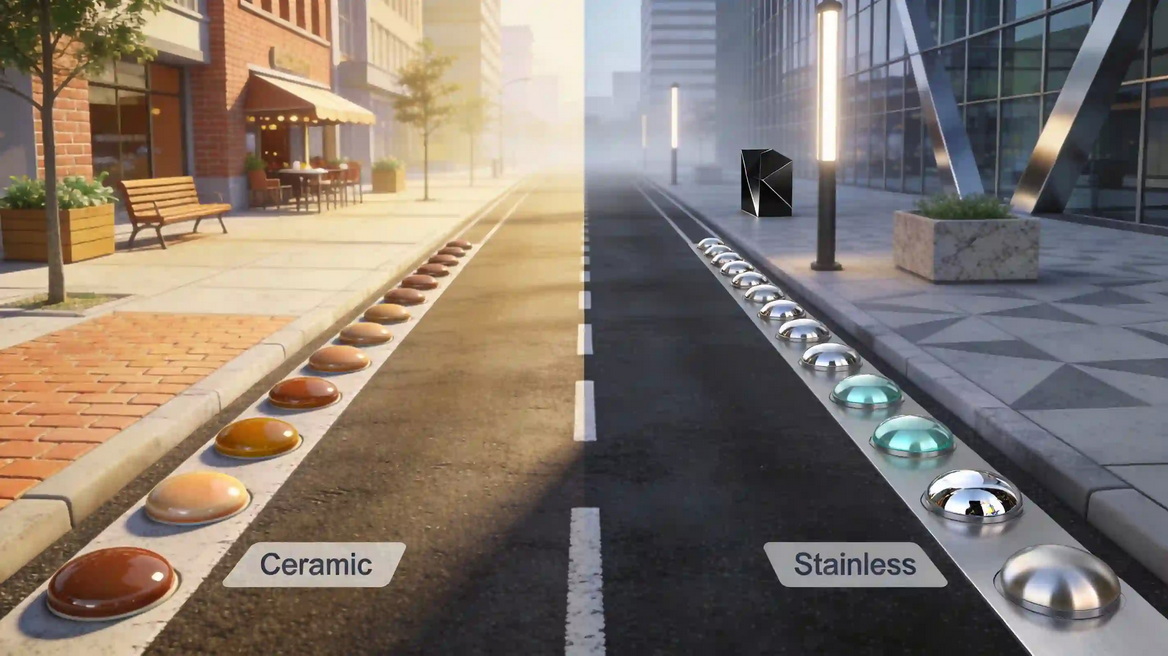
In dense city environments, every element—from pavements to road studs—contributes to perceived safety, wayfinding and brand image for municipalities and developers. As Chinese manufacturers like Shenzhen Xingsheng Traffic Facilities Co., Ltd. expand OEM/ODM portfolios in LED traffic signs and road studs, more procurement teams now treat road hardware as a design asset, not just a regulatory requirement.
When comparing ceramic road studs vs stainless steel markers for urban aesthetics, buyers are really weighing three intertwined priorities: visual harmony with the streetscape, long‑term performance in harsh traffic conditions, and total lifecycle cost. This article uses both manufacturer‑side insights and practical city case experience to map those trade‑offs and give B2B decision‑makers a clear, actionable framework.
Ceramic road studs are raised or low‑profile pavement markers made from high‑fired ceramic bodies, often combined with glass or plastic reflectors. Their dense, vitrified structure resists surface wear and color fading, making them especially suited for decorative lane delineation, pedestrian zones and premium mixed‑use projects.
Because glaze color and shape can be customized, ceramic studs offer strong aesthetic flexibility for branding corridors, heritage districts or waterfront promenades. Many Asian and European cities have adopted ceramic markers in spots where the visual story of the street is as important as basic reflectivity.
Stainless steel road markers are heavy‑duty pavement studs machined or cast from corrosion‑resistant steel alloys, usually with embedded glass lenses or retroreflective inserts. They are designed primarily for mechanical robustness: high impact resistance, load bearing under trucks, and performance in snowplow and de‑icing conditions.
These markers often appear in bus lanes, loading bays, high‑traffic roundabouts and industrial zones where durability and safety margins come ahead of pure visual softness. Their metallic surface reflects both vehicle lights and urban ambient illumination, contributing to a sharp, high‑tech streetscape aesthetic.
| Factor | Ceramic Road Studs | Stainless Steel Markers |
|---|---|---|
| Daytime visual style | Warm, decorative, integrates with paving lu-bao.en.made-in-china+1 | Sleek, industrial, high‑tech look roadsafe.en.made-in-china |
| Night‑time visibility | Strong with good reflectors, can integrate LEDs trafficroadsafe+1 | Very strong, sharp retroreflection and metal sheen roadsafe.en.made-in-china |
| Color flexibility | Wide glaze and body color options lu-bao.en.made-in-china | Mostly metallic; colored lenses or inserts only roadsafe.en.made-in-china |
| Texture and comfort | Smooth, less aggressive visually trafficroadsafe | Hard, crisp, visually intense roadsafe.en.made-in-china |
| Impact/abrasion resistance | High, but can chip under extreme point loads lu-bao.en.made-in-china+1 | Very high for heavy traffic and snowplows roadsafe.en.made-in-china |
| Corrosion resistance | Intrinsic ceramic immunity lu-bao.en.made-in-china+1 | Excellent with proper alloy, but depends on grade roadsafe.en.made-in-china |
| Best use cases | Pedestrian areas, plazas, premium streets trafficroadsafe | High‑load lanes, industrial roads, truck routes roadsafe.en.made-in-china |
In CBDs, high‑street retail or waterfront promenades, stakeholders usually prioritize place‑making and pedestrian experience. Ceramic studs here allow color‑coded lanes, calm visual rhythm and compatibility with stone or decorative concrete.
Stainless steel inserts may still be specified at crossing points, bus stops or turning zones, where heavy braking and wheel impacts are concentrated. The result is a hybrid, layered aesthetic: ceramic for background rhythm, steel for safety‑critical emphasis.
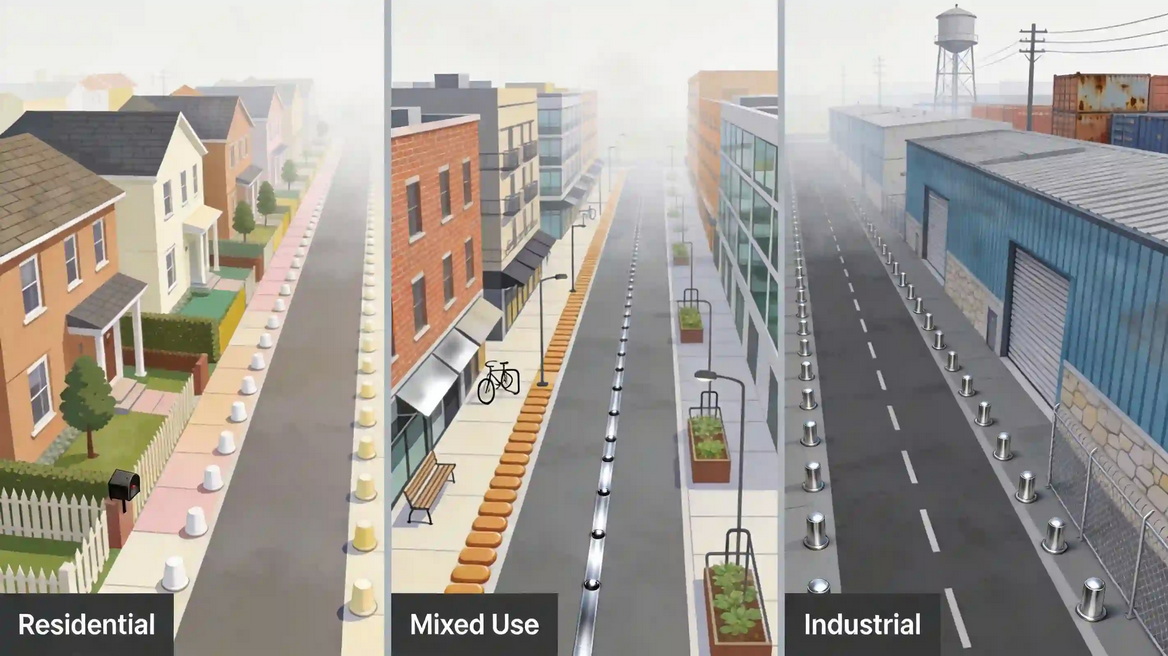
In ports, logistics hubs and industrial arterials, heavy axle loads and intense turning movements can quickly destroy softer materials. Stainless steel markers are the default in these contexts because they offer uncompromising impact resistance, clear visibility and long intervals between replacements.
Ceramic may still appear in internal staff parking or visitor access lanes, where you want a more welcoming visual impression without sacrificing marking clarity.
Residential drivers respond better to calmer, visually friendly surfaces; aggressive metal textures may unintentionally signal speed and authority rather than care and caution. Ceramic studs, especially in light colors, visually support traffic calming and "slow street" narratives.
Stainless steel can be reserved for specific traffic islands, raised crossings or gateway points, used sparingly so they read as signals rather than pervasive hardware.
Ceramic studs tolerate high temperatures, UV exposure and de‑icing chemicals extremely well, because the ceramic matrix and glazes are chemically stable. In tropical or coastal cities, this makes them strong candidates for long‑term color fidelity and corrosion‑free performance.
Stainless steel markers perform best where freeze‑thaw cycles, snowplows and grit blasting are dominant; high‑grade steel alloys maintain integrity and reflectivity under mechanical abuse. In cold climates, planners often pair steel markers with high‑intensity reflective lenses for maximum winter safety.
Field data from Chinese and international deployments show that ceramic studs in moderate‑traffic urban areas can operate for many years with minimal maintenance beyond occasional cleaning. When they do fail, it's usually due to localized impact or substrate failure rather than body wear.
Stainless steel markers typically exhibit extended service life in heavy‑traffic corridors but may require attention to lens cleanliness and corrosion spots around fixings if poor‑quality alloys are used. Over a 10‑year lifecycle, the choice between ceramic and stainless is often less about cost and more about fit to traffic category and design intent.
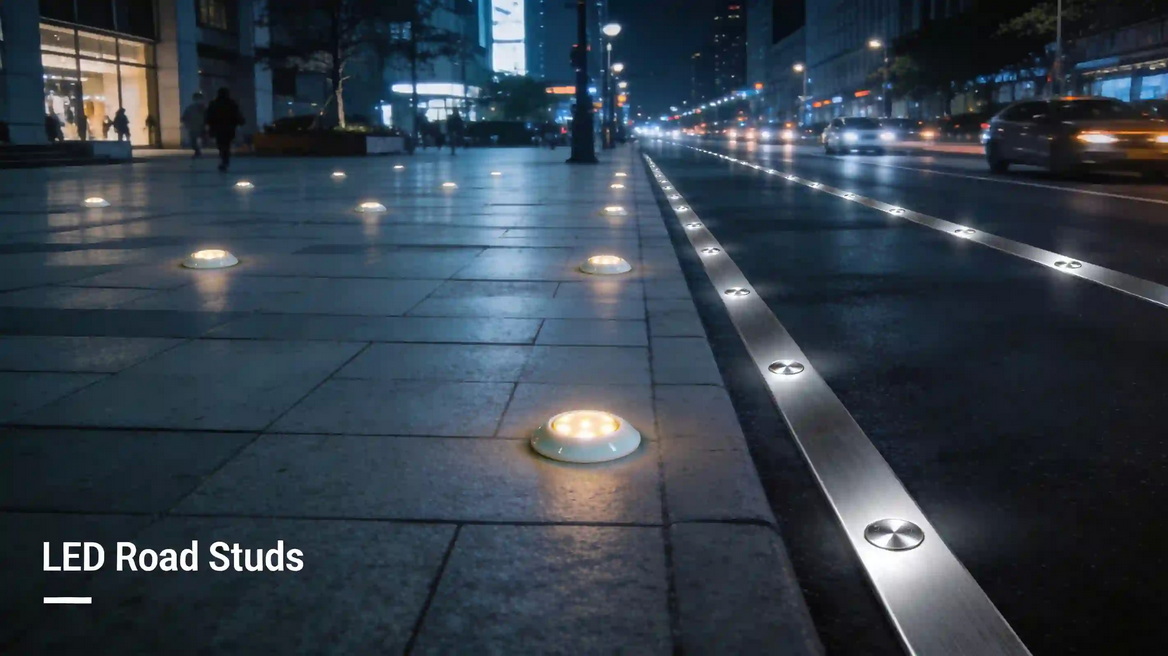
For manufacturers focused on LED traffic signs, integrating LED road studs and raised pavement markers aligns perfectly with the shift towards smart streets. Both ceramic bodies and stainless steel housings can accommodate LED modules, with slightly different aesthetic outcomes:
- Ceramic + LED: Gives a softer, diffused glow that feels friendly and premium in pedestrian spaces and slow streets.
- Stainless + LED: Emphasizes crisp edges and high‑contrast light, ideal for lane discipline on arterials and toll exits.
Chinese manufacturers like Shenzhen Xingsheng Traffic Facilities Co., Ltd. leverage OEM/ODM capabilities to tailor LED color, flashing patterns and integration with ITS platforms, so cities can unify visual language across signs, studs and lane control systems.
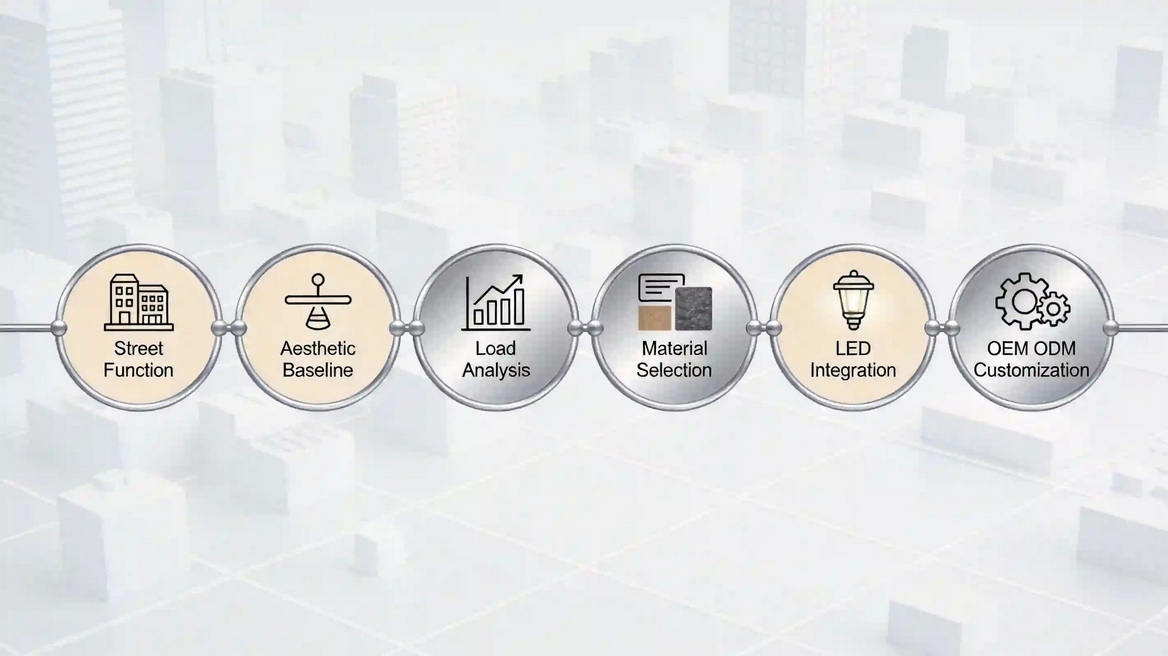
1. Define street function: Classify each segment (pedestrian core, mixed‑traffic, logistics, school zone).
2. Set aesthetic baseline: Map how road studs should visually relate to curbs, paving and street furniture.
3. Estimate loading: Use projected traffic volumes, heavy vehicle percentages and local maintenance practices.
4. Score materials: Rate ceramic and stainless against aesthetics, durability, maintenance access and sustainability.
5. Decide hybrid zones: Identify sections where mixing ceramic for background and stainless for critical nodes adds both safety and visual clarity.
6. Specify LED integration: Decide which studs must be LED‑enabled for night‑time guidance or smart city systems.
7. Lock OEM/ODM requirements: Document dimensions, color codes, lens types and branding elements for suppliers.
This type of structured approach is what leading city clients now expect from their manufacturers and design partners, especially when working with full‑solution traffic safety vendors in China.
From a manufacturing and design standpoint, the real power of ceramic road studs and stainless steel markers lies in customization. Shenzhen Xingsheng Traffic Facilities Co., Ltd. and similar suppliers provide OEM/ODM services that let B2B buyers align studs with project‑specific brand palettes, logos, unique lane patterns and different axial load classes.
- Ceramic bodies can be molded and glazed to match heritage streets, waterfront branding or campus colors.
- Stainless steel housings can be precision‑machined to specific load ratings, anti‑skid patterns and reflector layouts.
For international clients, consolidating LED traffic signs, road studs and ancillary hardware under one OEM/ODM partner simplifies certification, logistics and lifecycle support while protecting design consistency across networks.
If you are planning a new urban corridor, upgrading toll or parking facilities, or simply rethinking the visual language of your city's roads, now is the right moment to involve a specialized traffic safety manufacturer early in the design process. By partnering with a Chinese OEM/ODM supplier like Shenzhen Xingsheng Traffic Facilities Co., Ltd., you can prototype ceramic and stainless steel configurations, integrate LED guidance, and create a cohesive, safe and visually distinctive road environment before construction begins.
In low to moderate heavy‑vehicle environments, high‑grade ceramic studs with robust bases perform well, but in frequent truck or bus‑lane scenarios stainless steel typically offers longer mechanical life.
Ceramic studs usually provide a softer, more welcoming look and can be color‑matched to paving, making them better suited to residential aesthetics than aggressive metallic markers.
Yes, both materials can house LED optics and electronics; the choice affects the visual feel of the light pattern rather than the feasibility of integration itself.
Ceramic surfaces mostly need routine cleaning and occasional replacement after localized damage, while stainless steel markers demand periodic checks for lens cleanliness and any early corrosion at fixings.
Key indicators include proven export experience, documented material standards, flexible OEM/ODM capabilities, integrated LED product lines and clear support for city‑scale design coordination.
1. Shenzhen Xingsheng Traffic Facilities Co., Ltd. – Company Profile. https://www.trafficthing.com/Company-Profile.html
2. Shenzhen Xingsheng Traffic Facilities Co., Ltd. – Multilingual Company Profile. https://www.trafficthing.com/kk/Company-Profile.html
3. XS Traffic Facilities – "Road Studs Types Vs. Materials: A Manufacturer's Expert Guide for Safer Highways And Smarter Procurement". https://www.trafficthing.com/road-studs-types-vs-materials-a-manufacturer-s-expert-guide-for-safer-highways-and-smarter-procurement.html
4. Beijing Roadsafe Technology Co., Ltd. – Ceramic Road Stud And Industry News. https://lu-bao.en.made-in-china.com/product/YpRUEWXKRmhQ/China-Road-Safety-Solutions-Reflective-Pavement-Marker-Raised-Ceramic-Road-Stud-Supplier.html
5. Beijing Roadsafe Technology Co., Ltd. – Reflective Glass Road Marker Studs (stainless steel housings). https://roadsafe.en.made-in-china.com/product/hSEmXKwdlrUj/China-Reflective-Glass-Road-Marker-Studs.html
6. NOKIN and other Chinese manufacturers – LED road studs and LED raised pavement markers. https://www.studsroad.com/about-us)


