
Please Choose Your Language
Views: 263 Author: XS Traffic Facilities Publish Time: 2026-07-24 Origin: Site


Content Menu
● White/Yellow Studs for Lane Division
● Standards and Local Practice
● Why the Difference Matters in Project Planning
● Practical Installation Steps
● Product Value for Manufacturers
>> Are blue LED studs always used for hydrants?
>> Can white studs be used for hydrants?
>> What is the main advantage of LED hydrant studs?
>> Are yellow studs the same as white studs?
>> What should buyers check before ordering?
Road studs are more than simple pavement accessories. In traffic systems, they function as visual language that helps drivers, responders, and facility managers understand space, direction, and emergency access. The difference between blue LED studs for hydrants and white/yellow studs for lane division is not only a matter of color, but also a matter of function, placement, and operational meaning.
For manufacturers and buyers in the traffic safety field, this distinction matters a great deal. A hydrant marker must support emergency response and fast identification. A lane division stud must support driving guidance and reduce confusion. When the wrong product is used in the wrong place, visibility may remain high, but usability drops sharply.
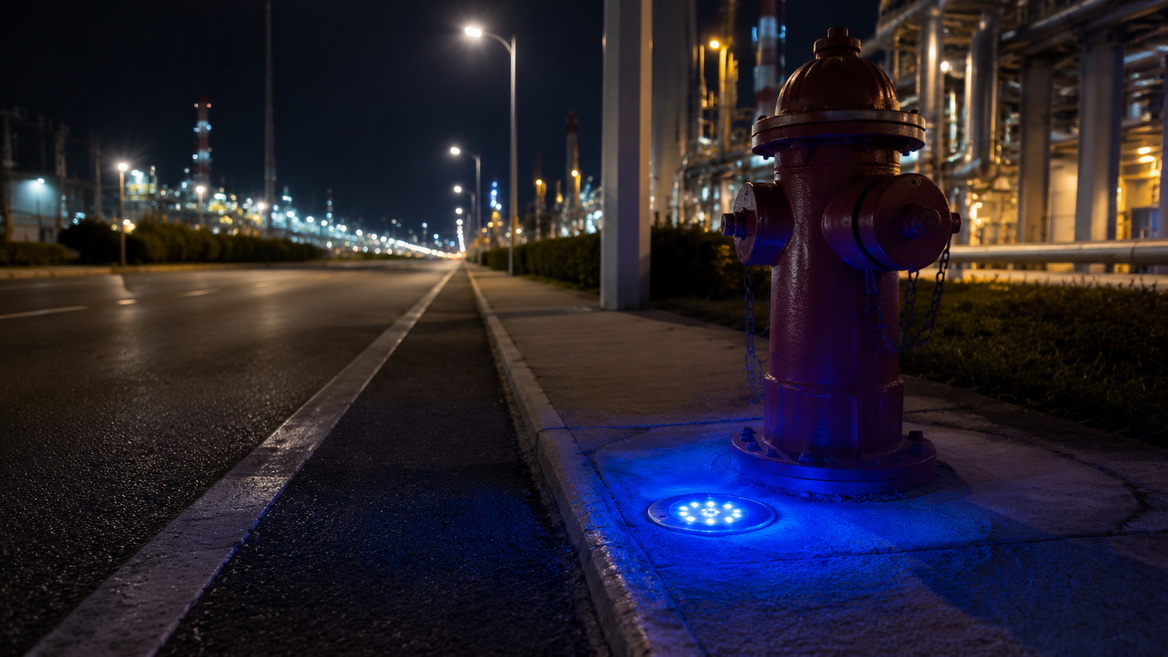
Color plays a critical role in road safety systems. It helps users interpret a marker instantly, even in poor lighting or under stress. White, yellow, and blue are not chosen randomly. Each color usually corresponds to a specific traffic or emergency function.
White and yellow are commonly used for lane guidance, edge marking, and direction control. Blue is often associated with hydrant identification or emergency access marking in certain jurisdictions. This color coding improves recognition and reduces delay when drivers or emergency crews need to make quick decisions.
Blue LED studs for hydrants are designed to make hydrants easier to locate, especially at night or in areas with poor visibility. They are especially useful when hydrants are set back from the road, partially hidden, or located in busy industrial and commercial environments.
In many systems, hydrant markers are not optional visual features. They are part of a fire-safety identification arrangement that helps responders find water access points quickly. A blue LED version adds active illumination, making the marker easier to notice from a distance and in darker conditions.
Blue LED studs for hydrants usually serve the following functions:
- Identify the location of a hydrant quickly.
- Improve visibility in low-light or high-clutter environments.
- Help emergency crews reduce search time.
- Support safety planning in roads, industrial parks, and parking facilities.
These markers are most effective in:
- Public streets with concealed hydrants.
- Industrial parks and warehouse zones.
- Large parking lots.
- Fire access roads.
- Private communities and commercial facilities.
A good hydrant marker should be durable, weather-resistant, and easy to install. It should also remain visible under repeated vehicle movement, cleaning, vibration, and rain. If the product is LED-based, battery life, waterproofing, and maintenance access are also important.
White and yellow studs are used for traffic guidance, especially in lane separation, edge marking, and directional control. Their purpose is to keep vehicles in the correct position and improve lane discipline, particularly at night or in challenging weather.
These studs are commonly found on highways, toll stations, parking lot lanes, and access roads. They help drivers stay oriented and reduce sudden lane changes. Their role is different from hydrant markers because they do not identify a physical emergency asset. Instead, they support movement and road organization.
White/yellow studs generally help with:
- Lane separation.
- Road edge definition.
- Direction guidance.
- Driver awareness at night.
- Reduced risk of lane drift or confusion.
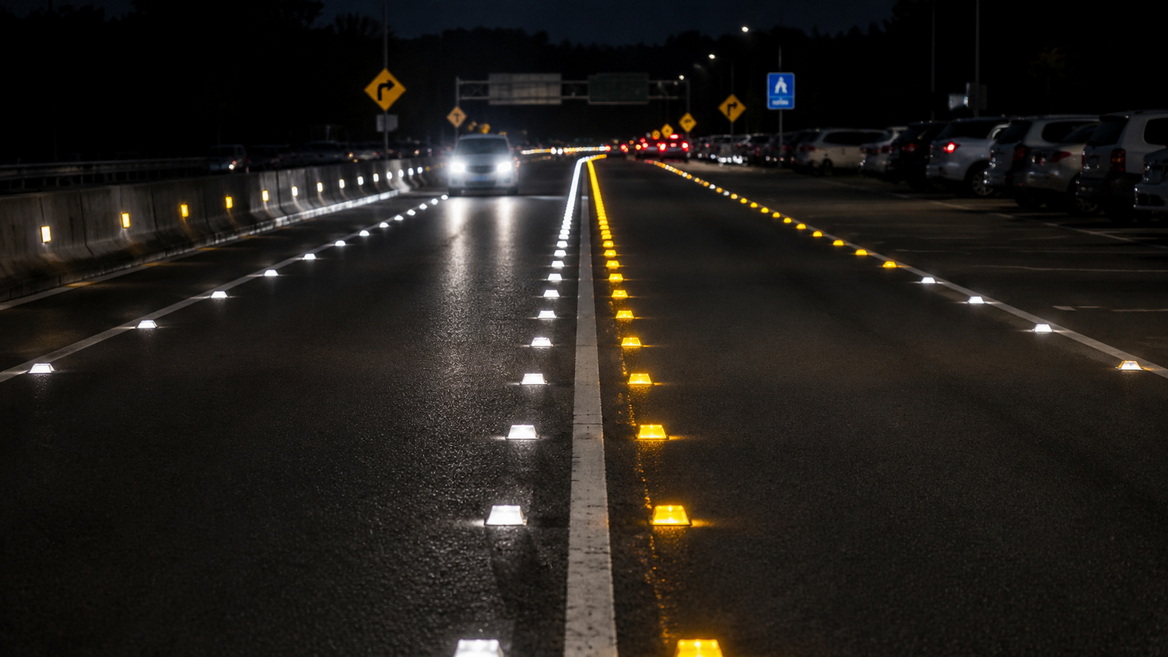
These markers are often used in:
- Highway lane lines.
- Toll plaza channels.
- Parking lot circulation routes.
- Access roads.
- Roadwork and temporary traffic control zones.
For lane division use, reflectivity, load strength, and durability are especially important. The marker should remain visible under headlights and should resist cracking, detachment, and surface wear. In busy traffic environments, performance consistency matters more than appearance alone.
| Item | Blue LED Studs for Hydrants | White/Yellow Studs for Lane Division |
|---|---|---|
| Main purpose | Identify hydrants or emergency access points | Separate lanes and guide traffic flow |
| Primary user | Emergency crews, site managers | Drivers |
| Visual meaning | Emergency location marker | Traffic guidance marker |
| Typical placement | Near hydrants or fire-access points | Along lanes, edges, or medians |
| Lighting type | Reflective or active LED | Usually reflective |
| Main priority | Fast recognition of emergency equipment | Clear road direction and lane control |
| Common use environment | Streets, industrial areas, parking facilities | Highways, toll stations, parking lots, access roads |
Marker color and placement are often defined by local standards or site-specific requirements. In some regions, blue is used for hydrant identification, while white and yellow are used for lane division and road orientation. Because these rules can vary, the product must always be matched to the intended market and application.
Hydrant markings are usually tied to fire-safety planning. Lane division studs are tied to traffic organization. That means the same roadway may use both products, but never for the same purpose. Understanding this difference is essential for design, procurement, and installation.
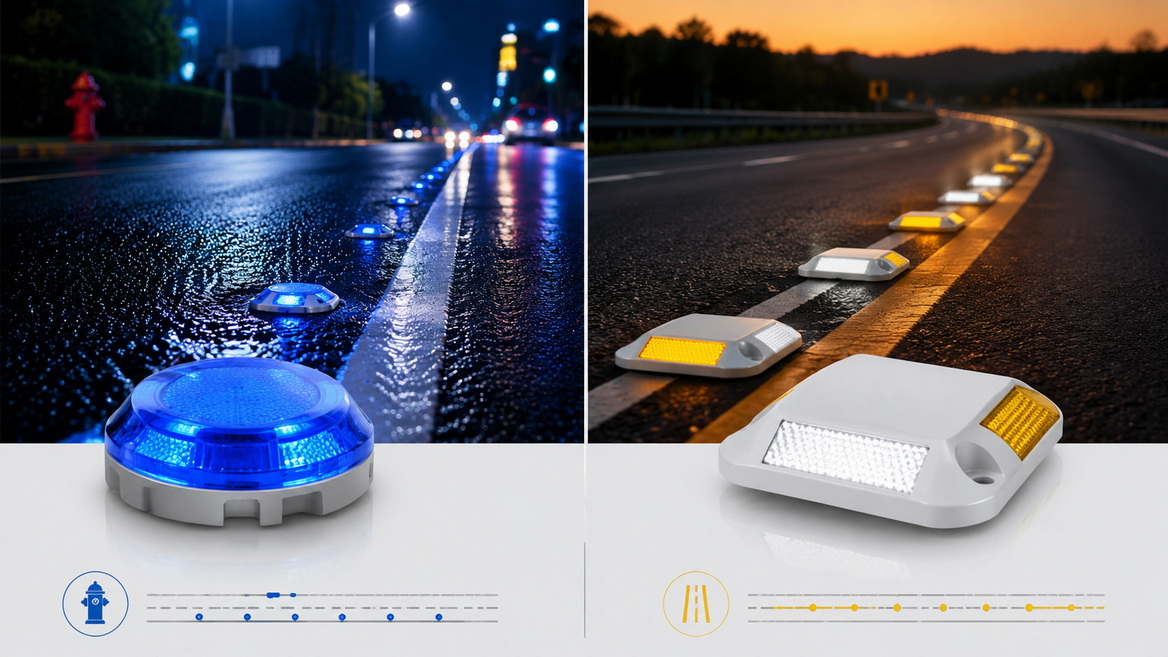
In real projects, selecting the correct road stud color affects more than appearance. It affects response time, traffic clarity, and user behavior. If a hydrant is hard to find, emergency access becomes slower. If lane markers are unclear, drivers are more likely to drift, hesitate, or change lanes suddenly.
For manufacturers and distributors, this also influences product positioning. Blue hydrant studs should be presented as emergency identification products. White and yellow lane studs should be presented as traffic guidance products. Clear positioning helps buyers choose the right solution faster.
A proper installation process helps the product perform as intended. The following steps are useful for both hydrant and lane division applications:
1. Confirm the exact use case before selecting the marker.
2. Check local rules, site drawings, and project requirements.
3. Prepare the road surface carefully before installation.
4. Place the marker in the correct direction of vehicle approach.
5. Test visibility after installation, especially at night.
6. Record the installation location for future inspection and maintenance.
When these steps are followed, the marker is more likely to remain effective over time.
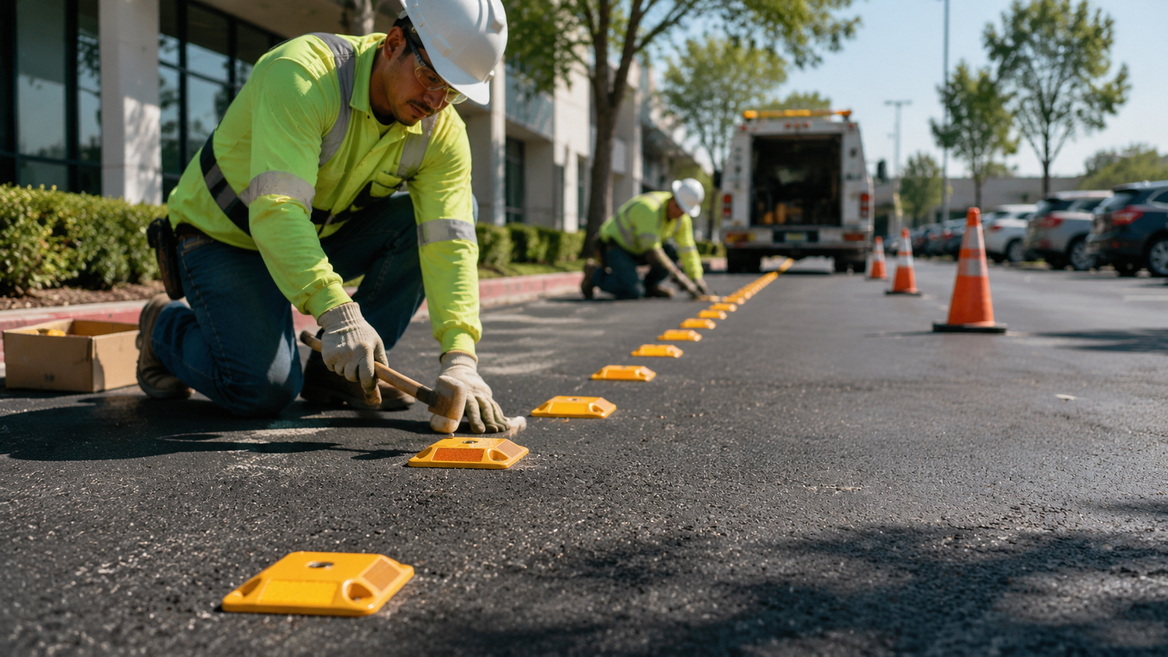
For a traffic safety manufacturer, this topic supports a wider product portfolio. Blue LED hydrant studs connect naturally with fire safety and emergency access products. White and yellow lane division studs connect naturally with parking lot safety, road guidance, and highway control products.
This is especially relevant for OEM and ODM service models. Buyers often need different colors, mounting types, reflectivity levels, and LED options for different projects. A flexible product line makes it easier to serve export markets and project-based customers.
Blue LED studs for hydrants and white/yellow studs for lane division may look similar at first glance, but their roles are very different. One supports emergency identification, while the other supports traffic guidance. Using the correct product in the correct place improves safety, clarity, and long-term reliability.
For projects involving streets, highways, toll stations, industrial parks, or parking facilities, marker selection should always match the actual use environment. When color, placement, and function work together, the result is a safer and more efficient traffic system.
Not always, but blue is commonly associated with hydrant identification in many systems. The exact rule depends on the local standard and project specification.
Usually not. White studs are normally used for lane division or road guidance, not emergency hydrant identification.
The main advantage is stronger visibility. LED lighting makes the marker easier to notice in dark or cluttered environments.
No. White and yellow studs often serve different traffic guidance roles depending on the road system and application.
Buyers should confirm application, color, installation method, reflectivity, material grade, and local compliance requirements before placing an order.
1. Country Fire Authority. *Identification of Street Hydrants for Firefighting Purposes.*
2. Kāpiti Coast District Council. *Valve and Hydrant Identification Markers.*
3. Driving Masters. *Reflective Studs on the Motorway.*
https://www.drivingmasters.uk/kb/reflective-studs-on-motorway
4. Cal Poly Facilities. *Hydrant Reflector Standard Detail.*
5. Made-in-China. *Parking Safety Facility Manufacturers & Suppliers.*
https://www.made-in-china.com/manufacturers/parking-safety-facility_4.html


