
Please Choose Your Language
Views: 222 Author: XS Traffic Facilities Publish Time: 2026-05-16 Origin: Site


As a manufacturer that designs and builds LED traffic signs and signals for highways, streets, toll stations, tunnels, and parking facilities, I see every day how the right signal solution can reduce accidents, cut congestion, and support smarter cities. In this guide, I will walk you through the main traffic light types, explain where and how they are used, and show how modern LED and smart technologies are reshaping traffic safety projects worldwide.
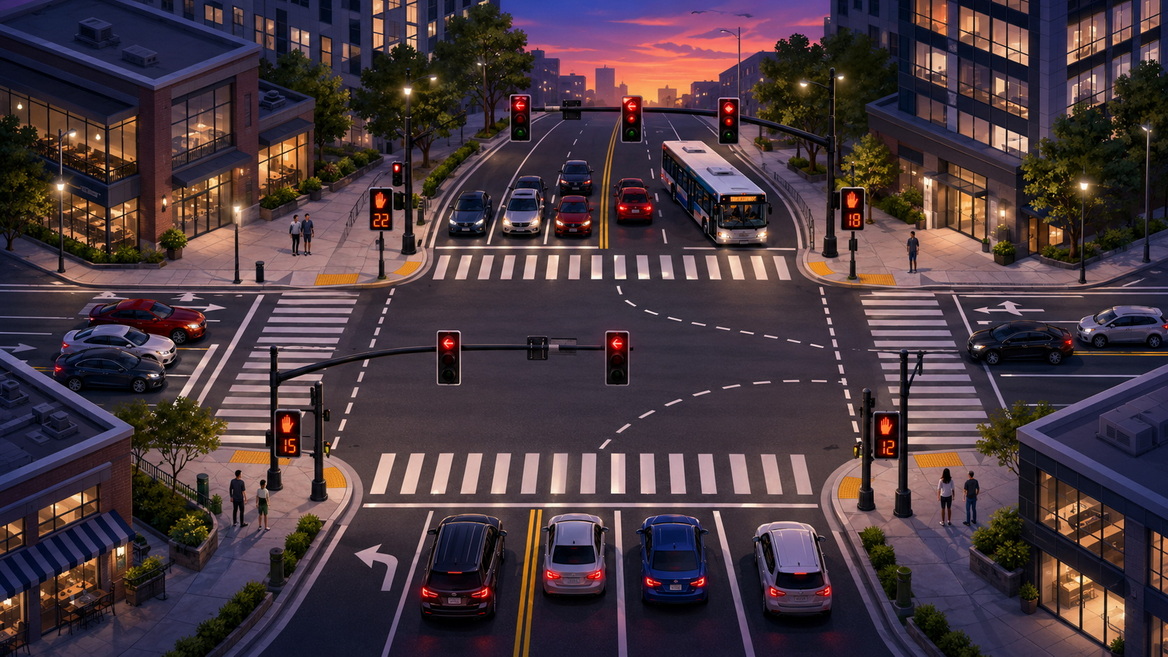
Traffic lights (also called traffic signals or stop lights) are electronic signaling devices installed at intersections, crosswalks, tunnels, and other critical points to control vehicle and pedestrian movements using standardized colors: red, yellow (amber), and green.
Traditional traffic lights now increasingly use LED light sources, which offer longer lifetime, higher brightness, and up to about 80% lower energy use than legacy incandescent lamps. In parallel, LED traffic signs—such as speed limit signs, lane control signs, variable message signs, and solar warning signs—supplement traffic lights with real-time, highly visible guidance for drivers.
From an engineering and project perspective, LED traffic lights and LED traffic signs are no longer separate worlds; they are core elements of integrated traffic management and smart city systems.
As traffic volumes rise and road networks become more complex, using a single, generic traffic light type is no longer enough. Different environments—urban intersections, expressways, tunnels, school zones, and parking facilities—face very different risk profiles and flow patterns.
From a manufacturer's and designer's viewpoint, correctly matching signal type + optics + control logic to each scenario is what actually delivers:
- Fewer angle and rear-end collisions at intersections
- Shorter average delay per vehicle in peak hours
- Better protection for vulnerable users such as pedestrians and cyclists
In practice, when we work with city engineers or parking operators on OEM or ODM projects, the discussion always starts with "what type of movement are you trying to control, and under which conditions?" rather than "what lamp size do you want?"
These are the standard three-aspect red–yellow–green signals that control vehicle movements at road intersections, roundabout entries, and mid‑block crossings.
Typical applications include:
- Urban and suburban intersections with multi‑lane traffic
- Highway ramp terminals and signalized roundabouts
- Dedicated bus lanes or BRT corridors with special phases
Best practices from standards such as the Manual on Uniform Traffic Control Devices (MUTCD) and the Vienna Convention on Road Signs and Signals keep red at the top (or left) and use consistent color meanings to minimize driver confusion.
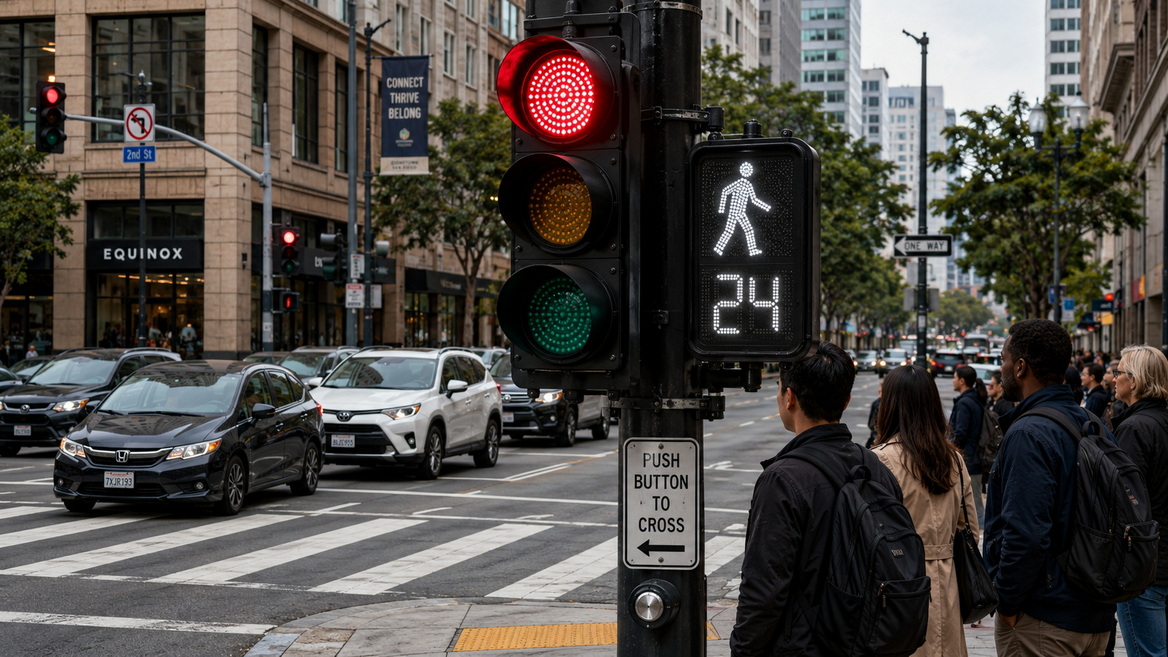
Pedestrian traffic lights typically use symbol displays (walking person / standing person or WALK / DON'T WALK) and increasingly incorporate countdown timers and audible signals.
Key use cases:
- Busy city crosswalks and mid‑block crossings
- School zones and university campuses
- Transit hubs near metro stations or bus terminals
Modern practice increasingly adds:
- Countdown indicators to show remaining crossing time, which reduces the tendency to "run the red" and lowers sudden braking.
- Audible cues and tactile push buttons to support visually impaired users.
Arrow traffic lights use red, yellow, and green arrows to control protected and permissive turning movements, such as left or right turns at intersections.
They are essential where:
- Traffic volumes are high and turning vehicles frequently conflict with opposing or crossing flows.
- Intersection geometry or sight distance makes it difficult for drivers to judge gaps safely.
By providing dedicated phases and clearly separated arrows, these signals reduce angle collisions and help traffic engineers fine‑tune capacity at complex junctions.
Flashing or blinking signals are used in lower-volume or special-risk locations, often without full three‑aspect control.
Common patterns:
- Flashing red (stop, then proceed when safe) at low‑volume side streets or temporary one‑lane controls.
- Flashing yellow (proceed with caution) at minor crossings, sharp curves, or in transition zones.
With LED technology, flashing beacons can now be solar powered, wirelessly networked, and configured with adaptive flashing patterns that vary with speed or environmental conditions.
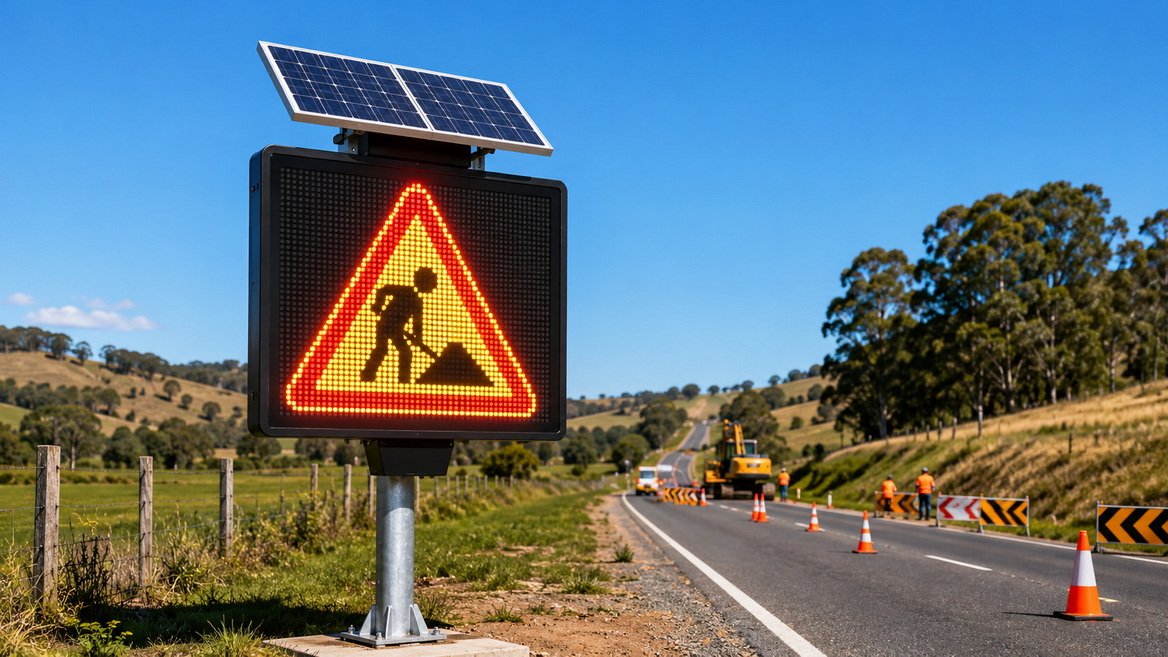
Beyond vehicles and pedestrians, different user groups require dedicated signals with specific symbols or aspects.
Typical examples:
- Railway crossing signals with alternating red flashers
- School zone beacons that flash during defined time windows
- Bicycle signals with bicycle symbols and sometimes special green phases
- Bus and tram signals with T‑symbols or white bars, giving priority at intersections
For manufacturers, these projects usually involve more customization in terms of pictograms, mounting, and controller interfaces—exactly where OEM/ODM capability becomes valuable.
Countdown signals show a numeric display of remaining seconds before a phase ends.
Benefits observed in project deployments include:
- Reduced last-second acceleration at the end of green, lowering red‑light running.
- More predictable behavior from pedestrians who clearly understand how much time is left to cross.
These signals are now widely adopted in Asia and the Middle East and are appearing in more cities worldwide as part of safety‑oriented signal modernization programs.
Temporary traffic signals are used where permanent infrastructure is unavailable or not economical, such as:
- Road construction and maintenance zones
- Bridge repairs with alternating one‑way operation
- Special events, stadium traffic control, or emergency detours
Modern portable units often combine battery packs, solar panels, and wireless radio links, allowing quick deployment without trenching or cabling.
From the perspective of road safety and system operation, traffic lights offer clear benefits, but they also come with trade‑offs that must be managed through proper design and technology.
Key benefits:
- Reduce angle and pedestrian collisions at intersections by clearly assigning right of way.
- Enable efficient coordination of flows on major corridors.
- Provide safe gaps for slower users such as elderly pedestrians or cyclists.
- Remain visible in poor weather and low‑light conditions, especially with LEDs.
Key drawbacks and challenges:
- Poorly timed or unnecessary signals can increase delay, encourage risky behaviors, and push drivers onto inappropriate side streets.
- Installation costs per modern signalized intersection can reach USD 80,000–100,000, plus ongoing power and maintenance.
- If not maintained or upgraded, aging systems can become energy‑intensive and unreliable.
This is why many cities now treat signal modernization and LED upgrades as strategic investments, not just maintenance tasks.
At typical city intersections, a combination of:
- Vehicle traffic signals
- Pedestrian signals with push buttons
- Arrow signals for protected turns
is used to balance safety and throughput, often coordinated along corridors to create "green waves" that reduce stops.
On highways and in tunnels, traffic signals and LED signs focus on access control and incident response:
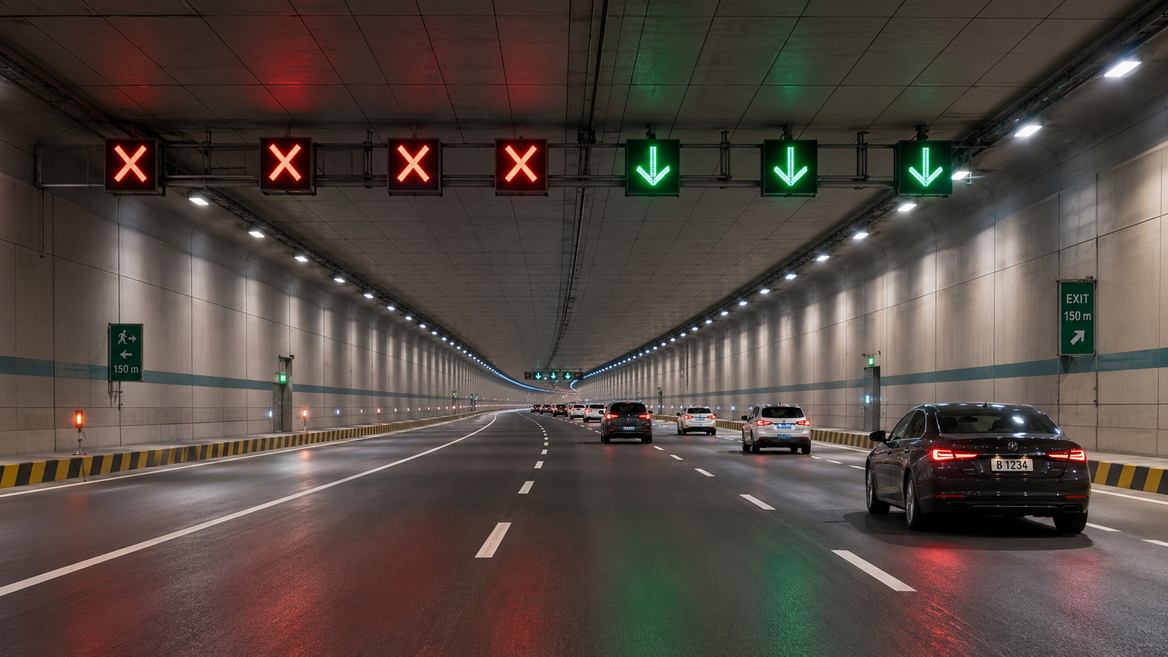
- Lane control signals and red X / green arrow indicators
- Tunnel entry signals and emergency closure signs
- Toll station signals guiding vehicles into open lanes and indicating electronic vs. manual booths
With LED signs integrated into control centers, operators can close lanes, lower speed limits, or reroute traffic within seconds when an incident occurs.
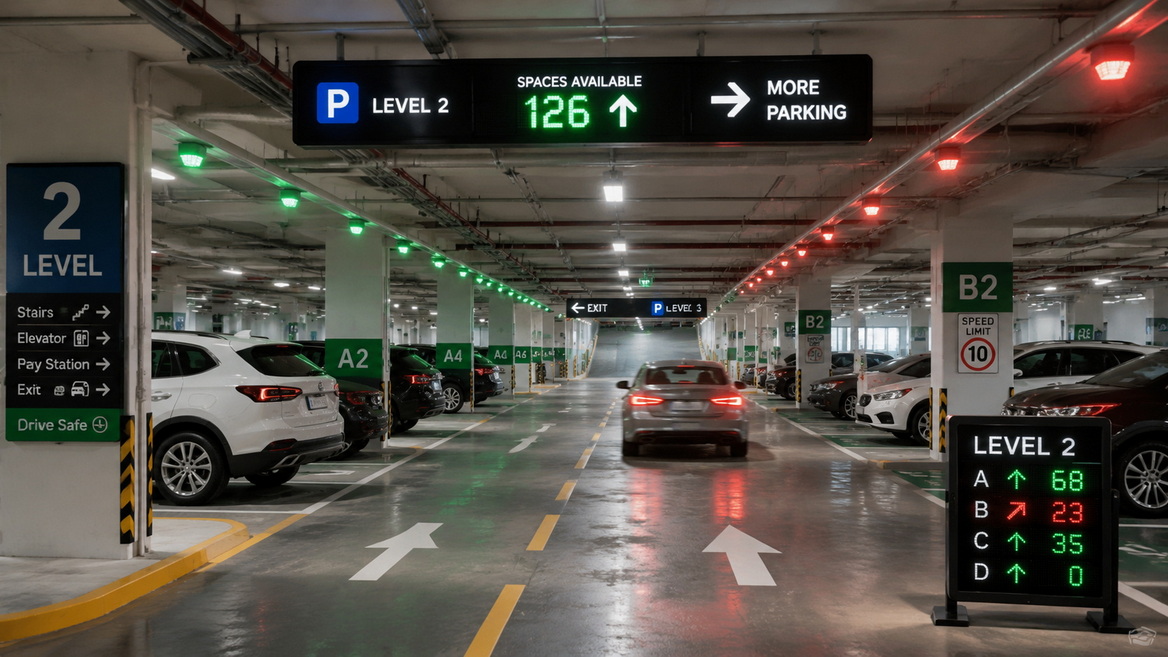
In large parking garages and logistics centers, LED signals and signs manage:
- Entry/exit flows and barrier operations
- Space availability indicators and guidance arrows
- Dock and ramp operations for trucks and forklifts
These systems often interface with access control and billing systems, requiring reliable industrial‑grade components and long service life—another area where specialized OEM manufacturing is key.
LED traffic lights and signs have transformed the economics of signal systems. Compared with older incandescent lamps, LED modules:
- Use up to around 80% less energy, dramatically reducing operating cost.
- Offer lifetimes measured in years rather than months, reducing maintenance callouts.
- Provide sharper, more uniform light that is easier to see in bright sunlight or rain.
For asset owners, this means lower total cost of ownership and the ability to justify modernization projects based on both safety and energy savings.
The integration of Internet of Things (IoT) technologies allows traffic lights and LED signs to act as networked sensors and actuators rather than standalone devices.
Typical features include:
- Remote monitoring of status, voltage, and fault conditions.
- Dynamic adjustment of phase splits and offsets based on real‑time traffic volume.
- Integration with emergency vehicle priority and public transport priority systems.
Global projects such as Google's Green Light initiative demonstrate that AI can analyze city‑wide traffic data and recommend optimized signal timings that reduce stops and emissions.
Early deployments have shown:
- Up to 30% reduction in stops at optimized intersections.
- Around 10% reduction in CO₂ emissions from idling vehicles at those locations.
For manufacturers of LED signals and signs, this shift means:
- Growing demand for interfaces and protocols compatible with smart city platforms.
- Increased need for high‑reliability hardware that can support frequent switching and remote updates.
Some modern LED traffic signs incorporate sensors and AI‑driven flashing patterns that change intensity or frequency depending on speed and risk.
For example:
- Adaptive dimming avoids glare at close range while maintaining visibility up to hundreds of meters.
- Flashing frequencies increase when vehicles are approaching too fast, making the warning more urgent.
These innovations are particularly relevant for hazardous curves, work zones, and rural intersections where conventional static signs are often overlooked.
Although regulations differ, most regions now follow similar core principles:
- Three-color codes (red = stop, yellow/amber = caution, green = go).
- Recommended mounting heights and lateral placement for visibility.
- Defined minimum brightness and chromaticity requirements for LED lenses.
Key reference frameworks include:
- MUTCD in the United States, which specifies signal head configurations and warrant criteria.
- The Vienna Convention in Europe, which harmonizes meanings and basic designs.
In Asia, including China, many countries adopt these global principles while adapting to local driver behavior, climate, and language—for example, the historical description of "blue" for green in Japan.
From a practical, day‑to‑day perspective, what road authorities, EPC contractors, and parking operators need from a manufacturer usually goes beyond "just" products:
- OEM and ODM engineering support to customize sizes, optics, housings, symbols, and mounting for specific projects.
- System-level guidance on how to combine traffic lights, LED warning signs, and controllers into a coherent solution.
- Reliable compliance with international standards and long-term component availability for maintenance cycles.
By collaborating early—at the concept or tender stage—manufacturers can help:
1. Match traffic light type and LED sign type to each application (intersection, tunnel, toll plaza, parking area).
2. Optimize for energy efficiency and total cost of ownership through LED and solar options.
3. Ensure smooth integration with existing or planned smart city and ITS platforms.
When we advise customers on new installations or upgrades, we typically follow a simple expert checklist:
1. Clarify application and risk level
- Intersection vs. highway vs. parking vs. tunnel.
- Accident history, speed, and visibility constraints.
2. Define control strategy
- Fixed‑time, actuated, adaptive, or AI‑assisted signal control.
- Need for countdown or special phases (bicycles, buses, emergency vehicles).
3. Select appropriate traffic light types
- Vehicle signals, arrows, pedestrian signals, flashing beacons, special‑purpose lights.
- Consider temporary vs. permanent needs.
4. Specify LED and power configuration
- LED module size, brightness class, and color performance.
- Mains, battery‑backup, or solar‑hybrid power.
5. Plan integration and maintenance
- Communication protocols, controller interfaces, and central software.
- Access, spare parts strategy, and long-term supplier support.
If you are planning a new road project, tunnel, toll station, parking facility, or traffic safety upgrade, now is the ideal time to transition to high‑efficiency LED traffic lights and intelligent LED traffic signs.
By partnering with an experienced Chinese OEM/ODM manufacturer of LED traffic signs and signals, you can:
- Build a solution tailored to your local standards and climate.
- Reduce lifetime costs with energy‑saving LEDs and robust housings.
- Prepare your infrastructure for smart city and AI‑driven control from day one.
You can share your intersection layouts, traffic volumes, or parking and toll station plans, and we can help translate them into a detailed LED traffic signal and signage proposal.
The main types include standard vehicle traffic signals, pedestrian signals, arrow signals, flashing and beacon signals, special-purpose signals (schools, buses, bicycles), countdown signals, and temporary portable signals for work zones.
LEDs deliver much higher energy efficiency, longer service life, and better visibility in adverse weather, which lowers maintenance costs and improves safety compared with incandescent lamps.
Smart signals use sensors, IoT connectivity, and AI algorithms to adjust signal timing based on real‑time demand, reducing unnecessary stops and cutting emissions from idling vehicles by around 10% in pilot deployments.
Core principles, such as red–yellow–green color meanings, are largely harmonized by frameworks like MUTCD and the Vienna Convention, but details such as mounting, timing rules, and symbol designs vary by country and region.
You should gather basic information about road layout, speed limits, traffic volumes, existing control systems, power availability, and any specific standards or certifications required in your jurisdiction. This allows the manufacturer to propose the most suitable combination of signal types, LED modules, and control options.
1. Precision Business Insights https://www.precisionbusinessinsights.com/market-reports/led-traffic-signs-and-signals-market
2. Google Research https://sites.research.google/gr/greenlight/
3. Sustainability Magazine https://sustainabilitymag.com/articles/project-green-light-google-using-ai-for-sustainability
4. Wired https://www.wired.com/story/googles-ai-traffic-lights-driving-annoying/
5. BBM Traffic Light https://www.bbmled.com/zh-CN/a-news-improving-road-safety-and-efficiency-with-led-traffic-signal-lights
6. JACKWIN Traffic https://jackwinsafety.com/traffic-light-types-and-applications/
7. Tacha Solar / Ruichen https://www.tachasolar.com/exhibition-news/news/the-future-of-solar-traffic-signs-in-2026-smarter,-more-durable,-and-built-for-r
8. China Road Traffic Safety Network https://www.crsa.net/news/article/6714
9. LinkedIn Articlehttps://www.linkedin.com/pulse/united-states-led-traffic-signs-market-application-pykkf
10. Alibaba https://www.alibaba.com/supplier/building-access-control-system-manufacturers.html


