
Please Choose Your Language
Views: 0 Author: Site Editor Publish Time: 2026-04-09 Origin: Site


Have you ever wondered how traffic lights work and when they change? If you are a driver, traffic officer or you plan road projects, it’s important for you to understand how traffic lights work.
Traffic lights use smart sensors, timers, and control boxes to keep your cars, bikes and pedestrians safe. In today’s guide, we have explained everything you need to know about how traffic signals work.
Traffic lights are important to keep you safe on roads and busy highways. They follow a smart system to help your cars, bikes, and people take turns at crossings. Below are some steps that show you how traffic lights work.
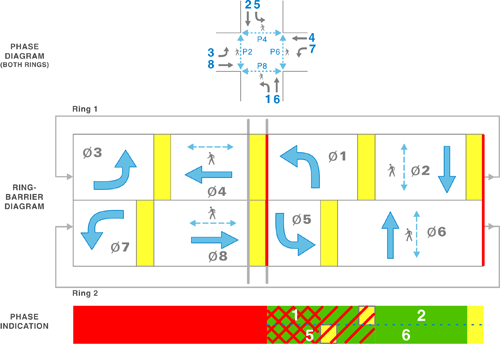
To control the flow of traffic, traffic lights need to know how traffic moves at intersections. In this way, these lights assess your movement if you are walking and check the direction of your cars, bikes, etc. Because you may see cars can take turns left, straight, or turn right. Traffic lights are set up in a way that they easily notice these movements with sensors, so they can guide you at each turn.
A signal phase actually decides who gets to go and for how long. For example, sometimes you notice a green light to go straight, and other times, someone else is allowed to turn green.
This is an advanced system that tells you when you should stop, wait, and start driving. That’s why traffic lights change in a special order, so everyone can take the right turn to avoid crashes.
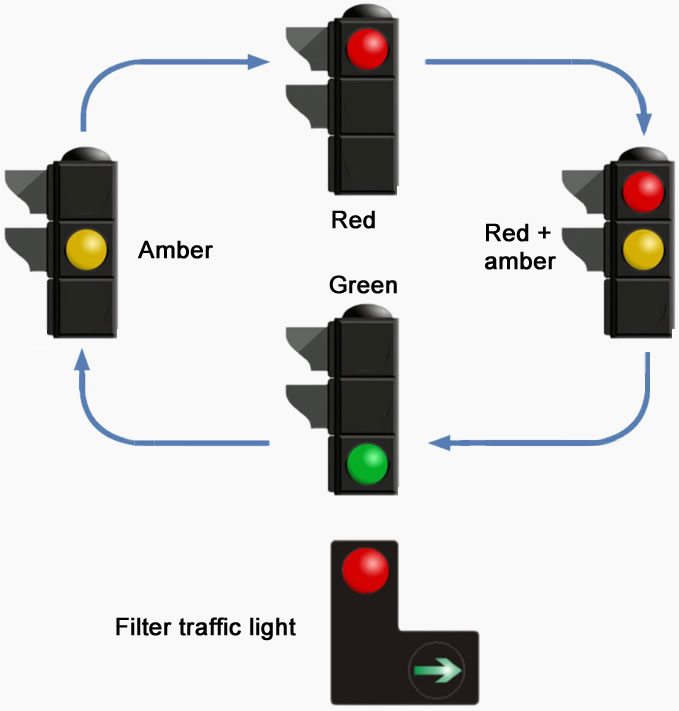
Traffic lights use three main colors: green, yellow, and red to provide instructions on the road. Each color stays on for a limited amount of time, and that duration is carefully set to help everyone move safely.
Green Light: This light gives you permission to move forward. It stays green just long enough so your cars, bikes, and other people can pass safely.
Amber (Yellow) Light: When the green time is almost over, you will notice the yellow light comes on. It alerts you that the red light is set to switch on, so you should slow down your vehicle or stop if it’s safe.
Red Light: The red lights indicate that you have to completely stop your vehicle. While your side is red, the other side will be green, so that traffic can keep flowing in turns.
If we talk about the main component of traffic lights operations, it is the traffic signal lights sensors. Traffic sensors are devices, generally placed on and near roads. They can sense and identify when and where vehicles are present. These sensors also help to detect cars, trucks, or bikes that are waiting at intersections.

How do traffic light sensors work?
Sensor technology is used to detect traffic flow with the help of different techniques. For example, when you stop your car at a red light, the sensor can feel the metal in your car. As a result, the traffic system knows that a vehicle is there. After vehicle detections, these sensors send a message to a small computer that controls the traffic lights.
This communication helps the system, so it can make decisions on when to change the light. On the other hand, if there are no cars or bikes present in the lane, the sensor won’t send a signal. This stops the light from turning green when nobody is there.
You can install these boxes near the traffic lights in a metal cabinet. They operate as the brain (control system) of traffic lights. It uses a set of rules, which is called a signal plan. These standards are designed by traffic engineers. Hence, the controller uses this plan to decide how long each light should stay on.
These control boxes also have links with traffic sensors which help to make the best decian/choices. We can say that whenever we notice the signal change at the rods, there is basically a controller box that is functional in the background of the overall system.

When you place many lights close to each other, you should set them to change in a way that helps smooth traffic movement. Basically, this is called coordination. All lights and its components work as a team. These components involved: timers & signal program, controller boxes, cameras, cables/wires, and traffic sensors.
For example, when you drive on a busy street, you may notice that you get green lights at more than one intersection in a row. This is because the signals follow a time limit to work together. This will help you to know when to stop less, save time, and keep traffic flow as well.
Well, traffic lights follow a set pattern to keep their operations smooth. This order, followed by a traffic light system, is known as a light change sequence. In most cases, it guides drivers and walkers to know what to do at the right time.
When there are green lights switched on, it indicates you can go. But these green lights only stay on for a short time. It will change to yellow after a certain time. If you see yellow lights, it warns you that the light is about to turn red. In such a case, if you are close to the intersection, you should slow down your car and get ready to stop.
As you know yellow is a warning color, it means the light is regulated that you should stop. Additionally, yellow light gives you a few seconds to slow down your automobiles and get ready to stop your cars/bikes. Then, the light changes to red, and you have to stop fully. This sequence helps you and other drivers to avoid accidents, stay in order, and create ease for everyone around the roads.
When there are red lights that stay on, you must stop your vehicle and wait until the signal turns green. After a short time, the light will change from red to green. It directs you that you can now start your car and go. Hence, whenever you see the green light, it is safe for you to drive forward and cross the road. It also clears the path and gives you fair time to move in each direction.
Traffic lights can’t make random changes because they operate on the basis of an intelligent transportation system (ITS). This setup helps traffic lights to decide the best time to switch. The following are two main systems that are designed for light change purposes.
Inductive loop detectors are a special type of sensor that you can place under the road. These detectors are widely installed on highways by traffic engineers and managers to make the traffic light system more effective. There are wires that are used to sense when your vehicle is above them.
In addition, these sensors can tell the size and type (detect metal) of your vehicles accurately. With the help of an inductive loop traffic detector, the traffic light system senses this change and knows a car is waiting. So, traffic lights change color according to the situation.
As you already know, an ambulance, a fire truck, and a police car need to get through traffic fast during an emergency. That is why these types of vehicles have special devices (emergency vehicle preemption systems) that send a signal to the traffic lights.
These signals direct the traffic lights to take quick action and give emergency vehicles green light indications. This overall setup helps you reach people faster and keeps everyone secure.
Traffic light timing sequence means the order and time durations each light can stay on. Well, this time limit is set by traffic engineers. You can use computers, sensors, and traffic data to decide the time limit for traffic lights.
How are Traffic Lights Timed?
First, you have to study how many cars are on the road and when traffic is busy/slow. Now you can set the green, yellow, and red lights to stay on for the right amount of time. For busy areas, you have to switch on green lights for a longer time as compared to other zones. But on quiet roads, the lights may change faster or change only when needed.
If you see there are more cars on the highways, green traffic lights must stay on for a longer time. However, if there are few cars present on the road, then the green light doesn’t remain on as long. You have to follow this pattern to avoid traffic jams and keep your cars from waiting too long.
Generally, in the morning and evening, roads are busier because people go to work, jobs, or come back to their homes. Due to the high traffic rate at that time, these are called peak hours. Hence, you will notice green lights stay for a long time during peak hours so that your cars can move through the intersection without getting stuck.
However, in the off-peak hours, such as late at night & during the middle of the day, there is less traffic. So, traffic lights change fast to avoid unnecessary delay time.
Sometimes people press a button to cross the street. Whenever this happens, the traffic light changes its time accordingly to give you a safe time to walk. Once you cross the road, the lights go back to normal for other cars moving on the roads. This creates a secure environment whether you’re a pedestrian or driving your car.
If an ambulance, fire truck, or police car is on the way, the traffic light system detects it and can change quickly to let it pass. This helps emergency vehicles reach people faster in critical situations without getting stuck in traffic, keeps everyone safe and saves lives as well.
Not every traffic light has a camera, but some do. You will generally find cameras at busy roads, dangerous intersections and places where accidents happen more as compared to quiet zones.
If a camera is near a traffic light, it may be there to catch people who violate the red light rules. Moreover, if you want to know, do your local traffic lights have cameras? You can check with your local council or visit their website.
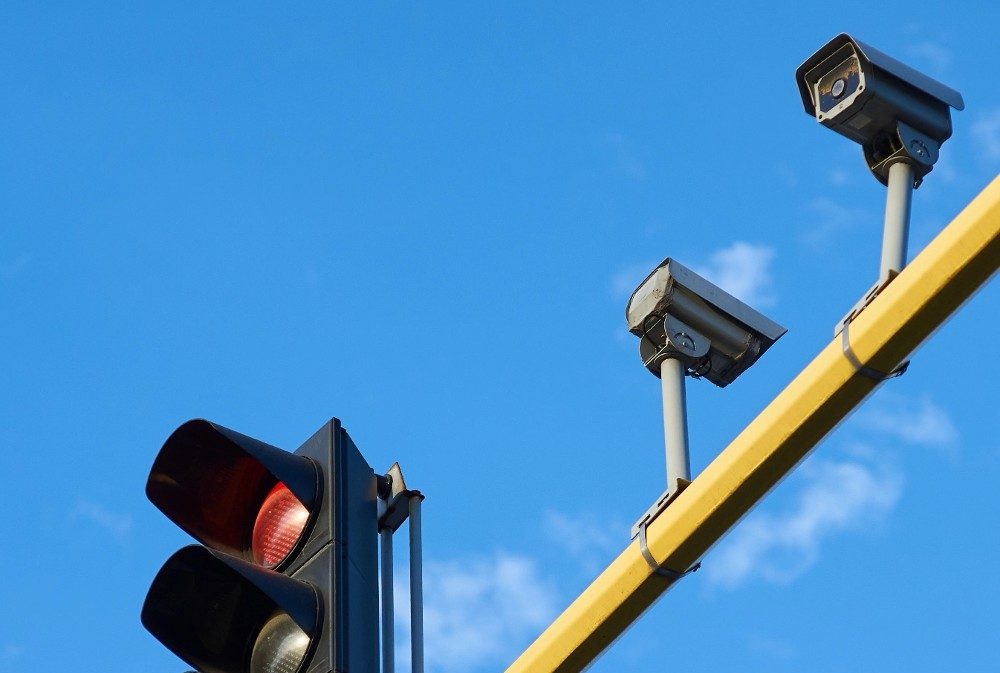
The cameras you see on top of traffic lights are installed to watch and manage traffic flow. Their main purpose is to identify the heavy traffic roads and catch drivers who don’t stop at the red light.
These cameras also guide lights to change at the right time. However, they don’t always take pictures of you. Most are just there to help the traffic lights work smarter and operate in the right way.
If you don’t follow the red light, then the camera takes a picture of your car. But you can’t see any flash or signs right at the spot. Rather, you will know later if you get a ticket/notice in the mail. This ticket will be issued by the traffic department and will usually show:
A picture of your car violating the red light.
The time, date, and place where it happened (this shows exactly when & where your car did not follow the traffic signal).
The red light that you didn’t follow (the light was red, you still kept driving and didn’t stop).
Hopefully, now you have a good understanding of how traffic lights work, when they change and keep everyone (from drivers to walkers) safe on the roads. You can see, from smart sensors to timing plans, each has a unique function and importance for the traffic lights to work.
However, if you are looking for a traffic light manufacturer and supplier for your project, XS is the right choice. You can contact our professional team today and get your product according to your brand requirements.
Stop lights are controlled by special computers, called controllers. These controllers follow a pre-set plan and use sensors on the road to know when to change the lights. This helps to keep the roads safe from heavy traffic/blockages.
Basically, stop light sensors watch the road to spot cars waiting at the signal. These sensors can feel the metal of your car and see it with a camera. When the sensor detects your car, it tells the traffic light to change so your vehicle can go safely.
Traffic lights change in different ways with the help of unique techniques. Some lights follow a set timer that changes the lights after a fixed time interval. In some cases, traffic lights change their pattern by the use of sensors (loop of wire, infrared sensors). While traffic lights also use cameras to monitor traffic.
Yes, in specific areas, police cars can trigger traffic lights. They use special devices and signals that direct the traffic light to change, generally to green. So they can pass through safely during an emergency.
Absolutely yes! Traffic lights can change for your emergency vehicles because these lights have advanced systems that detect the presence of ambulances, fire trucks and police cars. As a result, traffic light systems take quick action according to the transmitted signal information.
In case you notice traffic lights not operating properly, you should report it to your local traffic or city department. You can report it by calling their customer service number and visiting their official website. Remember, you should tell them the exact location & what the issue is (like lights off, stuck on red, or flashing).


