
Please Choose Your Language
Views: 222 Author: XS Traffic Facilities Publish Time: 2026-05-05 Origin: Site


Content Menu
● Why Substrate Matters for LED Traffic Signs
>> Understanding Aluminum Backing
>> The Role of Galvanized Steel
● Key Comparison: Aluminum vs. Galvanized Steel
● Expert Insights: Factors Influencing Your Choice
>> 1. The Impact of Environmental Stress
>> 2. Regulatory Compliance and Safety
● Frequently Asked Questions (FAQ)
>> 1. Is aluminum always more expensive than galvanized steel?
>> 2. Can LED traffic signs be mounted on existing steel posts?
>> 3. Which material is better for extreme cold climates?
>> 4. How often does the protective coating on steel signs need replacing?
>> 5. What thickness is recommended for LED sign backing?
Choosing the right material for your LED traffic signs is a critical decision that impacts longevity, maintenance costs, and overall project safety. As a manufacturer at Shenzhen Xingsheng Traffic Facilities Co., Ltd., we have seen firsthand how the choice between aluminum backing and galvanized steel can determine the success of infrastructure projects on highways, city streets, and parking lots. This guide provides an industry-expert analysis to help you make an informed decision based on durability, performance, and environmental conditions.
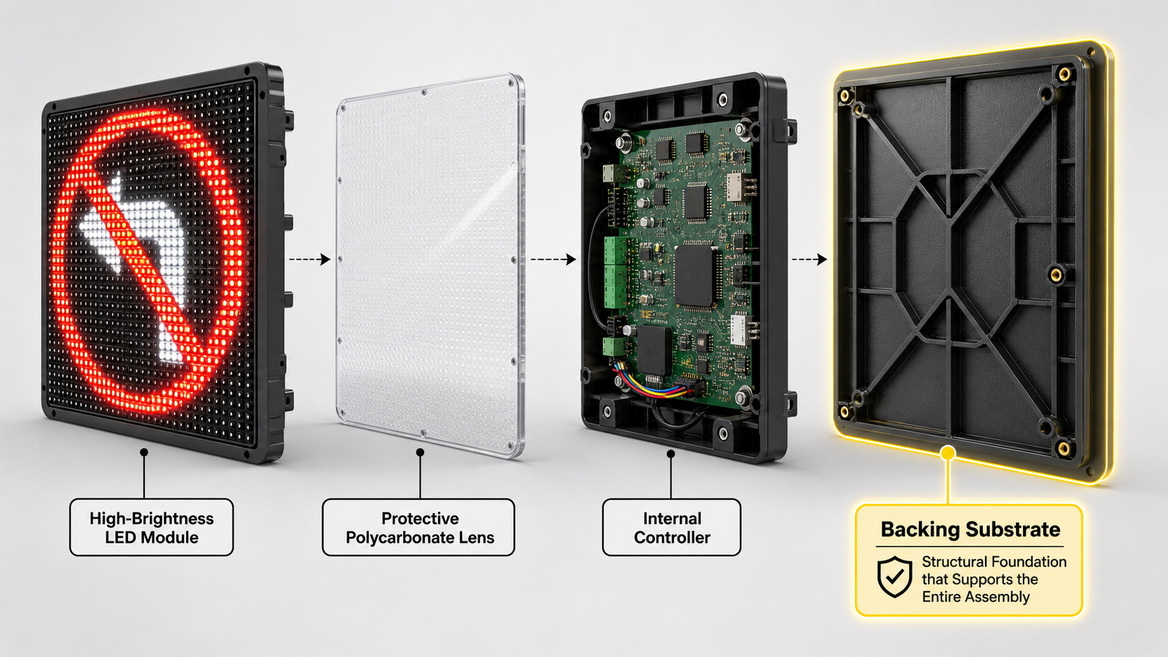
For LED traffic signs, the substrate (backing material) is more than just a mounting surface; it is the structural integrity of your investment. An LED sign involves complex electronic components, high-brightness LEDs, and protective housing that must withstand years of outdoor exposure.
If the backing fails—whether through corrosion, warping, or fatigue—the electronics inside will inevitably suffer, leading to costly maintenance or total system failure. Below, we break down the fundamental differences between the two industry-standard choices.
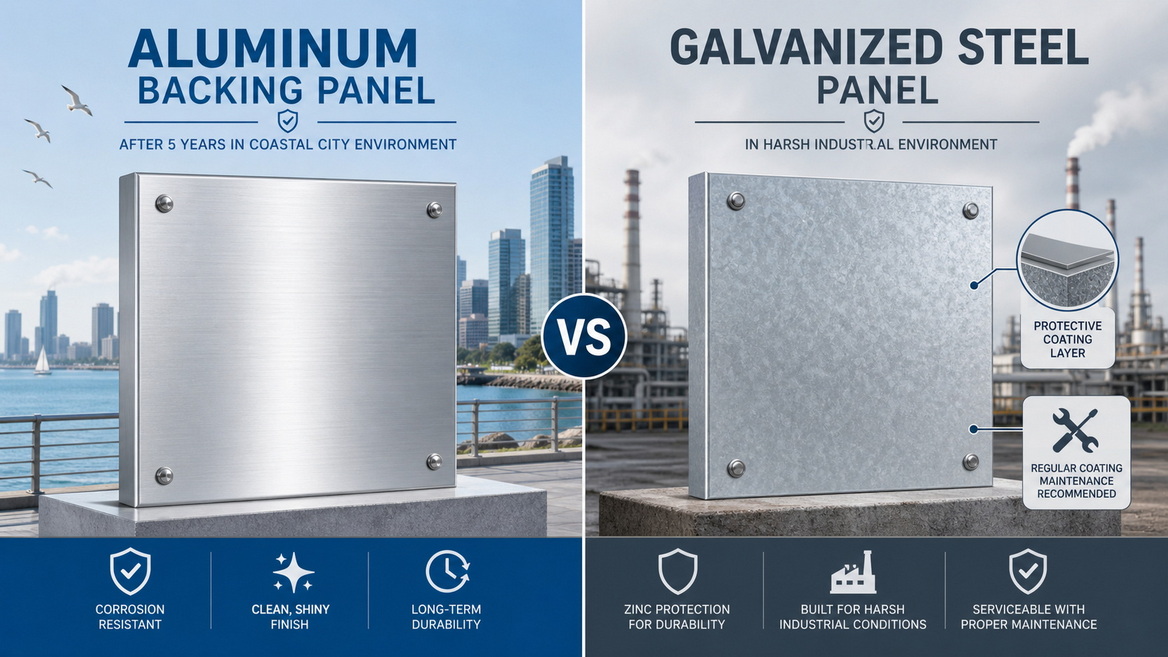
Aluminum is widely regarded as the premium choice for modern LED traffic signs due to its inherent resistance to oxidation and light weight.
Corrosion Resistance: Aluminum naturally forms a protective oxide layer that prevents further corrosion, making it ideal for coastal regions or areas with high humidity.
Weight Advantage: Aluminum is approximately one-third the weight of steel, which simplifies installation and reduces the load on sign posts.
Thermal Management: For high-performance LED systems, aluminum's superior thermal conductivity helps dissipate heat, extending the lifespan of internal electronic components.
Galvanized steel is often favored in high-impact environments where rigidity and cost-effectiveness are the primary drivers.
Exceptional Rigidity: Because of its higher density, galvanized steel offers unmatched stability, preventing signs from bending or breaking in high-wind zones.
Cost Efficiency: For large-scale projects where budget is the tightest constraint, steel often presents a lower initial procurement cost.
Durability via Coating: The galvanization process (zinc coating) provides a robust barrier against rust, though it must be maintained properly to remain effective.
| Feature | Aluminum Backing | Galvanized Steel |
|---|---|---|
| Weight | Lightweight (2.71 g/cm³) | Heavy (7.87 g/cm³) |
| Corrosion Resistance | Excellent (natural) | Good (requires zinc coating) |
| Stability | Moderate | High (best for high wind) |
| Installation | Easier / Low Labor Cost | Challenging / Requires heavy gear |
| Best Application | Coastal, humid, standard urban | High-traffic, permanent, industrial |
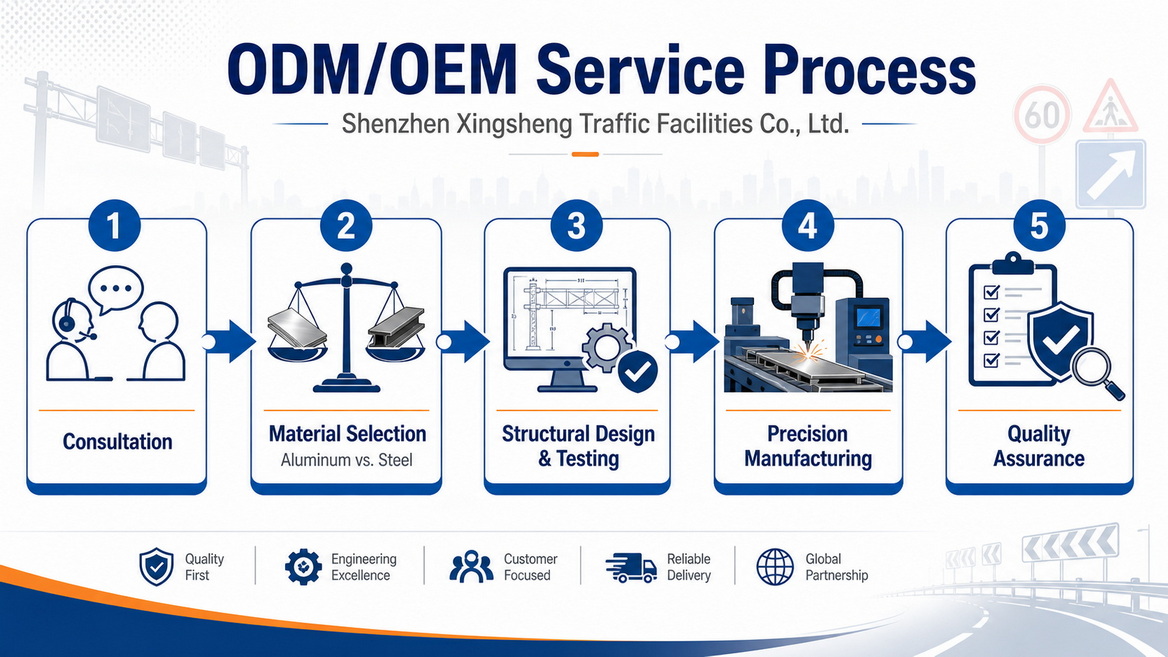
Beyond the technical specs, industry experts at Shenzhen Xingsheng Traffic Facilities Co., Ltd. recommend considering the "Lifecycle Cost" rather than just the initial price. While steel may be cheaper to purchase, the maintenance requirements for rust mitigation can quickly exceed the upfront savings compared to low-maintenance aluminum.
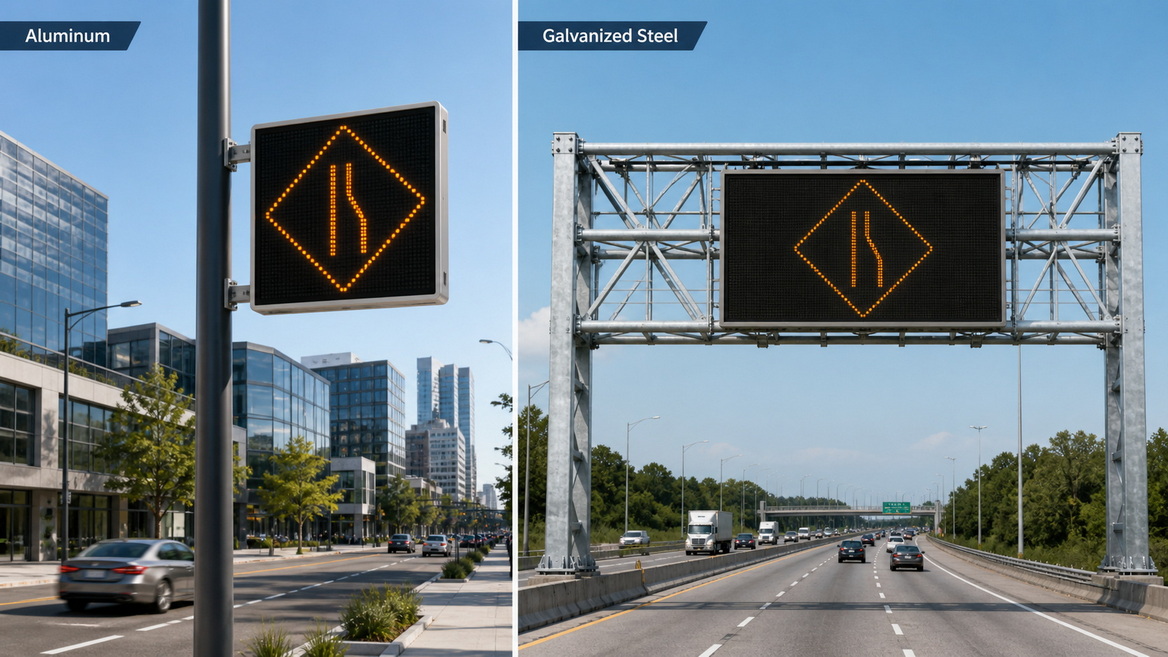
If your project is located in a harsh climate—such as near saltwater or in areas with extreme temperature fluctuations—aluminum is significantly more resilient. Recent 2026 industry data suggests that signs utilizing aluminum substrates show less thermal expansion/contraction fatigue, which is vital for maintaining the structural seal around LED housings.
Always verify that your chosen substrate meets MUTCD (Manual on Uniform Traffic Control Devices) standards for structural integrity. Whether you choose steel or aluminum, ensure the sign's retroreflectivity and mounting hardware are certified for the specific wind loads of your region.
When working with an OEM partner, specify the thickness of the material. For LED traffic signs, we often recommend a minimum of 2mm to 3mm for aluminum to ensure the rigidity required for housing heavy-duty LED controllers and cooling systems.
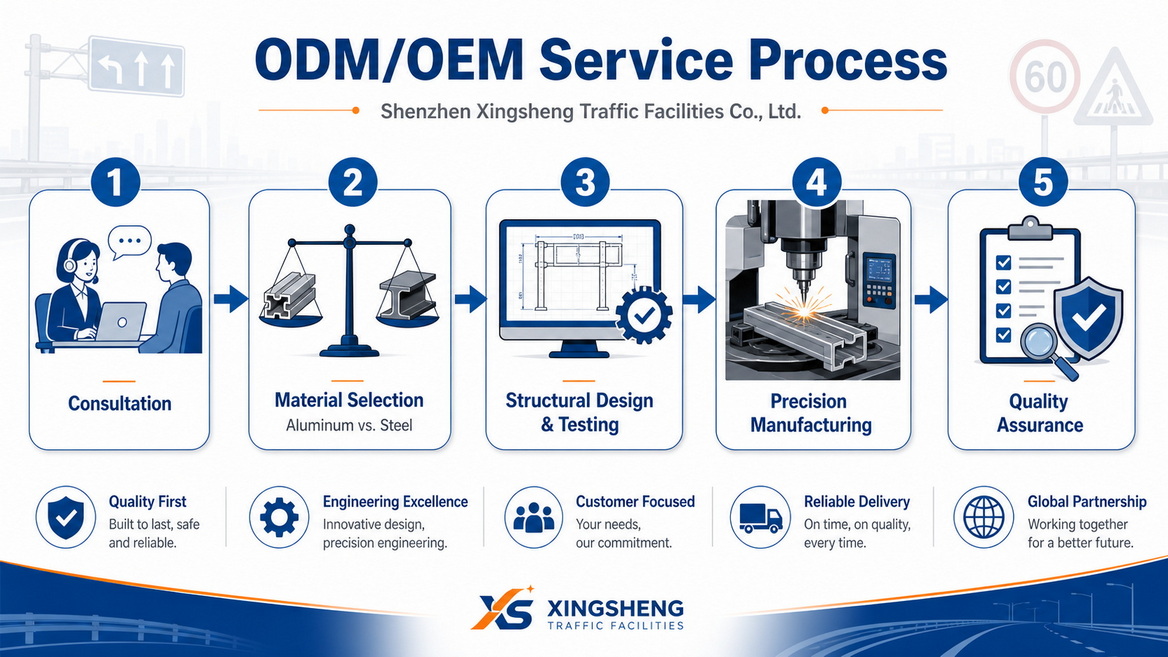
1. Analyze Your Location: Prioritize aluminum for coastal or high-humidity regions.
2. Evaluate Wind Load: Use galvanized steel for high-clearance, high-wind highway applications where rigid stability is non-negotiable.
3. Consult with Experts: Always discuss the intended LED power consumption and heat dissipation requirements with your manufacturer, as this often dictates the backing material's thermal properties.
Ready to enhance your traffic safety infrastructure?
At Shenzhen Xingsheng Traffic Facilities Co., Ltd., we specialize in high-durability, custom-engineered LED traffic signs. Our team is ready to provide expert consultation on the best materials for your specific climate and project needs. Contact us today to request a professional quote for your OEM/ODM signage project.
Yes, usually the raw material cost of aluminum is higher, but it often proves more cost-effective over a 10-year period due to reduced maintenance and lower installation labor costs.
Yes, but ensure the structural weight capacity of the existing post is compatible with the weight of your new LED sign system.
Aluminum is preferred in extreme cold as it maintains better dimensional stability and is less prone to brittle failure compared to some steel alloys if the protective coating is compromised.
It depends on the environment; however, industrial experts recommend inspection every 3–5 years to check for signs of zinc-coating degradation.
Generally, a thickness of 2.0mm to 3.0mm for aluminum is the industry standard to ensure both structural rigidity and proper housing for internal electronic components.
1. [Jackwin Safety - Traffic Sign Material Guide]https://jackwinsafety.com/traffic-sign-material/
2. [Lightway Traffic - LED Signal Classification]https://www.lightwaytraffic.com/led-traffic-light-classification-4-key-ways-to-distinguish-them/
3. [OPT Signs - Highway Sign Materials for Extreme Cold]https://optsigns.com/highway-sign-materials-extreme-cold-specifications/
4. [OPT Signs - MUTCD 11th Edition Guide]https://optsigns.com/mutcd-traffic-signs-11th-edition-update-guide-for-rental-fleets-2026/
5. [OPT Signs - Aluminum vs Steel Road Sign Frames]https://optsigns.com/aluminum-vs-steel-road-sign-frames/
6. [Yaham LED - LED Traffic Sign Facts]https://yahamled.com/11-led-traffic-sign-facts/


