
Please Choose Your Language
Views: 238 Author: XS Traffic Facilities Publish Time: 2026-07-04 Origin: Site


Content Menu
● 3M Reflective Inserts Vs. Local Brand Reflectors: A Longevity Test
● Understanding Road Reflectors And Reflective Inserts
>> What Are 3M Reflective Inserts?
● Longevity Factors: What Really Determines Reflector Life
>> Material Composition And Optical Technology
>> Environmental And Traffic Loads
● Expert View: 3M Inserts Vs. Local Brand Reflectors In Longevity
● Comparative Table: 3M Inserts Vs. Local Brand Reflectors
● Shenzhen Xingsheng: OEM/ODM Flexibility Behind The Longevity Choice
● Industry Case Insight: Highway Segment Vs. Parking Network
● Practical Selection Steps For Project Owners
● Expert Insights On Maintenance And Replacement Cycles
● Actionable CTA For Buyers And Specifiers
● FAQs
>> Q1: Are 3M reflective inserts always the best choice for every road project?
>> Q2: How can I estimate the service life of local brand reflectors?
>> Q3: Can OEM manufacturers combine global and local technologies in one project?
>> Q4: Does using local brand reflectors reduce compliance with international standards?
>> Q5: What is the most effective way to reduce reflector maintenance costs?
The article compares 3M reflective inserts with local brand road reflectors in a long‑term longevity and performance context, and positions Shenzhen Xingsheng Traffic Facilities Co., Ltd. as a pragmatic OEM/ODM partner that helps buyers balance global brand expectations with cost‑effective project realities in street, highway, toll station and parking applications.
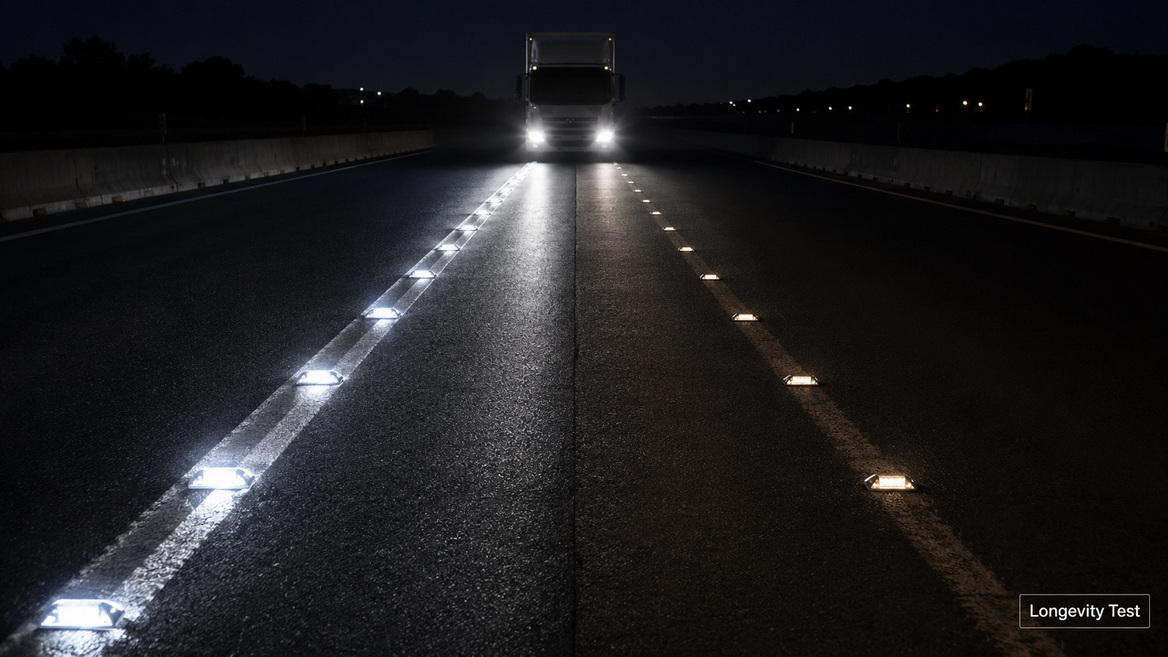
In road safety projects, reflective performance over time is not just a technical detail—it directly affects night‑time visibility, liability risk and maintenance budgets. When engineers compare 3M reflective inserts with local brand reflectors, they are essentially weighing brand‑certified durability against project‑level cost and flexibility. As a China‑based manufacturer, Shenzhen Xingsheng Traffic Facilities Co., Ltd. sits at this intersection, providing OEM and ODM solutions that integrate premium inserts or local refraction technologies according to project needs.
Road reflectors (also called road studs or raised pavement markers) are small devices installed on road surfaces to reflect vehicle headlights and outline lanes, edges and hazard zones. They are widely used on highways, toll plazas, urban streets and parking lots to improve night‑time and wet‑weather visibility.
Key functional roles:
- Lane delineation in low‑light conditions.
- Edge marking on curves, ramps and bridges.
- Hazard highlighting around toll islands, speed humps and parking barriers.
- Visual guidance where road markings are prone to wear.
3M reflective inserts are branded retroreflective elements designed to return light toward its source using microprismatic or glass bead technology, typically encapsulated in durable polymers. In many markets, they are used inside road studs, signs and delineators to achieve higher certified brightness and long‑term performance.
Typical characteristics:
- High initial luminance and strict quality control. - Compatibility with international standards in traffic safety equipment. - Extensive field testing in highway and urban environments.
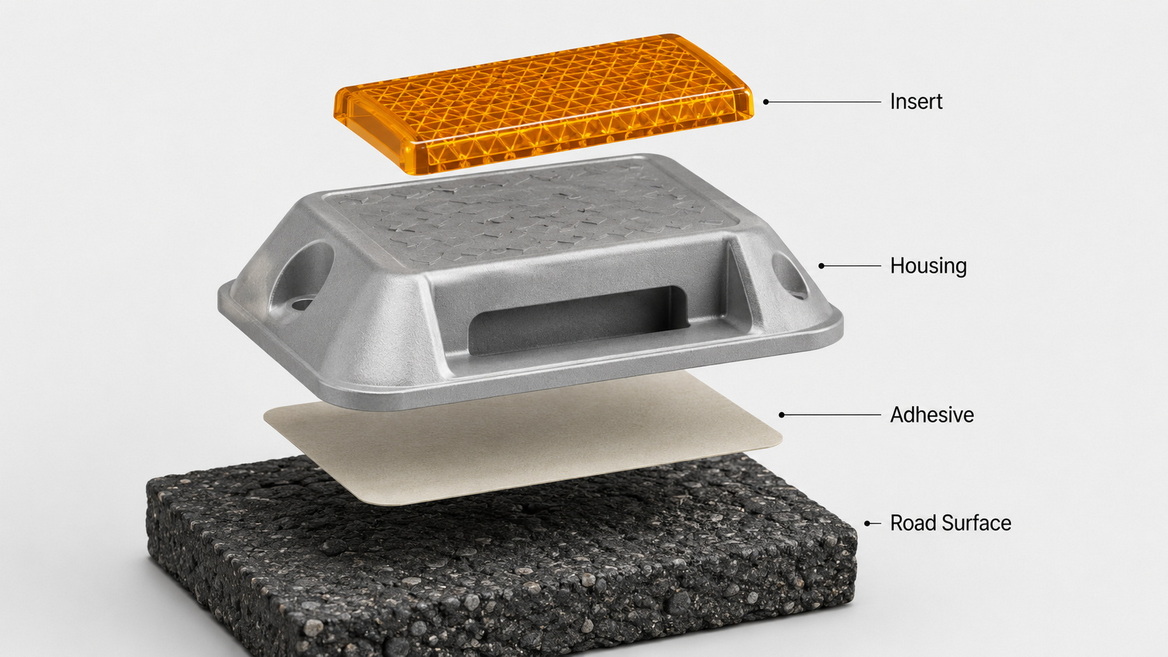
The life expectancy of a road reflector is driven by a combination of housing material, reflective core and bonding technology.
Main material and technology variables:
- Housing: Polycarbonate, ABS, aluminum or rubber bases affect impact resistance and UV stability.
- Optics: Microprismatic inserts (such as those used by global brands) typically retain brightness longer than basic glass bead solutions under heavy traffic.
- Adhesives: High‑performance epoxy or bituminous adhesives improve retention under thermal cycling and moisture.
In general, 3M reflective inserts emphasize advanced microprismatic design, while many local brand reflectors focus on cost‑efficient optical designs with acceptable, but sometimes lower, long‑term luminance.
Real‑world longevity tests must consider climate and traffic patterns.
Key stressors:
- UV exposure and temperature extremes on open highways.
- Frequent braking and turning forces in parking lots.
- Chemical exposure from de‑icing salts, fuel and oils around toll stations.
- Water pooling and debris load in poorly drained areas.
Under high‑stress highway conditions, premium inserts can maintain retroreflectivity longer, while in controlled sites like parking structures, well‑engineered local reflectors can deliver similar service life at lower cost.
From an industry specialist perspective, three practical dimensions matter most in longevity tests:
Initial brightness: 3M inserts generally start brighter due to advanced microprism structures.
Brightness retention: On heavily trafficked highways, premium inserts often retain usable retroreflectivity for more years than standard local optics.
Mechanical integrity: Housing and installation quality can narrow or widen the performance gap; a low‑grade housing will fail early regardless of insert brand.
Long‑term project value is not just about how long the reflector lasts but how often it needs replacement and how much downtime that creates.
For project owners:
- 3M reflective inserts:
- Higher unit price, lower replacement frequency. - Strong fit for critical safety sections and compliance‑driven projects. - Local brand reflectors:
- Lower unit price, potentially higher replacement rate depending on specification. - Attractive for large area coverage where budgets are tightly constrained.
A mixed strategy—using premium inserts on critical zones and robust local reflectors elsewhere—is often the most balanced long‑term solution.
| Dimension | 3M Reflective Inserts | Local Brand Reflectors |
|---|---|---|
| Optical technology | Advanced microprismatic retroreflection.linkedin | Mix of glass bead and basic prism optics.trafficsafetychina |
| Typical brightness retention | Longer on high‑speed, high‑traffic roads. linkedin+1 | Adequate, may decline faster under severe stress.trafficsafetychina |
| Housing options | Often integrated in premium housings.giottogroup.wixsite | Wide range from economy to heavy‑duty housings. trafficsafetychina+1 |
| Cost per unit | Higher, brand‑driven pricing.linkedin | Lower, more flexible pricing for bulk projects. trafficsafetychina+1 |
| Standards alignment | Frequently aligned with global standards.giottogroup.wixsite | Varies by manufacturer and project spec. trafficsafetychina+1 |
| Best use cases | Critical highway lanes, hazardous curves.giottogroup.wixsite | Parking lots, local streets, budget‑sensitive projects.trafficsafetychina |
As a Chinese road safety manufacturer, Shenzhen Xingsheng Traffic Facilities Co., Ltd. focuses on traffic safety solutions for streets, highways, toll stations and parking facilities. The company's OEM and ODM model allows project owners to specify either branded inserts or local reflective systems within a single supply chain.
Key OEM/ODM capabilities:
- Custom reflector design to match lane layouts, local regulations and client branding.
- Integration of different reflective cores (including compatibility with global brands) in one product portfolio.
- Support for bulk orders and long‑term replenishment plans to simplify maintenance cycles.
For B2B buyers, this means the longevity strategy can be engineered project by project instead of being locked into a single global or local option.
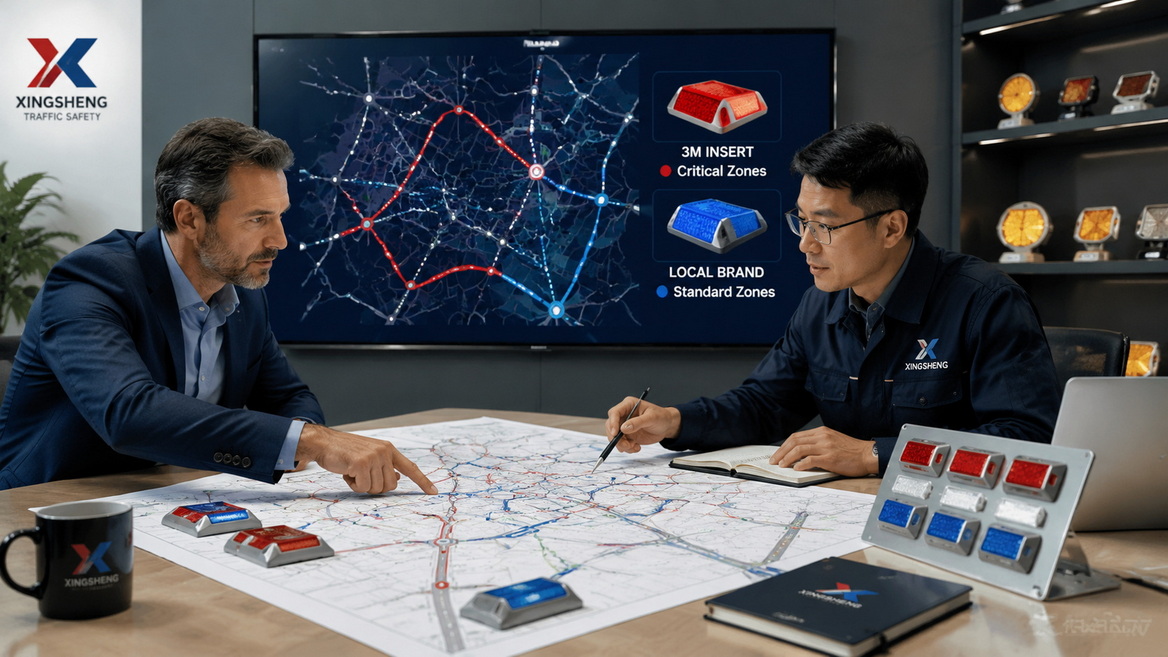
A common pattern in international projects is a dual‑tier specification.
Example configuration:
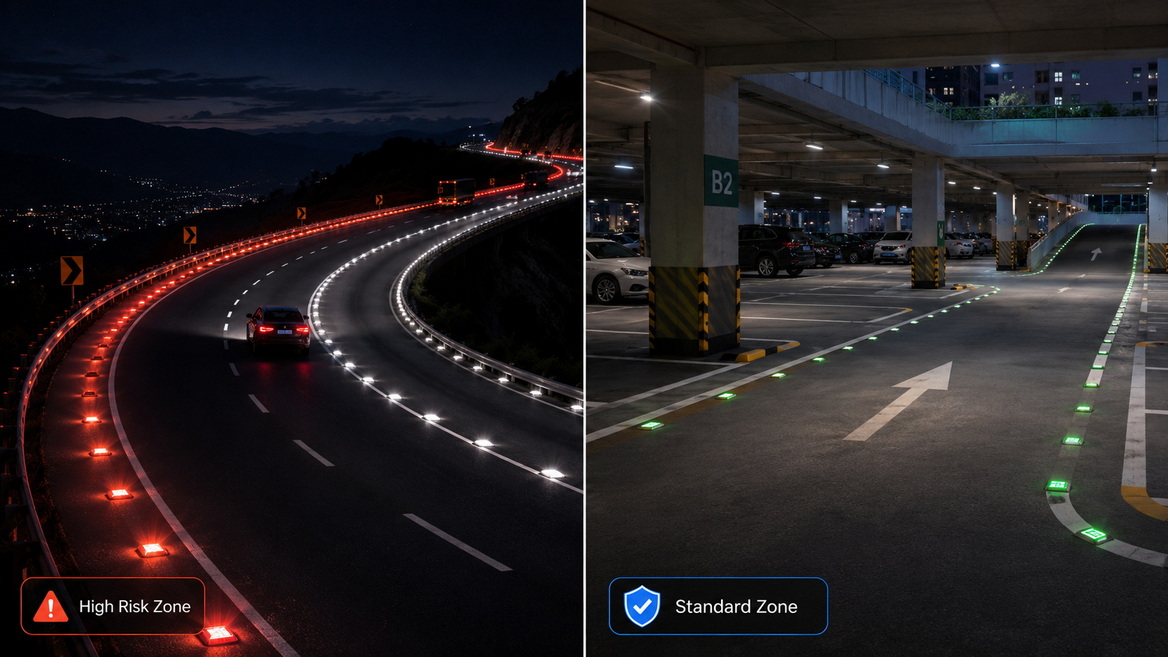
- Highway segment:
- Uses road studs incorporating 3M reflective inserts in key lanes, merging sections and hazardous curves to maintain maximum visibility over long service intervals.
- Parking network and access roads:
- Deploys robust local brand reflectors built by OEM manufacturers with adequate luminance and impact resistance, upgraded primarily during resurfacing cycles.
This approach allows safety managers to allocate budget where longevity impact is greatest, while standardizing mechanical design and installation through a single manufacturing partner like Shenzhen Xingsheng.
From a project engineer's standpoint, choosing between 3M inserts and local reflectors can follow a straightforward process.
1. Define risk zones
Identify segments where reflector failure directly affects crash risk—curves, merges, toll lanes and high‑speed entries.
2. Set minimum brightness and life targets
Establish target service life in years and acceptable retroreflectivity thresholds for each segment type.
3. Map budget brackets
Assign per‑lane or per‑meter budgets, distinguishing critical lanes from secondary areas.
4. Match technology to segments
Use 3M reflective inserts where extended brightness and brand assurance are essential; specify local brand reflectors with proven housings and adhesives in lower‑risk, high‑quantity zones.
5. Leverage OEM/ODM partnerships
Work with a manufacturer like Shenzhen Xingsheng to harmonize design, packaging and installation instructions across all variants for easier maintenance planning.
Industry experience shows that planned replacement cycles often matter more than theoretical maximum lifespan.
Expert perspectives:
- Inspection regimes: Regular night‑time inspections or mobile luminance assessments help identify early failures before they become visible hazards.
- Batch replacement: Replacing reflectors in logical segments reduces patchy brightness and improves lane readability for drivers.
- Data‑driven specification updates: Over several years, maintenance records reveal which combinations of insert type, housing and adhesive deliver the best value in each climate and traffic profile.
Manufacturers that support OEM/ODM services, including Chinese traffic safety suppliers, can incorporate this field data into new design iterations, progressively improving longevity performance without sacrificing cost efficiency.
For specifiers, the next step is to audit current reflector performance and align future purchases with clearly defined longevity goals. By partnering with an OEM/ODM manufacturer such as Shenzhen Xingsheng Traffic Facilities Co., Ltd., you can design a mixed technology strategy that uses 3M reflective inserts where they matter most and cost‑efficient local brand reflectors where they deliver sufficient value.
If you are planning a new road, toll or parking project, consider requesting a comparative proposal that includes both options, with estimated service life and replacement cycles per segment.
A1: No. They are often the most suitable choice for high‑risk or high‑speed segments, but well‑specified local brand reflectors can be more economical for lower‑risk areas.
A2: Combine manufacturer data with field records on climate, traffic loads and maintenance intervals to estimate realistic service life for each application zone.
A3: Yes. Many Chinese traffic safety manufacturers support OEM/ODM designs that integrate different reflective inserts and housings within a unified product portfolio.
A4: Not necessarily. Compliance depends on how products are designed and tested; some local products are aligned with international norms when specified accordingly.
A5: Use a tiered strategy: apply premium inserts in critical zones, use robust local reflectors elsewhere, and maintain structured inspection and batch replacement plans


