
Please Choose Your Language
Views: 230 Author: XS Traffic Facilities Publish Time: 2026-08-03 Origin: Site


Content Menu
● IP54 vs IP64 vs IP65 vs IP67
● Which Rating Fits LED Traffic Signs
● Choosing the Right Protection Level
● Where Each Rating Works Best
>> Highways
>> Parking lots
● A Buyer Checklist Before Ordering
● Maintenance Tips for Long-Term Performance
● Practical Application Examples
● FAQ
>> 2. Is IP67 better than IP65?
>> 3. Can IP54 be used outdoors?
>> 4. What is the difference between IP64 and IP65?
>> 5. Which IP rating is best for LED traffic signs?
When choosing LED traffic signs or other outdoor safety products, the IP rating is one of the most important specifications to review. It shows how well a product resists dust and water, which affects durability, maintenance needs, and long-term performance in outdoor environments.
For traffic safety equipment used on roads, highways, toll stations, and parking lots, the right IP rating can make a major difference. A product with the wrong level of protection may suffer from water ingress, dust buildup, corrosion, or early failure.
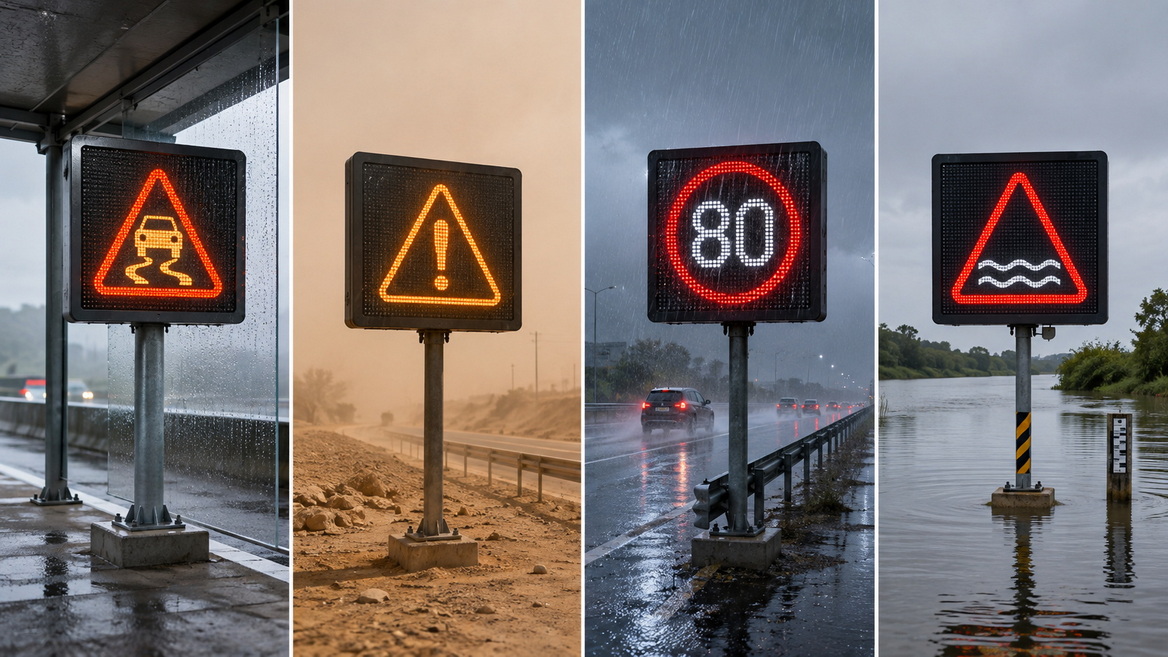
IP stands for Ingress Protection. The first digit shows protection against solids such as dust, while the second digit shows protection against water. In general, a higher number means stronger protection.
That said, the best rating is not always the highest one. The right choice depends on the installation environment, weather exposure, cleaning method, and how the product will be used.
Each rating offers a different level of protection, and each one fits a different type of environment.
| IP Rating | Dust Protection | Water Protection | Typical Use Case |
|---|---|---|---|
| IP54 | Limited dust protection | Splash resistance | Sheltered outdoor areas, light moisture exposure |
| IP64 | Dust-tight | Splash resistance | Dust-prone areas with moderate water exposure |
| IP65 | Dust-tight | Protection against water jets | Outdoor traffic signs, roadside equipment |
| IP67 | Dust-tight | Temporary immersion resistance | Harsh environments, flood-prone locations |
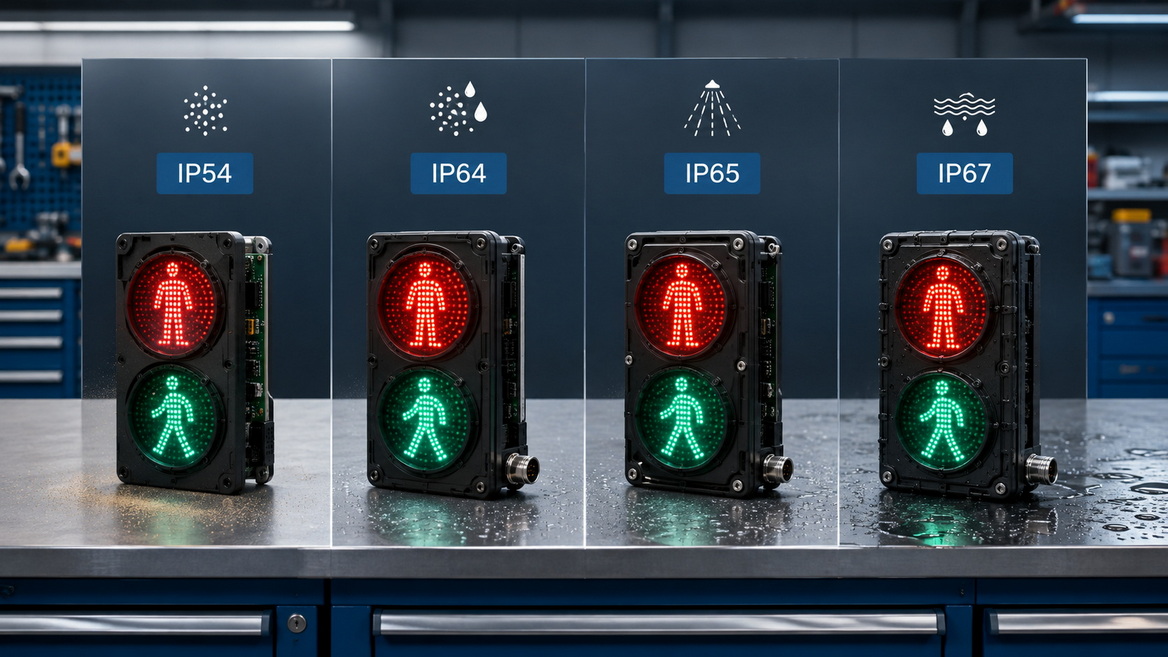
IP54 is suitable for lighter exposure conditions. IP64 provides stronger dust protection and remains useful where splashing water is limited. IP65 is one of the most common choices for outdoor traffic products. IP67 is the stronger option when temporary submersion or standing water may occur.
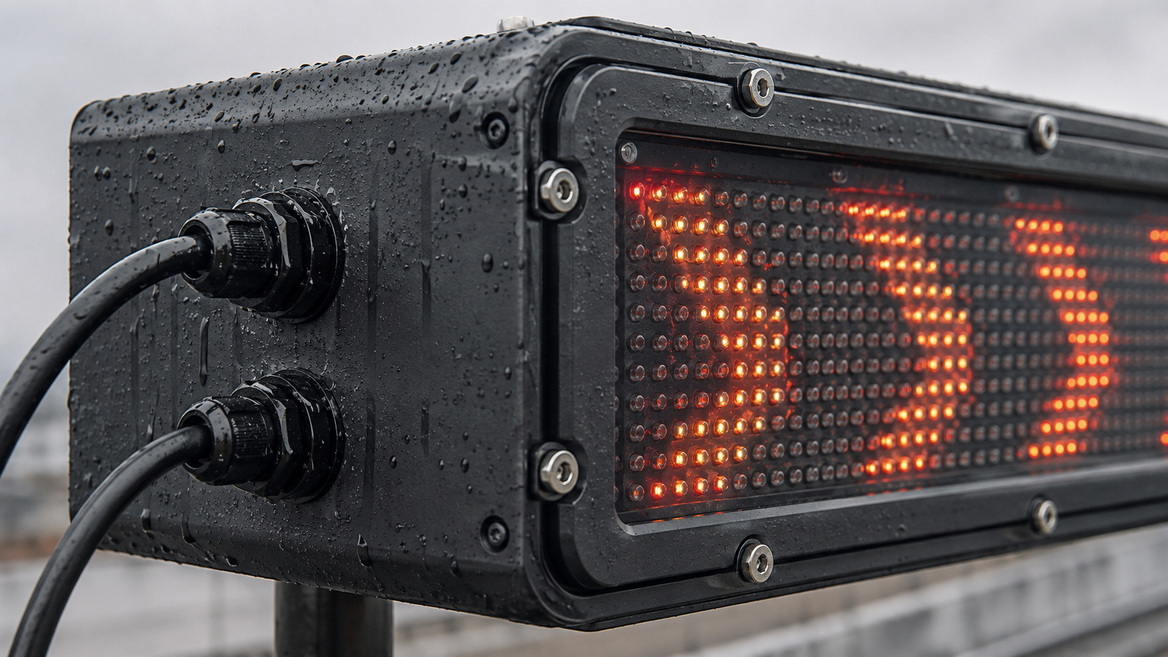
For many LED traffic signs, IP65 offers the best balance between protection and practicality. It is strong enough for rain, wind-driven spray, dust, and typical outdoor conditions.
IP54 may work in covered or partially sheltered areas where direct water exposure is limited. IP64 can be a better choice when dust is a bigger issue but water exposure is still moderate. IP67 is best for demanding sites where water accumulation or flooding is possible.
A good way to select the right rating is to evaluate the installation environment step by step.
1. Check whether the product will be fully exposed or partially sheltered.
2. Consider how much rain, spray, or standing water it may face.
3. Review dust levels, road debris, and cleaning frequency.
4. Match the rating to the maintenance plan for the project.
5. Balance protection needs with budget and application requirements.
This approach helps buyers avoid overspecifying products where it is not necessary, while also avoiding underprotection in harsher sites.
Roadside LED traffic signs often need IP65 because they face rain, dust, changing weather, and constant outdoor exposure.
Highways create more demanding conditions because of wind, debris, and stronger weather impact. IP65 is often suitable, while IP67 may be better for low-lying or water-sensitive installations.
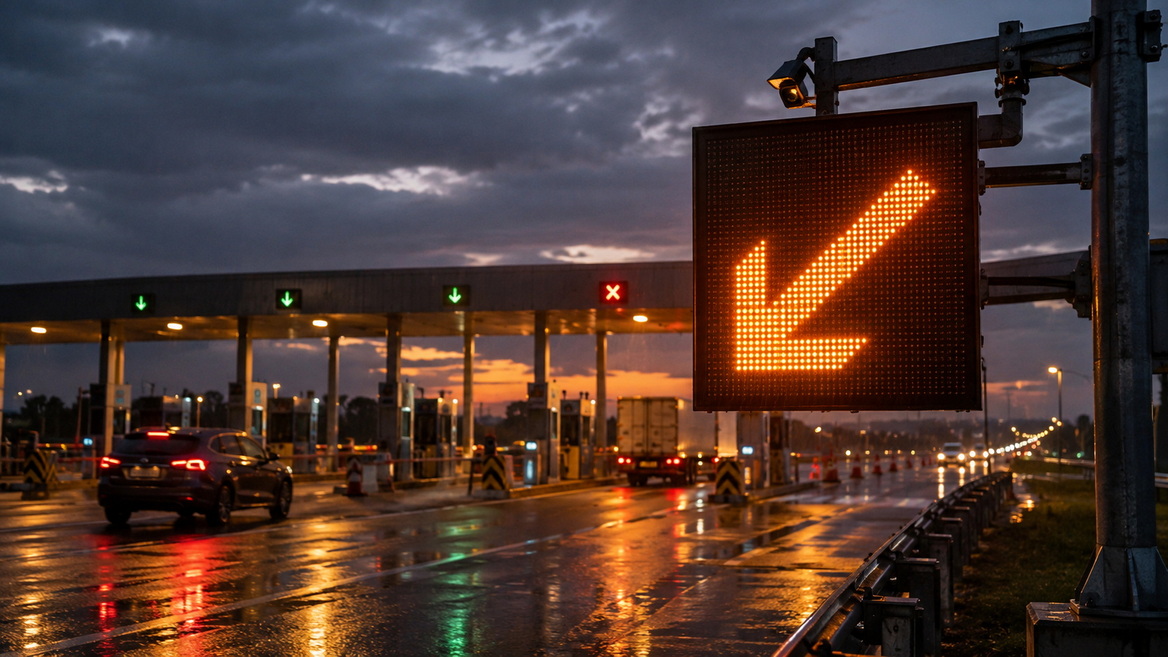
Toll stations are exposed to outdoor weather and frequent cleaning. IP65 is usually a safe choice, with IP67 preferred in places where water may pool or drainage is weak.
Covered parking areas may only need IP54 or IP64. Open parking lots exposed to rain should usually use IP65 or above.
IP65 is often seen as the most practical option for outdoor traffic safety products. It protects against dust and water jets, which covers many of the conditions found in real road environments.
It also offers a good balance between durability and cost. For many projects, it is strong enough without adding unnecessary complexity or expense.
Before placing an order, it helps to confirm several details with the supplier.
- Is the IP rating for the finished product, not only the housing?
- Are cable entries, connectors, and seals protected to the same standard?
- Has the rating been tested on the assembled unit?
- Can the product handle rain, dust, and cleaning conditions in the target market?
- Does the manufacturer offer OEM or ODM customization for project-specific needs?
These questions help reduce the risk of mismatch between product claims and actual field performance.
Even a product with a high IP rating can fail early if it is installed poorly or not maintained properly. Regular inspection is important for long-term outdoor use.
- Clean the housing with a soft cloth and mild detergent.
- Check rubber seals and gaskets for cracks, hardening, or wear.
- Inspect cable glands and connection points.
- Avoid aggressive pressure washing unless the product is designed for it.
- Recheck mounting positions after heavy storms or seasonal weather changes.
Good maintenance helps preserve both product appearance and protection performance.
Different markets have different weather conditions, installation standards, and project expectations. That is why OEM and ODM support can be valuable for traffic safety products.
A customized solution can align the housing, seals, lens design, mounting structure, and electrical details with the actual project environment. This improves installation convenience, product durability, and long-term performance.
For sheltered pedestrian zones, IP54 or IP64 may be enough. For typical roadside LED traffic signs, IP65 is often the preferred option. For low-lying areas or locations where water exposure is more severe, IP67 is the safer choice.
The key is not to choose the highest number automatically. The key is to match the protection level to the real operating conditions.
Choosing the right IP rating is an important part of selecting reliable outdoor traffic safety products. The best result comes from matching protection level to the real environment, not simply choosing the highest available number.
For LED traffic signs, road safety equipment, toll station products, and parking lot solutions, the right specification can improve durability, reduce maintenance, and support safer operation over time.
IP65 is not meant for full submersion, but it offers strong protection against dust and water jets, making it suitable for many outdoor applications.
IP67 provides stronger water protection because it can withstand temporary immersion. However, IP65 is enough for many standard outdoor traffic products.
Yes, but mainly in sheltered or low-exposure outdoor areas. It is better for light splash resistance than for heavy rain.
Both ratings are dust-tight, but IP65 offers stronger water protection because it resists water jets more effectively.
For most outdoor LED traffic signs, IP65 is the most practical choice. IP67 is better for harsher environments, while IP54 and IP64 are better for lighter exposure conditions.
1. Understanding Waterproof IP Ratings https://example.com
2. IP Ratings Explained: Understanding IP54, IP64, IP65, and IP67 https://example.com
3. IP Ratings: How to Choose Weatherproof Outdoor Lights https://example.com
4. SEO for Manufacturers: A Comprehensive Guide https://example.com
5. SEO Content Strategy https://example.com
6. Manufacturing SEO: Strategy Guide on What Works (and What Doesn't https://example.com


