
Please Choose Your Language
Views: 256 Author: XS Traffic Facilities Publish Time: 2026-08-04 Origin: Site


Content Menu
● What Variable Speed Limit Signs Are
● Why These Signs Improve Safety
>> Work Zones
>> Highways and Congestion Points
● How They Help Drivers Make Better Decisions
● Key Features Buyers Should Evaluate
>> Visibility and LED Performance
>> Weather Resistance and Durability
● Static vs Dynamic Speed Control
● Why This Matters for Project Owners
● Our Approach to Traffic Safety Solutions
● FAQ
>> 1. What is a variable speed limit sign?
>> 2. Where are variable speed limit signs used most often?
>> 3. Do variable speed limit signs really improve safety?
>> 4. Are variable speed limit signs only for highways?
>> 5. What should buyers check before ordering these signs?
Variable speed limit signs are traffic signs that display different speed limits depending on road conditions, traffic volume, weather, or incidents. Unlike static signs, they can be updated in real time through a control system or traffic management platform.
These signs are commonly used on highways, in work zones, near toll stations, and in areas where road conditions change quickly. Their main purpose is simple: help drivers choose a safer speed when the road environment is no longer predictable.
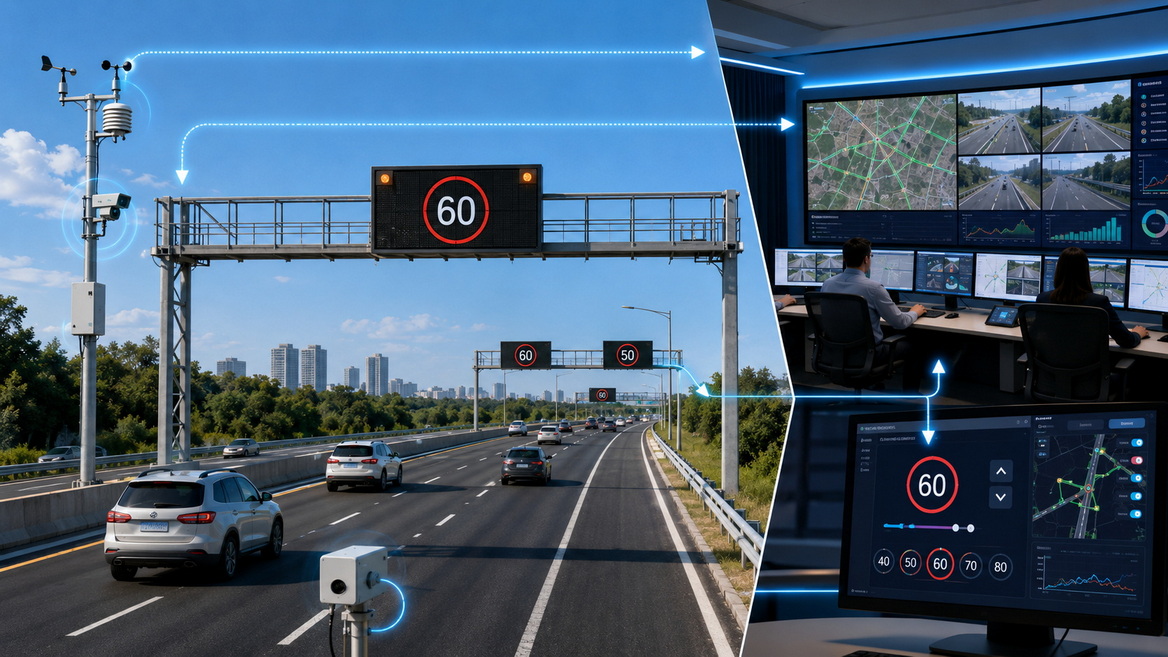
In practice, a variable speed limit system usually includes three parts:
- Detection equipment that monitors traffic or weather.
- A controller that processes the data.
- LED signs that show the updated speed limit to drivers.
When these parts work together, traffic managers can communicate speed changes quickly and clearly.
Variable speed limit signs improve safety because they help reduce sudden speed differences between vehicles. When traffic slows down gradually instead of abruptly, the risk of rear-end collisions often drops.
They also help drivers react more appropriately in rain, fog, congestion, or lane closures. A fixed speed limit may be too high for a specific moment, while a dynamic sign can reflect the actual road condition more accurately.
Another important benefit is consistency. Drivers are more likely to follow a speed message that feels relevant to the situation in front of them. That can improve compliance and reduce confusion.
Variable speed limit signs are not useful everywhere in the same way. Their value becomes strongest in locations where traffic conditions change often or where safety margins are already narrow.
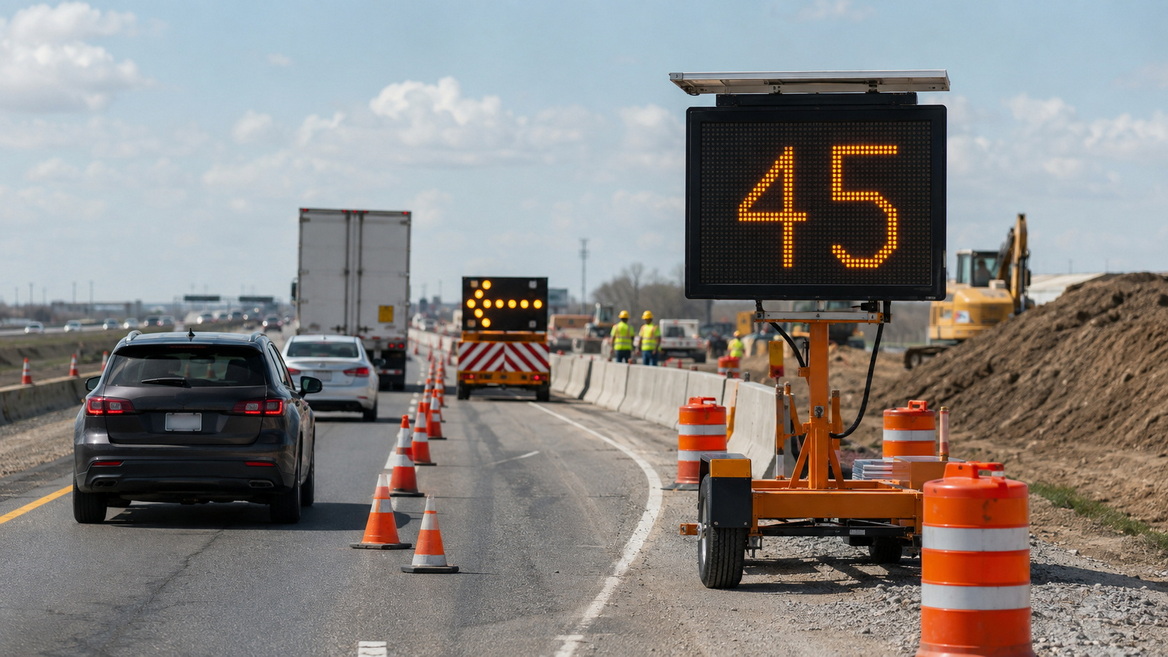
Work zones are one of the most important applications. Lane shifts, narrowed shoulders, moving equipment, and worker presence all make speed control more important.
Dynamic speed messages can help remind drivers to slow down before they enter the most active section of the work zone. That gives road crews a safer operating environment and can reduce the chance of sudden braking near cones, barriers, or lane closures.
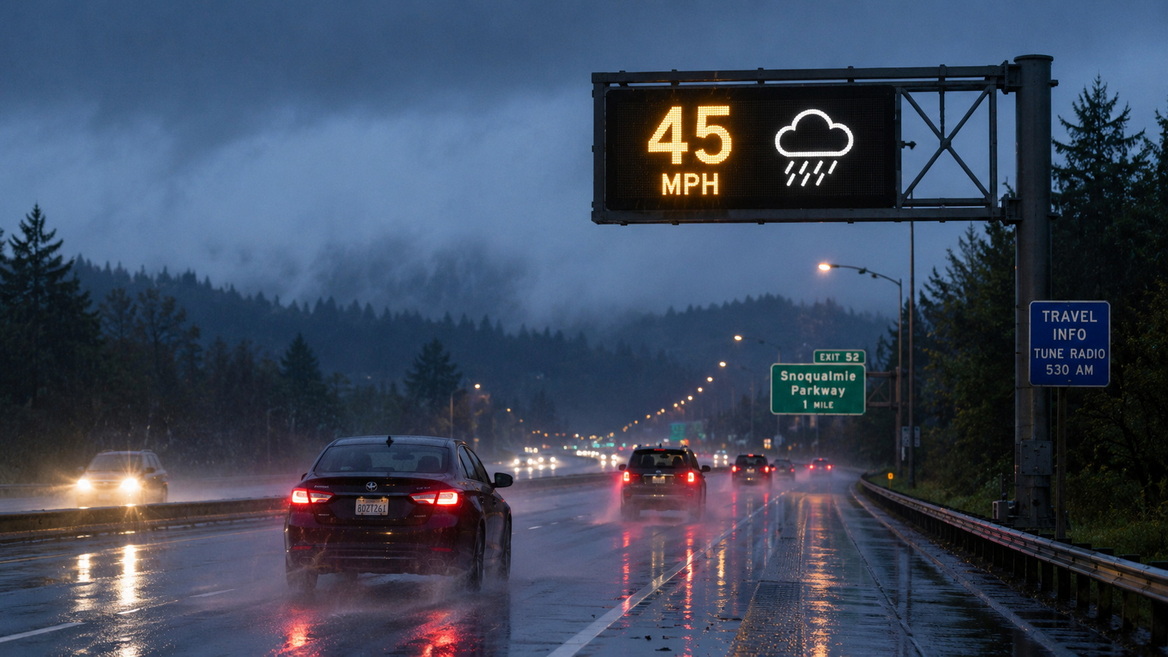
Rain, spray, and reduced visibility can make normal traffic flow less stable. In these conditions, a lower posted speed can help drivers maintain better spacing and reduce the chance of skidding or hydroplaning.
Variable speed signs are especially useful when weather conditions change across a longer corridor. One segment of highway may be dry while another is wet, and a flexible sign system can reflect that difference more accurately.
Highways often need speed control near merge areas, curves, accident-prone zones, or recurring bottlenecks. In these locations, sudden traffic slowdowns can create chain reactions.
A variable speed limit system can smooth the transition and reduce shockwaves in traffic flow. That makes it easier for vehicles to move through the area with fewer stop-and-go events.
Drivers do not always respond well to generic speed limits when conditions are changing quickly. A variable sign improves decision-making by giving a visible and immediate message that matches the road environment.
This matters because many crashes begin with a small decision problem. A driver may be following the posted limit, but the actual condition ahead may require more caution. A dynamic sign helps narrow that gap.
These systems also support more uniform driving behavior. When fewer vehicles are moving at extreme differences in speed, traffic tends to become more predictable. Predictability is one of the simplest and strongest foundations of roadway safety.
Not all variable speed limit signs are equal. Buyers should look closely at the design, durability, and control options before selecting a system.
The sign must remain readable from a safe distance in daylight, rain, fog, and nighttime conditions. Bright LED modules, proper contrast, and large character size are essential.
If drivers cannot see the message quickly, the system loses value. Clear visibility is one of the first things to verify.
A strong system should allow flexible updates through a reliable control platform. In some cases, this may be roadside control. In others, it may be remote communication connected to a traffic center.
The best systems are easy to operate, simple to maintain, and stable during long-term use.
Outdoor traffic equipment must handle heat, rain, dust, vibration, and long operating hours. The cabinet, housing, and electrical components should be designed for harsh conditions.
This is especially important for highway and toll applications where downtime is costly and maintenance access may be difficult.
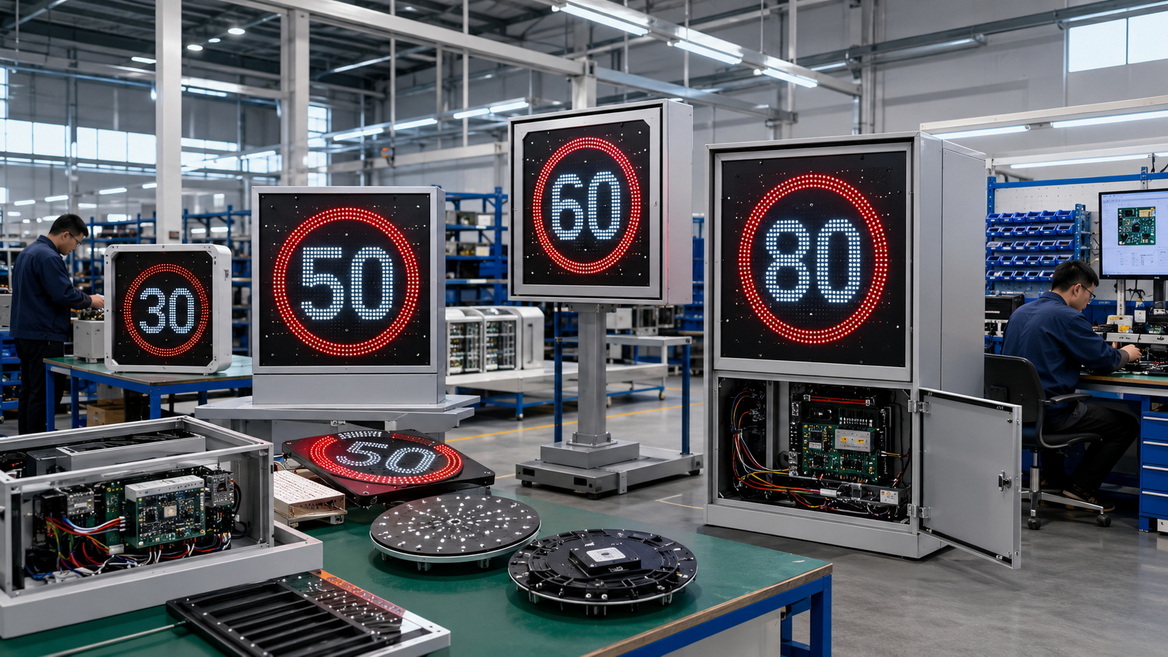
For project owners and distributors, customization matters. Different markets may require different icon formats, language settings, dimensions, pole structures, or power options.
OEM and ODM support can help buyers match the sign to local regulations, project requirements, and installation conditions. That flexibility is especially useful for export projects and large-scale traffic system contracts.
| Feature | Static Speed Signs | Variable Speed Limit Signs |
|---|---|---|
| Speed display | Fixed | Adjustable in real time |
| Response to weather | Limited | Strong |
| Response to incidents | Limited | Strong |
| Work zone use | Basic | Highly effective |
| Traffic flow management | Minimal | Better adaptation |
| Installation value | Simple projects | Complex or changing conditions |
Static signs are useful when conditions remain stable. Variable speed limit signs become more valuable when safety depends on reacting to real-world changes.
A successful system is not only about the sign itself. It also depends on planning, placement, and operational logic.
1. Identify the most critical risk area.
2. Decide what conditions should trigger a speed change.
3. Choose the sign size, brightness, and mounting method.
4. Connect the sign to a stable control system.
5. Test visibility from driver approach distances.
6. Train the operating team on updates and maintenance.
7. Review the system regularly and adjust based on traffic data.
These steps help avoid a common mistake: installing good equipment without a clear operating plan.
For road agencies, contractors, and infrastructure operators, variable speed limit signs are more than a traffic product. They are part of a broader safety strategy.
They can help reduce risk around workers, support smoother traffic movement, and show that the operator is taking speed management seriously. In many projects, that combination is just as important as the hardware itself.
For manufacturers, this is also a chance to deliver more than a standard product. A well-designed sign system should reflect the road environment, the buyer's operating model, and the practical demands of daily use.
Shenzhen Xingsheng Traffic Facilities Co., Ltd. focuses on LED traffic signs and broader traffic safety solutions for streets, highways, toll stations, and parking areas. Our products can be adapted for different project needs through OEM and ODM services.
That means we can support customers who need a flexible solution rather than a one-size-fits-all product. Whether the project requires custom display formats, structural adjustment, or application-specific design, the goal is the same: make traffic communication clearer and safer.
Variable speed limit signs are most effective when road conditions change faster than static signs can respond. They help reduce speed differences, improve driver awareness, and support safer traffic flow in work zones, wet weather, and congested highway corridors.
For buyers, the best results come from selecting a system with strong visibility, dependable control, durable construction, and practical customization support. For road operators, the value lies in safer roads and more predictable movement.
A well-designed variable speed limit sign system can make a real difference when every second and every lane decision matters. For your next traffic safety project, choose a solution built for clarity, durability, and real-world performance.
A variable speed limit sign is a traffic sign that changes the displayed speed limit based on road, weather, or traffic conditions.
They are commonly used in work zones, highways, wet weather corridors, toll areas, and congestion-prone locations.
Yes. They can help reduce sudden speed changes, improve driver awareness, and support safer traffic flow in changing conditions.
No. They can also be used in streets, toll stations, parking areas, and construction zones where speed control matters.
Buyers should review visibility, control options, durability, power setup, installation method, and OEM or ODM customization support.
1. FHWA. *Speed Management Reference Materials*. https://highways.dot.gov/safety/speed-management/speed-management-reference-materials
2. FHWA. *Guidelines for the Use of Variable Speed Limit Systems in Wet Weather*. https://highways.dot.gov/safety/speed-management/guidelines-use-variable-speed-limit-systems-wet-weather]
3. NHTSA. *Dynamic Speed Display/Feedback Signs*. https://www.nhtsa.gov/book/countermeasures-that-work/speeding-and-speed-management/countermeasures/other-strategies-0
4. Fudala, N. J. *Work Zone Variable Speed Limit Systems: Effectiveness and System Design Issues*. http://rosap.ntl.bts.gov/view/dot/20237
5. FHWA. *Reference Materials for Speed Management and Variable Speed Limits*. https://highways.dot.gov/safety/speed-management/speed-management-reference-materials


