
Please Choose Your Language
Views: 252 Author: XS Traffic Facilities Publish Time: 2026-10-09 Origin: Site


Content Menu
● What Do Different Curb Colors Mean?
● White Curb Meaning: Passenger Pickup and Drop-Off
>> Check the Local Passenger Loading Limit
>> Separate Passenger Access from Deliveries
● Green Curb Meaning: Limited-Time Parking
>> What to Check Before Parking
● Yellow Curb Meaning: Loading and Unloading
>> Not Every Yellow Zone Accepts Every Vehicle
>> Plan Deliveries Around the Actual Restrictions
● Red Curb Meaning: No Stopping, Standing, or Parking
>> Avoid Universal Emergency-Zone Assumptions
● Blue Curb Meaning: Accessible Parking
>> Accessible Parking Needs a Complete Layout
>> Keep Access Aisles Available
● Why Curb Color Rules Differ Between Locations
>> Start International Projects with Local Requirements
● How to Check Whether You Can Park at a Colored Curb
>> Step 1: Identify the Full Zone
>> Step 2: Confirm the Permitted Activity
>> Step 3: Check Vehicle Eligibility
>> Step 4: Read the Operating Conditions
>> Step 5: Inspect the Surroundings
● A Practical Curbside Audit for Property Managers
>> Record the Existing Arrangement
>> Compare Instructions with Actual Use
>> Separate Approval Questions from Maintenance Tasks
● Curb Markings and Road Reflectors Serve Different Purposes
>> Questions for Traffic Safety Procurement
● Conclusion: Clear Rules Start with Local Verification
● Frequently Asked Questions About Curb Colors
>> What Do the Five Main Curb Colors Mean?
>> Can I Park Beside an Unpainted Curb?
>> Can a Private Car Use a Yellow Loading Zone?
>> Can I Stop at a Red Curb for a Few Seconds?
>> Does Blue Paint Make a Parking Space Accessible?
Understanding curb colors meaning helps drivers identify passenger loading areas, short-term parking spaces, accessible parking, and places where stopping is prohibited. For property managers and traffic safety buyers, these markings also help organize vehicle movements around entrances, delivery points, and parking facilities.
However, familiar colors do not always carry identical rules. A yellow loading zone may accept different vehicle types depending on the city, while the permitted hours and duration may depend on nearby signs.
The most important principle is local verification. Identify the curb color, read the signs, and check the rules that apply to the location.
This guide explains common curb color meanings using California's official definitions as a starting point, with local comparisons where they help prevent misunderstandings.
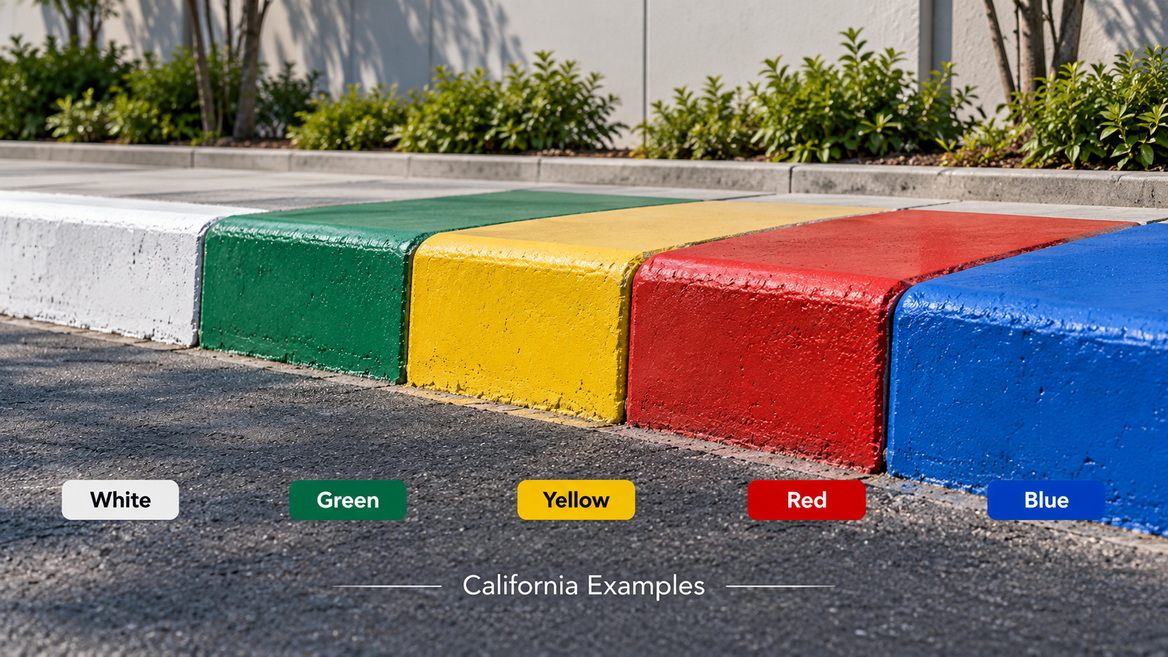
Colored curbs communicate restrictions or permissions for using the roadside. They may indicate passenger loading, freight unloading, limited parking, accessible parking, or a prohibition on stopping.
The following table summarizes California's published rules. Other jurisdictions may use different categories or operating conditions.
| Curb Color | Common Meaning in California | What to Check |
|---|---|---|
| White | Passenger pickup or drop-off | Permitted activity and posted restrictions |
| Green | Limited-time parking | Time limit shown on signs or the curb |
| Yellow | Passenger and freight loading | Duration and vehicle requirements |
| Red | No stopping, standing, or parking | Any specifically authorized exception |
| Blue | Parking for eligible people with disabilities | Required placard or license plate |
An unpainted curb does not automatically mean unrestricted parking. Other rules may apply near driveways, crossings, intersections, or locations identified by signs.
For drivers, color is an initial clue. For project planners, it is one component of a broader system involving signs, access requirements, and approved traffic arrangements.
A white curb commonly identifies a passenger loading area. California permits stopping only long enough to pick up or drop off passengers.
The distinction is between actively transferring passengers and occupying the space for another purpose. Dropping someone at an entrance differs from leaving the vehicle while collecting an order.
Do not assume that every white curb allows the same stopping duration. Seattle, for example, identifies passenger loading areas where vehicles may stop for three minutes during posted hours.
Before stopping, check:
- Whether the area is designated for passengers.
- The permitted stopping duration.
- The hours when the restriction applies.
- Any additional conditions shown on signs.
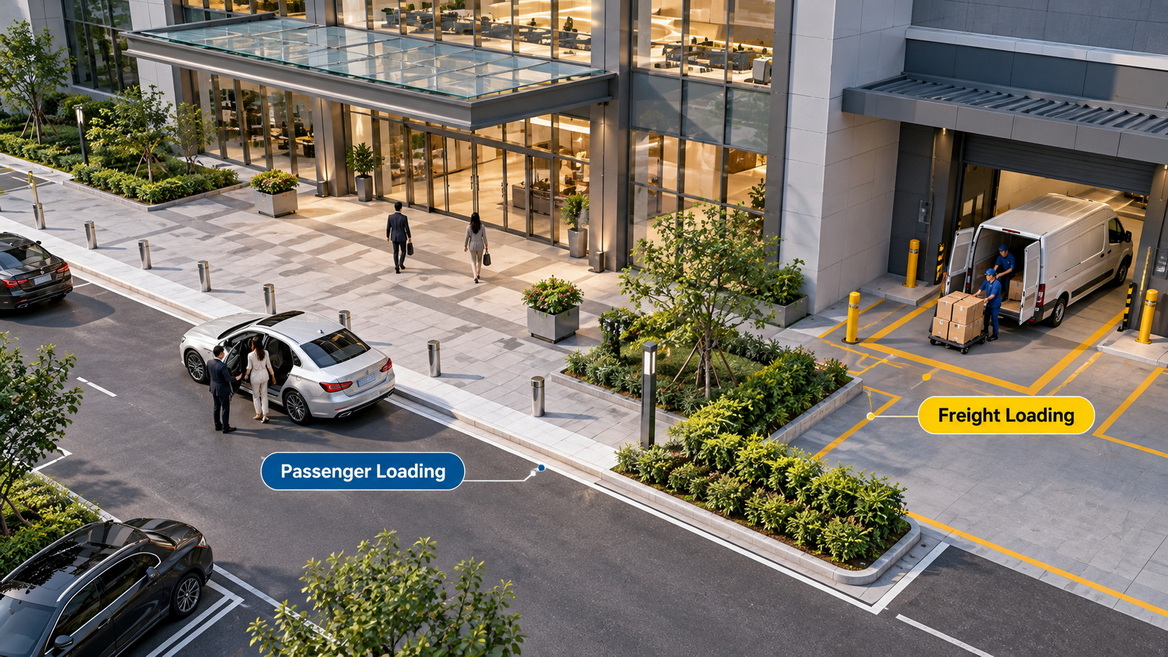
For a commercial property, consider how passenger pickups interact with freight unloading.
A hotel entrance may need frequent passenger transfers, while its receiving area needs space for goods handling. Treat these as distinct activities when developing an approved layout.
Clear separation can make instructions easier to understand and reduce competition for the same curbside space.
A green curb indicates time-limited parking under California's rules. The permitted duration may appear on a sign or be painted on the curb.
The color alone does not establish a fixed number of minutes.
A driver who assumes that all green curbs allow the same stay may overlook a shorter limit or restrictions applying only during particular hours.
Review the entire parking instruction, including:
1. The maximum permitted stay.
2. The applicable days and hours.
3. Payment or permit requirements, where posted.
4. Temporary restrictions affecting the space.
For property managers, short-stay parking should match the intended activity. A customer collection point and a service appointment may require different arrangements.
Define the operational need first. Then confirm the locally approved duration, signs, and markings.
A yellow curb often identifies a loading area, but the details require careful reading.
California permits passenger and freight loading or unloading within the posted time. Its guidance states that drivers of noncommercial vehicles are usually required to remain with their vehicles.
Seattle distinguishes generic loading areas, truck-only loading areas, and commercial vehicle loading areas. These categories have different eligibility requirements.
A private car may therefore qualify for one yellow zone but not another.
For drivers and delivery coordinators, the questions are practical:
- Is the vehicle type permitted?
- Is the activity permitted?
- Is the zone operating at this time?
- Is payment or a permit required?
- How long may the vehicle remain?
Before scheduling a delivery, check the receiving location's loading arrangements.
Do not rely on a photograph showing yellow paint without reviewing the accompanying sign. The vehicle classification and operating conditions may determine whether the delivery can use that space.
For commercial sites, clear instructions should help drivers distinguish active unloading from ordinary parking.
California defines a red curb as a place where stopping, standing, and parking are prohibited. Its handbook identifies a specific exception for buses at red zones marked for buses only.
A brief stop is not automatically acceptable because the driver remains inside the vehicle.
Red curbs should not be described as universally reserved for emergency vehicles.
Seattle identifies red curbs as tow-away zones and alternating red-and-yellow curbs as bus zones. This illustrates why color combinations require local interpretation.
For a facility manager, the appropriate approach is to confirm the intended restriction before specifying paint or signs.
Review:
- Required access.
- Approved restrictions.
- Sign placement.
- Enforcement arrangements.
- Any authorized exceptions.
The marking should communicate the approved rule rather than an assumption about what the color usually means elsewhere.
California's blue-curb rule reserves parking for a person with a disability, or someone transporting that person, with the required special placard or license plate.
For property owners, accessible parking involves more than painting a curb blue.
U.S. Access Board guidance explains that accessible spaces generally require identification signs displaying the International Symbol of Accessibility. Van-accessible spaces require the additional "van accessible" designation.
The federal accessibility standards do not prescribe a particular color for parking-space and access-aisle markings, although state or local requirements may do so.
A practical review should examine:
- Identification signs.
- Parking-space dimensions.
- Access aisles.
- Connections to accessible entrances.
- Obstructions affecting vehicle transfers.
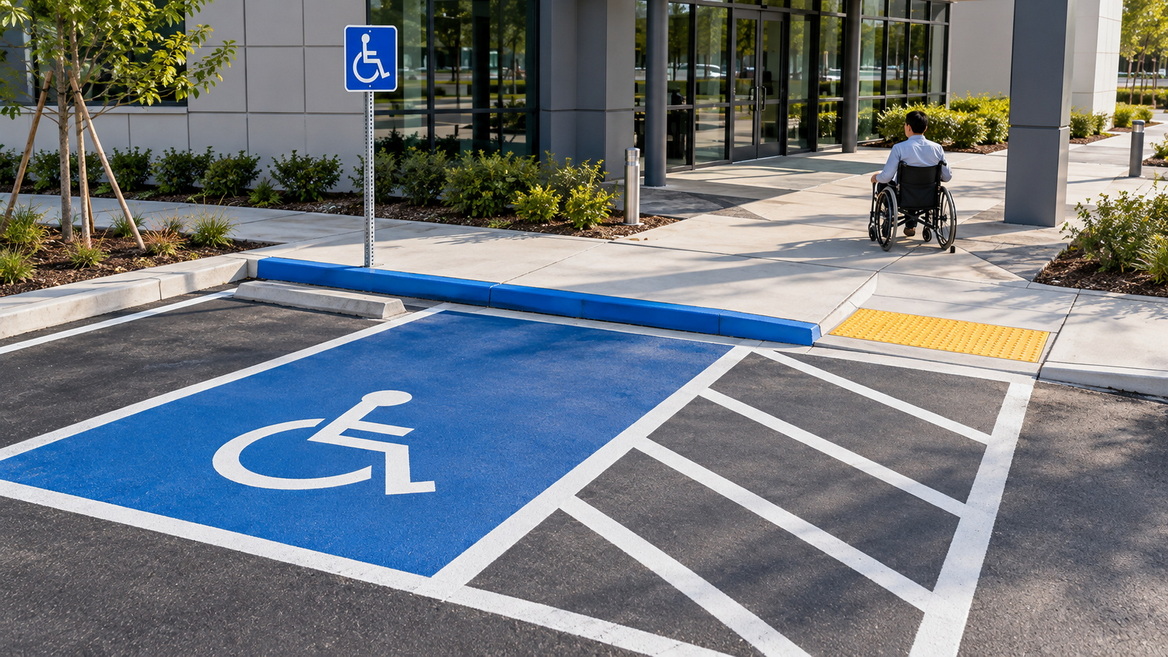
An access aisle is not an additional parking space or a convenient place for equipment.
These areas must be marked to discourage parking and remain available for their intended use. A site should not direct deliveries, storage, or temporary installations into that space.
When considering additional traffic safety products, evaluate their placement against the accessible layout rather than treating each installation as an isolated decision.
A familiar color can communicate a different operating arrangement in another city.
California describes yellow curbs as passenger and freight loading areas. Seattle divides yellow loading zones into categories that distinguish eligible vehicles.
Likewise, alternating red and yellow should not be presented as a universal emergency-access marking.
For projects outside the United States, do not transfer this color chart directly into a purchasing specification.
A practical planning sequence is:
1. Identify the destination jurisdiction.
2. Define the intended vehicle activity.
3. Obtain the approved marking and sign requirements.
4. Select suitable products.
5. Confirm the installation arrangement.
This keeps the legal instruction separate from the materials used to communicate it.
For manufacturers, the destination market is therefore an essential project detail—not merely a shipping destination.
Use a consistent sequence before stopping or leaving your vehicle.
Look for where the painted section begins and ends. Check nearby signs and directional arrows rather than evaluating only the curb beside your vehicle.
Determine whether the location allows parking, passenger loading, freight loading, or no stopping. These are different permissions.
A loading zone may require a truck or commercial vehicle. Accessible parking requires the appropriate eligibility and parking credentials.
Check the time limit, days, hours, payment instructions, and permit conditions.
Review driveways, crossings, pedestrian routes, and other restricted locations. Parking permission should not be inferred from curb color alone.
If the instructions remain unclear, choose another lawful space rather than guessing.
A useful curbside audit connects the intended operation with the instructions visitors actually see.
Photograph each zone and record:
- Its intended purpose.
- Existing signs and markings.
- Nearby entrances and delivery points.
- Common vehicle activities.
- Visible damage or obstructions.
Ask whether a first-time visitor can identify the correct stopping area.
Check whether passenger pickups compete with freight deliveries. Review whether vehicle eligibility and operating hours are clear.
Inspect accessible routes and access aisles separately, rather than assuming they are adequately protected by parking-space markings.
Faded paint and unclear operating rules are different problems.
Maintenance may restore a marking, but a missing or ambiguous restriction may require review by the responsible authority or project professional.
As a proposed management practice, repeat the audit after resurfacing, construction, or changes in delivery operations. Keep photographs and approved drawings so future teams understand the intended arrangement.
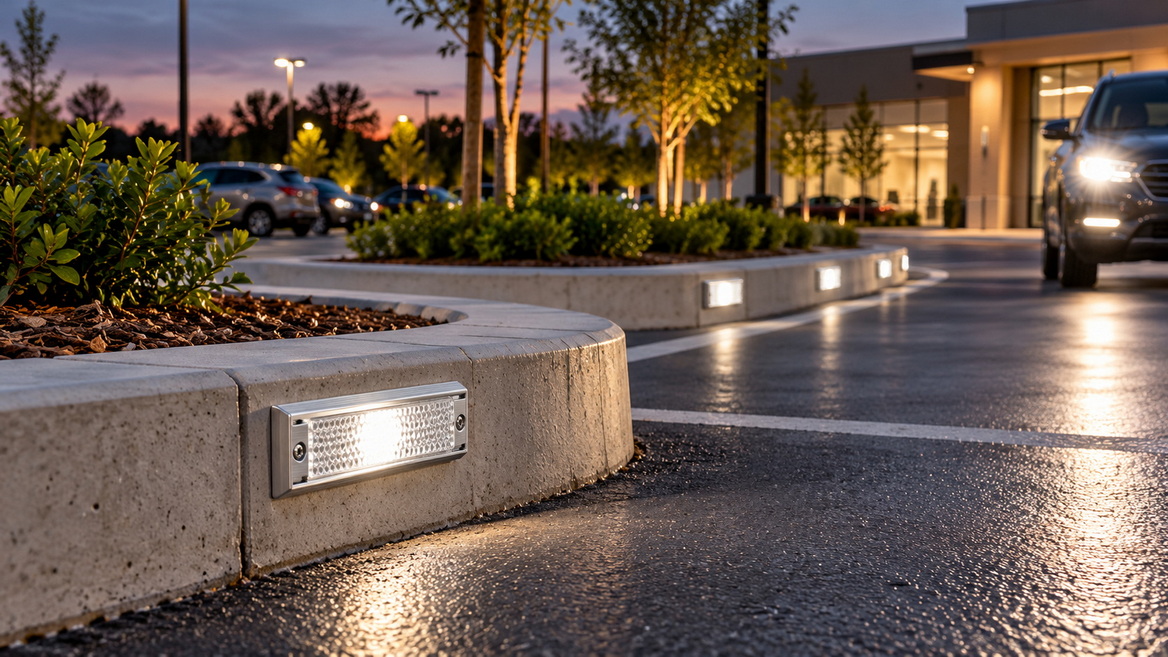
When planning a traffic safety project, distinguish regulatory communication from supplementary visual guidance.
Curb markings and associated signs communicate restrictions. Road reflectors should be considered according to their approved function within the overall design.
Do not assume that a reflector's color carries the same legal meaning as a painted curb.
Before selecting products, establish:
- Where vehicles should travel.
- Where stopping is permitted.
- Which areas must remain clear.
- Which signs and markings communicate the rules.
- Where additional visual guidance is required.
- How installation and replacement will be managed.
For OEM and ODM projects, request drawings, installation guidance, sample evaluation, and relevant supporting test documentation.
A useful specification defines the application and evaluation method instead of relying on broad, unsupported performance claims.
Curb colors provide useful visual guidance, but they should never be interpreted without their local context.
For drivers, the practical approach is to identify the color, read the signs, and confirm the permitted activity. For property managers, a stronger approach combines approved rules, clear markings, appropriate signs, and regular inspection.
Traffic safety purchasing should follow the same logic: define the site's needs first, then select products that support the approved arrangement.
In California, white indicates passenger loading, green indicates limited-time parking, yellow indicates loading, red prohibits stopping, standing, and parking, and blue identifies parking for eligible people with disabilities. Local details may differ.
Not automatically. Signs and restrictions involving driveways, crossings, and other locations may still prohibit parking. Inspect the surrounding area before leaving your vehicle.
Sometimes. The answer depends on the zone's permitted activities and vehicle requirements. Seattle distinguishes generic, truck-only, and commercial loading areas, so yellow paint alone is insufficient.
California prohibits stopping as well as standing and parking at red curbs. Remaining inside the vehicle does not create permission to stop. Check specifically authorized exceptions locally.
No. Accessible parking also involves signs, dimensions, access aisles, and accessible routes. Federal accessibility guidance does not prescribe the marking color.


