
Please Choose Your Language
Views: 256 Author: XS Traffic Facilities Publish Time: 2026-07-15 Origin: Site


Content Menu
● Understanding Modern Traffic Control
● What Traffic Control Devices Do
● Why LED Traffic Signs Are Changing the Game
● Key Applications for LED Traffic Signs
>> Streets and Urban Road Networks
>> Toll Stations and Turnpike Plazas
>> Parking Lots and Structured Parking Facilities
● Essential Traffic Control Equipment in the Field
● From Concept to Implementation: Traffic Control Planning
>> Role of Manual and Automated Control
● Safety and Compliance: Core Design Considerations
>> Reliability and Maintenance
● Market Trends and Data Points That Matter
>> Integration with Intelligent Traffic Systems
● Inside Our Practice: How We Approach LED Traffic Solutions
>> Experience with OEM and ODM Collaborations
● How End Users Describe Their Experience
● Practical Steps for Planning LED Traffic Sign Projects
● Sample Specification Checklist for Project Teams
● Conclusion: Building Safer Roads with Advanced LED Traffic Signs
>> 1. What is the main difference between LED traffic signs and traditional reflective signs?
>> 2. Are LED traffic signs suitable for remote or off-grid locations?
>> 3. How long do LED traffic signs typically last?
>> 4. Can LED traffic signs be integrated with existing traffic management systems?
>> 5. What should project owners prioritize when selecting an LED traffic sign supplier?
LED traffic signs are transforming how streets, highways, toll stations, and parking facilities stay safe, efficient, and intelligible for drivers and pedestrians worldwide. Drawing on my work with B2B manufacturing companies and the experience of our engineering team at Shenzhen Xingsheng Traffic Facilities Co., Ltd., this guide explains how modern traffic control solutions work in practice and what to look for when specifying LED traffic signs for your project.
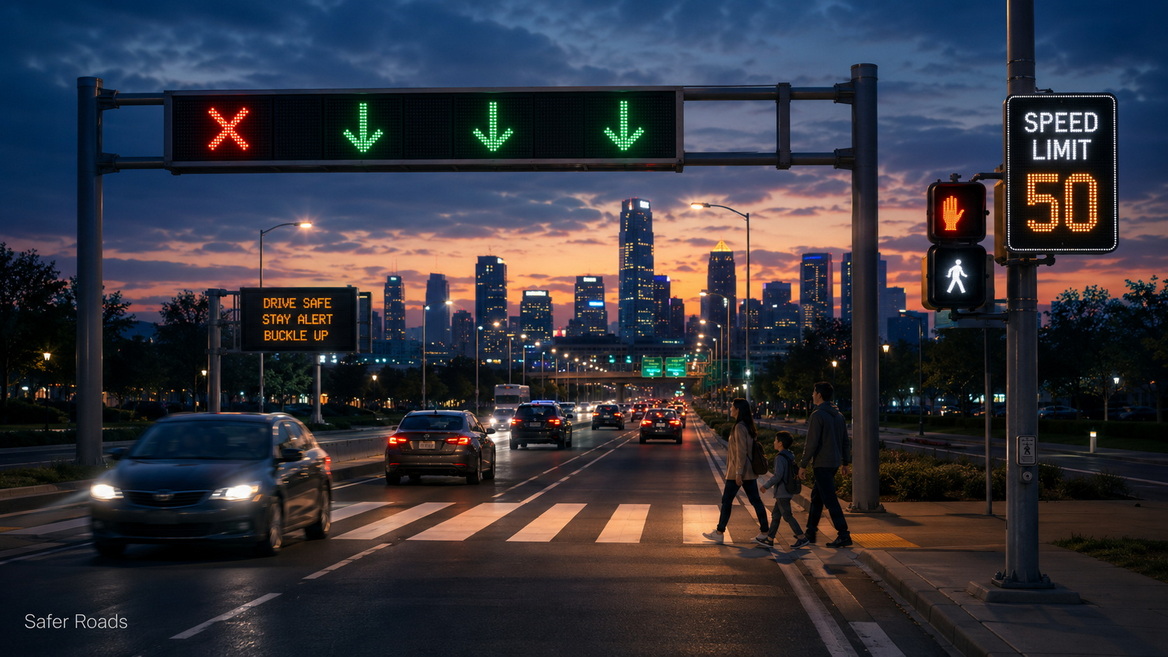
Effective traffic control is no longer just about painted lines and static signs; it is a coordinated system of devices, rules, and digital tools that manage how people and vehicles move through streets, highways, work zones, rail crossings, ports, and parking areas. At its core, traffic control protects people from accidents, reduces congestion, and gives clear guidance on where to stop, when to move, and how to navigate complex environments.
A modern traffic control system typically includes a mix of LED traffic signs and signals, road markings, physical barriers, smart monitoring systems, and clearly defined procedures for emergency and work-zone operations. When these components are designed coherently, they help authorities and contractors maintain safety while keeping vehicles and pedestrians flowing smoothly.
Traffic control devices are any tools placed on or near the road to guide, warn, or regulate road users in a consistent, recognizable way. In practice, this includes everything from LED variable message signs and flashing beacons to cones, delineators, speed bumps, and lane control displays.
The primary purposes of these devices are to improve safety, alert road users to hazards, organize traffic movement, and provide predictable information so drivers can make quick decisions with confidence. When implemented correctly, they reduce crashes, protect workers in construction or maintenance zones, and make it easier for logistics operators, commuters, and pedestrians to share the same space.
Over the past decade, LED-based traffic signs and signals have become a key pillar of traffic control systems worldwide. The global market for LED traffic signs and signals has grown steadily, supported by rising investments in road infrastructure and a push to reduce road fatalities and congestion.
LED traffic signs offer several advantages over traditional reflective or incandescent-based signs: they provide higher visibility in low-light and adverse weather, can display dynamic information such as lane status or speed limits, and integrate more easily with sensors and intelligent traffic systems. Because LED modules consume less energy and have a longer life span, they also reduce maintenance costs for agencies and operators over the long term.
LED traffic signs now appear in a wide range of traffic environments, from downtown intersections to remote highways. Below are some of the most common application scenarios where we see them delivering the biggest impact.
On city streets, LED signs support signalized intersections, school zones, pedestrian crossings, and complex junctions where driver attention is often overloaded. Typical devices include LED traffic signals, pedestrian crossing indicators, lane control signs, and speed feedback signs that show drivers their current speed versus the permitted limit.
Because urban networks must accommodate cars, buses, cyclists, and pedestrians simultaneously, high-contrast LED displays help ensure that each user group understands when to move and when to yield, especially under low visibility, heavy rain, or bright backlighting conditions.
On highways and expressways, LED signs support high-speed decision-making where drivers often have only a few seconds to interpret information. Common devices include overhead lane control signs, variable speed limit signs, LED tunnel signs, and LED warning signs that highlight curves, merging zones, or incident areas.
These signs can be integrated into regional traffic management centers so operators can adjust speed limits, close lanes, or display incident warnings in real time to smooth traffic flow and reduce the severity of collisions. As a result, LED highway signs play an important role in both congestion management and incident response.
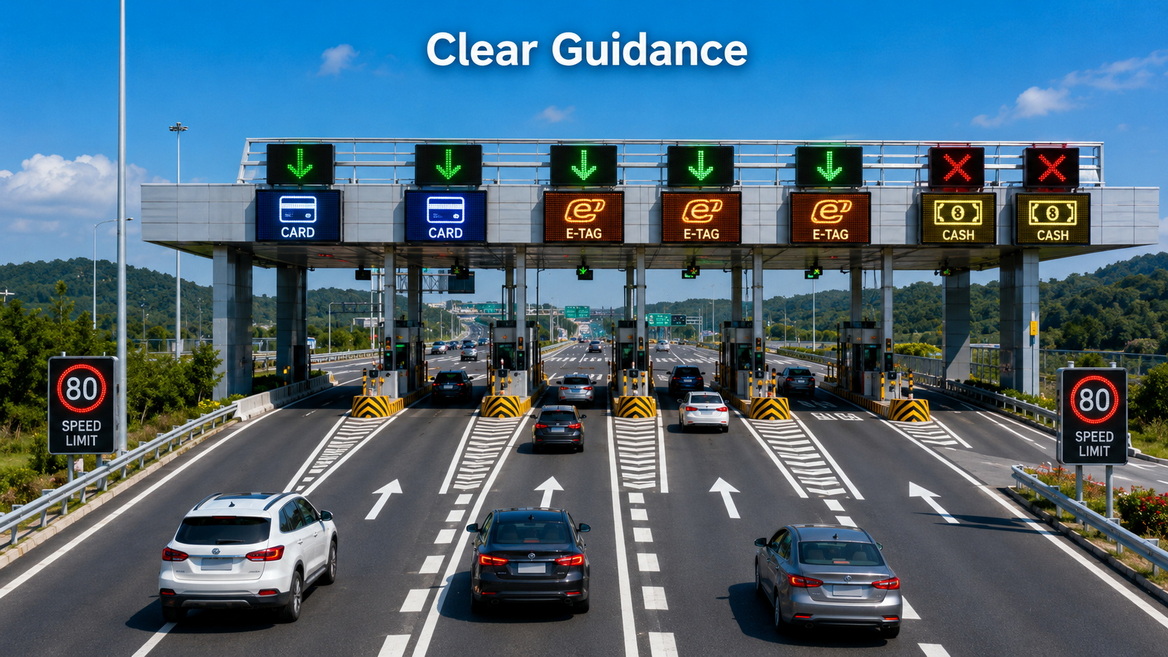
At toll plazas, vehicle speeds must transition from highway levels to near-stationary queues, which creates a high risk of rear-end collisions and side-swipes if guidance is unclear. LED signs are used here to display lane status (open/closed), payment modes (cash, card, electronic tags), and real-time instructions that help drivers choose the correct lane and maintain safe following distances.
LED tunnel signs and overhead gantry signs can also provide clear guidance as vehicles approach or leave the toll station, highlighting speed reductions, lane merges, and special restrictions for heavy vehicles. This combination improves throughput while reducing driver confusion and abrupt lane changes.
In parking facilities, LED-based guidance systems help operators turn complex multi-level layouts into intuitive environments for visitors. Typical solutions include LED parking guidance signs that show available spaces, entrance and exit guidance signs, LED speed limit signs, and illuminated directional signs for pedestrians.
When combined with physical devices such as speed bumps, bollards, and barriers, LED signs reduce low-speed crashes, improve pedestrian safety, and shorten the time drivers spend circulating in search of a space, which can also lower emissions in enclosed garages.
Beyond LED traffic signs themselves, real-world projects depend on a suite of supporting equipment that ensures a complete and coherent control environment.
Common examples include:
- Cones and tubular markers for temporary lane delineation
- Bollards and safety barriers to protect work zones and separate traffic flows
- Variable message signs (VMS trailers or fixed) for dynamic information
- Arrow boards and beam barricades to guide merges and closures
- Speed bumps and rumble strips to enforce low speeds in sensitive zones
- Truck‑mounted attenuators to shield workers from rear-end impacts
When planning a project, it is important to see LED traffic signs as part of this broader toolkit so that messages on the signs are consistent with pavement markings and physical guidance devices.
Every effective traffic installation begins with a clear traffic control plan that defines how vehicles and pedestrians will navigate the work zone, permanent roadway, or facility. In many regions, transportation departments base these plans on national or regional standards that specify sign placement, spacing, lettering sizes, and symbol conventions.
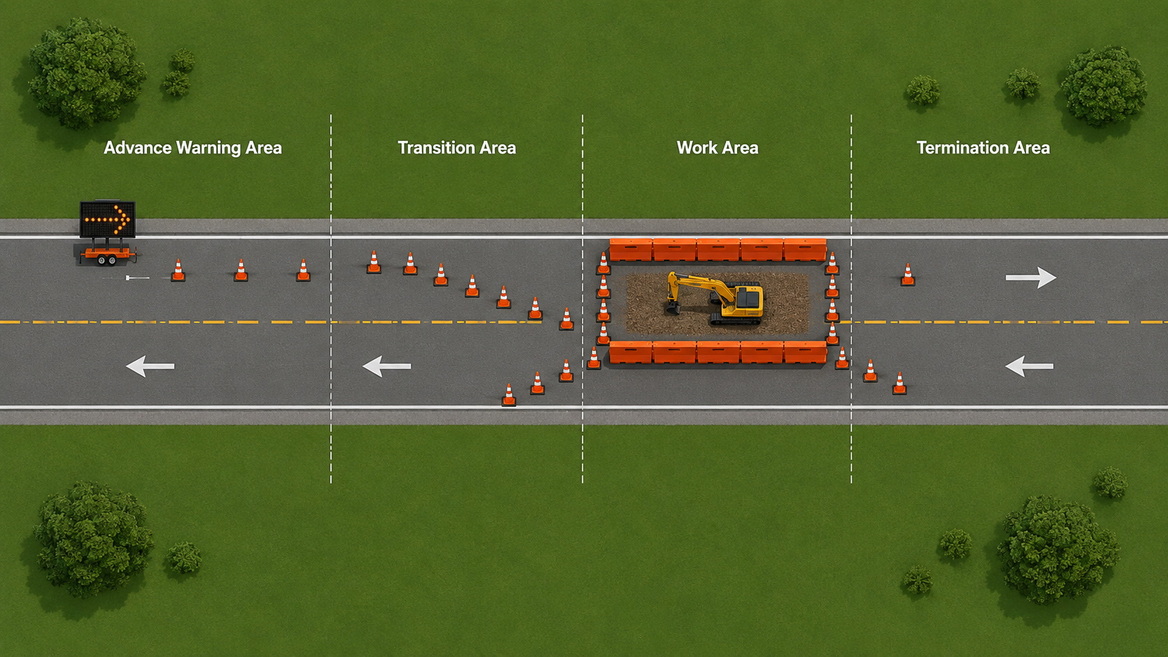
For construction and maintenance projects, a typical plan defines advance warning areas, transition areas (tapers), work areas, and termination zones, each with specific sign and device requirements. When LED signs are used in these contexts, their content and positioning must align with the plan so that messages are visible at the correct distances and do not conflict with temporary markings or barriers.
In some scenarios, especially when signals fail or when heavy vehicles must be waved through complex detours, trained personnel use flags, paddles, and hand signals to control traffic manually. Guidelines generally require such personnel to wear high‑visibility garments and to follow formal training so they can coordinate safely with approaching drivers and work crews.
Automated flagger assistance devices (AFADs) and remotely controlled LED signs are increasingly used to replace or augment manual flagging in high‑risk zones. By using LED displays and mechanical arms to provide clear stop/go signals, these devices reduce direct exposure of workers to moving traffic while maintaining compliance with established control practices.
Designing LED traffic signs and related systems requires more than choosing a bright display; it demands alignment with recognized traffic engineering standards and best practices. For example, manuals in multiple regions specify sign colors, legends, fonts, luminance levels, and flashing patterns that have been tested to ensure readability and driver comprehension.
From a practical perspective, authorities and engineers focus on factors such as viewing distance, mounting height, ambient lighting conditions, and driver workload when determining where and how to deploy LED signs. They also account for environmental exposure, including temperature extremes, humidity, and vibration, which influences enclosure design and choice of materials.
Road operators often evaluate LED sign solutions based on lifetime cost of ownership rather than just purchase price. LED modules with long rated life, robust surge protection, and modular design make maintenance easier and reduce the need for lane closures during repairs.
In addition, monitoring systems can provide alerts when a sign loses power, experiences communication failures, or shows inconsistent brightness between modules. This allows maintenance teams to respond proactively and keep installations operating close to their design performance.
Worldwide, road safety remains a major public concern, with an estimated 1.35 million people losing their lives in traffic crashes each year and many more suffering serious injuries. In response, international frameworks have set targets to reduce deaths and injuries, creating strong incentives for agencies and infrastructure owners to invest in advanced traffic control solutions.
Analysts report that the market for LED traffic signs and signals reached approximately 184.9 million USD in value around 2023 and is projected to grow at a compound annual rate in the mid‑single digits over the next several years. More specialized segments such as LED lane control signs are expected to expand even faster, with some forecasts projecting near double‑digit annual growth through the mid‑2030s as smart mobility projects scale globally.
Another notable trend is the integration of LED signs with sensor networks, cameras, and analytic platforms that dynamically adjust messages and restrictions based on real-time conditions. For instance, radar-based speed feedback signs or AI-assisted monitoring platforms can trigger warnings when vehicles exceed speed thresholds or when congestion builds on particular corridors.
In practice, this means project owners increasingly look for LED signs that can interface with existing control centers, support remote configuration, and be updated over time as traffic patterns or regulations evolve. Manufacturers that can supply both robust hardware and integration support are better positioned to meet these expectations.
Shenzhen Xingsheng Traffic Facilities Co., Ltd. has operated as an export-oriented traffic safety manufacturer since 2014, with a portfolio that spans LED traffic signs, LED warning lights, solar road markers, LED delineators, road reflectors, LED tunnel signs, solar traffic signals, and parking safety products. Our equipment is widely deployed on streets, highways, toll stations, and parking lots, particularly for overseas projects that need reliable and cost-effective solutions.
Our production and quality systems operate under an ISO 9001–approved framework, which helps us maintain consistent quality across product batches and align with international expectations for documentation and traceability. With a dedicated R&D team, we develop new designs and provide customized solutions that adapt to differing regional standards and project requirements.
Over the past decade, we have collaborated with numerous partners as a specialized OEM/ODM manufacturer of traffic products, providing end‑to‑end support from initial design through packaging and shipment. In practical terms, this means we frequently work with engineering consultancies, distributors, and branded solution providers who need a manufacturer capable of tailoring LED traffic signs to specific regulations, languages, or control systems.
A typical collaboration may involve customizing sign faces for local standards, adapting communication protocols for integration with a client's controller, or configuring solar-powered options for locations with limited grid access. Because many of our customers operate under tight construction and commissioning timelines, we structure production and logistics to achieve reasonable pricing while maintaining fast delivery windows.
In feedback gathered from project managers and contractors using LED traffic devices similar to those described in the reference article, common themes emerge around visibility, reliability, and ease of deployment. Users often highlight how bright LED legends and symbols improve driver compliance compared with older reflective signs, particularly at night and during rain or fog.
Another recurring point is the value of modular and lightweight designs that simplify installation and maintenance, especially when signs need to be mounted on existing structures or relocated between projects. Clients also appreciate when traffic products arrive with clear documentation and preconfigured settings that are compatible with their local standards, reducing commissioning time.
From my perspective working alongside traffic engineers and manufacturing teams, successful projects tend to follow a predictable series of steps that align technical, regulatory, and commercial needs. The outline below provides a practical roadmap for organizations considering new or upgraded LED traffic control installations.
1. Define the operational objectives: Clarify whether the primary goals are safety, congestion reduction, compliance with new regulations, or modernization of aging infrastructure. 2. Map the traffic environment: Document approach speeds, typical traffic volumes, user groups (including pedestrians and cyclists), and environmental constraints such as tunnels or sharp curves.
3. Align with applicable standards: Identify national and regional guidelines governing sign design, placement, and performance for the project's jurisdiction.
4. Select appropriate LED sign types: Choose between fixed messages, variable messages, lane control signs, speed feedback signs, or tunnel-specific displays based on the defined objectives.
5. Determine power and communication options: Decide whether signs will be grid‑powered, solar‑powered, or hybrid, and select communication protocols that can integrate with control centers or standalone controllers.
6. Evaluate durability and life-cycle costs: Consider enclosure materials, ingress protection ratings, surge protection, and maintenance accessibility in addition to initial purchase cost.
7. Plan installation and commissioning: Coordinate with civil and electrical contractors to ensure safe mounting, proper cable routing, and thorough testing before opening to traffic.
8. Set up monitoring and maintenance routines: Establish inspections, remote monitoring, and spare parts strategies to keep signs performing reliably over time.
By treating LED signs as part of a system rather than standalone devices, project owners can create safer, more resilient traffic environments for daily operations and special events alike.
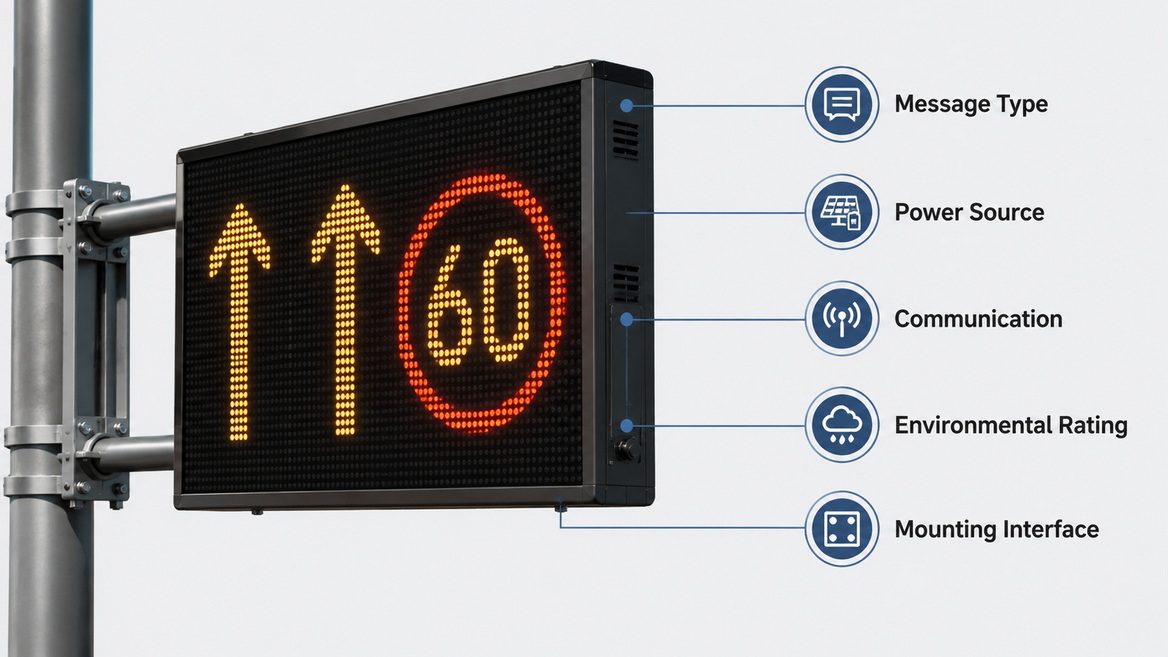
When working with manufacturing partners or procurement teams, a clear specification checklist can accelerate communication and reduce rework. The table below illustrates a concise way to capture key parameters for LED traffic sign projects.
| Parameter | Example Considerations |
|---|---|
| Application location | Highway gantry, tunnel entrance, toll lane, urban intersection, parking facility |
| Message type | Fixed legend, variable text, lane status arrows, speed limit, warning symbols |
| Power source | Grid, solar, or hybrid with battery backup |
| Communication | Local controller only, or integration with central traffic management system |
| Environmental rating | Temperature range, ingress protection class, corrosion resistance |
| Structural interface | Mounting type, pole or gantry specifications, available space and weight limitations |
| Regulatory alignment | Relevant national or regional standards for sign design and placement |
This type of checklist helps both engineers and suppliers confirm that the final solution aligns with the project's safety, operational, and budgetary requirements.
As urbanization accelerates and vehicle volumes continue to rise, the need for robust, clearly understood traffic control systems becomes more urgent year by year. LED traffic signs, in combination with traditional devices and advanced monitoring technologies, offer a practical path toward safer roads, more efficient highways, better-managed toll and parking facilities, and more predictable journeys for all road users.
For infrastructure owners, contractors, and integrators, focusing on reliable LED hardware, sound traffic engineering principles, and strong collaboration with experienced manufacturing partners can create long-lasting value while contributing to broader road safety goals.
If you are planning a new road, tunnel, toll plaza, or parking project and want to upgrade from static signs to intelligent LED-based solutions, now is the ideal time to define your requirements and explore how modern traffic control equipment can support your objectives.
LED traffic signs use illuminated diodes to display messages or symbols, making them visible under a wider range of lighting conditions and enabling dynamic content, whereas reflective signs rely on external light sources and fixed legends.
Yes, many LED signs can be configured with solar power and battery storage, which makes them suitable for remote highways, rural intersections, or temporary work zones with limited access to the electrical grid.
While actual life depends on usage and environmental conditions, high-quality LED modules are often designed for extended service life, which, combined with robust enclosures and surge protection, can reduce maintenance frequency compared with older technologies.
Most modern LED traffic signs support communication interfaces that allow connection to controllers or central traffic management centers, enabling remote configuration, automated responses to conditions, and coordinated messaging across a corridor or network.
Key considerations include proven experience with traffic safety products, alignment with relevant standards, quality management certifications, flexibility for custom designs, and the ability to provide both technical support and timely delivery for complex projects.
1. Jackwin Safety – "Traffic Control Methods" (Traffic Control Overview, Devices, Methods, Importance) – https://jackwinsafety.com/traffic-control/
2. Shenzhen Xingsheng Traffic Facilities Co., Ltd. – Company Profile (Product Range, Markets, OEM/ODM Capabilities, ISO 9001) – https://www.trafficthing.com/Company-Profile.html
3. Precision Business Insights – "LED Traffic Signs and Signals Market Size, Growth, Analysis 2024" (Market Size, CAGR, Safety Context) – https://www.precisionbusinessinsights.com/market-reports/led-traffic-signs-and-signals-market 4. Future Market Insights – "LED Lane Control Signs Market" (Market Forecasts, Growth Drivers) – https://www.futuremarketinsights.com/reports/led-lane-control-signs-market
5. MUTCD – Manual on Uniform Traffic Control Devices (United States) – Excerpts on Manual Traffic Control and Device Standards – https://mutcd.fhwa.dot.gov/pdfs/2003/Ch2A.pdf
6. MnDOT – Sign Plan Design Manual (Traffic Control Plans and Sign Placement Practices) – http://www.dot.state.mn.us/trafficeng/signing/doc/mndot-sign-plan-design-manual.pdf
7. SDDC Traffic Engineering Bulletins – Sign Management Best Practices – https://www.sddc.army.mil/sites/TEA/Functions/SpecialAssistant/TrafficEngineeringBranch/Bulletins/Bulletin%2021-01%20-%20Sign%20Management%20Best%20Practices.pdf
8. Austroads – "Guide to Traffic Management Part 10: Traffic Control and Communication Devices" – https://austroads.gov.au/__data/assets/pdf_file/0026/342836/AGTM10-19-Guide-to-Traffic-Management-Part-10-Traffic-Control-and-Communication-Devices.pdf
9. Business Research Insights – "Road LED Traffic Signals Market 2026–2035" – https://www.businessresearchinsights.com/market-reports/road-led-traffic-signals-market-101750
10. LinkedIn Insights – "LED Traffic Signs Market Growth 2026 to 2033" (Industry Commentary on Innovation and Efficiency) – https://www.linkedin.com/pulse/led-traffic-signs-market-growth-2026-2033


