
Please Choose Your Language
Views: 222 Author: XS Traffic Facilities Publish Time: 2026-06-01 Origin: Site


Content Menu
● What Does a Yield Sign Mean?
● Yield Sign Shape, Color, and Basic Design
● Key Differences: Yield Sign vs. Stop Sign
>> Yield vs. Stop: Driver Obligation
● Where You Will Most Often See Yield Signs
● How Drivers Should Respond to a Yield Sign
● Why Yield Signs Matter for Road Safety
● From Paint to LEDs: How Yield Signs Are Evolving
● Expert Tips for Effective Yield Sign Design
● Choosing Between Standard and LED Yield Signs (For Buyers)
● Practical Placement and Maintenance Best Practices
● How OEM/ODM LED Yield Signs Support Global Traffic Safety
● Call to Action: Upgrading Your Yield Signs
● Frequently Asked Questions About Yield Signs
>> 1. Does a yield sign mean I must always stop?
>> 2. Why are yield signs triangular instead of octagonal like stop signs?
>> 3. Are LED yield signs legal everywhere?
>> 4. Where is it most important to use LED yield signs instead of standard ones?
>> 5. Can yield signs be customized for private roads or parking facilities?
Yield signs are one of the most misunderstood but critical regulatory signs on the road, and as a manufacturer of LED traffic signs, we see every day how a well‑designed yield sign can literally prevent crashes at intersections, ramps, and parking facilities. From my perspective as someone working with global traffic engineers and buyers of OEM/ODM traffic products, a yield sign is not just a simple inverted triangle—it is a finely tuned safety tool that must balance legal compliance, human behavior, and modern visibility technology.
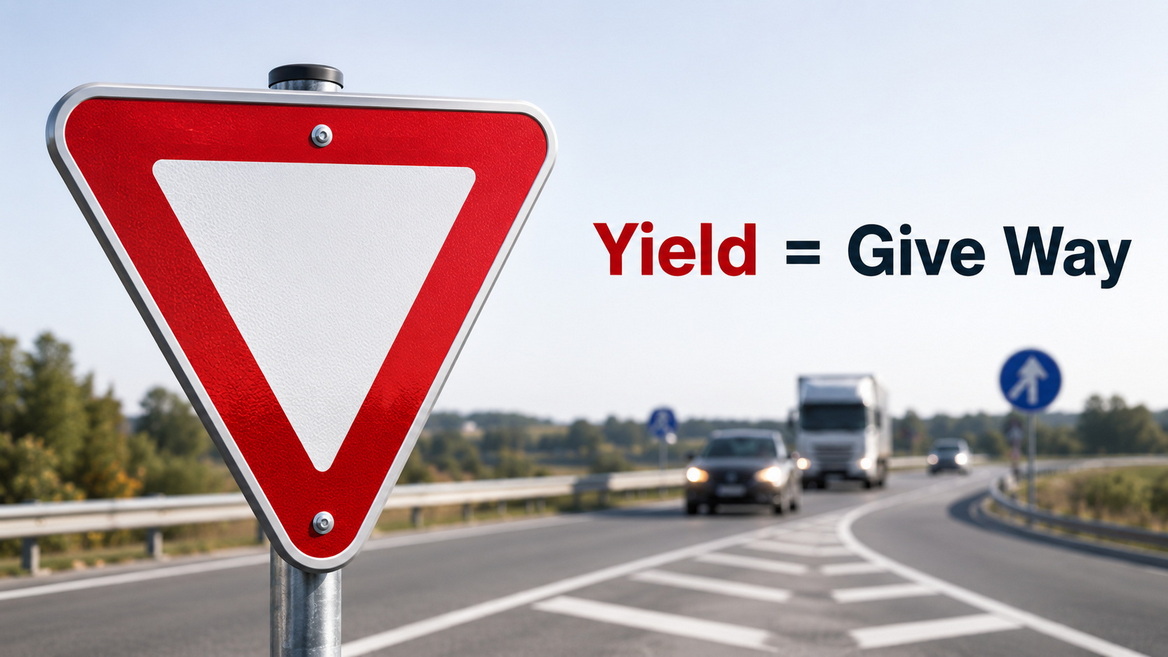
At its core, a yield (or "give way") sign tells drivers to give priority to other road users before entering or crossing a lane, intersection, or roundabout. It means the driver must slow down, scan the road, and be prepared to stop if another vehicle, cyclist, or pedestrian has the right of way.
Unlike a stop sign, which always requires a full stop, a yield sign only requires stopping when there is conflicting traffic or pedestrians; if the way is clear, drivers may proceed without stopping, but at a controlled speed. The safety goal is to keep traffic flowing smoothly while still preventing high‑risk conflicts, especially at merging or low‑speed intersections.
A simple example is a freeway on‑ramp: a yield sign there tells entering drivers to match speed, check mirrors and blind spots, and allow mainline traffic to pass before merging, rather than forcing every vehicle to stop and restart.
Across most countries, the yield sign has a very recognizable inverted triangle shape, which visually distinguishes it from other regulatory signs like stop (octagon) or speed‑limit (circle or rectangle) signs. Under international conventions, the standard design is a downward‑pointing equilateral triangle with a red border and a white or yellow center.
The word "YIELD" (or local language equivalent like "GIVE WAY") is typically written in bold red letters on the white background to ensure fast recognition at a distance. This combination of strong color contrast, unique shape, and simple wording is not accidental; it is designed to be legible even at night, in rain, or at high speeds.
From a manufacturing and safety engineering standpoint, the triangular shape also provides redundancy: even if snow, mud, or partial obstruction covers the text, drivers can still recognize the sign by silhouette alone.
Although both yield and stop signs are regulatory signs, they require different driver behaviors and are used in different risk scenarios.
- Yield sign: Slow down, observe, and be ready to stop; proceed only when it is safe and when other road users with priority have passed.
- Stop sign: Come to a complete stop at or before the stop line or crosswalk, look in all directions, and proceed only when safe—even if no other traffic is visible.
- Yield signs are common at ramp merges, minor‑to‑major road junctions, roundabouts, and entrances to parking lots where visibility is adequate and traffic speeds are moderate.
- Stop signs are preferred where sight distance is limited, crash history is high, or vulnerable road users like pedestrians and cyclists frequently cross.
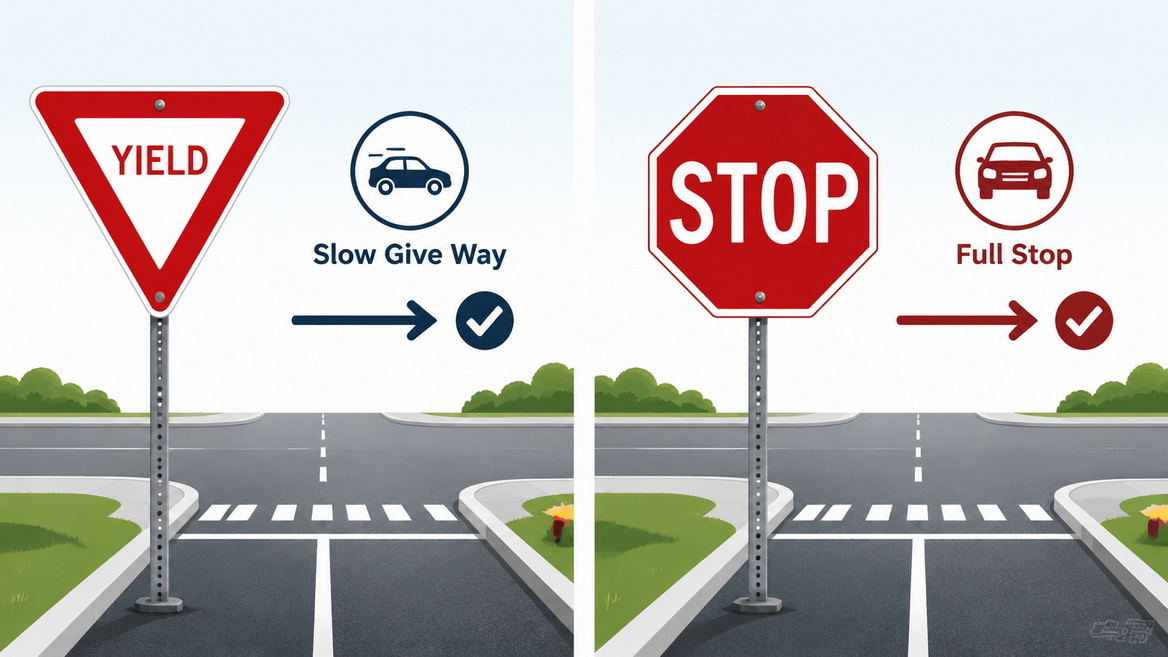
From feedback we receive from fleet operators and parking managers, confusion often comes from drivers treating yield like a "soft stop" or ignoring it entirely, which is why proper design and illumination are critical.
In day‑to‑day driving and traffic system design, yield signs are strategically placed to control conflict points rather than to halt traffic completely.
Common locations include:
- Entrance ramps onto freeways or expressways where merging must be controlled but not fully stopped.
- Roundabouts or traffic circles, where entering vehicles must yield to circulating traffic.
- Minor roads intersecting with major arterials, when visibility and speed conditions allow a yield instead of a stop.
- Driveway exits and parking lot entrances where vehicles join a busier road or internal circulation lane.
From an operational point of view, we often see city engineers choosing yield signs for areas where they want to minimize unnecessary braking and fuel consumption while still eliminating the most dangerous conflicts.
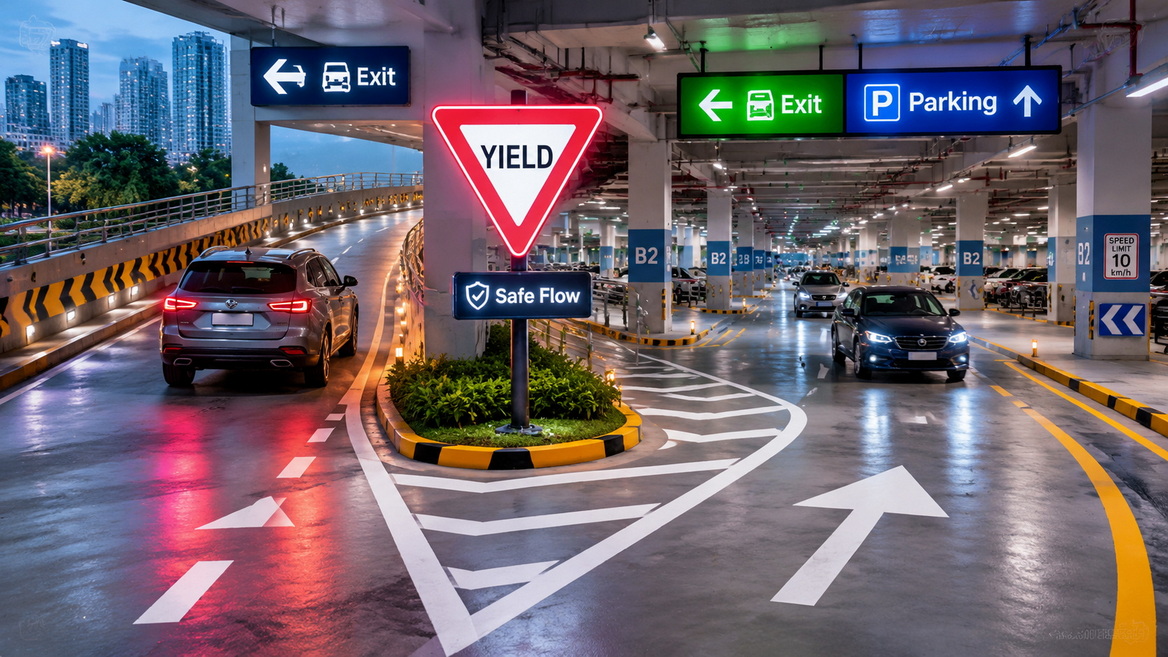
Based on training guidelines and road safety best practices, a driver encountering a yield sign should follow a simple sequence.
1. Reduce speed early
As soon as you see the inverted triangle, ease off the accelerator to create time for observation and decision‑making.
2. Scan for all road users
Look for vehicles on the main road, cyclists in bike lanes, and pedestrians at crosswalks or stepping off the curb.
3. Judge gaps and priority
Decide whether you can merge or cross safely without forcing other road users to brake or swerve.
4. Stop if necessary
If the gap is not safe, bring the vehicle to a full stop at the yield line or before the crosswalk, not in the middle of the intersection.
5. Proceed smoothly
When the way is clear, accelerate smoothly to match the speed of the traffic flow you are joining.
For commercial fleets and professional drivers, we see training programs emphasizing that "yield" means giving up the right of way, not just glancing and pushing through; this is particularly important for heavy trucks and buses with longer stopping distances.
Yield signs play a central role in preventing side‑impact and merging collisions, which are often severe because they occur at junctions where paths cross. They reduce conflict by clearly defining who has priority in situations where traffic flows intersect but do not need to be fully stopped.
Modern road safety programs favor a mix of engineering, education, and enforcement; yield signs sit in the middle of this strategy by ensuring that the physical environment gives drivers clear, consistent cues. For example, pairing a yield sign with road markings, rumble strips, or LED‑enhanced borders can dramatically increase driver compliance at previously problematic intersections.
In our experience supplying LED traffic signs to highways, toll stations, and parking structures, many clients adopt illuminated or flashing yield symbols after analyzing crash data and identifying high‑risk conflict points.
Traditional yield signs rely on reflective sheeting and ambient light, which can be inadequate in heavy rain, fog, or complex urban backgrounds. Over the last decade, transportation agencies have increasingly adopted LED‑enhanced yield signs, either with illuminated borders or fully backlit faces, to address these visibility gaps.
LED yield signs offer several advantages:
- Strong, uniform brightness that stands out from visual clutter and advertising.
- Lower power consumption and long service life compared with older lighting technologies.
- The ability to integrate solar power for remote highways and rural junctions, minimizing trenching and cabling.
- Optional flashing or sensor‑activated modes that highlight the sign only when vehicles approach, reducing light pollution and energy use.
For OEM and ODM projects, we frequently customize LED yield signs to meet local standards for size, color coordinates, luminance, and viewing distance, ensuring they comply with regulations while supporting each road authority's safety goals.
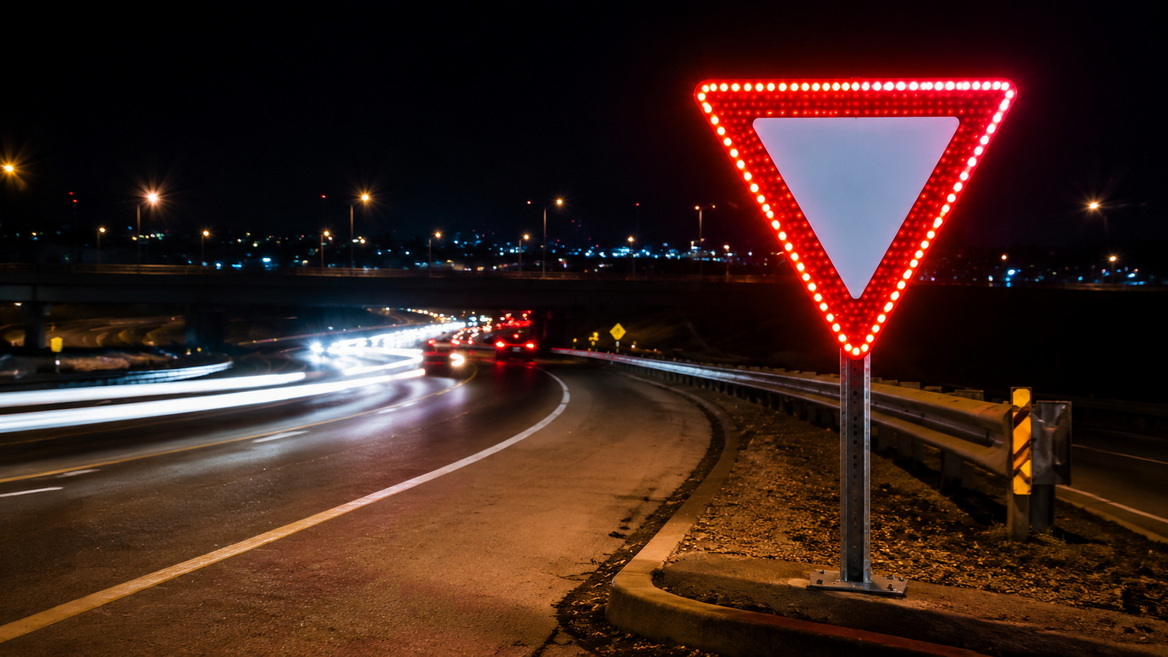
Designing an effective yield sign is not only about meeting minimum standards; it is about maximizing legibility and comprehension in real‑world conditions.
From current industry best practices on traffic and general signage design:
- Prioritize legibility: Use clear, sans‑serif fonts and avoid decorative lettering that is hard to read at a distance.
- Keep the message simple: A single word like "YIELD" or "GIVE WAY" is far more effective than long text.
- Maximize contrast: Red borders on white or yellow backgrounds, paired with bold text, deliver high contrast and fast recognition.
- Ensure appropriate size: Larger signs are needed for high‑speed roads so drivers can read them in time to react safely.
- Consider placement carefully: Position yield signs where they are not blocked by trees, poles, or parked vehicles and where drivers have adequate sight distance to respond.
In our work with overseas clients, we often run through these design checks together before confirming OEM or ODM specifications, especially when they need to align national standards with unique site conditions.
If you manage highways, toll stations, or large parking facilities, choosing between standard reflective yield signs and LED‑enhanced versions is a strategic decision.
You may opt for standard reflective signs when:
- Traffic speeds are low to moderate and visibility is generally good.
- Budget is limited and there is already good street lighting.
You may invest in LED yield signs when:
- The location has a history of near‑misses or collisions at merges and side roads.
- Weather frequently reduces visibility (fog, heavy rain, snow).
- The environment is visually busy (city centers, complex interchanges, toll plazas).
- You want to integrate energy‑efficient solar solutions for remote areas.
As a manufacturer serving OEM and ODM customers, we are often asked to design LED yield signs that match specific state or regional templates, including custom text, bilingual legends, or integrated controllers for flashing modes.
Even the best‑designed yield sign fails if it is badly placed or poorly maintained. For agencies and facility managers, several operational practices make a significant difference.
- Height and lateral offset: Mount signs at standardized heights and distances from the roadway so drivers in all vehicle types can see them clearly.
- Avoid obstructions: Regularly trim trees and relocate conflicting poles or advertising boards that block lines of sight.
- Maintain retroreflectivity: Replace faded reflective sheeting to keep nighttime visibility at required levels.
- Check LED performance: For LED versions, implement periodic inspections to check brightness, uniformity, and controller function.
Many of our long‑term customers combine yield sign upgrades with broader intersection improvement programs, using common maintenance schedules to reduce downtime and service costs.
For road authorities, contractors, and parking operators outside China, working with an experienced OEM/ODM manufacturer can significantly simplify traffic sign projects. Reputable suppliers offer engineering support, customization, and flexible order quantities that align with both local regulations and project budgets.
Common OEM/ODM support services include:
- Custom sizes, legends, and languages aligned with local standards and templates provided by clients.
- Integration of LED light sources, controllers, and solar systems into standard yield sign formats.
- Design for specific applications such as highways, toll stations, parking garages, and smart city projects.
By combining traffic engineering requirements with manufacturing expertise, OEM/ODM LED yield signs help cities and facility owners upgrade safety infrastructure faster and more cost‑effectively.
If you are planning to upgrade intersections, toll stations, or parking facilities, reviewing your yield signs is a high‑impact, cost‑effective step. Assess locations where visibility is poor, speeds are high, or near‑miss incidents are frequent, and consider whether LED‑enhanced yield signs or customized designs could improve safety performance.
When you are ready to design or source new yield signs, partnering with a specialized OEM/ODM LED traffic sign manufacturer will help you align safety, compliance, and budget in a single solution.
No. A yield sign means you must slow down, observe, and be prepared to stop, but you only stop if there is conflicting traffic or pedestrians with the right of way.
The inverted triangle is an internationally recognized shape for "give way," allowing drivers to identify the sign even when text or colors are partially obscured.
LED yield signs are increasingly accepted, but they must still follow local regulations on size, color, flashing patterns, and installation, so agencies usually refer to national or regional standards before deployment.
They are most useful at high‑risk merges, locations with poor visibility, complex interchanges, and sites with a documented history of accidents or near‑misses.
Yes. Many manufacturers offer OEM/ODM services for customized legends, sizes, and LED features to suit private campuses, logistics hubs, and parking structures, while still following core safety principles.
1. Jackwin Safety. "Yield Sign Means: Shape, Types, Color and Rules Explained." https://jackwinsafety.com/yield-sign-means/
2. Creative Safety Supply. "Yield Sign: What Does It Mean And Its Purpose?" https://www.creativesafetysupply.com/qa/safety-signs/what-is-a-yield-sign
3. Wikipedia. "Yield sign." https://en.wikipedia.org/wiki/Yield_sign
4. Transline Inc. "Making Your Mark: 5 Tips for Custom Traffic Sign Creation." https://translineinc.com/making-your-mark-5-tips-for-custom-traffic-sign-creation/
5. ZGSM. "LED Traffic Light | Manufacturer." https://www.zgsm-china.com/led-products/led-traffic-light
6. Made‑in‑China. "LED Traffic Control Sign." https://www.made-in-china.com/products-search/hot-china-products/Led_Traffic_Control_Sign.html
7. Jackwin Safety. "Custom Traffic Signs Manufacturer in China." https://jackwinsafety.com/custom-traffic-signs/


