
Please Choose Your Language
Views: 248 Author: XS Traffic Facilities Publish Time: 2026-08-12 Origin: Site


Content Menu
● Why Traffic Cone Colors Matter
● Traffic Cone Color Meanings at a Glance
● Orange Traffic Cones for Roads and Work Zones
>> Choosing Orange Cones by Traffic Environment
>> Orange Cones for Parking Lots
● Red Traffic Cones for Danger and Restricted Areas
>> When Red Cones Need Additional Protection
● Yellow Traffic Cones for Caution Areas
>> Yellow Cones in Industrial Facilities
● Lime Green Traffic Cones for High-Visibility Guidance
● Blue Traffic Cones for Designated Areas
● White Traffic Cones for Events, Valet Parking, and Branding
>> Using White Cones in Parking Operations
● Pink and Purple Traffic Cones for Custom Applications
● Traffic Cone Visibility: Color Is Only the First Step
>> Reflective Collars for Nighttime Safety
● How to Choose the Right Traffic Cone
● Example Traffic Cone Specification for OEM or ODM Projects
● Traffic Cone Safety Starts with Clear Communication
>> What does an orange traffic cone mean?
>> What are red traffic cones used for?
>> Are yellow traffic cones suitable for parking lots?
>> Do traffic cones need reflective collars?
>> What size traffic cone should I use?
Traffic cones are among the most recognizable temporary traffic-safety devices in the world. Whether they appear on a highway work zone, at a parking-lot entrance, beside a loading bay, or around a public event, they deliver a simple visual message: pay attention, change your route, or proceed with care.
However, traffic cone colors are not merely a design choice. The color, height, reflective collar, base weight, material, and placement of a cone can affect how quickly people notice a hazard and how safely they respond.
For contractors, parking-facility operators, distributors, municipal buyers, and industrial-site managers, selecting the right traffic cone requires more than choosing a bright color. A well-designed cone should match the working environment, traffic speed, weather conditions, visibility needs, and local project requirements.
This guide explains the common meanings of different traffic cone colors and provides practical guidance for choosing suitable cones for temporary traffic management.
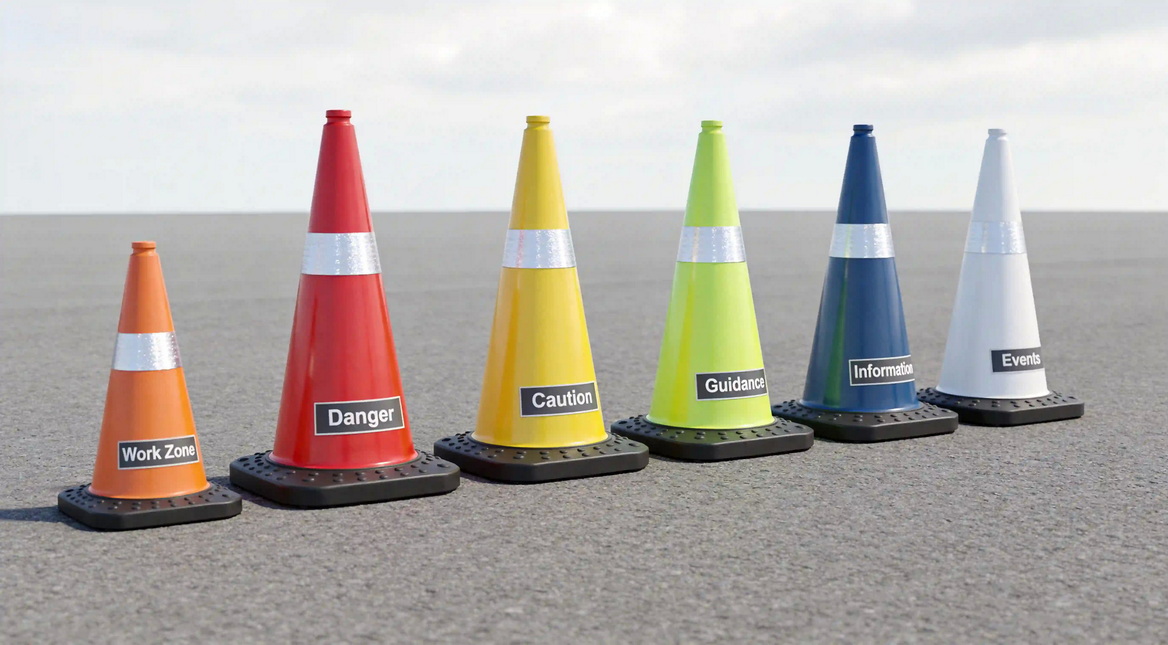
Traffic cones are temporary channelizing devices. They help direct vehicles and pedestrians away from hazards, guide traffic around work areas, separate lanes, mark restricted spaces, and create safer routes through changing environments.
A cone's color is often the first thing a road user notices. Bright colors create contrast against asphalt, concrete, grass, warehouse floors, and vehicle traffic. This visual contrast helps drivers react earlier, especially in crowded or unfamiliar environments.
Still, color is only one part of an effective traffic-safety setup. A high-performing traffic cone system should also consider:
- Cone height for the traffic speed and viewing distance
- Reflective collars for nighttime and low-light visibility
- Base weight for wind resistance and passing vehicle turbulence
- Material flexibility for impact resistance and long-term use
- Cone spacing for clear lane guidance
- Warning signs and barriers for additional direction
- Site-specific rules for roads, factories, parking lots, and public events
A cone placed in the wrong location, with insufficient height or poor visibility, may not provide enough warning. By contrast, a properly selected and positioned cone can help create a clear, organized, and safer environment.
| Traffic Cone Color | Typical Meaning | Common Applications | Key Consideration |
|---|---|---|---|
| Orange | Temporary traffic control and roadwork warning | Roads, highways, construction sites, toll plazas | Select reflective collars for nighttime use |
| Red | Danger, restriction, emergency, or no-entry area | Fire lanes, emergency zones, hazardous areas | Combine with signs and barriers where needed |
| Yellow | Caution and temporary hazard awareness | Parking lots, loading bays, warehouses | Useful for lower-speed and lower-severity risks |
| Lime Green | High-visibility guidance | Pedestrian zones, schools, events, service areas | Use consistent site instructions |
| Blue | Information or designated-use areas | Parking facilities, service zones, managed access | Pair with official signs and pavement markings |
| White | General guidance, event organization, branding | Valet parking, hospitality, queues, events | Suitable for logos and printed messages |
| Pink or Purple | Custom, promotional, event, or campaign use | Awareness campaigns, temporary events, branding | Do not treat as a universal safety code |
Orange traffic cones are the most widely recognized cones for temporary traffic control. Drivers commonly associate orange with road construction, maintenance work, utility projects, lane closures, road resurfacing, excavation areas, and changing traffic patterns.
Orange is highly visible against most road surfaces. It is especially effective during daytime construction activity because it contrasts sharply with asphalt, concrete, grass, dirt, and surrounding vehicles.
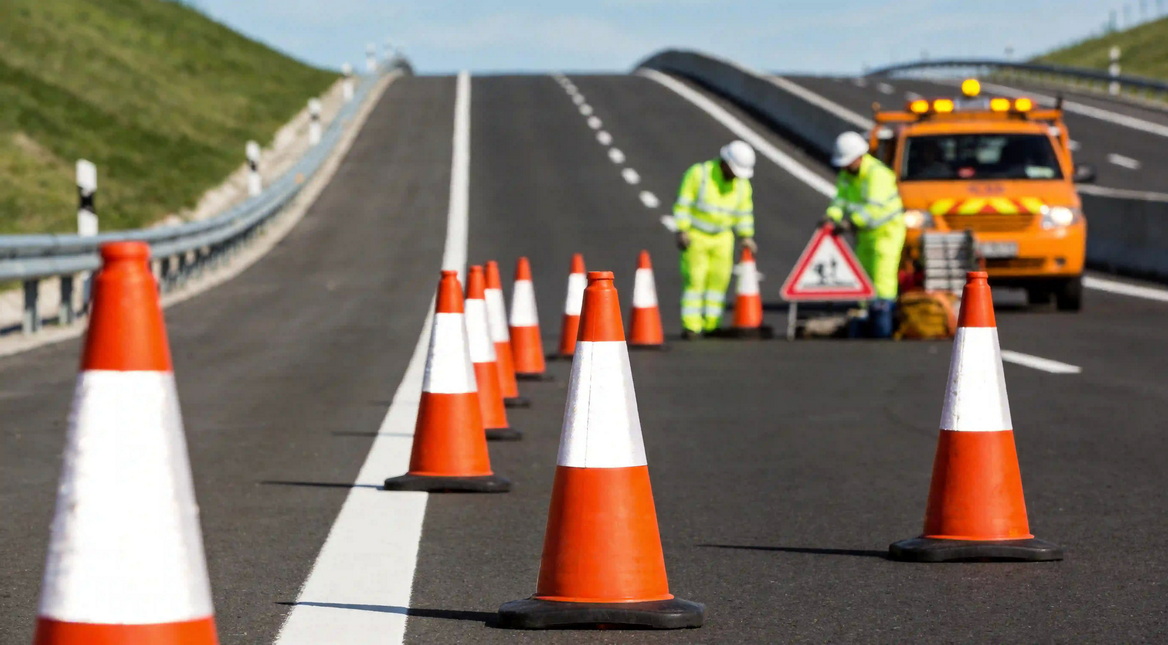
Orange cones are commonly used in:
- Road construction zones
- Highway maintenance areas
- Toll-station lane management
- Utility repair projects
- Temporary lane closures
- Roadside inspections
- Emergency traffic diversions
- Parking-lot maintenance work
- Airport and logistics operations
Not all orange cones are designed for the same purpose. A lightweight cone for a private parking lot may not be suitable for a high-speed road. A highway cone may require a taller body, a heavier base, and reflective collars to remain visible under demanding conditions.
Before selecting orange cones, consider the following:
1. Traffic speed: High-speed roads generally need taller cones that can be seen from farther away.
2. Daytime or nighttime use: Low-light environments may require reflective collars, warning lamps, or other visibility enhancements.
3. Wind and vehicle turbulence: Heavy-duty rubber bases can improve stability near fast-moving traffic.
4. Surface conditions: Smooth warehouse floors, uneven construction sites, wet parking lots, and asphalt roads may require different base designs.
5. Storage and transport: Stackable cones can reduce shipping volume and improve warehouse efficiency.
6. Branding needs: Custom logos, product labels, barcodes, and private-label packaging can help distributors build a consistent product line.
Orange cones are also widely used in parking facilities. They can temporarily block damaged pavement, reserve maintenance spaces, direct vehicles around cleaning work, create temporary pickup zones, or guide traffic during peak periods.
For parking-lot applications, buyers often choose cones that are easy to carry, stack, and deploy. When cones are used at night or in covered garages, reflective bands can improve visibility for drivers and pedestrians.
Red traffic cones usually communicate a more urgent message. They are often used to mark danger, restricted access, emergency conditions, fire-related areas, or temporary no-entry zones.
Because red is strongly associated with stopping and danger, it should be used carefully and consistently. Red cones can quickly capture attention, but they are most effective when they are supported by clear warning signs, physical barriers, or staff instructions.
Common uses for red traffic cones include:
- Emergency response areas
- Fire lanes and fire-equipment access points
- Hazardous maintenance zones
- Vehicle accident areas
- Temporary no-entry zones
- Chemical spill or equipment-failure areas
- Restricted industrial workspaces
- Emergency evacuation routes
Red cones provide a visual warning, but they do not physically prevent access. If the area involves serious danger, a stronger traffic-control setup may be necessary.
For example, an open trench, active vehicle-repair area, electrical hazard, or emergency scene may require:
- Warning signs
- Barricades
- Expandable barriers
- Safety tape
- Flashing warning lights
- Trained personnel
- Temporary fencing
The objective is not simply to make people notice the area. It is to make the correct behavior obvious: stop, stay out, reroute, or wait for instruction.
Yellow traffic cones are commonly used where people should slow down and remain alert. They are useful for hazards that may not require a full road closure but still need clear visual management.
In parking lots, warehouses, schools, shopping centers, factories, and loading zones, yellow cones can identify areas where drivers and pedestrians need to use extra caution.
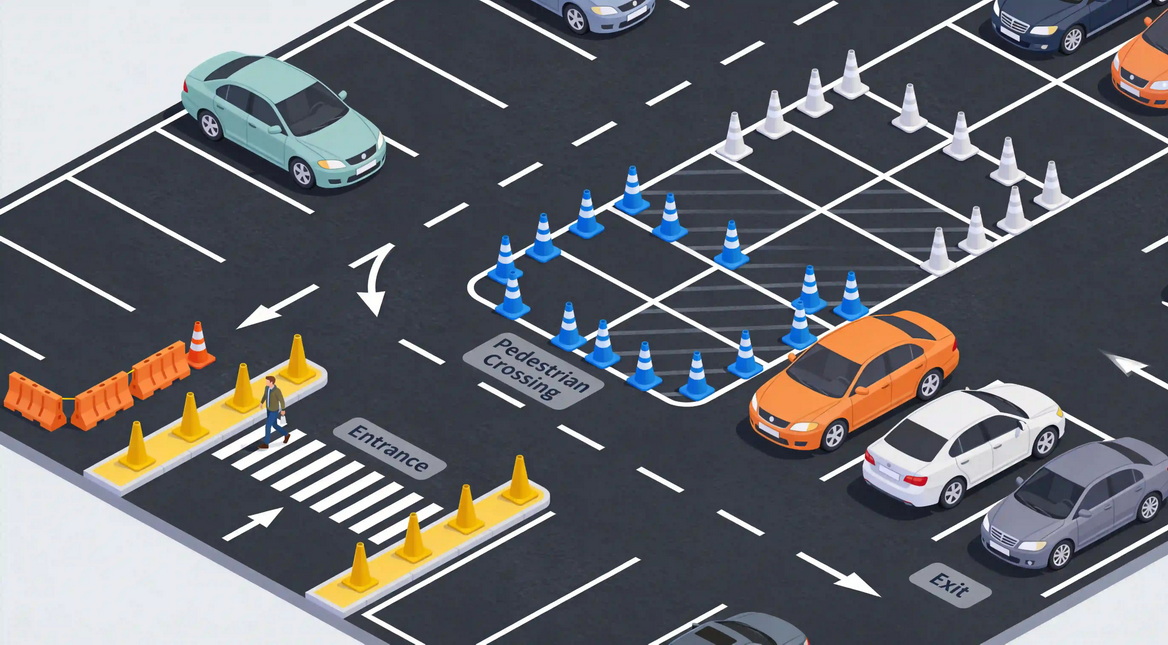
Typical yellow-cone applications include:
- Wet or slippery surfaces
- Floor cleaning areas
- Loading docks
- Delivery zones
- Pedestrian crossings
- Temporary speed-control points
- Minor pavement damage
- Low-clearance areas
- Forklift operating zones
- Temporary queue-management areas
Industrial sites often have a mixture of pedestrians, forklifts, delivery trucks, pallet jacks, and production equipment. Yellow cones can help create short-term visual boundaries around changing conditions.
For example, a yellow cone layout may be used to:
- Keep pedestrians away from forklift turning zones
- Mark temporary storage overflow
- Highlight floor cleaning or spill response
- Separate visitors from active loading areas
- Identify repair work near machinery
For better communication, use yellow cones with simple printed messages or companion signs, such as "Caution," "Wet Floor," "Loading Area," or "Pedestrian Route."
Lime green traffic cones are highly visible and can stand out effectively in busy pedestrian environments. They are often used where the goal is to attract attention without creating the same urgent visual message as red or orange.
Lime green cones may be suitable for:
- School pickup and drop-off zones
- Pedestrian-management areas
- Event entrances
- Service work near public walkways
- Sports venues
- Temporary queue lines
- Outdoor maintenance areas
- Facility entrance guidance
Their fluorescent appearance can be especially useful in locations where pedestrians, cyclists, visitors, and slow-moving vehicles share the same space.
However, lime green does not have one universal meaning in every market. Facility managers should use consistent signs, staff instructions, and traffic layouts so visitors understand the intended route.
Blue traffic cones are often used for informational or designated-use purposes. They can work well in managed parking facilities, service areas, event venues, and private properties where operators need to communicate a specific site rule.
Common blue-cone uses include:
- Temporary designated parking areas
- Service-vehicle zones
- Visitor management
- Pickup and drop-off lanes
- Reserved spaces
- Accessible-parking support areas
- Controlled-access points
- Facility information zones
Blue cones can be useful for temporary parking guidance, but they should not replace permanent signs, pavement markings, legal accessibility requirements, or official site instructions.
For example, a blue cone can help keep a designated space clear during maintenance or event setup. However, permanent accessible parking must still follow the applicable local requirements for signs, markings, dimensions, and access routes.
White traffic cones are often selected for environments where appearance matters as much as organization. They are popular for hospitality businesses, valet parking areas, outdoor events, sports venues, retail centers, and private facilities.
White cones provide a clean surface for custom printing. Businesses can add:
- Company logos
- Directional arrows
- Valet-parking messages
- Event branding
- Sponsor logos
- Queue instructions
- Parking guidance
- Safety reminders
White cones are especially useful when the purpose is to organize vehicle flow or pedestrian movement without creating a strong construction or emergency appearance.
Hotels, restaurants, shopping centers, and event venues often use white cones to create a more professional customer experience. A white cone with a clear logo or directional message can help guide visitors without making the area feel overly industrial.
Examples include:
- "Valet Entrance"
- "Guest Pickup"
- "Reserved for Event"
- "Delivery Access"
- "Keep Clear"
- "Exit Route"
- "Taxi Queue"
Pink and purple cones are less common in standard traffic-control systems. They are generally used for custom projects, promotional events, awareness campaigns, site-specific identification, or special branding requirements.
These colors may work well for:
- Charity events
- Awareness campaigns
- Sports events
- School programs
- Brand activations
- Film-production sites
- Festival traffic management
- Temporary event parking
Because pink and purple do not have a consistent universal traffic meaning, they should be supported by visible signs, staff direction, or printed messages.
For distributors and event organizers, custom-colored cones can create a recognizable visual identity. For roadway and high-risk environments, however, it is important to confirm whether the selected color meets the project's relevant requirements.
A cone can have the correct color and still perform poorly if it is not visible enough. This is particularly important for nighttime roadwork, underground parking garages, foggy weather, rain, tunnels, and low-light industrial areas.
Visibility depends on several factors:
- Fluorescent cone material
- Retroreflective collars
- Cone height
- Vehicle headlight distance
- Lighting conditions
- Cone spacing
- Background contrast
- Surface reflectivity
- Weather conditions
- Placement angle
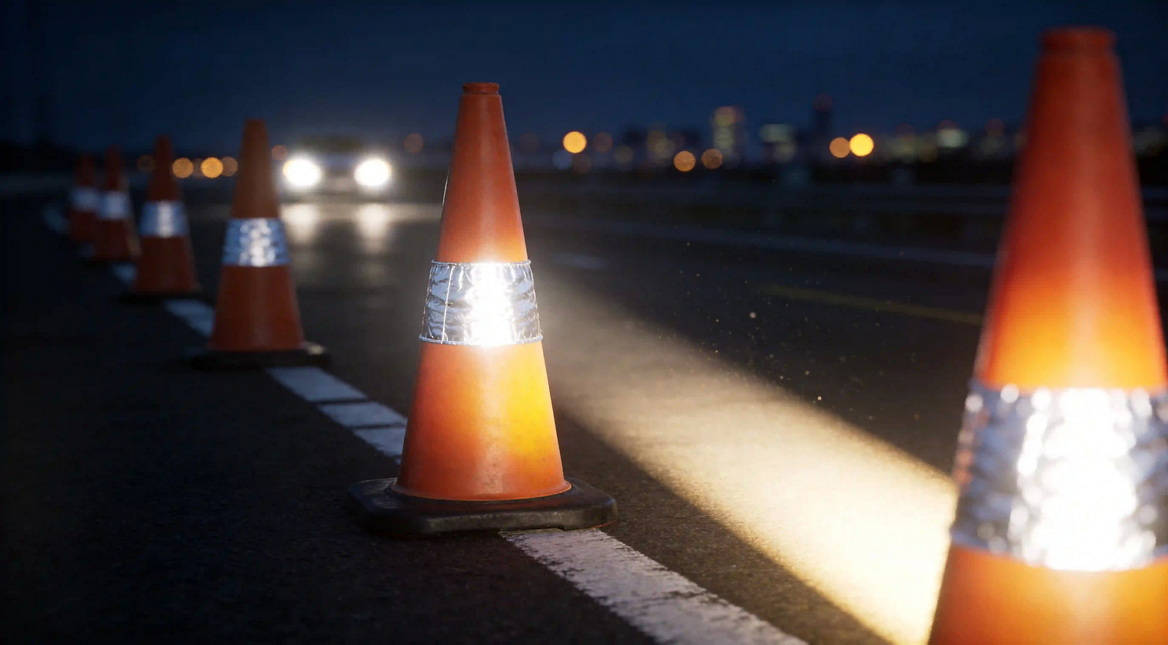
Reflective collars return light toward vehicle headlights, making cones easier to see at night. They are commonly used on roadwork cones, highway cones, toll-plaza cones, airport cones, and other applications where traffic may operate after dark.
When selecting reflective cones, consider:
- Number of reflective collars
- Collar width
- Adhesion quality
- Reflective material type
- Resistance to rain and dust
- Long-term outdoor durability
- Compatibility with local project requirements
A tall orange cone with reflective collars may be more appropriate for nighttime roadwork than a small non-reflective cone designed for indoor use.
Before ordering traffic cones, define the intended operating conditions. This reduces the risk of purchasing a product that looks suitable in photographs but does not perform well at the job site.
Use the following checklist when preparing a product requirement:
1. Identify the location. Is the cone for a highway, city street, toll station, parking lot, warehouse, school, event, or construction site?
2. Determine the traffic speed. Faster traffic usually requires taller and more visible cones.
3. Confirm daytime or nighttime use. Low-light conditions may require reflective collars or lighting accessories.
4. Consider weather exposure. Outdoor cones should withstand sunlight, rain, heat, cold, dirt, and repeated impacts.
5. Choose the right base. A heavier base can improve stability in windy areas or near fast-moving vehicles.
6. Define the color purpose. Select a color that matches the message you want to communicate.
7. Plan for storage. Stackable designs can make transportation and storage more efficient.
8. Request custom features. Logo printing, labels, special colors, barcodes, and customized packaging may support your business needs.
9. Confirm inspection requirements. Define product dimensions, weight, color consistency, reflective-band quality, packaging, and pre-shipment inspection expectations.
A detailed product brief helps avoid misunderstandings between buyers and manufacturers.
Product: 750 mm orange traffic cone
Application: Nighttime road maintenance and toll-plaza lane guidance
Cone body: Flexible PVC
Base: Heavy black recycled-rubber base
Visibility: Two white retroreflective collars
Customization: Customer logo printed on cone body
Packaging: Export cartons suitable for pallet loading
Inspection: Height, weight, visual appearance, collar adhesion, logo position, and packaging check
Purpose: Private-label traffic-safety product for a regional distributor
A specification like this makes it easier to select suitable materials, define production requirements, control consistency, and prepare the right packaging for export transportation.
The right traffic cone color helps people understand their surroundings quickly. Orange cones are widely used for temporary roadwork and traffic guidance. Red cones can mark dangerous or restricted areas. Yellow cones support caution in parking lots and industrial environments. Lime green, blue, white, pink, and purple cones can provide additional guidance, organization, branding, or site-specific communication.
However, the strongest traffic-safety result comes from combining the right cone with the right placement, visibility features, signage, barriers, and operating procedures.
Shenzhen Xingsheng Traffic Facilities Co., Ltd. provides traffic-safety products and customized solutions for streets, highways, toll stations, parking lots, industrial facilities, and temporary work zones. OEM and ODM options are available for cone colors, sizes, materials, reflective collars, logo printing, labels, and export packaging.
Share your application requirements, operating environment, target specifications, and branding needs with our team to develop a practical traffic-cone solution for your market.
Orange traffic cones usually indicate temporary traffic control, construction work, road maintenance, lane changes, utility work, or a temporary hazard that requires drivers to slow down and follow a guided route.
Red traffic cones are commonly used to identify danger, emergency conditions, restricted access, fire-related areas, accident scenes, or temporary no-entry zones. They should be supported by signs or barriers if the risk is serious.
Yes. Yellow traffic cones are useful for parking lots because they can highlight wet surfaces, maintenance zones, pedestrian crossings, loading activity, temporary hazards, and areas where drivers should proceed carefully.
Reflective collars are especially important for nighttime use, low-light conditions, parking garages, tunnels, roadwork areas, and locations where vehicle headlights are the main source of illumination.
The right cone size depends on traffic speed, viewing distance, visibility conditions, and the intended application. Smaller cones may be suitable for indoor or low-speed parking areas, while taller and heavier cones are generally better for roads, highways, and nighttime work zones.
routes, or other applicable requirements.
1. Federal Highway Administration. Chapter 6F: Temporary Traffic Control Zone Deviceshttps://mutcd.fhwa.dot.gov/htm/2009/part6/part6f.htm
2. Occupational Safety and Health Administration. 29 CFR 1910.145, Appendix A: Recommended Color Codinghttps://www.osha.gov/laws-regs/regulations/standardnumber/1910/1910.145AppA
3. California Department of Transportation. Construction Manual, Section 4-12: Temporary Traffic Controlhttps://dot.ca.gov/programs/construction/construction-manual/section-4-12-temporary-traffic-control
4. Federal Highway Administration. Chapter 3F: Barricades and Channelizing Deviceshttps://mutcd.fhwa.dot.gov/htm/2003/part3/part3f.htm
5. Traffic Safety Warehouse. The Different Traffic Cone Colors and What They Meanhttps://www.trafficsafetywarehouse.com/Resources/the-different-traffic-cone-colors-and-what-they-mean.asp
Article word count: Approximately 2,050 words, excluding the References section.


